A2A (Agent-to-Agent Protocol)
A2A (Agent-to-Agent Protocol) is a communication protocol that enables different AI agents to perform capability discovery, task delegation, and state synchronization, published by Google in April 2025.
Clear explanations of AI, DX, and technology terminology
A2A (Agent-to-Agent Protocol) is a communication protocol that enables different AI agents to perform capability discovery, task delegation, and state synchronization, published by Google in April 2025.

Acceptance testing is a testing method that verifies whether developed features meet business requirements and user stories, from the perspective of the product owner and stakeholders.

A mechanism that controls task distribution, state management, and coordination flows among multiple AI agents.

Agent Skills are reusable instruction sets defined to enable AI agents to perform specific tasks or areas of expertise, functioning as modular units that extend the capabilities of an agent.

Agentic AI is a general term for AI systems that interpret goals and autonomously repeat the cycle of planning, executing, and verifying actions without requiring step-by-step human instruction.

Agentic RAG is an architecture in which an LLM autonomously and iteratively generates search queries, evaluates results, and decides whether to re-retrieve information as an agent, achieving answer accuracy that cannot be obtained with simple single-turn RAG.

An AI agent is an AI system that autonomously formulates plans toward given goals and executes tasks by invoking external tools.

An AI chatbot is software that leverages natural language processing (NLP) and LLMs to automatically conduct conversations with humans. Unlike traditional rule-based chatbots, it is characterized by its ability to understand context and respond to questions that have not been predefined.

An autonomous AI agent that takes on a specific business role and continuously performs tasks in the same manner as a human employee. It differs from conventional AI assistants in that it holds a defined scope of responsibility as a job function, rather than simply responding to one-off instructions.

AI governance refers to the organizational policies, processes, and oversight mechanisms that ensure ethics, transparency, and accountability in AI system development and operation.

An evaluation method that systematically tests AI system vulnerabilities from an attacker's perspective to proactively identify safety risks.

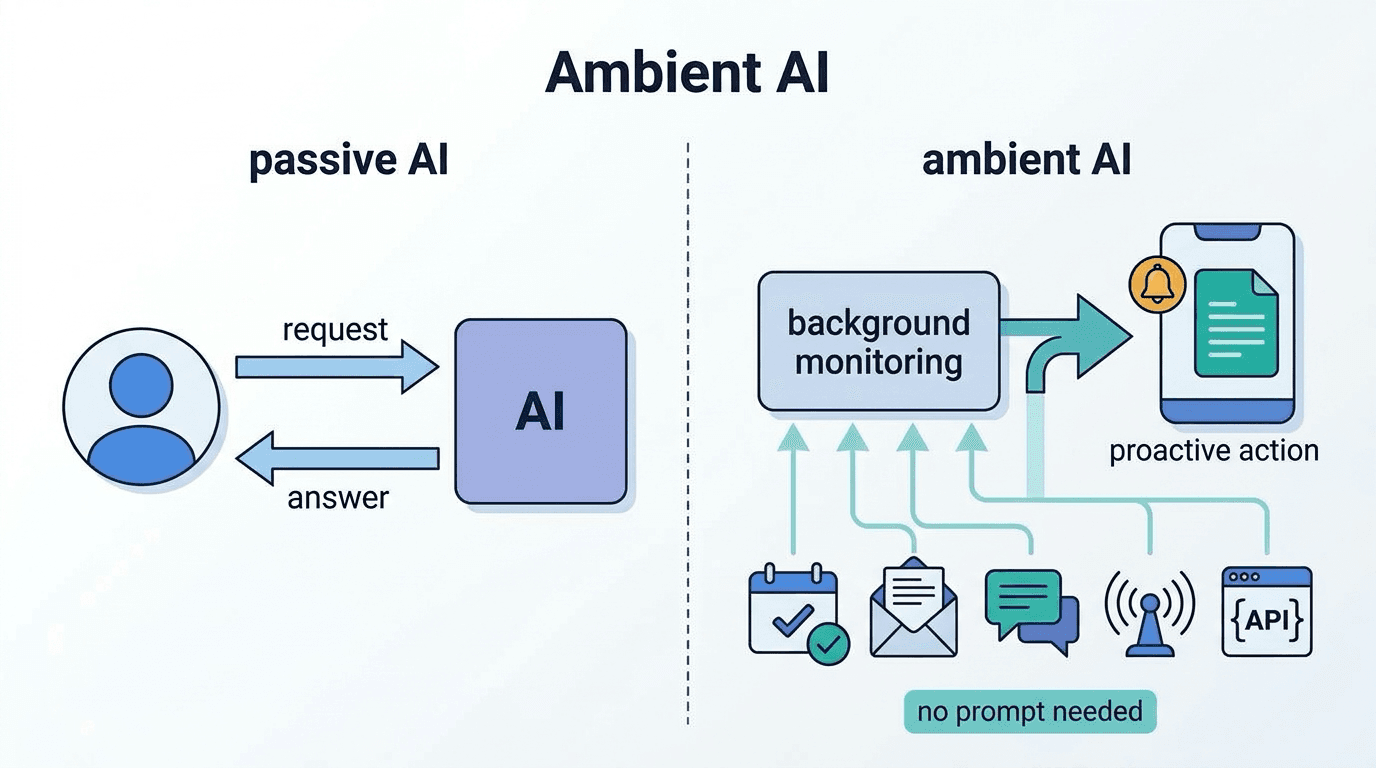
Ambient AI refers to an AI system that is seamlessly embedded in the user's environment, continuously monitoring sensor data and events to proactively take action without requiring explicit instructions.

ATDD (Acceptance Test-Driven Development) is a development methodology in which the entire team defines acceptance test criteria before development begins, automates those tests, and then proceeds with implementation.

A base model (Foundation Model) is a general-purpose AI model pre-trained on large-scale datasets. Rather than being specialized for a specific task, it functions as a "foundation" that can be adapted to a wide range of applications through fine-tuning or prompt engineering.

BM25 (Best Matching 25) is a probabilistic information retrieval algorithm that scores the relevance between a query and documents by taking into account the term frequency within documents and document length.

Chunk size refers to the size (in number of tokens or characters) of the unit into which documents are split when stored in a vector store within a RAG pipeline. It is a critical parameter that directly affects retrieval accuracy and answer quality.

The Claude Agent SDK is a development kit provided by Anthropic for building AI agents. It is a framework for implementing agents in Python and TypeScript that leverage Claude's Tool Use and multi-turn conversation capabilities.

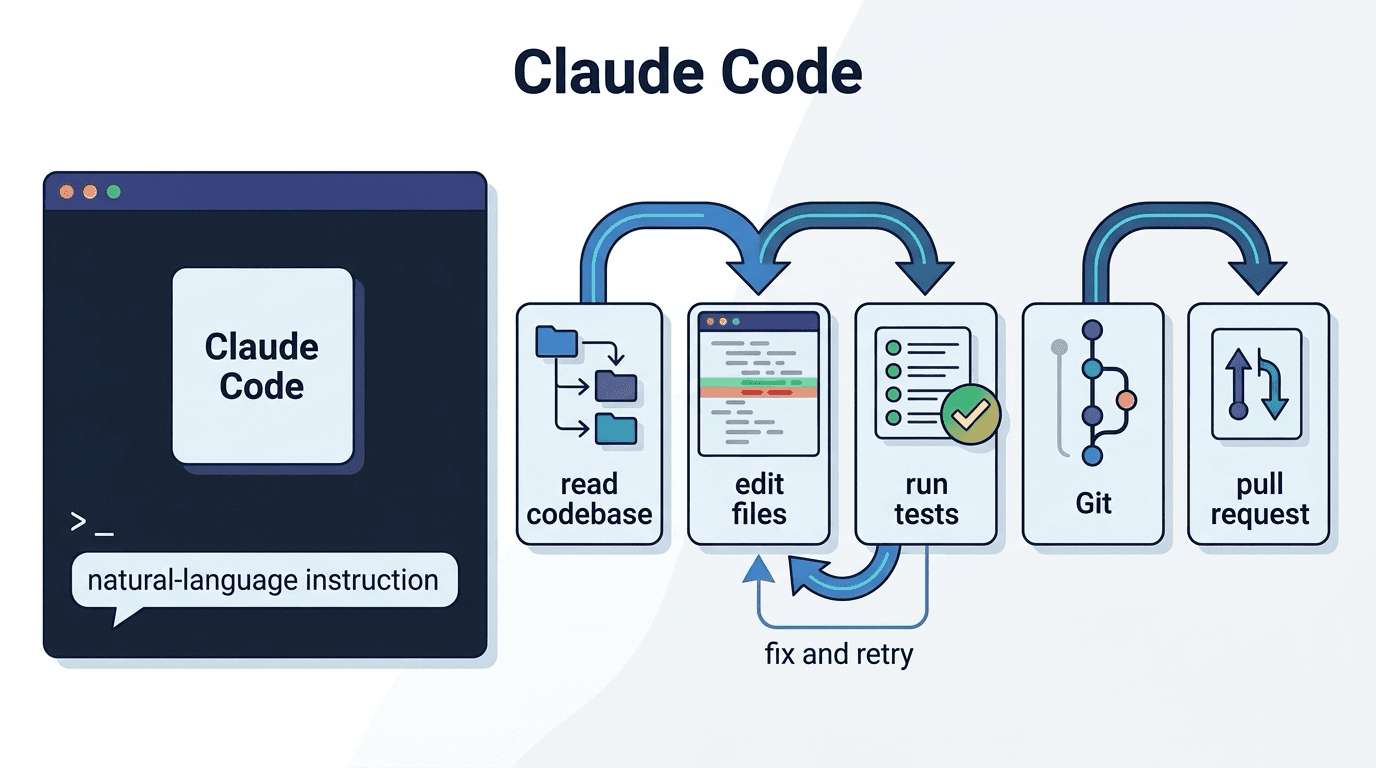
Claude Code is a terminal-resident AI coding agent developed by Anthropic. It is a CLI tool that enables users to consistently perform codebase comprehension, editing, test execution, and Git operations through natural language instructions.

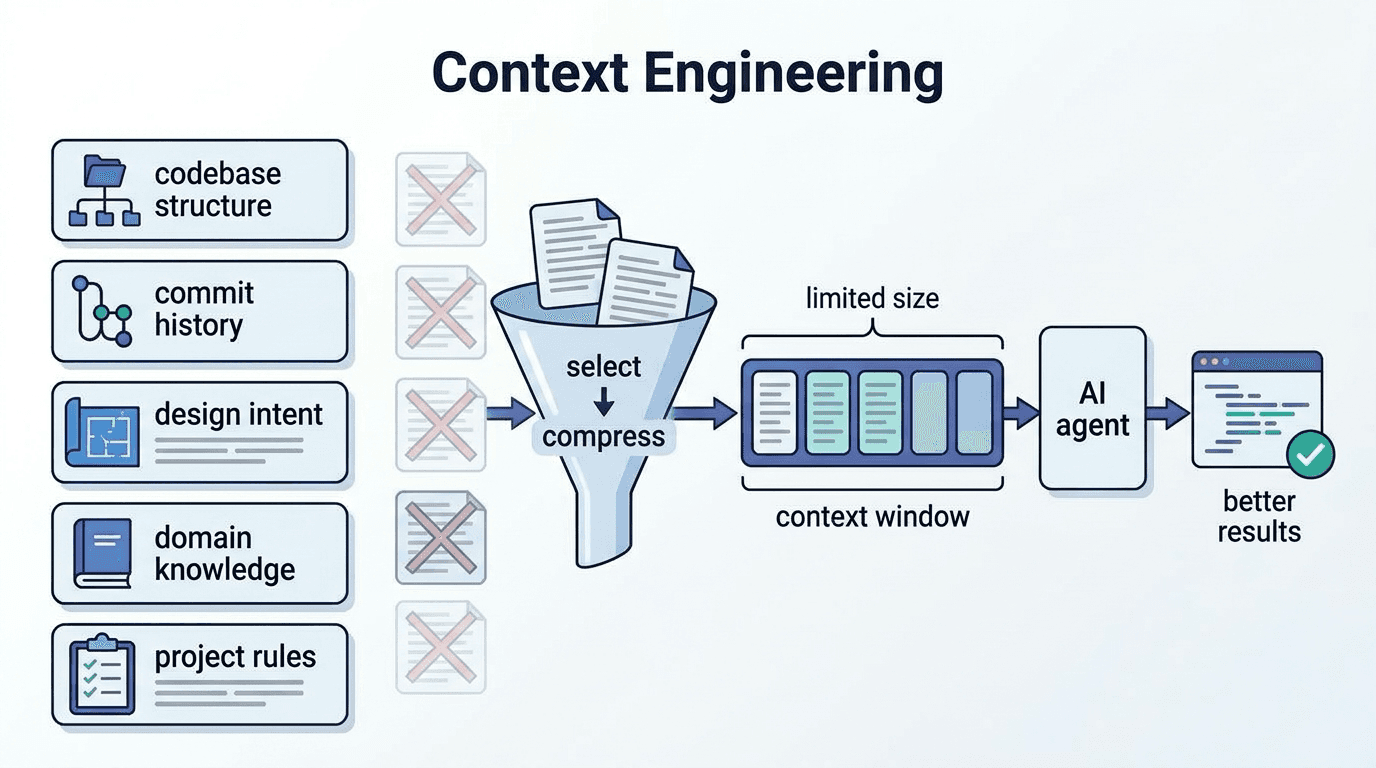
Context Engineering is a technical discipline focused on systematically designing and optimizing the context provided to AI models — including codebase structure, commit history, design intent, and domain knowledge.

A Dense Model is a neural network architecture in which all of the model's parameters are used for computation during inference. In contrast to MoE (Mixture of Experts), which activates only a subset of experts, a Dense Model always involves all weights in computation regardless of the input.

DevOps is a collective term for the culture and practices that integrate software development (Development) and operations (Operations), achieving both faster release cycles and improved quality through CI/CD pipelines and automation tools.

DevSecOps is an approach that integrates security measures into the DevOps pipeline from the outset, unifying the three domains of development, security, and operations.

Dynamic pricing is a pricing strategy that adjusts the prices of goods and services in real time based on variable factors such as demand, supply, competitive conditions, and time of day. While it has long been used in airline ticket and hotel room pricing, the spread of AI has expanded its adoption across a wide range of industries, including retail and food service.

E2E testing (End-to-End testing) is a testing methodology that simulates user interactions to drive requests through the entire system via a browser or API, verifying that the expected results are produced.

An architecture that runs AI inference on-device rather than in the cloud. It enables low latency, privacy protection, and offline operation.

Embedding is a technique that transforms unstructured data such as text, images, and audio into fixed-length numerical vectors while preserving semantic relationships.

The EU AI Act (EU Artificial Intelligence Act) is a comprehensive European Union regulation that establishes legal obligations based on the risk level of AI systems. It classifies AI into four tiers — "unacceptable risk," "high risk," "limited risk," and "minimal risk" — imposing stricter requirements as the risk level increases.

Fine-tuning refers to the process of providing additional training data to a pre-trained machine learning model in order to adapt it to a specific task or domain.

Functional testing (feature testing) is a testing method that verifies system behavior in terms of specific features or use cases. It covers a broader scope than unit testing, confirming that multiple modules work together correctly.

Gemini Embedding 2 is a multimodal embedding model developed by Google, capable of converting text, images, video, audio, and documents into a single vector space.

Gherkin notation is a structured format for describing software behavior in natural language using three steps: Given (precondition), When (action), and Then (outcome). It is widely used as the standard notation for .feature files read by the test automation tool Cucumber.

A GPU (Graphics Processing Unit) is a semiconductor chip that processes large volumes of parallel computations at high speed. Originally designed for rendering graphics, its parallel computing capabilities are well-suited for AI training and inference, making it an indispensable hardware component for LLM training and fine-tuning.

A next-generation RAG architecture that combines knowledge graphs and vector search, leveraging relationships between entities to improve retrieval accuracy.

A technique that cross-references LLM outputs with external data sources and search results to generate factually grounded responses. A core method for reducing hallucinations.

A safety mechanism that monitors LLM inputs and outputs to automatically detect and block harmful content, sensitive information leakage, and policy violations.

Hallucination refers to the phenomenon in which an AI model generates information that is not based on facts as if it were correct. It stems from the mechanism by which LLMs generate "plausible" text from patterns in training data, and is considered difficult to eliminate entirely.

HITL (Human-in-the-Loop) is an approach that incorporates into the design a process by which humans review, correct, and approve the outputs of AI systems. Rather than full automation, it establishes human intervention points based on the criticality of decisions, thereby ensuring accuracy and reliability.

Hybrid search is a technique that combines keyword-based full-text search (such as BM25) with vector search (semantic search), leveraging the strengths of both to improve retrieval accuracy.

Inference-time scaling is a technique that dynamically increases or decreases the amount of computation used during a model's inference phase, allocating more "thinking steps" to difficult problems while providing immediate answers to simpler ones.

A technique that transfers knowledge from a large teacher model to a small student model, creating a lightweight yet high-accuracy model.

A data model that represents entities and their relationships in a graph structure. It is used to improve the accuracy of RAG and AI search.

LLM (Large Language Model) is a general term for neural network models pre-trained on massive amounts of text data, containing billions to trillions of parameters, capable of understanding and generating natural language with high accuracy.

A local LLM refers to an operational model in which a large language model is run directly on one's own server or PC, without going through a cloud API.

LoRA (Low-Rank Adaptation) is a technique that inserts low-rank delta matrices into the weight matrices of large language models and trains only those deltas, enabling fine-tuning by adding approximately 0.1–1% of the total model parameters.

MCP (Model Context Protocol) is a standard protocol that enables AI agents to connect to external tools, databases, and APIs. It is an open standard developed by Anthropic and donated to the Linux Foundation's Agentic AI Foundation.

MLOps is a practice that automates and standardizes the entire lifecycle of machine learning model development, training, deployment, and monitoring, enabling the continuous operation of models in production environments.

MoE (Mixture of Experts) is an architecture that contains multiple "expert" subnetworks within a model, activating only a subset of them for each input, thereby increasing the total number of parameters while keeping inference costs low.

A multi-agent system is an architecture in which multiple AI agents divide roles and coordinate with each other to accomplish a shared objective.

Multi-step reasoning is a reasoning approach in which an LLM arrives at a final answer not through a single response generation, but by going through multiple intermediate steps, such as generating sub-questions, verifying partial answers, and retrieving additional information.

The N+1 query problem is a performance anti-pattern in which, after retrieving a list of records with a single query, the related data for each record is fetched individually, resulting in a total of N+1 database accesses.

n8n (nodemation) is an open-source automation platform that enables building workflow automations with a no-code/low-code approach.

NDVI (Normalized Difference Vegetation Index) is an index derived by normalizing the reflectance difference between the near-infrared band and the red band of satellite imagery, calculated as (NIR - Red) / (NIR + Red), and is used to quantitatively assess vegetation vigor and density.

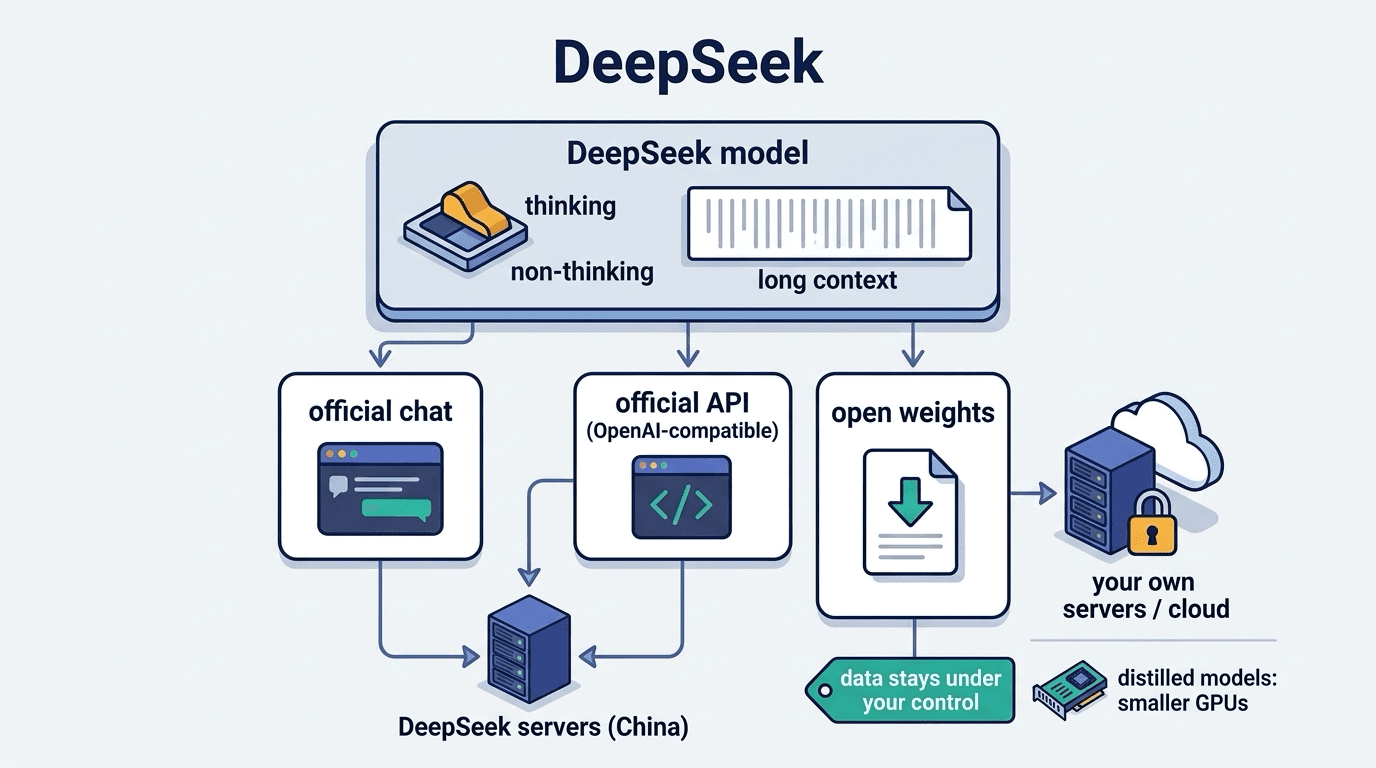
An open-weight model is a language model whose trained weights (parameters) are publicly released and can be freely downloaded for use in inference and fine-tuning.

OpenClaw is an open-source personal AI agent framework that runs in a local environment, featuring long-term memory, autonomous task execution, and self-generating skill capabilities, which surpassed 160,000 stars on GitHub in 2026.

OWASP (Open Worldwide Application Security Project) is an open community project dedicated to improving software security, widely known for its vulnerability risk ranking "OWASP Top 10."

PDPA (Personal Data Protection Act) is a law in Thailand that regulates the collection, use, storage, and transfer of personal data, serving as Thailand's equivalent of the EU's GDPR in terms of data protection legislation.

PEFT (Parameter-Efficient Fine-Tuning) is a collective term for fine-tuning methods that adapt a large language model to a specific task with minimal computational resources and data, by updating only a subset of the model's parameters rather than all of them.

PMF (Product-Market Fit) refers to a state in which a product accurately solves customer problems in a specific market, and sustainable demand is occurring organically.

PoC (Proof of Concept) is the process of verifying the feasibility of a new technology or idea on a small scale. It is conducted to identify risks before investing in full-scale development and to determine whether a given approach can achieve the intended objective.

Predictive maintenance is a method that uses AI to analyze sensor data and operation logs, predicting equipment failures in advance to enable planned maintenance.

A design approach that structurally eliminates the risk of personal data leakage by physically and logically isolating AI systems and data processing infrastructure. Typical examples include tenant separation and on-premises operation.

Prompt engineering is the practice of designing the structure, phrasing, and context of input text (prompts) in order to elicit desired outputs from LLMs (Large Language Models).

An attack technique that manipulates LLM behavior in unintended ways through malicious input. Classified as the top critical risk in the OWASP LLM Top 10.

QLoRA (Quantized LoRA) is a method that combines LoRA with 4-bit quantization, enabling fine-tuning of large language models even on consumer-grade GPUs.

An optimization technique that compresses model size by reducing parameter precision from 16-bit to 4-bit or similar, enabling inference with limited computational resources.

RAG (Retrieval-Augmented Generation) is a technique that improves the accuracy and currency of responses by retrieving relevant information from external knowledge sources and appending the results to the input of an LLM.

Remote Sensing is a general term for technologies that measure the reflection and emission of electromagnetic waves from satellites, aircraft, drones, and other sensor-equipped platforms without direct contact with the target, in order to acquire and analyze the conditions of the Earth's surface and atmosphere.

RLHF is a reinforcement learning method that uses human feedback as a reward, while RLVR is a reinforcement learning method that uses verifiable correct answers as a reward; both are used to align LLM outputs with human expectations.

RRF (Reciprocal Rank Fusion) is a scoring method that integrates ranking results returned by multiple retrieval methods. By summing the reciprocal ranks from each method, it enables the fusion of different scoring systems without normalization.

Sentinel-2 is an Earth observation satellite of the Copernicus program led by ESA (European Space Agency). It acquires multispectral imagery in 13 bands spanning the visible to shortwave infrared range at resolutions of 10–60 m, and continuously observes land areas with a revisit cycle of approximately 5 days. It is widely used for cropland and vegetation monitoring, land cover classification, and pre/post-disaster comparison, with data made fully open and freely available.

SLM (Small Language Model) is a general term for language models with a parameter count limited to approximately a few billion to ten billion, characterized by the ability to perform inference and fine-tuning with fewer computational resources compared to LLMs.

A Sparse Model is a general term for neural network architectures that activate only a subset of the model's parameters during inference, rather than all of them. A representative example is MoE (Mixture of Experts), which adopts a scaling strategy distinct from that of Dense Models — increasing the total parameter count while keeping inference costs low.

AWS Systems Manager (SSM) is an AWS managed service for centrally operating and managing EC2 instances and on-premises servers. It enables operational tasks such as patch application, command execution, parameter management, and inventory collection to be performed in a unified manner, without the need to connect to each server individually via SSH or RDP.

Training data generated by AI. It is used to supplement the lack of real data and to train and evaluate models while protecting privacy.

TDD (Test-Driven Development) is a development methodology in which tests are written before implementation code, repeating a short cycle of test failure (RED) → implementation (GREEN) → refactoring (Refactor).

A token is the smallest unit used by an LLM when processing text. It is not necessarily a whole word; it can include parts of words, symbols, and spaces — essentially the fragments resulting from splitting text based on the model's vocabulary.

Unit testing is a testing method that individually verifies the smallest units of a program, such as functions and methods. By replacing external dependencies with mocks, it allows for rapid validation of the target logic in isolation.

A vector database stores text, images, and other data as numerical vectors (embeddings) and provides fast search based on semantic similarity.

Vibe Coding is a general term for a development style in which developers communicate their intent in natural language and AI handles code generation and modification; it was selected as the "Word of the Year" for 2025.