ERP (Enterprise Resource Planning)

ERP (Enterprise Resource Planning) is an integrated business management system that centrally manages core operational data across functions such as finance, procurement, manufacturing, and human resources, supporting management decision-making.
ERP (Enterprise Resource Planning) is an integrated business management system that centralizes core operational data across finance, procurement, manufacturing, human resources, and other functions to support management decision-making. By consolidating data that was previously managed independently by each department onto a single platform, it enables real-time information sharing and cross-functional analysis.
The Background Behind ERP's Emergence
As companies—particularly in manufacturing—grew in scale, operations such as inventory management, accounting, and human resources came to be run on separate, independent systems for each department. The problems caused by this fragmentation were serious: "data silos," where the same data existed in multiple locations with no way to ensure consistency, and delays in inter-departmental communication that frequently impaired management decision-making.
ERP emerged as an answer to these challenges. In the evolutionary trajectory from Material Requirements Planning (MRP), which appeared in the 1960s–70s, to MRP II in the 1980s—which expanded scope to cover all manufacturing resources—Gartner coined the concept and term "ERP" in the early 1990s, after which it spread as the core system for businesses across all industries. In recent years, cloud-based ERP has become the mainstream, significantly lowering the barrier to adoption even for small and medium-sized enterprises.
Key Functions and Features of ERP
The reason ERP is called "integrated" lies in its design philosophy of connecting different business domains through a single database. The main functional modules are as follows.
- Financial & Accounting Management: Automates journal entries, financial closing, and cash flow management, and supports real-time visualization of KPIs (Key Performance Indicators)
- Procurement & Purchasing Management: Transaction history with suppliers, purchase order approval workflows, and automated inventory replenishment
- Manufacturing Management: Integrates production planning, process management, and quality control, and also serves as an integration platform for smart factories
- Human Resources & Payroll Management: Lifecycle management from hiring to retirement, and automation of attendance tracking and payroll calculation
- Sales & Customer Management: Order processing, shipping management, and sales forecasting
Because these modules share a common database, business chains such as "the moment an order is received, inventory is updated and manufacturing plans and procurement instructions are automatically generated" become possible.
Challenges Encountered During Implementation
Implementing ERP is a major management decision and carries the risk of failure. Common challenges can be summarized as follows.
First, there is the customization trap. Excessively customizing the system to match existing internal business workflows causes modification costs to balloon with every upgrade. The "fit-to-standard" approach—aligning business processes to ERP best practices rather than the other way around—becomes critically important.
Next is the complexity of data migration. Migrating data from legacy systems that have been in operation for many years carries the risk of inheriting low-quality master data. Without allocating sufficient effort to data cleansing before implementation, the system risks becoming a case of "garbage in, garbage out."
The difficulty of organizational change also cannot be ignored. Implementing ERP is not merely a system overhaul—it entails redesigning business processes themselves. Change management to overcome resistance from the field is just as important as, if not more important than, the technical implementation. Many companies also combine ERP migration with BPO (Business Process Outsourcing) to externalize non-core operations.
The Present: Accelerating Convergence of AI and ERP
In recent years, ERP vendors have been accelerating efforts to embed Generative AI into core systems. Features such as natural language data querying, automated anomaly detection, and higher-precision demand forecasting are increasingly becoming standard.
Integration with AI agents is also attracting attention. By leveraging structured data accumulated in ERP through RAG (Retrieval-Augmented Generation), a world is becoming reality in which executives can simply ask "What is the primary cause of rising manufacturing costs this quarter?" and receive analytical results spanning multiple modules. From an AI ROI (AI Return on Investment) perspective, the approach of leveraging existing ERP data assets with AI is considered highly cost-effective.
On the security front, ERP systems handling core business data are strongly recommended to apply AES-256 encryption and Zero Trust Network Access (ZTNA). Additionally, the risk of Shadow AI—where business departments use cloud services outside the oversight of the IT department—has become a threat that cannot be overlooked in ERP operations.
ERP has moved beyond its positioning as "a heavyweight system for large enterprises" and is evolving into an intelligent management platform integrated with AI. Its essence, however, remains unchanged: consolidating scattered data to accelerate decision-making across the entire organization.
Articles covering this term
- What Is AI Cross-Supply Chain Integration? A Design Approach to Breaking Down Silos and Achieving ROIDiscover how to design AI integration architecture across manufacturing, procurement, and logistics data silos—and solve the data quality issues blocking ROI for 89% of companies.
- What Is an AI Data Readiness Audit? How to Assess Your Internal Data Before Implementing Agentic AIMost AI agent failures stem from data, not models. Learn how to run a data readiness audit—evaluating quality, accessibility, and structure of internal data.
- How to Automate B2B Procurement with AI Agents — A Step-by-Step Guide to Autonomous Supplier Selection and PO Issuance for Thai ManufacturingA practical guide for Thai manufacturers to design & operate AI agents that autonomously handle RFQ-to-PO workflows, as B2B transactions shift to AI agents. Covers HITL & audit log design.
- AI Consulting in Bangkok: How to Choose a Partner in ThailandWhy Bangkok is a growing AI consulting hub, common AI challenges in Thailand, how to compare global, local and hybrid firms, plus an ERP transformation case study.


Related Terms
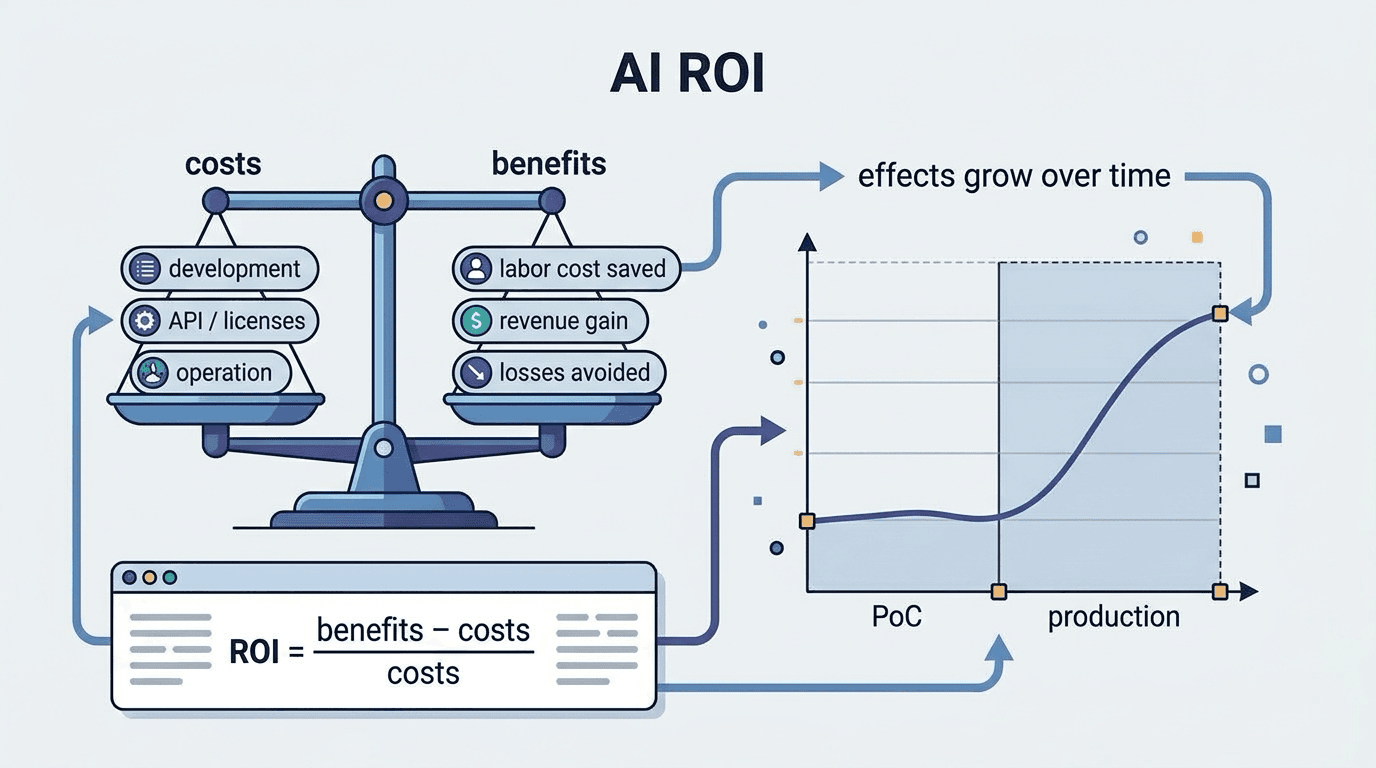
AI ROI (Return on Investment in AI)
AI ROI is a metric that quantitatively measures the effects obtained — such as operational efficienc

AI Observability
An operational practice of continuously monitoring and visualizing the inputs/outputs, latency, cost
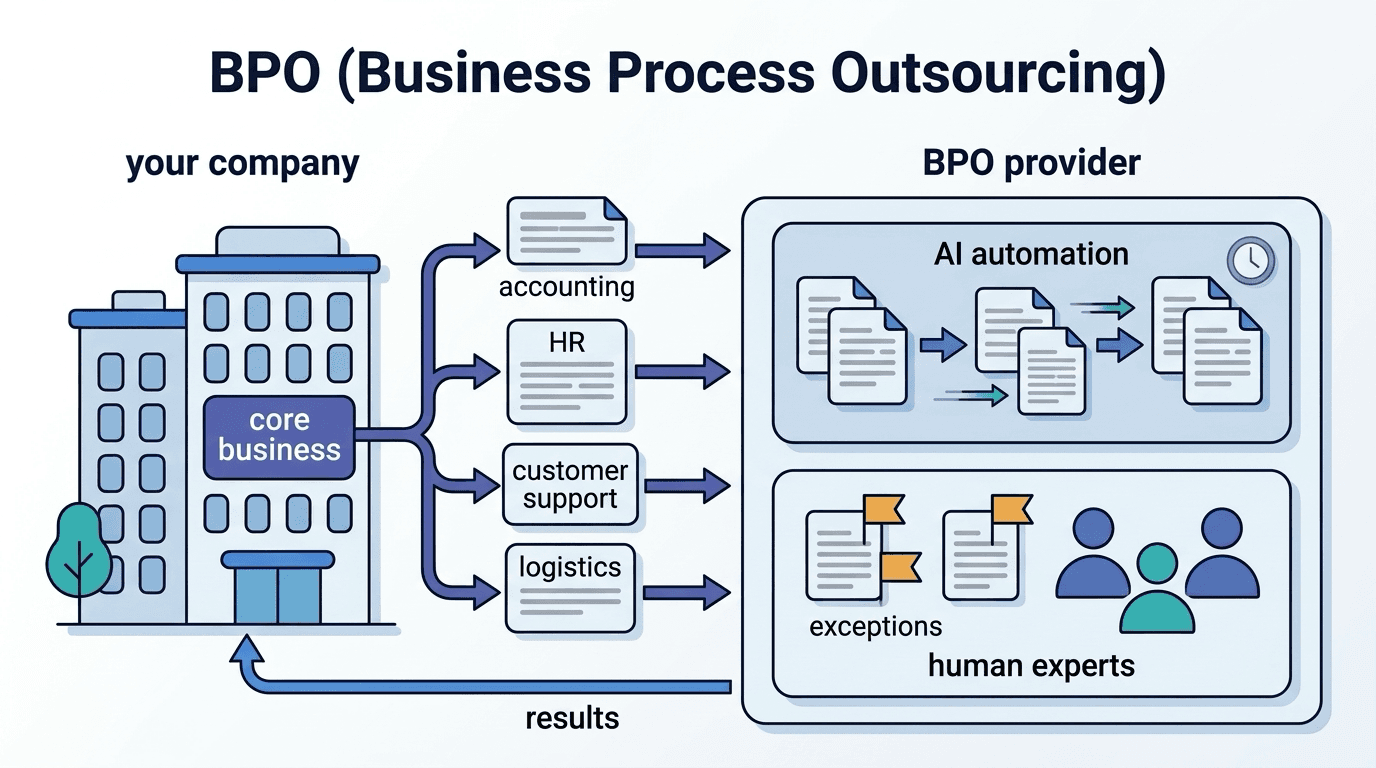
BPO (Business Process Outsourcing)
BPO refers to a form of outsourcing in which a company delegates specific business processes to an e

Demand Forecasting AI
Demand forecasting AI refers to a system that analyzes historical sales data and external factors us