A2A (Agent-to-Agent Protocol)
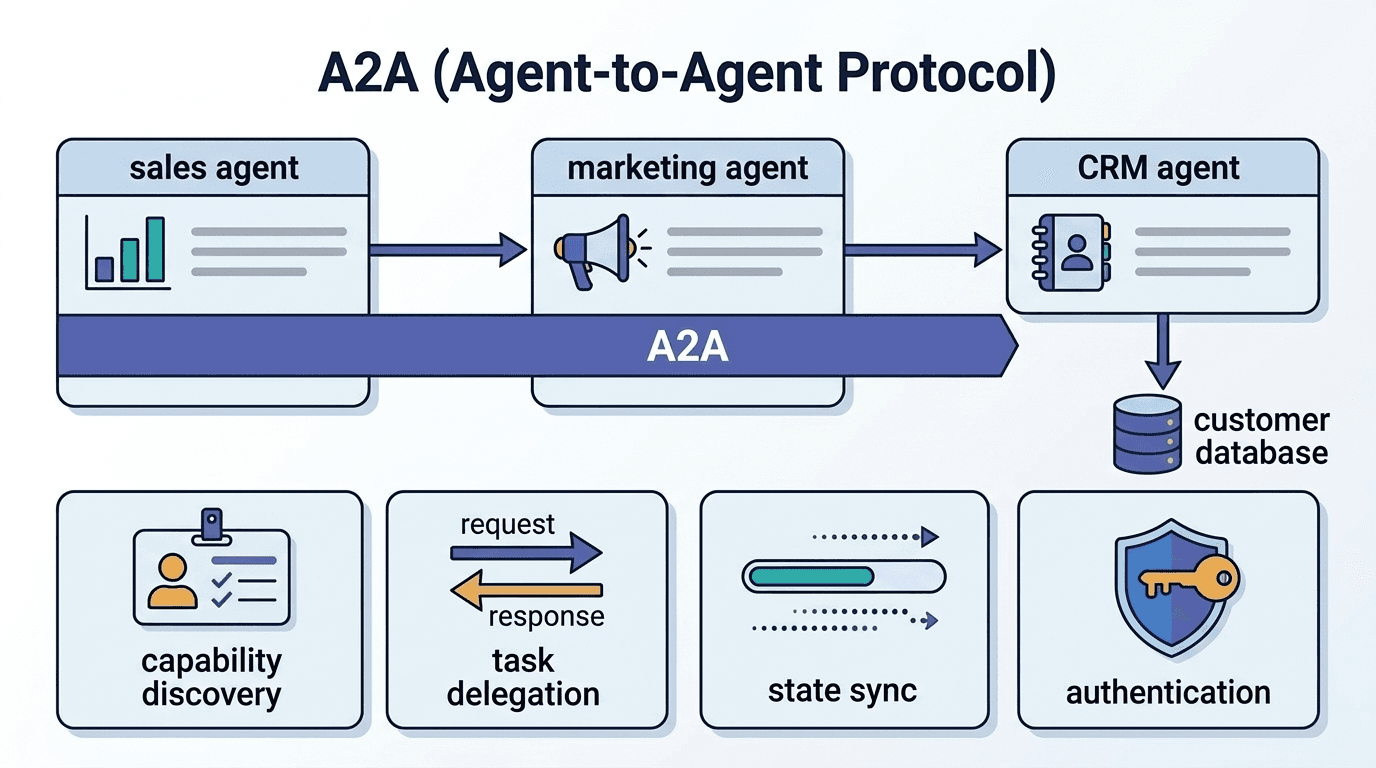
A2A (Agent-to-Agent Protocol) is a communication protocol that enables different AI agents to perform capability discovery, task delegation, and state synchronization, published by Google in April 2025.
If MCP is a protocol that "connects agents and tools," then A2A is a protocol that "connects agents with each other."
A practical scenario makes this easier to understand. A sales support agent analyzes prospective customers, passes the results to a marketing agent to design an optimal campaign, and then a CRM agent updates the customer database — the A2A specification is what enables this kind of multi-agent coordination.
A2A defines four main functional areas:
Capability Discovery: A mechanism by which each agent publishes metadata about "what it can do," allowing other agents to search and reference that information.
Task Delegation: The request/response format used when one agent assigns a task to another agent.
State Synchronization: A streaming mechanism for sharing the progress and intermediate results of long-running tasks in real time.
Authentication and Authorization: A security layer that establishes trust relationships between agents and prevents unauthorized access.
In February 2026, NIST announced the AI Agent Standards Initiative, marking the beginning of full-scale standardization efforts based on A2A and MCP. As multi-agent systems move into practical use, the importance of A2A will only continue to grow.
Articles covering this term
- What Are AI Agent Protocols (MCP & A2A)? How Multi-Agent Collaboration WorksLearn how AI agent protocols like MCP and A2A work. A foundational guide to tool integration and inter-agent communication design in multi-agent systems.
- AI Agents from Pilot to Production: 5 Barriers and FixesThe 5 barriers that stop AI agents from moving from pilot to production, with practical steps for quality control, system integration, governance and ROI.
- What is Agentic Commerce? Preparing for the B2B Era Where AI Agents Make PurchasesLearn how "agentic commerce"—where AI agents autonomously buy and transact—works, and the key practices B2B companies need for sales and marketing success.
- What is Multi-Agent AI? From Design Patterns to Implementation and Operational Best PracticesTackle complex tasks beyond a single AI agent using multi-agent architecture. Explore 4 key patterns—Planner, Executor, Critic & Verifier—with design principles and practical tips.


Related Terms
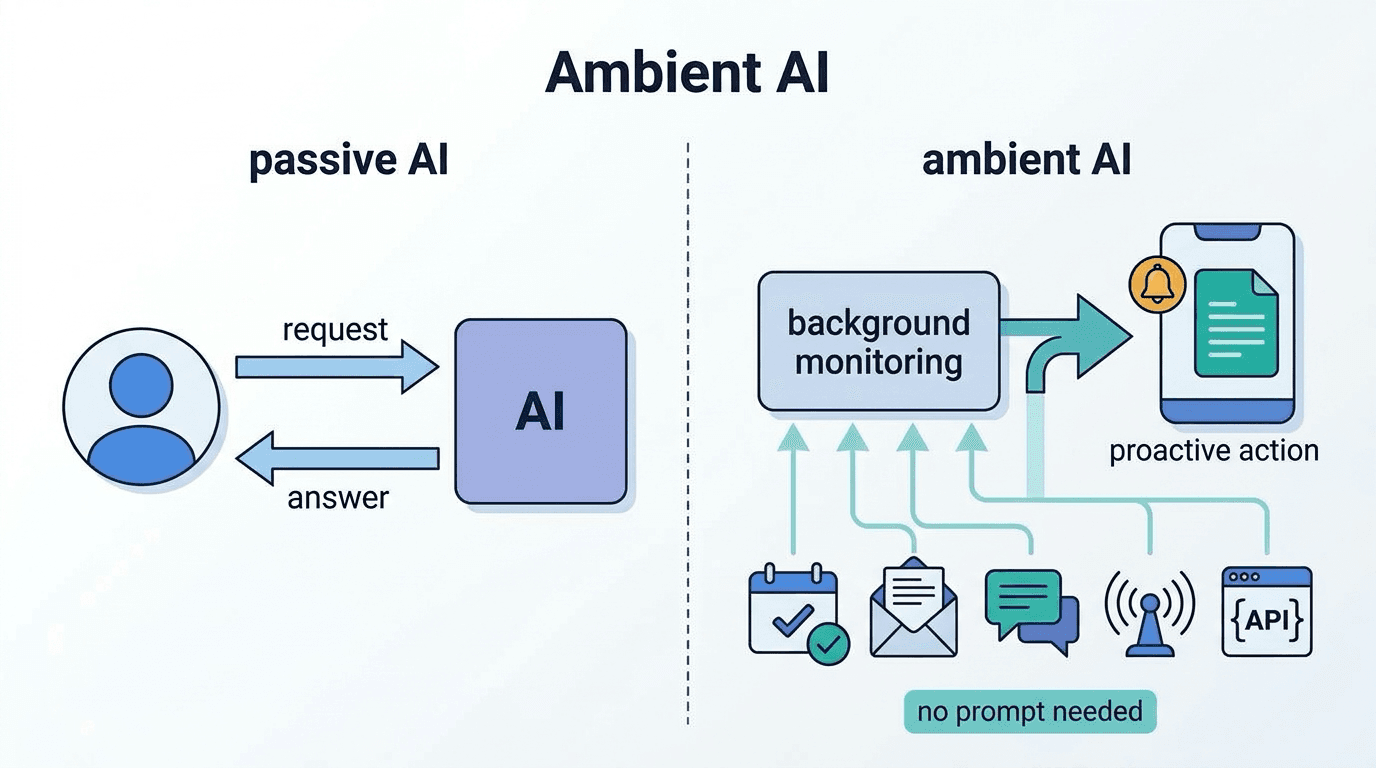
Ambient AI
Ambient AI refers to an AI system that is seamlessly embedded in the user's environment, continuousl
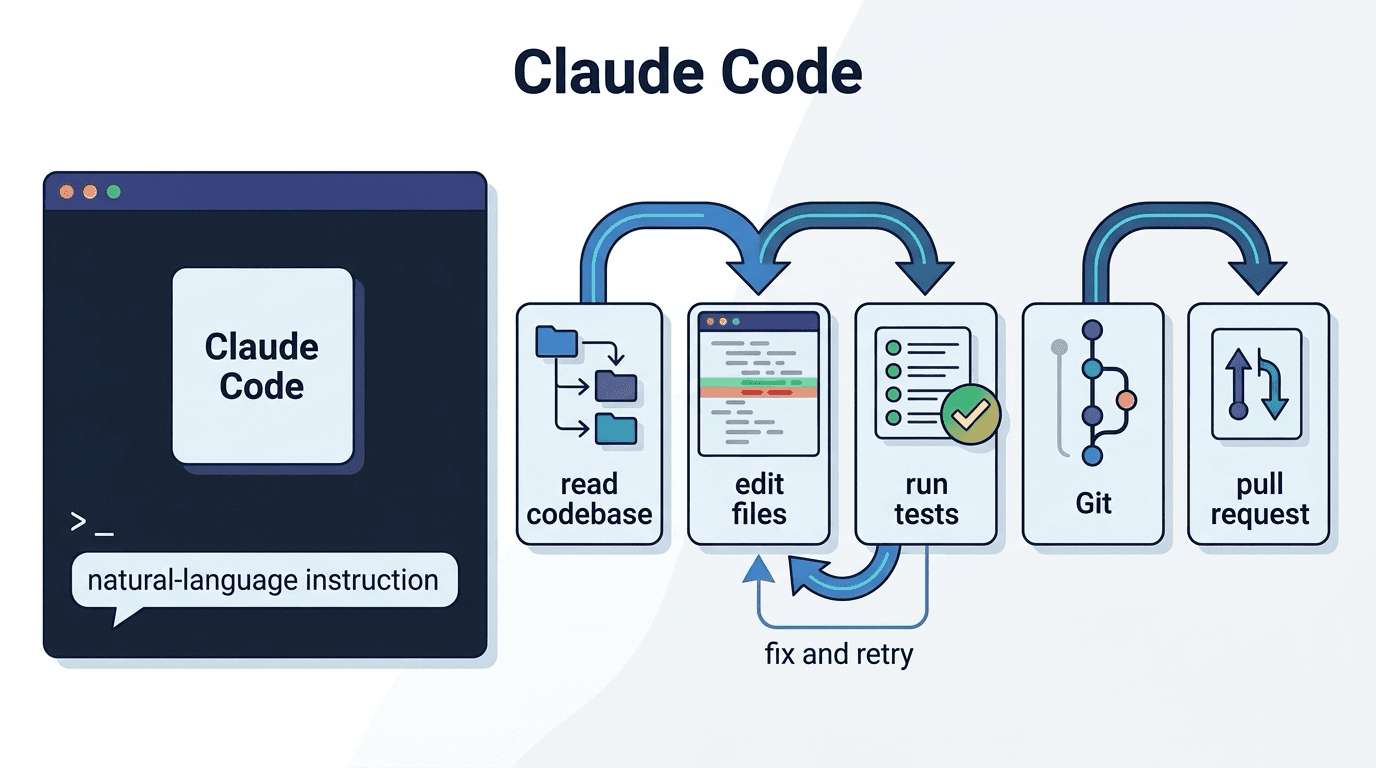
Claude Code
Claude Code is a terminal-resident AI coding agent developed by Anthropic. It is a CLI tool that ena
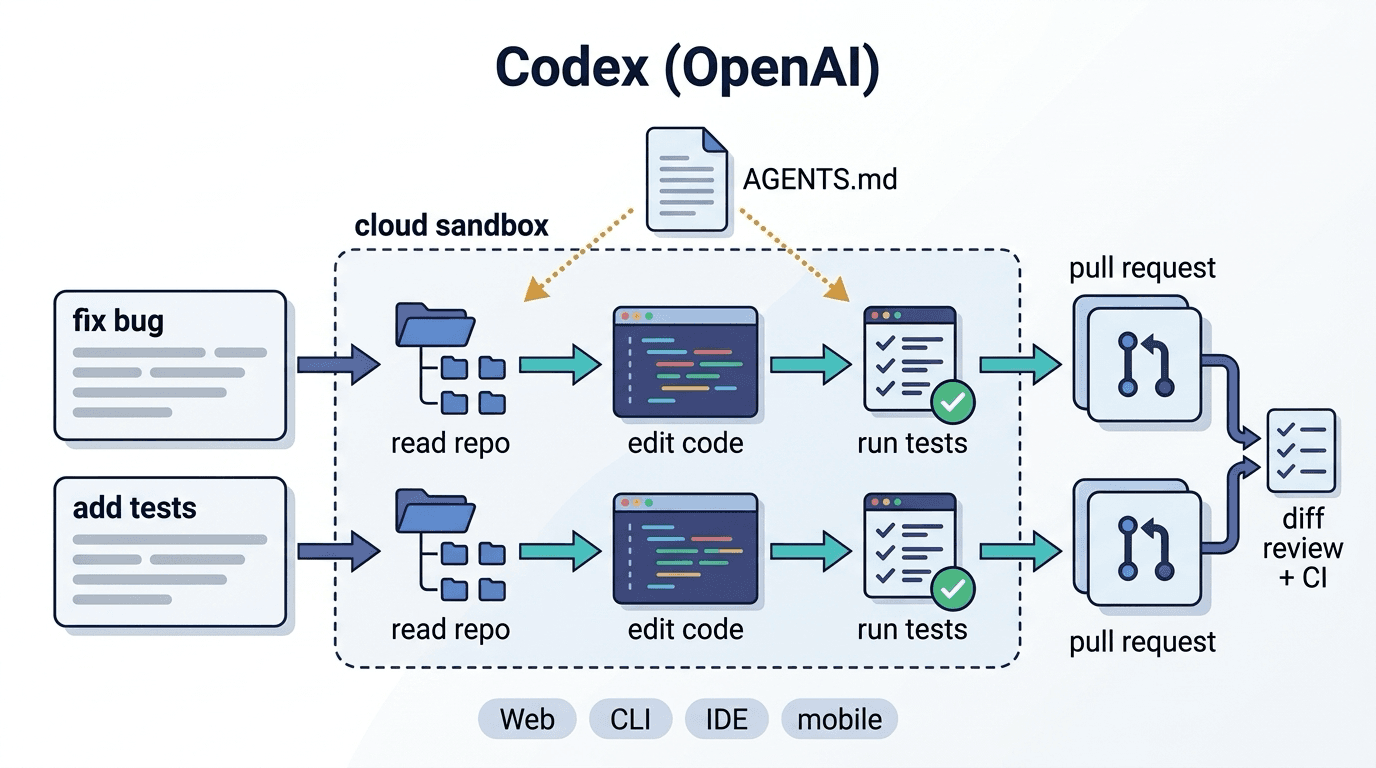
Codex (OpenAI)
Codex is OpenAI's AI coding agent. It reads a repository and carries a task through implementation,
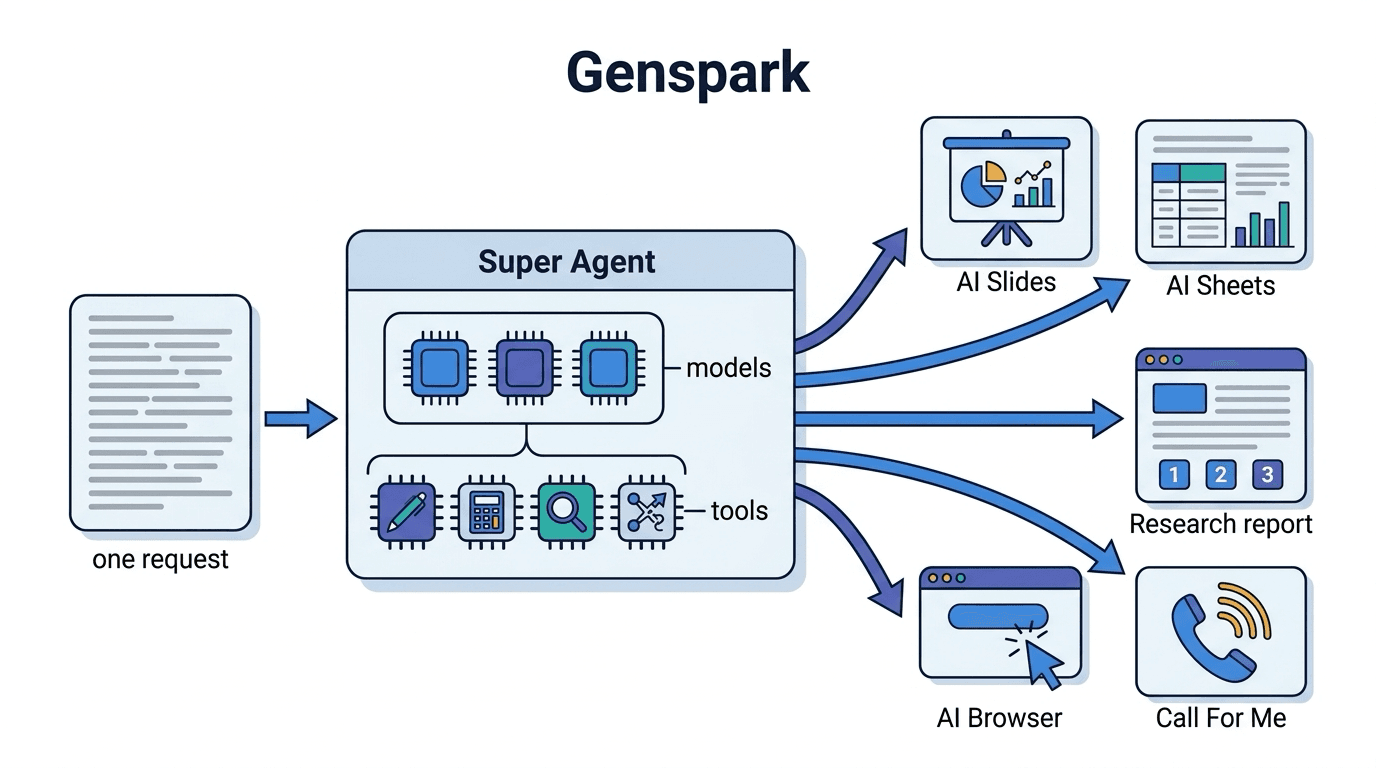
Genspark
Genspark is an AI workspace in which AI agents take on research, slide and spreadsheet creation, and