BPO (Business Process Outsourcing)
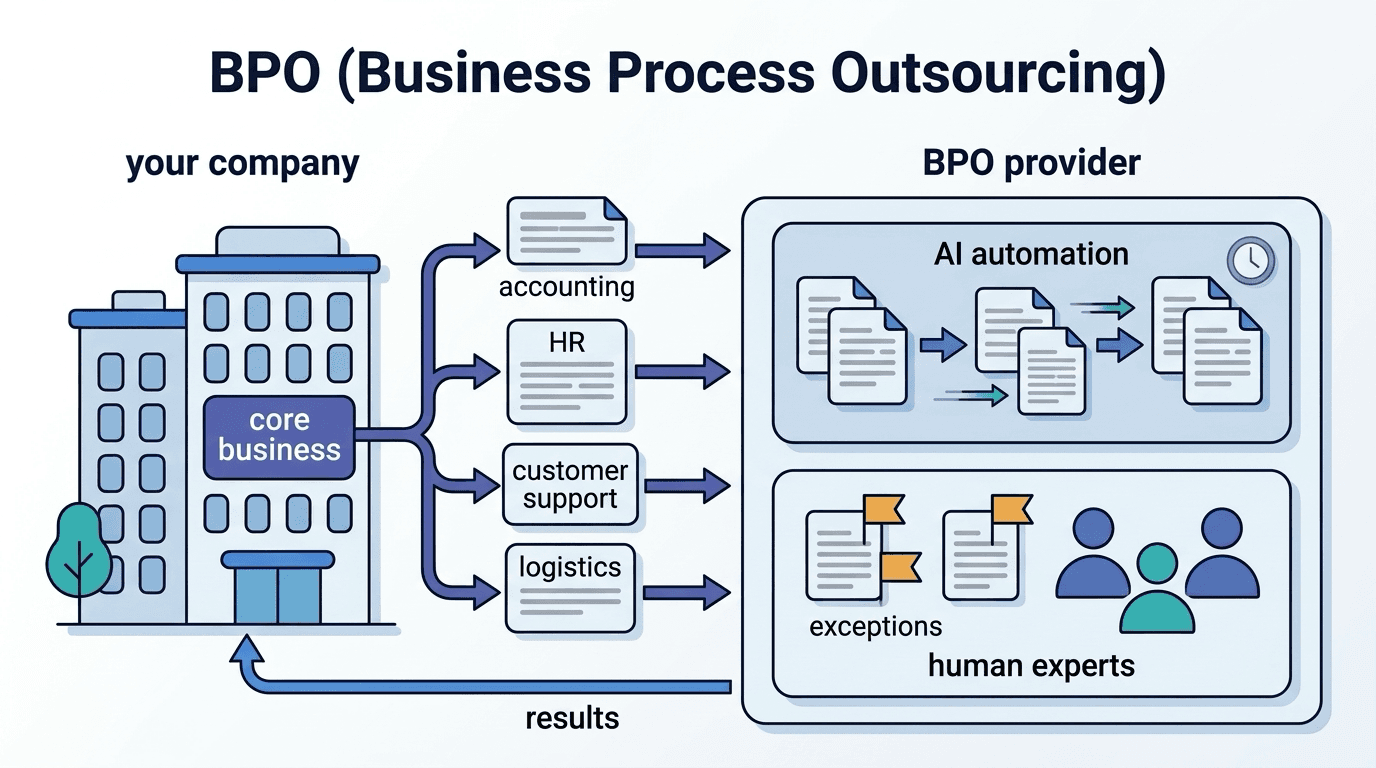
BPO refers to a form of outsourcing in which a company delegates specific business processes to an external specialized vendor. AI Hybrid BPO, which combines BPO with automation leveraging AI, has been attracting significant attention in recent years.
BPO (Business Process Outsourcing) is a form of outsourcing in which a company delegates specific business processes to external specialized vendors. It covers a wide range of areas, from back-office operations such as accounting, human resources, and customer support, to marketing operations, procurement, and logistics management.
Background to the Spread of BPO
Focusing on core competencies is essential for companies to maintain a competitive advantage. However, as organizations grow, ancillary operations expand, placing pressure on human resources, costs, and management workload. BPO has gradually evolved as a structural solution to this challenge, developing in parallel with the broader spread of outsourcing in the manufacturing sector.
In recent years, BPO has come to be positioned not merely as a means of cost reduction, but as a strategic partnership through which companies source specialized expertise, technology, and scalability from external providers.
The Emerging Trend of AI Hybrid BPO
The most noteworthy trend in the evolution of BPO is its convergence with AI. Traditional BPO centered on manual processing, but with the growing practical adoption of LLMs (Large Language Models) and AI agents, "AI Hybrid BPO" — which combines an automation layer with a human judgment layer — is on the rise.
In practice, this typically involves the following structure:
- Automation layer: AI handles data entry, classification, templated responses, and similar tasks
- Monitoring and correction layer: Humans review AI outputs to ensure quality (based on the concept of HITL (Human-in-the-Loop))
- Exception handling layer: Specialized staff manage complex or high-risk decisions
This structure is closely related to the framework of In the Loop, On the Loop, and Outside the Loop, which describes the degree of human involvement. Determining how much human oversight to incorporate into each process is a core design decision in BPO.
Key Application Areas
The following are representative areas where BPO is commonly applied:
- Customer support: A combination of first-line responses via AI chatbots and human escalation
- Document processing and data entry: Structuring unstructured data using OCR and LLMs
- Compliance and screening: Separating automated risk scoring from final human judgment
- IT service management: Automated generation of incident classifications and response recommendations
Key Considerations When Implementing BPO
There are several issues that tend to be overlooked when implementing BPO.
Information security and data governance are among the most critical concerns. Since confidential information is passed to the vendor, it is essential to verify in advance whether encryption such as AES-256 and an AI governance framework are in place. Compliance with regional regulations — such as the PDPA (Personal Data Protection Act, Thailand) and the EU AI Act — is also a point that warrants careful scrutiny.
Vendor lock-in risk is another factor that cannot be ignored. Excessive dependence on a specific vendor can make it difficult to transfer operations when a contract ends. It is important to clearly document the scope of delegation, KPIs, and quality standards, and to establish a mechanism for ongoing evaluation from the perspective of AI ROI (AI Return on Investment).
In addition, the issue of Shadow AI deserves consideration. Cases in which vendor staff use unauthorized AI tools in their work are increasing, potentially leading to information leakage risks and inconsistencies in quality.
BPO is not simply an act of "outsourcing." Its true value is realized when it is approached as an opportunity to holistically reassess one's own operational design, technology strategy, and risk management.
Articles covering this term
- What is AI Hybrid BPO? Next-Generation Outsourcing Strategy Achieved Through Optimal Human-AI CollaborationAI Hybrid BPO combines automated AI processing with human expertise for next-gen outsourcing. Learn key differences from traditional BPO, implementation steps, failure patterns, and real case studies.
- What is Service as Software (SaS)? Why SaaS Delivery Models and Pricing Strategies Are Changing in the AI EraService as Software (SaS) is a new model where AI agents autonomously execute tasks, billed by outcomes. Learn how it differs from SaaS and key adoption criteria.
- What Are AI Agents? A Next-Generation AI Utilization Guide for Thai Businesses to Autonomously Automate OperationsLearn how AI agents work and how Thai businesses can use them. Discover differences from chatbots, implementation steps, and real use cases.
- How to Automate B2B Procurement with AI Agents — A Step-by-Step Guide to Autonomous Supplier Selection and PO Issuance for Thai ManufacturingA practical guide for Thai manufacturers to design & operate AI agents that autonomously handle RFQ-to-PO workflows, as B2B transactions shift to AI agents. Covers HITL & audit log design.


Related Terms
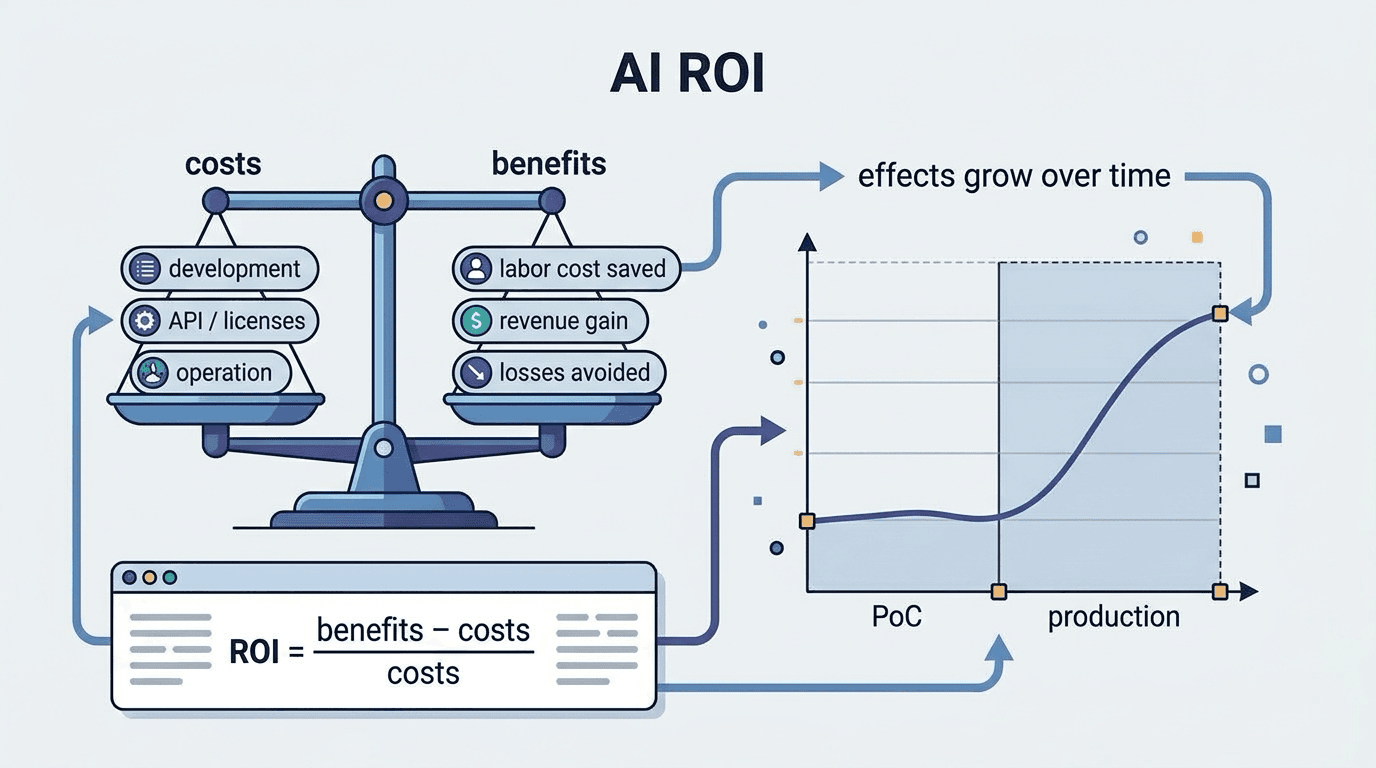
AI ROI (Return on Investment in AI)
AI ROI is a metric that quantitatively measures the effects obtained — such as operational efficienc

AI Observability
An operational practice of continuously monitoring and visualizing the inputs/outputs, latency, cost

Demand Forecasting AI
Demand forecasting AI refers to a system that analyzes historical sales data and external factors us

ERP (Enterprise Resource Planning)
ERP (Enterprise Resource Planning) is an integrated business management system that centrally manage