AI Observability

An operational practice of continuously monitoring and visualizing the inputs/outputs, latency, cost, and quality of AI systems in production. Essential for early detection of hallucinations and drift.
AI Observability refers to the operational practice of continuously monitoring and visualizing the inputs/outputs, latency, costs, and quality of AI systems in production. It enables early detection of hallucinations and responses to model drift, making it an indispensable foundation for operating AI systems safely and stably.
Why Observability Is Needed Now
Traditional software monitoring targeted relatively clear-cut metrics such as error logs and response times. However, in systems incorporating generative AI or LLMs, outputs differ with every request even for identical inputs, and the very definition of a "correct answer" becomes ambiguous. This is a fundamental difference from conventional monitoring approaches.
Furthermore, in compound AI systems where multiple components are chained together—such as RAG and multi-agent systems—it is difficult to pinpoint at which stage quality degradation occurred. Observability has rapidly grown in importance in recent years as the method for directly confronting this "opacity inherent to AI systems."
The Four Dimensions to Monitor
The scope of AI Observability can be broadly organized into the following four areas:
- Input/output quality: Recording prompt-and-response pairs to detect hallucinations, harmful content, and policy violations
- Latency and throughput: Measuring token generation speed and response times to catch early signs of SLA violations
- Cost: Tracking token consumption per API call to support AI ROI calculations and prevent budget overruns
- Drift detection: Continuously detecting shifts in the distribution of input data and changes in model behavior
These do not function independently—they are interrelated. For example, when latency spikes sharply, determining whether the cause is bloated context windows or backend load requires analysis that combines multiple metrics.
Relationship to MLOps and Integration into Operations
AI Observability sits as an extension of MLOps, but is a concept more specifically focused on production operations. While MLOps covers the entire pipeline of model training and deployment, Observability focuses on continuous monitoring after deployment.
Applying the shift-left philosophy, it is ideal to embed quality evaluation mechanisms from the development stage onward. Rather than reacting after problems surface in production, combining Observability with guardrails can suppress the occurrence of problems in the first place.
Integration with HITL (Human-in-the-Loop) is also an important design consideration. Having a mechanism that automatically routes detected anomalies to a human review queue enhances the practical effectiveness of AI governance.
Points to Note During Implementation
One aspect often overlooked when implementing Observability is the trade-off with privacy. The more detailed the logging of inputs and outputs, the higher the monitoring accuracy—but storing data that may contain personal or confidential information without restriction poses compliance risks. As noted in the context of shadow AI, the scope of log collection and retention periods must be defined under a clear policy.
Moreover, with Agentic AI that iteratively improves autonomously—such as the agentic flywheel—the behavioral space being monitored expands dynamically, meaning static, rule-based monitoring alone may not keep pace. It is important to understand that AI Observability is not something you implement once and leave alone, but rather something that must be continuously revisited as the system evolves.
Articles covering this term
- What is AI Observability? A Practical Guide to Monitoring LLMs in ProductionFrom AI observability basics to tracing, evaluation, and cost management for production LLM apps—learn key implementation steps and tool selection tips.
- AI Governance for Small Teams: Scalable AI Governance for Small and Medium-Sized BusinessesLightweight AI governance frameworks & checklists for SMEs and startups to practically adopt enterprise-grade AI standards—even with limited resources.
- Implementing AI Observability: Integration with Existing Application Monitoring and Phased AdoptionImplementation steps for integrating AI Observability into existing application monitoring infrastructure. Covers data pipeline setup, phased adoption strategies, and legacy system coexistence.
- AI Observability for Startups: 3 Key Metrics to Monitor FirstAI Observability guide for startups: the 3 key metrics to monitor first under resource constraints, minimal tool setup, and a phased scaling roadmap with implementation examples.


Related Terms
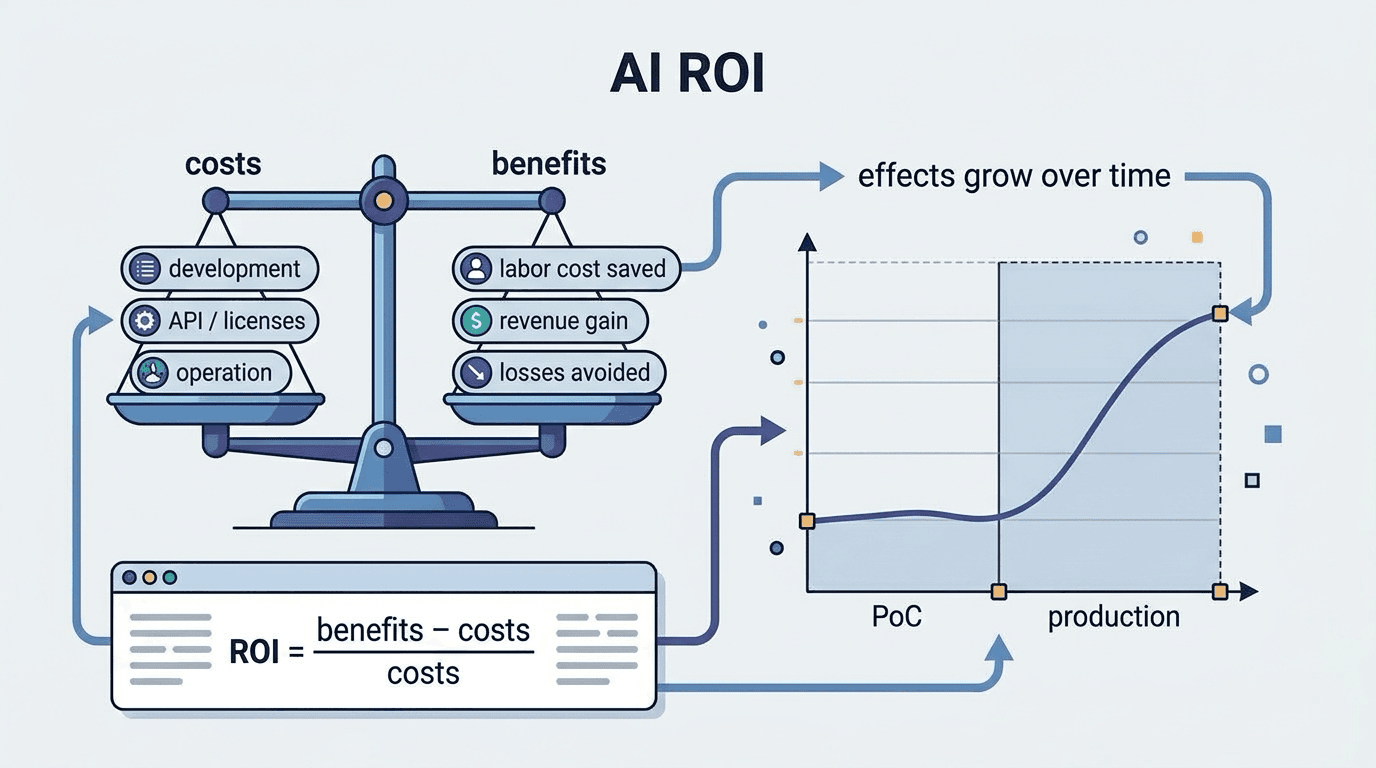
AI ROI (Return on Investment in AI)
AI ROI is a metric that quantitatively measures the effects obtained — such as operational efficienc
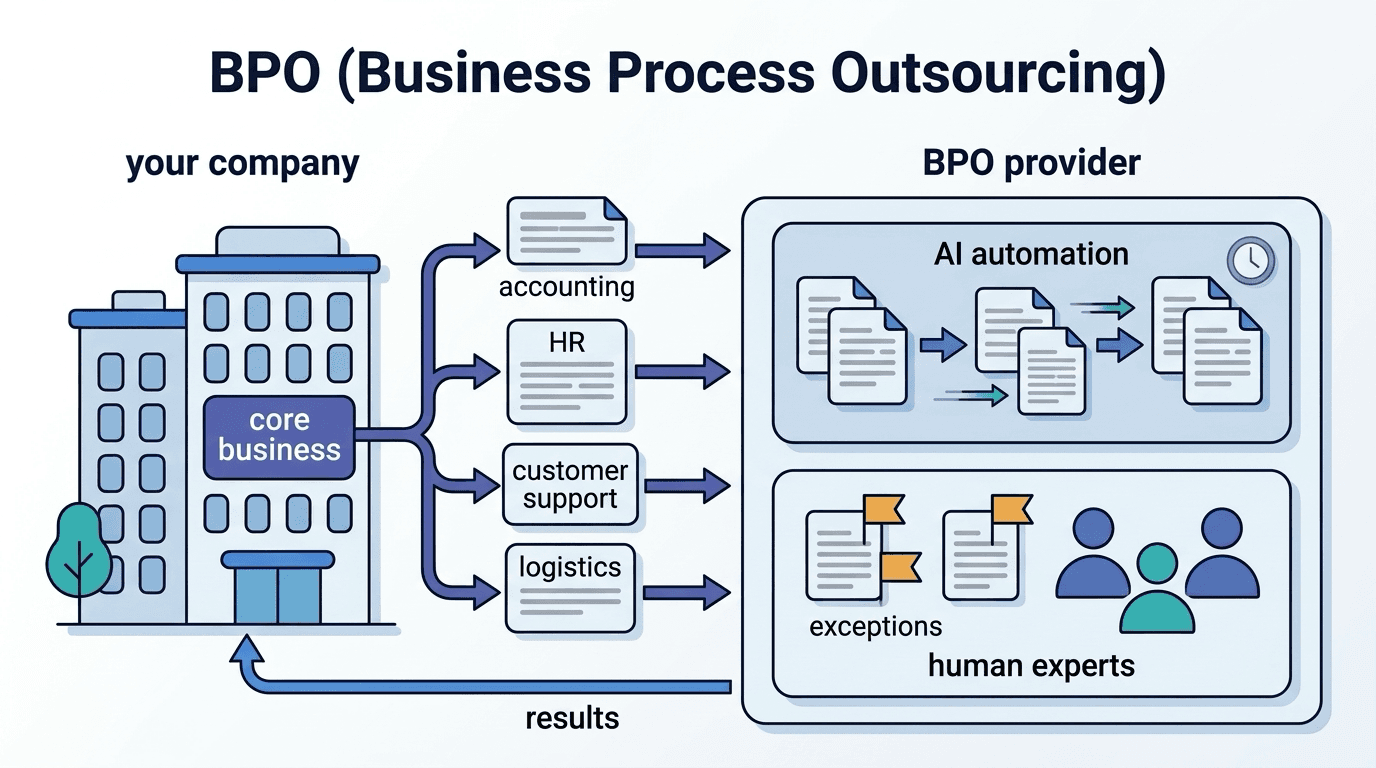
BPO (Business Process Outsourcing)
BPO refers to a form of outsourcing in which a company delegates specific business processes to an e

Demand Forecasting AI
Demand forecasting AI refers to a system that analyzes historical sales data and external factors us

ERP (Enterprise Resource Planning)
ERP (Enterprise Resource Planning) is an integrated business management system that centrally manage