LLM (Large Language Model)
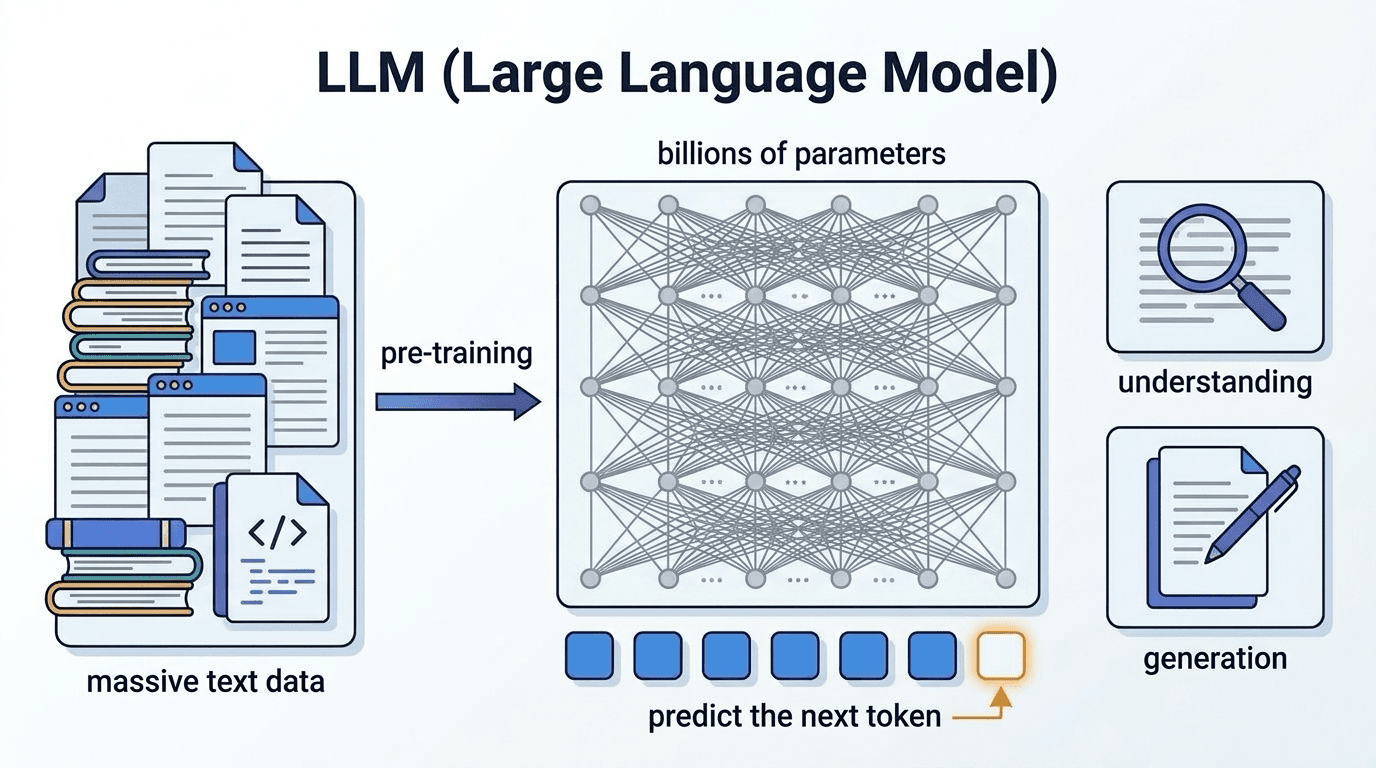
LLM (Large Language Model) is a general term for neural network models pre-trained on massive amounts of text data, containing billions to trillions of parameters, capable of understanding and generating natural language with high accuracy.
Since the public release of ChatGPT in November 2022, the term LLM has spread not only among engineers but to the general public as well. However, the essence conveyed by the name "large language model" is simple: it is nothing more than "a model trained by feeding it large amounts of text and repeatedly having it predict the next word." What makes LLMs fascinating is that this straightforward learning objective gives rise to a diverse range of emergent capabilities—translation, summarization, code generation, reasoning, and more—while at the same time, theoretical understanding has yet to fully catch up.
To give a concrete sense of scale: GPT-3 has 175 billion parameters (2020), Llama 3 has 70 billion parameters (2024), and GPT-4, though undisclosed, is estimated to exceed 1 trillion. While there is a general tendency for models to become more capable as parameter count increases, the fact that Llama 3 70B outperforms GPT-3 175B on many benchmarks demonstrates that the quality of training data and improvements in architecture are equally, if not more, important.
There are three main routes for using LLMs in practice.
The first is via API. This involves calling models from OpenAI or Anthropic directly. It is the most straightforward approach, but the challenges lie in the fact that data is sent to external parties and in managing costs under a pay-as-you-go pricing model.
The second is combining with RAG. By retrieving internal documents and passing them to the LLM, this approach leverages internal knowledge while suppressing hallucinations (outputs that differ from the facts). Since the model itself is not modified, the barrier to adoption is low.
The third is fine-tuning. This involves adjusting the model's behavior using proprietary data. It is effective when consistency in response tone or accurate use of industry-specific terminology is required, but it necessitates preparing training data and incurring GPU costs.
Which route to choose depends on "what problem you are trying to solve," and cases where all three are used in combination are becoming increasingly common.
Articles covering this term
- Local LLM / SLM Deployment Comparison — AI Utilization Without Cloud API DependencyCompare open-weight models like GPT OSS, Phi-4, and Llama 4 Scout against cloud APIs on GPU requirements, task accuracy, and TCO. A local AI deployment guide for data sovereignty and cost optimization.
- What Are Liquid Neural Networks? Next-Generation AI Inference with Dynamic BehaviorLearn how LNNs dynamically adapt time-constants during inference, how they differ from traditional models, and their edge AI potential—all while keeping trained weights fixed.
- LLM Cost Optimization Guide — Token Reduction, Model Selection, and Cache ImplementationPractical guide to cutting LLM production costs. Learn 4 pillars—token optimization, model selection, prompt caching & RAG design—to halve monthly costs without sacrificing accuracy.
- What is AI Observability? A Practical Guide to Monitoring LLMs in ProductionFrom AI observability basics to tracing, evaluation, and cost management for production LLM apps—learn key implementation steps and tool selection tips.


Related Terms
AI Checker (AI-generated text detector)
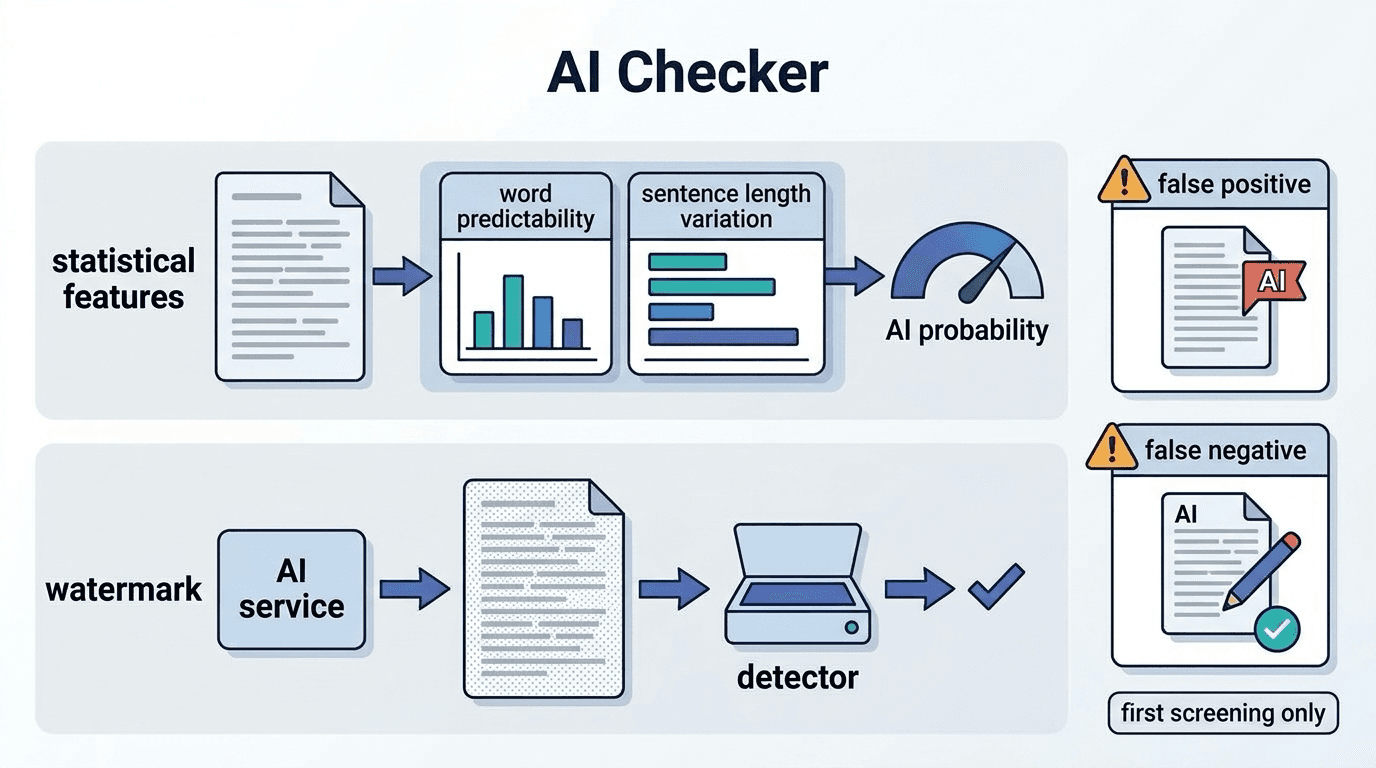
An AI checker is a tool that estimates whether a piece of writing was generated by AI, mainly from s
AI Mode (Google AI Mode)
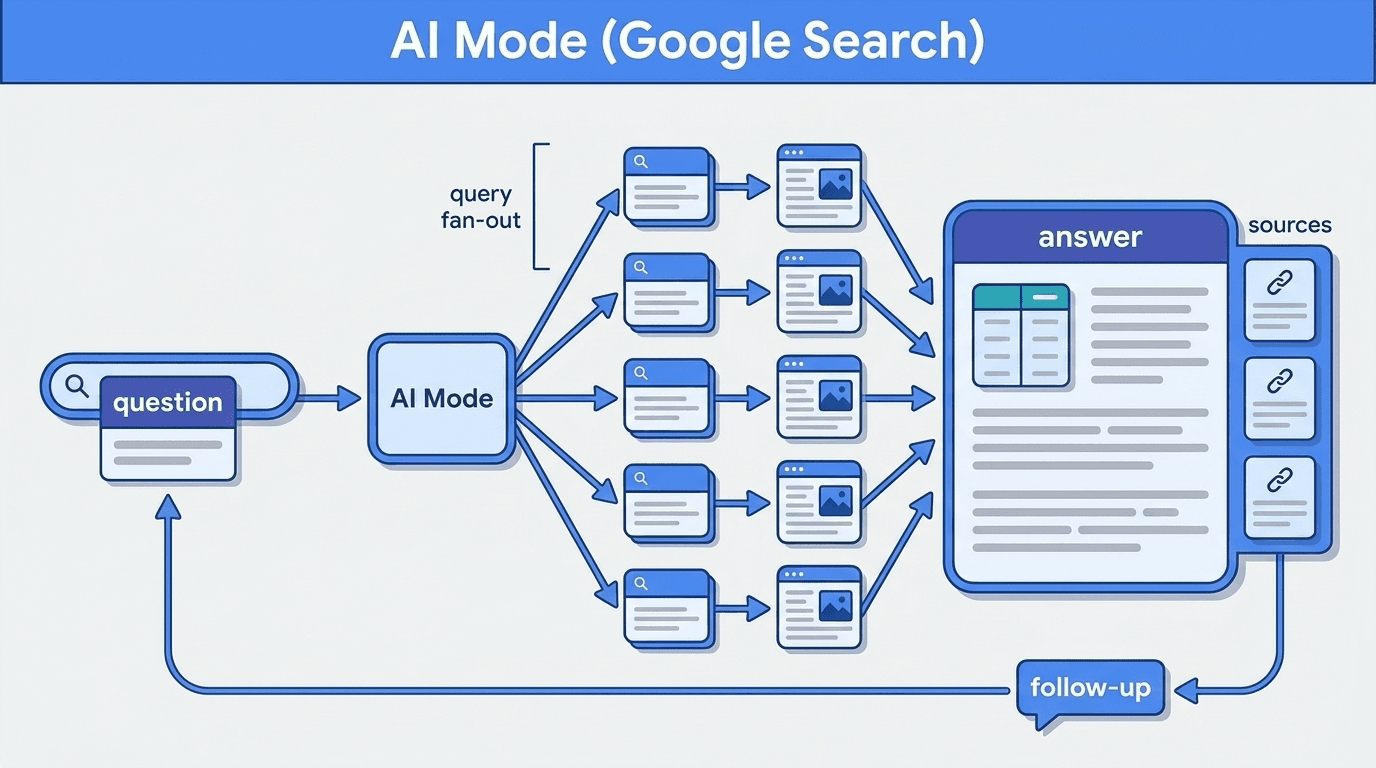
AI Mode is a generative AI search mode built into Google Search that answers questions conversationa

Context Window
A context window refers to the maximum number of tokens an LLM can process at one time, indicating t
DeepSeek
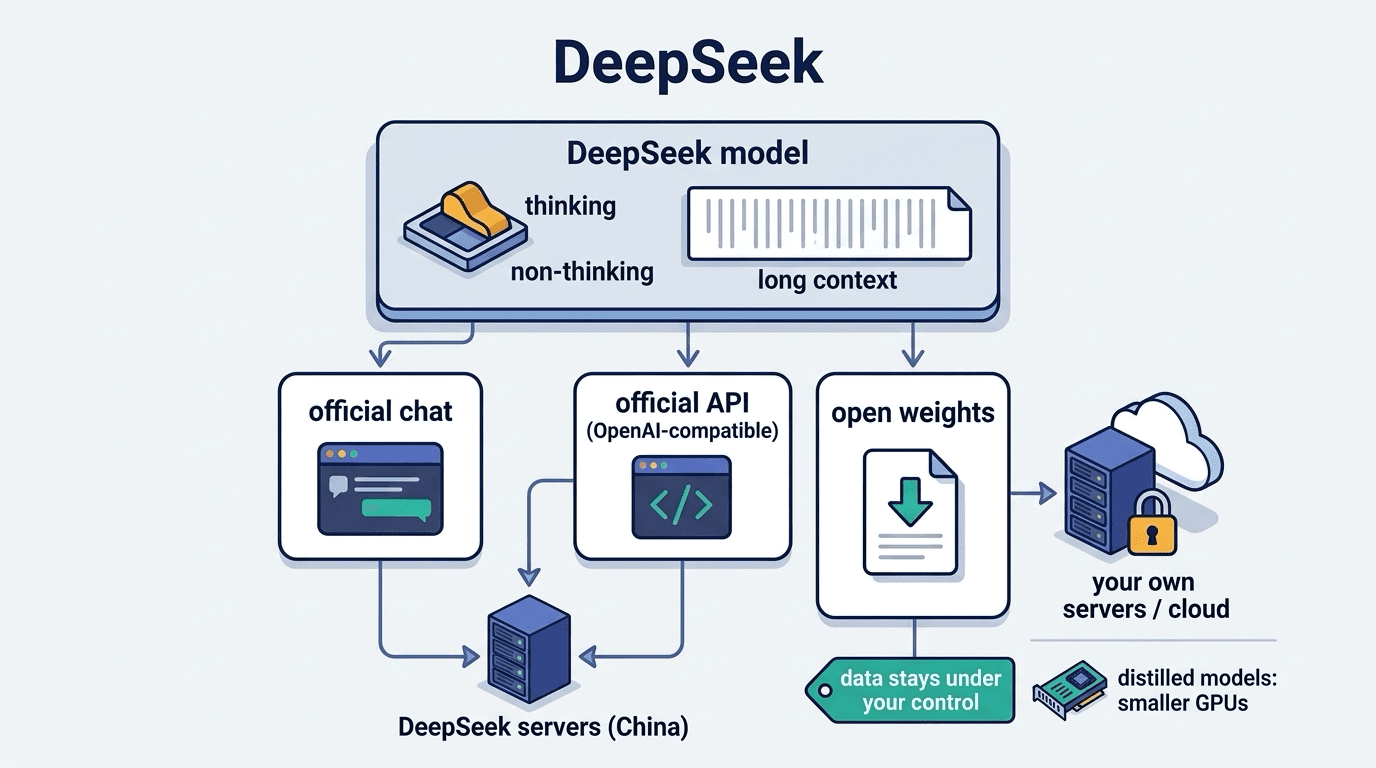
DeepSeek is a family of large language models and a chat service developed by the Chinese company De