

Services
Don't let AI adoption stop at the PoC
We stay with you through implementation — one client cut processing time by 70%. Strategy, PoC and production, end to end.
67%
Faster new hire onboarding
70%
Processing time reduction
65%
Journal entry time reduction


Common business challenges
From generative AI adoption to workflow automation

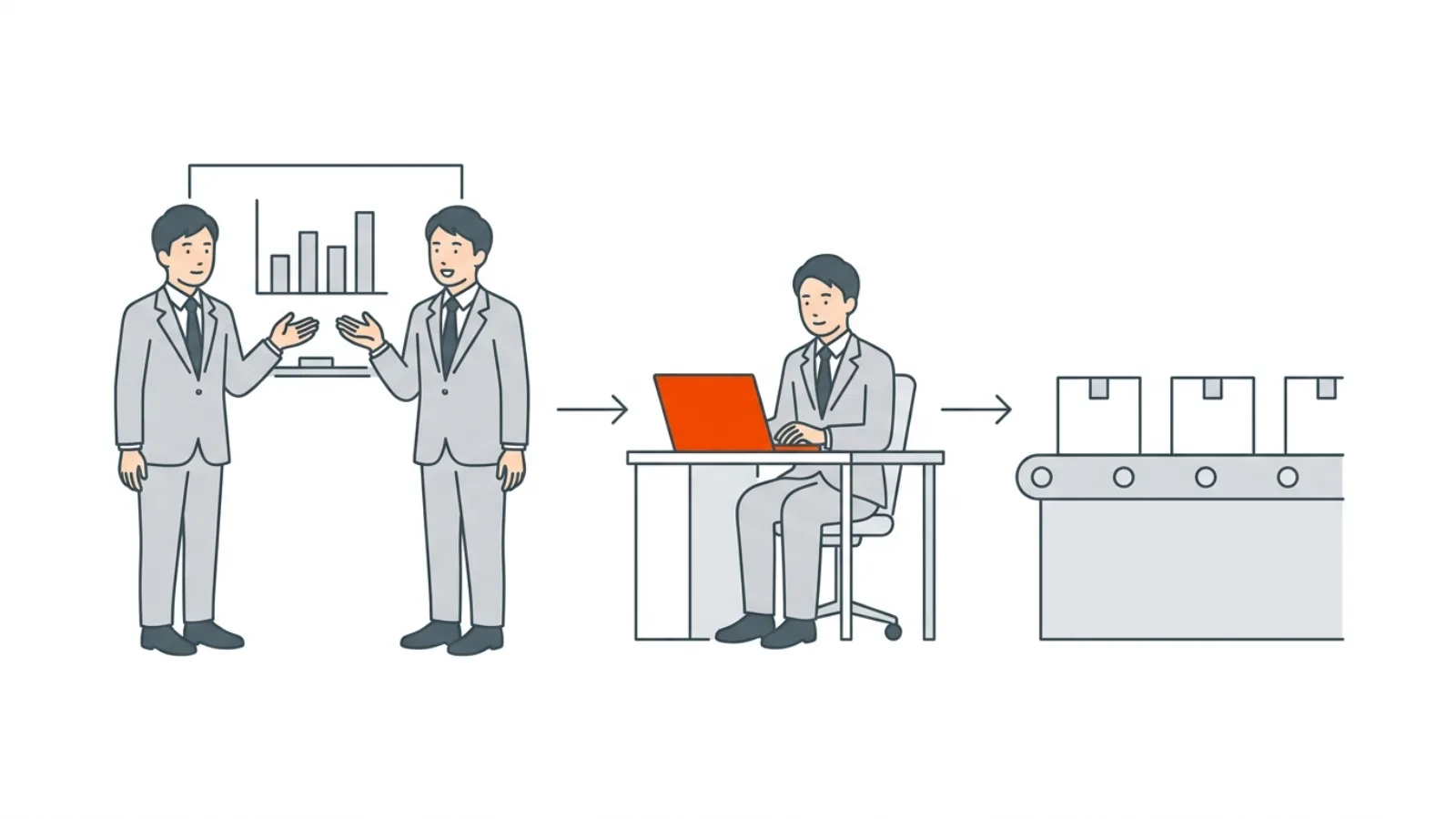
Unsure how to leverage AI
You're considering adopting generative AI but can't determine which tools or methods are best for your company, leaving projects stuck at the PoC stage.
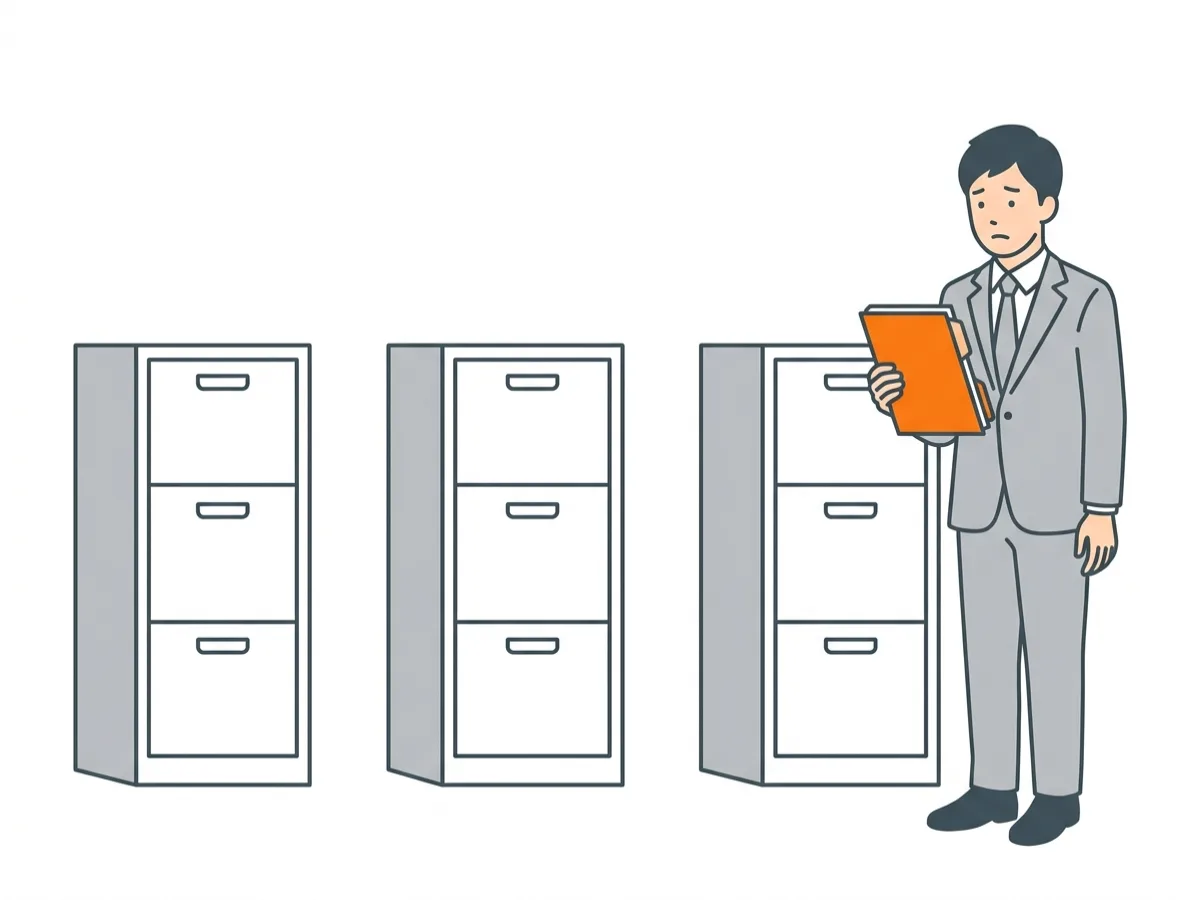
Internal data remains untapped
Internal knowledge and documents are scattered, making it time-consuming to find the information you need. There's no AI-powered search and utilization infrastructure.
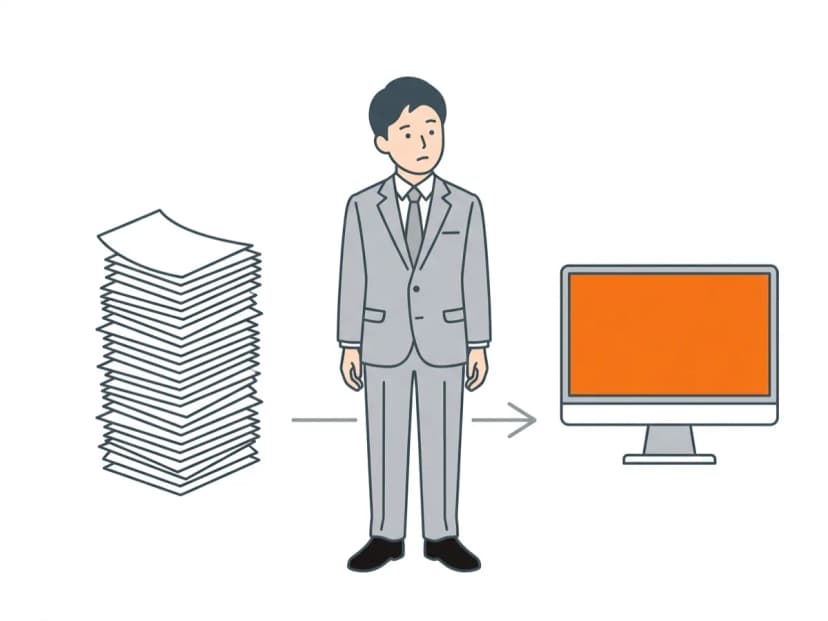
Business digitalization isn't progressing
Manual and paper-based processes persist, and DX of ERP and workflows hasn't advanced. Integration with existing systems is also a challenge.
Recommended solutions
Products and services matched to this challenge
Consulting services
RAG Development
RAGBuild RAG (Retrieval-Augmented Generation) systems to maximize the use of your internal knowledge with AI. Achieve high-accuracy information retrieval and operational efficiency.
Internal Knowledge Search
Vectorize scattered documents and enable instant search using natural language.
Secure Environment
Build closed RAG environments on AWS Bedrock / Azure OpenAI, eliminating data leakage risks.
Continuous Accuracy Improvement
Continuously improve search accuracy through feedback loops. AI grows as you operate.
90%+ reduction in search time Shorter new hire onboarding Transform tacit knowledge into organizational assets
Generative AI Consulting
Generative AIBuild safe generative AI environments leveraging your internal data, delivering AI assistants and workflow automation directly linked to business improvement.
Business-Specific AI Assistant
Build AI assistants that generate accurate answers based on your internal data.
Workflow Automation
Automate routine tasks like meeting minutes, report generation, and data analysis with AI.
From PoC to Production
Start with a small PoC and gradually scale. Verify cost-effectiveness before transitioning to production.
70% reduction in processing time Routine task automation Secure AI environment
AI-Driven Development Support
AI-Driven DevSupport in-house system development leveraging AI technology. Provide consistent development support from PoC to production environments.
AI-Powered Dev Efficiency
Dramatically improve development speed with AI code completion and test automation.
Training Programs
Systematically acquire AI-driven development skills through e-learning formats.
Self-Sustaining Organization
Break free from external dependency and build an internal team capable of continuous AI development.
3x development speed Reduced outsourcing costs In-house AI talent development
LLM Observability
LLM OpsTrack LLM usage, costs, and quality in real-time. Visualize AI ROI and optimize operations.
Usage & Cost Tracking
Visualize LLM usage and costs by model and department in real-time dashboards.
Quality Monitoring
Continuously monitor AI output quality through response scoring and hallucination detection.
Operational Optimization
Analyze the optimal cost-to-quality balance and recommend model selection and prompt improvements.
AI cost visibility Quality quantification Clear ROI measurement
Automation
Workflow automation ideas
Automate manual operations with AI and workflows to dramatically improve productivity
Document processing automation
AI automatically reads, classifies, and structures routine documents such as invoices, contracts, and reports. It eliminates manual entry errors and increases processing speed by 10x. OCR and LLM workflows can also handle non-standard formats.
10x faster processing and 95% fewer errorsWorkflow automation
Automate cross-department processes such as approvals, data handoffs, and notifications with AI workflows. Integrate with existing tools such as Slack, Teams, and kintone to improve efficiency without changing the current work environment.
70% reduction in processing timeData entry and reporting automation
AI handles repetitive work such as spreadsheet transcription, monthly report creation, and KPI aggregation. This shifts people toward higher-value work and helps reduce overtime significantly.
40 hours saved per monthCustomer support automation
An AI chatbot trained on internal FAQs and manuals handles first-line inquiries automatically 24/7. It standardizes response quality while significantly reducing the burden on support teams.
60% reduction in response timeWhy AI adoption stalls
The common blockers behind failed AI projects, and how we remove them.
PoCs end without production adoption
Even when technical validation succeeds, the solution is left unused because it is not embedded into day-to-day workflows. The objective becomes trying AI instead of solving a clearly defined business problem.
Unimon's approach
We start by identifying the business issue, define ROI up front, and design the PoC around production use. A roadmap to full rollout is created from the initial phase.
Frontline teams do not use it
Even if leadership mandates adoption, frontline users may feel they do not know how to use it or that existing workflows are faster, causing usage rates to drop.
Unimon's approach
We conduct thorough frontline interviews, design UI/UX around the actual workflow, and improve adoption through phased training programs.
Security concerns stop the project
Concerns about sending internal data to AI are raised by executives and IT teams, freezing the project before rollout.
Unimon's approach
We standardize closed environments using AWS Bedrock or Azure OpenAI. With architectures that keep data from leaving your environment, IT approval becomes easier to obtain.
How implementation works
A phased approach from PoC to production rollout for a lower-risk deployment
01
Free consultation and issue discovery
1-2 weeksWe clarify current business issues and the purpose of AI adoption, then propose the best approach.
02
PoC (proof of concept)
1-2 monthsWe quantify impact through a small-scale validation so you can confirm cost-effectiveness before moving to the next step.
03
Production environment build and rollout
2-3 monthsWe build the system in a secure environment and integrate it into existing business workflows.
04
Operational adoption and continuous improvement
OngoingWe support adoption through training, monthly reports, and prompt improvements until AI takes root in the organization.
Why teams choose Unimon
AI support backed by implementation capability, not just strategy documents
End-to-end support from strategy to implementation
We do not stop at recommendations. Our engineers handle RAG development, API integration, UI development, and rollout end to end.
Production launch in as little as one month
With more than 2,100 client companies across Thailand and Japan, our team enables fast implementation and minimizes the time from PoC to production.
Security-first architecture
Closed environments using AWS Bedrock and Azure OpenAI are our standard. We have experience supporting sensitive industries such as finance, healthcare, and legal services.
Visualize impact with LLM observability
Track cost, quality, and usage after launch in real time through dashboards, proving ROI with measurable data.
Bilingual support across Southeast Asia and Japan
With teams in Bangkok, Tokyo, and Vientiane, we support multilingual AI implementations in Japanese, English, Thai, and Lao.
Frequently Asked Questions
Answers to common questions about generative AI consulting.


Considering AI adoption or DX?
From AI implementation to data utilization and business process automation, we propose the optimal solution tailored to your challenges.