What is AI SDR? How to Automate B2B Sales Lead Response and Meeting Scheduling with AI Agents

Introduction
AI SDR (AI Sales Development Representative) refers to an AI agent that autonomously handles everything from lead discovery to initial outreach, reply handling, and meeting scheduling. This is a framework aimed at companies with heavy inside sales workloads in B2B sales, or organizations where delays in lead response are lowering the rate of converting leads into sales opportunities. This article explains the scope of tasks AI SDR can handle, how to design role divisions with human sales staff, and key points for implementation and adoption. After reading, you will be able to judge where in your organization you should start entrusting tasks to AI SDR.
AI SDR is a framework in which an AI agent handles everything from lead research to drafting outreach messages and responding to replies. It replaces part of the traditional SDR (Sales Development Representative) role, allowing sales representatives to focus on meetings and proposals. We will first organize the definition and background, then look at specific functions and implementation methods.
The Role of SDR and the Definition of AI SDR
SDR (Sales Development Representative) is a sales role responsible for discovering prospective customers, making initial contact, and moving them toward a sales opportunity. For leads gathered by marketing, the SDR checks the level of interest and, if conditions match, hands them off to a sales representative. When done manually, this requires spending significant time on tasks such as lead research, message drafting, and follow-up communication.
AI SDR refers to a framework in which an AI agent takes over part or most of these SDR tasks. Its distinguishing feature is that it automatically handles lead information gathering, prioritization, personalized message generation, and initial responses to replies. In IPA's proposed definition of AI agents, they are described as "AI systems that sense their environment and act autonomously to achieve specific goals," which sets them apart from simple one-off reply-generation tools.
In the early stages of implementation, there is a tendency to think that "simply contacting as many leads as possible will increase sales opportunities." In practice, however, narrowing down the targets of contact and responding with context-aware proposals tends to produce a more stable conversion rate into sales opportunities. Designing with an emphasis on precision rather than volume is the starting point for making effective use of AI SDR.
Why AI SDR Is Gaining Attention Now
Several factors are converging behind the growing attention on AI SDR.
In inside sales operations, there is a common tendency to hit a wall where staffing cannot be increased in proportion to the growth in the number of leads. While the diversification of marketing initiatives has increased the number of channels through which leads flow in, it is not easy to increase the volume of responses without sacrificing the quality of initial handling. Against this backdrop, the practical application of generative AI and AI agents has emerged, making it realistic to automate tasks that are easily standardized, such as lead research, message drafting, and reply handling.
Regulatory developments are also providing a tailwind. Updated materials for the AI Business Operator Guidelines define an AI agent as "an AI system that senses its environment and acts autonomously to achieve specific goals," and the environment is increasingly conducive to considering the use of autonomously acting AI in the sales domain as well.
However, high attention and suitability for implementation are separate matters. AI SDR tends to be effective for products with a large absolute number of leads where initial responses can be easily standardized. Conversely, for highly specialized products requiring individually optimized proposals, a more realistic design is to maintain a human-led approach while entrusting only research tasks to AI.
What AI SDR Can Do

The tasks handled by AI SDR span the entire flow from lead research to drafting outreach messages, handling replies, and coordinating meeting schedules. Its distinguishing feature is that it automates the repetitive processes that human SDRs previously performed manually, while improving response speed and coverage.
Lead Research and Scoring
The foundation of AI SDR lies in lead research and scoring. It automatically collects information from company websites, job postings, funding news, and social media activity, then organizes attributes such as company size, industry, tools in use, and the job titles of decision-makers. The biggest difference from human work is that while the same research would take a human several to over ten minutes per lead, an AI agent can process this work in parallel.
Scoring is the mechanism for quantifying this information against priority conditions defined by the sales side (e.g., number of employees, industry, similarity to existing customers). This is similar to scoring the results of a health checkup to prioritize patients—it's a sorting process that concentrates limited sales time on "leads that should be approached now."
That said, research accuracy depends on the quality of the information sources. For private companies with little publicly available information, or in cases involving industry-specific abbreviations or notation variations, misrecognition is likely to occur, and there have been reports of scores that diverge from reality. For this reason, rather than using scoring results directly to decide whether to move forward with a deal, it is essential to have humans periodically review the criteria and weighting.
Creating Personalized Outreach Messages
Based on the lead information obtained through scoring, AI SDR automatically generates the text for initial contact by combining factors such as industry, company size, browsing history, and past meeting notes. Unlike simple mail-merge processing that just inserts a lead's name and company name into a template, its distinguishing feature is that it infers the challenges the lead likely faces and the background behind their consideration of a solution, then proposes an opening approach tailored to that context.
Initially, one might assume that "the higher the personalization accuracy of the text, the higher the reply rate," but in practice, there are many reported cases where the design of send timing and contact frequency has a greater impact on reply rates than the quality of the writing itself. For example, whether contact can be made within a few hours immediately after a lead downloads a document can affect results more than how polished the message is.
Therefore, a practical operational approach is one where a human reviews the text generated by AI and makes adjustments only to the subtle contextual nuances that AI is prone to misunderstand, such as industry-specific phrasing or differences from competitors. Rather than entrusting the entire text to AI, a division of labor in which AI creates the outline while humans handle the final tone adjustments and removal of high-risk expressions tends to make it easier to balance quality and speed.
Handling Replies and Scheduling Meetings
Initial response after a reply is received is also an area that AI SDR can handle. For replies showing interest, it can propose the next action, and for rejection replies, it can set an appropriate follow-up interval, preserving the seeds of a potential deal without stopping the sales representative's other work.
For scheduling, the AI agent references calendar information to present candidate dates and times, and can process everything through to confirmation by integrating with CRM and scheduling tools. The shortening of a process that used to consume time through back-and-forth exchanges is a change felt in many workplaces.
That said, care is needed in interpreting reply content. For simple scheduling or information confirmation, it is fine to leave this to AI, but for replies involving price negotiations or contract terms, or replies containing emotional complaints, a decision framework should be established for handing off to a human sales representative. If this distinction is left ambiguous, there is a risk that AI will mishandle a deal opportunity that should have been handled by a human, damaging trust.
Also, in case the intent of a reply is misinterpreted, having a system in place where a human can check reply logs within a certain period makes it easier to maintain the quality of responses. The design of this division of roles will be covered in detail in the next section.
How to Design Role Division with Human Sales Reps

The effectiveness of introducing AI SDR varies greatly depending on where the line is drawn between AI and humans. The basic approach is to entrust simple tasks to AI while humans handle judgment and relationship-building, but if this line is drawn incorrectly, results will not improve. Next, we will look at the specific division of areas to delegate versus areas to handle, and how to design the handoff.
Areas to Delegate to AI and Areas for Humans
AI SDR and human sales representatives are, in a sense, similar to a "sorting and negotiating" relationship—it becomes easier to grasp the division of labor if you think of AI as the sorter who organizes packages by type, and the human as the delivery person who delivers those packages and negotiates the terms.
The areas entrusted to AI are tasks that occur repeatedly and have clear decision criteria. These include lead information research, scoring, drafting and sending initial contact messages, and initial responses to simple questions. Because these involve high volumes and delays in response can easily lead to lost opportunities, AI's speed and consistency come into play.
On the other hand, the areas handled by humans are price negotiations, adjustment of contract terms, hearing out complex business challenges, and building relationships with decision-makers. In B2B sales, there are many situations where one must read the intent behind statements and internal company circumstances, and this kind of contextual understanding cannot yet be fully entrusted to AI at this point.
If dividing by condition, the basic guideline is that AI handles cases where the response content is standardized and verifiable, while humans handle exception cases or situations requiring trust-building. However, since the boundary shifts depending on the industry and product, it is desirable to design this not as a fixed rule but on the premise that it will be reviewed and adjusted through ongoing operation.
Designing Handoff Points
Where to switch between AI SDR and human sales is a design point that determines outcomes. Initially, teams tend to adopt a rule of "hand off to a human as soon as a reply comes in," but in practice it is more effective to branch based on the tone of the reply content. Simple questions or requests for materials can continue to be handled by AI as the first line of response, while handing off to a human once specific mentions of price negotiations or implementation timing appear tends to lead to an improvement in the deal conversion rate.
Handoff conditions should be adjusted depending on the industry and the complexity of the product or service. For products with a short consideration period, it is advisable to hand off to a human early, while for enterprise-oriented offerings with a long consideration period, a design in which AI handles nurturing for a longer period is more suitable.
At the time of handoff, a mechanism for consolidating lead information, the conversation history so far, and points that showed interest, and passing them along via the CRM, is essential. If information is missing, sales representatives end up having to ask about the situation from scratch, which can cause the lead's interest to cool down. By organizing the level of human involvement in advance, it becomes clear at which stage human judgment should be inserted as part of an "In the Loop" process. The concept behind this kind of operational design is also explained in detail in What Is Human-in-the-Loop (HITL)? The Basics of "Human-Participatory" Design for Embedding AI-Driven Business Automation.
Common Misconceptions and Failure Patterns

When introducing AI SDR, common failures include the misconception that "increasing the number of sends will increase the number of deals," as well as neglecting quality control and ending up spamming. Relying too heavily on the speed of automation can instead undermine recipients' trust, leading to a decline in the overall sales effectiveness of the brand.
The Misconception That "More Sends Mean Better Results"
Immediately after introducing AI SDR, many teams tend to lean toward the idea that "if we increase the number of sends, the number of deals should also increase." Since mass sending that was impossible to do manually becomes possible, it is natural to want to try increasing volume first. In reality, however, send volume and reply rate are not necessarily proportional, and when the quality of target leads or timing is lacking, results tend to stagnate instead.
Have you ever faced a situation where "we doubled the number of sends, but the deal conversion rate stayed the same or even dropped"? In many cases, this is not due to a lack of precision in the AI SDR itself, but rather due to insufficiently rigorous targeting design. If send volume is expanded while scoring criteria remain loose, contact with low-interest leads increases, which ultimately lowers the average open rate and reply rate.
There is a view that narrowing down the target audience and improving the precision of the message content is more likely to lead to deal conversion than simply increasing the total number of sends. Before chasing volume, it is important to first reconsider which segments should be targeted.
The Risk of Quality Decline and Spam Behavior
Optimizing send volume is not as simple as a water faucet, where opening it more just makes more water flow out—it carries the paradoxical risk that opening it too much can clog the pipes themselves and bring everything to a halt. When AI SDR keeps sending the same template to a large number of leads, the personalization of the message content becomes diluted, increasing the likelihood that recipients will flag it as spam.
One thing that deserves particular attention is the impact on email deliverability itself. There are reports of cases where, if send volume is increased while open rates and reply rates remain low, spam-detection metrics worsen, making it harder even for legitimate emails to reach the inbox. This is not merely an issue affecting some prospective customers—it is often overlooked that it lowers the reputation of the domain as a whole, which can also affect communication with existing customers.
There are also cases in which expanding the number of leads while personalization accuracy remains low results in proposal messages that don't match the recipient's industry or job title being sent, damaging brand image. As a countermeasure, it is effective to set an upper limit on send volume in advance and expand it gradually while regularly checking open rates, reply rates, and spam report rates. Preparing multiple variations of subject lines and body text, and avoiding repeatedly sending the same pattern, can also be considered a basic technique for preventing messages from being flagged as spam.
Steps to Implement AI SDR

For AI SDR adoption to take root, it is key to proceed in stages rather than rolling it out fully all at once. A practical approach involves three stages: first narrowing the target scope and organizing the current sales process, then verifying the precision of messaging and targeting through small-scale tests, and finally transitioning to full-scale operation integrated with the CRM.
Step 1: Inventory the Sales Process and Define Scope
The first task to undertake at the time of introduction is to break down the existing sales process into individual steps and identify the scope that can be entrusted to AI.
When the flow from lead acquisition to deal formation is divided into units such as list collection, initial contact, reply handling, scheduling coordination, and meeting execution, it becomes clear where time is being consumed. In many workplaces, sales representatives' workload tends to concentrate on drafting initial contact messages and handling replies. This is a prime candidate for AI SDR adoption.
When determining the scope of application, the criteria for judgment need to vary depending on the characteristics of the lead. It is practical to divide the work so that leads referred by existing customers or those with a history of past negotiations—where relationship context matters—are handled by humans, while new inbound leads or leads with weak touchpoints, such as trade show business cards, are entrusted to AI for initial scoring and routine first contact.
It is also worth confirming during this inventory stage that the consideration period before deal formation differs by industry and product, as this ensures the design of subsequent processes stays consistent. When visualizing the process, actually aggregating CRM deal history and email sending logs—rather than relying on intuition—to narrow down the target scope with numbers is what determines the accuracy of the next step, the small-scale test.
Step 2: Small-Scale Testing and Message Quality Verification
Once the target scope has been decided, the next step is not to roll out to all leads immediately, but to run a small-scale test on a limited segment. The reason for limiting the number of cases is clear: it is better to gauge the tone of the messaging, the precision of personalization, and trends in reply rates before scaling up, since the cost of rolling back is smaller this way.
The concern of "is it okay to send the AI-generated text as-is?" is often the first question raised on many sales floors. At this stage, it is advisable to insert a step where sales representatives review the text generated by AI to check for industry-specific phrasing or any expressions that should not be sent.
The points that should be verified are as follows:
- How open rates and reply rates change across different target attributes
- Whether repeated use of the same template gives a spam-like impression
- Whether there is any discrepancy in the understanding of the lead persona, based on the content of the replies
The purpose of the small-scale test is not to produce results, but to identify the gap between the AI's judgment criteria and the company's own sales perspective. Once the gap becomes apparent, the messaging templates and scoring conditions should be adjusted, gathering the material needed to decide on moving to the next step.
Step 3: CRM Integration and Full-Scale Operation
Once the messaging and response quality have stabilized through the small-scale test, the next step is to proceed with CRM integration and move into full-scale operation. The key point here is not to run AI SDR as a standalone tool, but to embed it within the existing sales pipeline. If lead status updates, deal formation timing, and handoff history to representatives are not managed centrally within the CRM, AI SDR's activities will become "invisible work" to the sales team.
In a sense, it is closer to the idea of designing AI SDR not as an independent channel, but as a tributary that merges into an existing river. If the integration is insufficient, situations can arise where leads contacted by AI SDR overlap with leads being individually tracked by human sales representatives, resulting in the same person being contacted separately by different representatives.
The switch to full-scale operation is practically carried out by gradually expanding the range of target leads. Rather than applying it to all leads from the start, it is operated in a limited scope—specific industries or lead sources—while checking status transitions and handoff accuracy within the CRM, and then expanding the scope of application. At this stage, considering the nature of "sensing the environment and acting autonomously" as indicated in the IPA's proposed definition regarding the scope of autonomous judgment by AI agents, clearly documenting as an operational rule how much judgment is delegated to AI becomes key to preventing confusion later on.
Key Points for Sustained Operation

AI SDR does not end with implementation; it only becomes established through an operation in which outcomes are visualized with metrics and the messaging and targeting are continuously reviewed. Here, the key points are organized from two perspectives: KPI design for measuring results, and the daily improvement cycle.
Designing Performance Indicators (KPIs)
When measuring the results of AI SDR, there is a tendency to misjudge performance if only tracking the number of messages sent or the reply rate. This is because there are reported cases where, even if replies increase, without a corresponding deal formation rate, the pursuit of volume actually ends up depleting sales resources.
When designing KPIs, it is important to separate metrics by stage of the process. Specifically, tracking figures through the flow of lead contact count, reply rate, meeting-setting rate, and the win rate after deal formation makes it possible to identify at which stage distortions are occurring.
As a decision framework, it is effective to branch conditions such that, for new business development-focused efforts, contact count and reply rate are prioritized, whereas for efforts centered on deepening existing deals, deal formation rate and win rate are prioritized. Since the metrics that should be emphasized change depending on the objective, the key point is not to evaluate the whole with a single KPI.
Additionally, measuring results separately for the scope handled by AI SDR versus the scope handled by human sales representatives makes it easier to determine which side needs improvement. A detailed approach to KPI design is also explained in How to Measure Effectiveness After AI Agent Implementation: From KPI Design to Continuous Improvement.
Continuous Improvement of Messaging and Targeting
"How long can we keep using a message template once it's been created?" is a concern for many operations managers. Since reply rates and scoring accuracy tend to gradually decline due to changes in market conditions and target company responses, fixed operation is something to avoid.
As for the improvement cycle, the practical approach is to first break down reply rates and appointment acquisition rates by industry and persona to identify segments with weak response, and then run A/B tests changing only a small number of patterns in the subject line and body copy's appeal points, having the AI SDR learn from the results. If too many elements are changed at once, it becomes impossible to judge what actually drove the effect, so changes should be limited to 1-2 items.
On the targeting side, it is necessary to regularly extract trends in industry, company size, and job title from leads that were likely to turn into deals, using CRM data, and reflect these in the scoring criteria. Conversely, it is also necessary to decide to exclude segments with no replies at all from the approach targets.
As a guideline, the frequency of improvement should be monthly for cases with a large number of leads, and quarterly for cases with fewer leads. If you are unsure about designing the effectiveness measurement itself, the approach discussed in How to Measure Effectiveness After AI Agent Implementation: From KPI Design to Continuous Improvement may be helpful as a reference.
FAQ

Q1. If we introduce an AI SDR, will human SDRs become unnecessary? It is unlikely that they will become unnecessary. While AI SDRs handle routine tasks such as lead research, initial outreach, and scheduling, judging the value of a deal and building relationships remain areas that humans need to handle. Designing the system with a premise of role division is a prerequisite for successful adoption.
Q2. How much time is needed to implement an AI SDR? A certain preparation period is needed, since the process proceeds in stages—from reviewing the sales process, to small-scale testing, to CRM integration. It is common to move to full-scale operation only after conducting small-scale tests with a narrowed scope, since a hasty full rollout tends to lead to insufficient verification of message quality and targeting.
Q3. What legal points should be kept in mind when using an AI SDR? The AI Business Operator Guidelines define an AI agent as "an AI system that perceives its environment and acts autonomously to achieve specific goals." Regarding civil liability for decisions made through outgoing messages and automated responses, the "Guide on the Interpretation and Application of Civil Liability in AI Utilization" can also serve as a reference, and establishing operational rules is required.
Q4. Is integration with existing CRM or MA tools mandatory? It is not mandatory, but integration is considered practically desirable in order to improve lead scoring and handoff accuracy. Continuing to rely on manual data transfer tends to result in missed follow-ups and duplicate outreach, so it is recommended to consider the design of CRM integration before moving to full-scale operation.
Q5. If results aren't showing, what should be reviewed first? Rather than increasing the volume of messages sent, it is considered more effective to prioritize reviewing message quality and targeting accuracy. Regularly checking KPIs such as reply rates and deal conversion rates, and incorporating a continuous improvement cycle like the one introduced in How to Measure Effectiveness After AI Agent Implementation, tends to lead to better results.
Summary

An AI SDR is an AI agent that autonomously handles everything from lead research to initial outreach, reply handling, and meeting scheduling—a mechanism that shifts the sales team's time allocation from "tasks" to "conversations." However, what determines results is not the volume of messages sent, but rather the narrowing down of the target scope, the quality of the messaging, and the design of the handoff to humans.
At the time of implementation, gradually expanding the scope through inventory-taking and small-scale verification, and continuously reviewing KPIs and targeting even after CRM integration, is what determines whether adoption takes root. Clearly separating the areas handled by AI from those handled by humans, and maintaining a structure where humans handle situations requiring price negotiation or understanding the context behind decision-making, is the key to avoiding becoming spam-like or losing trust.
Positioning the AI SDR not as a replacement for sales, but as something that streamlines the early stages of pipeline building, makes it easier to measure return on investment. Starting small and adjusting the scope of application while monitoring metrics leads to sustainable, well-paced adoption.
Author & Supervisor

Yusuke Ishihara
Started programming at age 13 with MSX. After graduating from Musashi University, worked on large-scale system development including airline core systems and Japan's first Windows server hosting/VPS infrastructure. Co-founded Site Engine Inc. in 2008. Founded Unimon Inc. in 2010 and Enison Inc. in 2025, leading development of business systems, NLP, and platform solutions. Currently focuses on product development and AI/DX initiatives leveraging generative AI and large language models (LLMs).
Recommended Articles


Terms related to this article
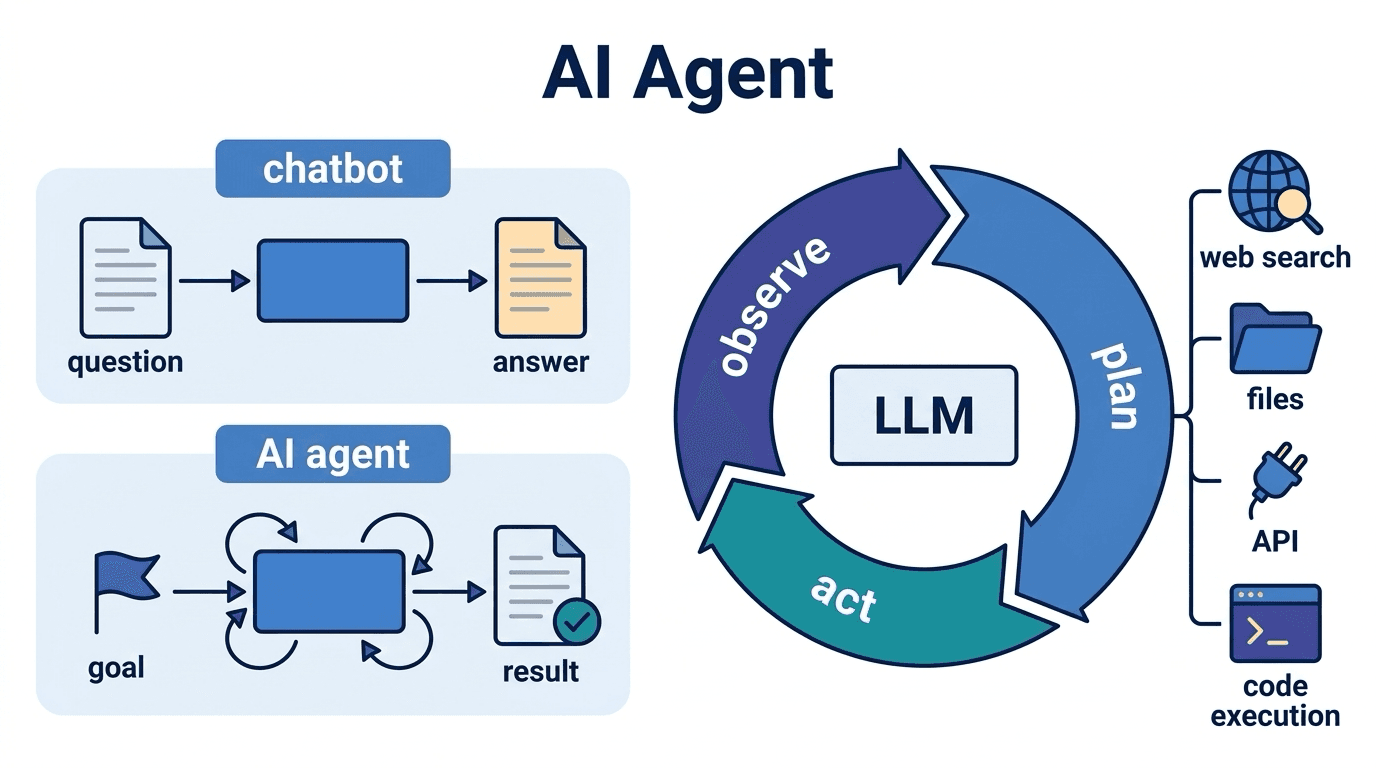
AI Agent
An AI agent is an AI system that autonomously formulates plans toward given goals and executes tasks
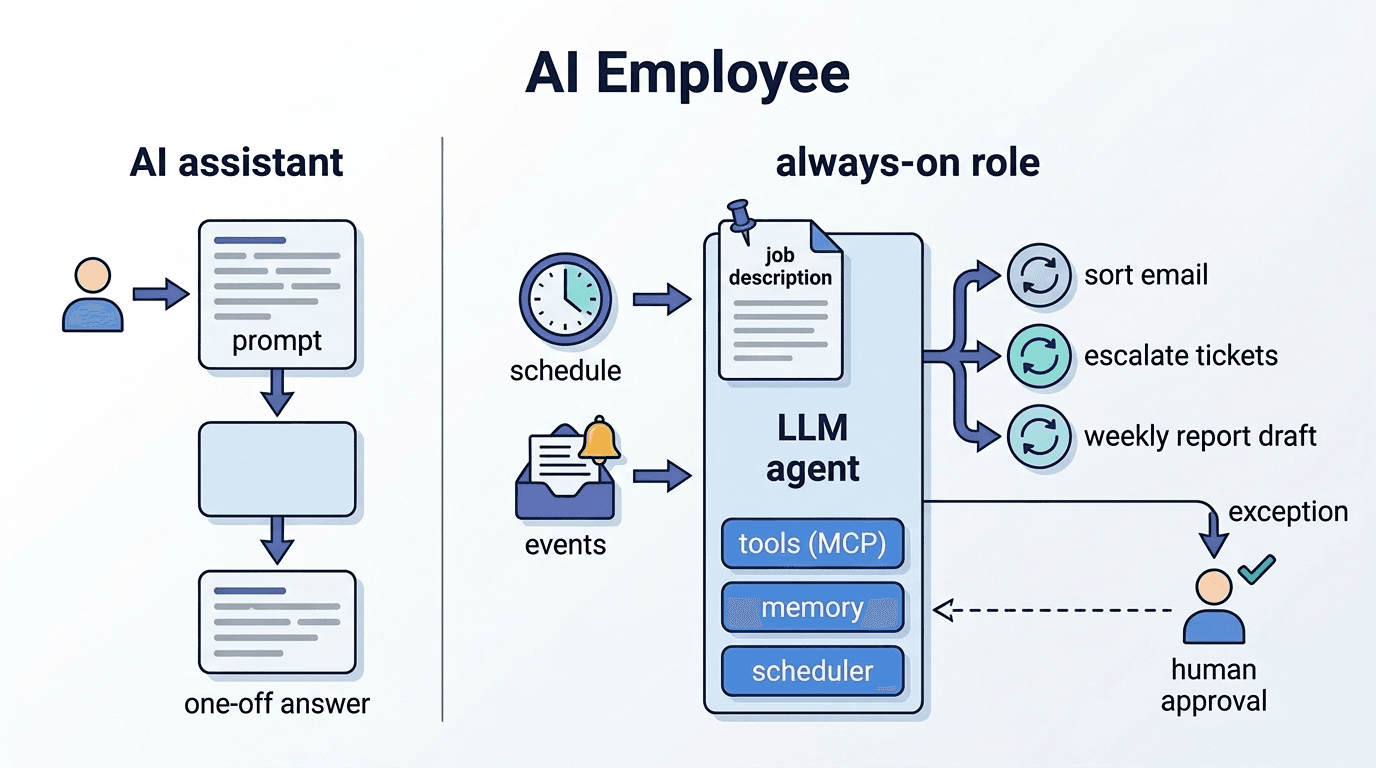
AI Employee (AI Employee)
An autonomous AI agent that takes on a specific business role and continuously performs tasks in the
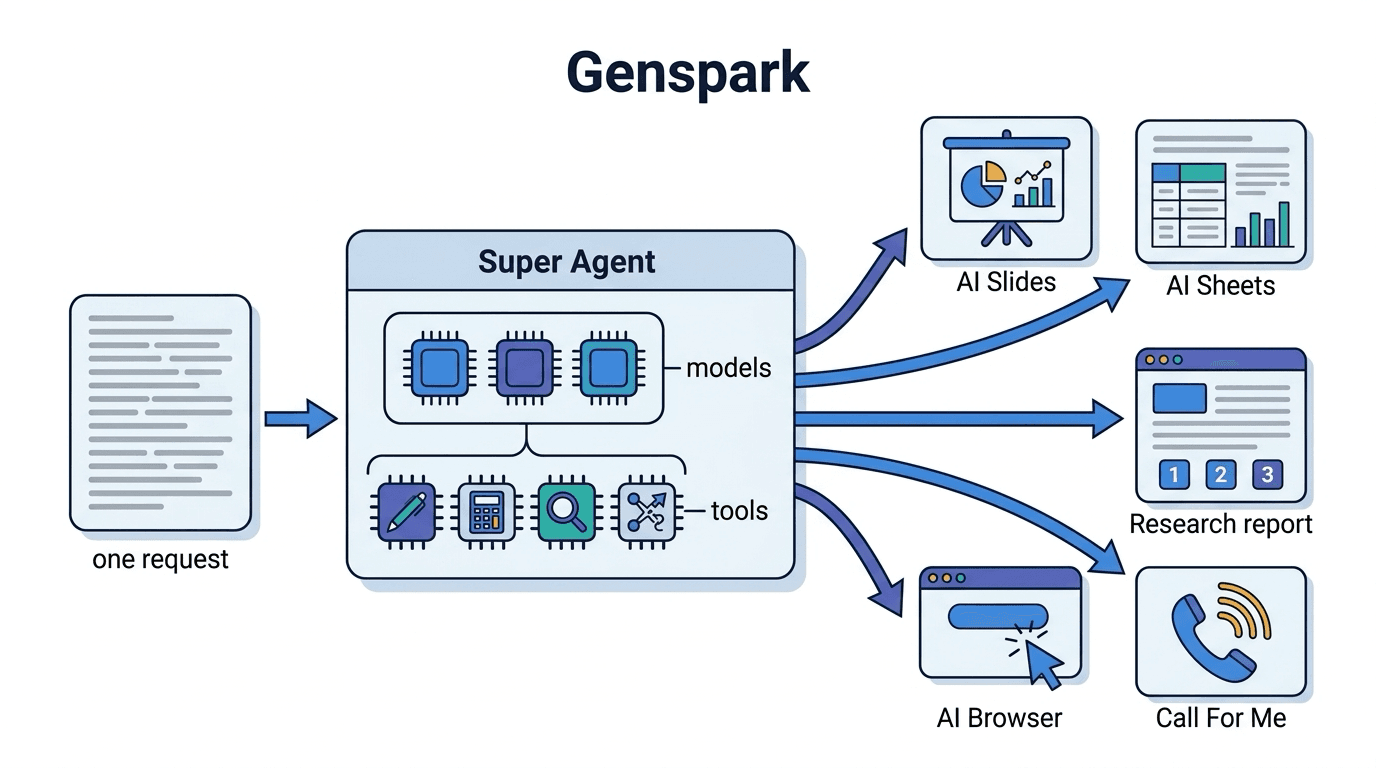
Genspark
Genspark is an AI workspace in which AI agents take on research, slide and spreadsheet creation, and