AI Employee (AI Employee)
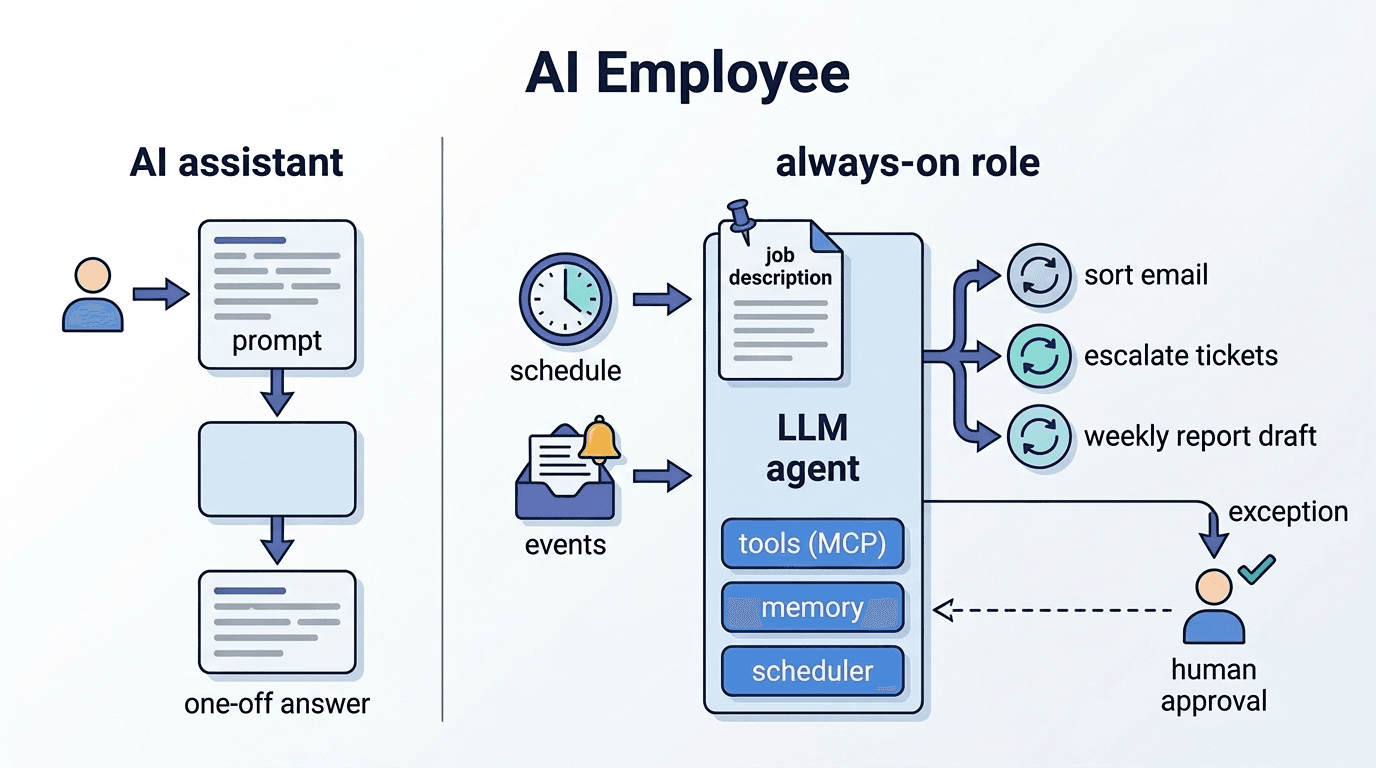
An autonomous AI agent that takes on a specific business role and continuously performs tasks in the same manner as a human employee. It differs from conventional AI assistants in that it holds a defined scope of responsibility as a job function, rather than simply responding to one-off instructions.
Traditional AI assistants operated on a "call-and-response" model, where users entered prompts each time and received one-off answers. AI Employees fundamentally change this dynamic. They are autonomous agents pre-assigned to specific job roles—such as meeting minutes coordinator, first-line customer support, or internal knowledge organizer—and continue executing their duties without waiting for human instruction.
Differences from AI Assistants
The boundary between the two is often blurry, but in practice it can be drawn by asking "who pulls the trigger."
An AI assistant responds to user questions and requests. The initiative always lies with the human. An AI Employee, by contrast, operates on its own terms, driven by schedules and events. It performs tasks such as sorting incoming emails each morning, automatically escalating tickets approaching their SLA, and generating draft weekly reports—all without explicit instruction.
Another distinction is the explicit definition of accountability. An AI Employee is given a definition equivalent to a job description, with performance metrics and escalation conditions specified. Exceptions it cannot handle are escalated to humans, and the outcomes are fed back as feedback—a design that presupposes what is known as HITL (Human-in-the-Loop).
Technical Components
An AI Employee is, in substance, an agent orchestration system that bundles multiple components together.
The core is an LLM-based reasoning engine, but that alone does not make it an "employee." Continuous task execution only becomes possible by integrating connections to internal systems (via MCP or Function Calling), long-term memory (vector databases or knowledge graphs), a task scheduler, and reporting and approval flows to humans. Cases where multiple AI Employees collaborate as a multi-agent system are also on the rise.
Considerations for Deployment
When deploying AI Employees within an organization, establishing AI governance is just as important as technology selection. Operating autonomously means that errors in judgment can also occur autonomously. Audit logs for outputs, anomaly detection, and Least Privilege must be built into the initial design.
In the author's experience, rather than granting broad permissions from the outset, an approach that starts with a single, narrowly scoped task and gradually expands the scope of responsibility once reliability has been confirmed tends to lead to more successful adoption.
Articles covering this term
- How AI Streamlines HR and Recruitment for Thai Companies — From Applicant Response to Turnover PredictionAI in HR & recruitment for firms in Thailand: applicant screening, attendance/labor query automation, attrition prediction, PDPA compliance, and practical implementation steps.
- What Are the Roles of AI and Humans? 3 Key Criteria for Deciding What to "Delegate, Collaborate On, or Keep Human"Learn how to divide tasks between AI and humans using 3 decision criteria, a 4-quadrant framework, and 5 design steps to optimize your workflow.
- How to Streamline In-House Training and Knowledge Transfer with AIDiscover how to use AI for employee training, onboarding & knowledge transfer. Learn steps to systemize FAQ, manuals & knowledge sharing to eliminate training silos.
- AI Governance for Small Teams: Scalable AI Governance for Small and Medium-Sized BusinessesLightweight AI governance frameworks & checklists for SMEs and startups to practically adopt enterprise-grade AI standards—even with limited resources.


Related Terms
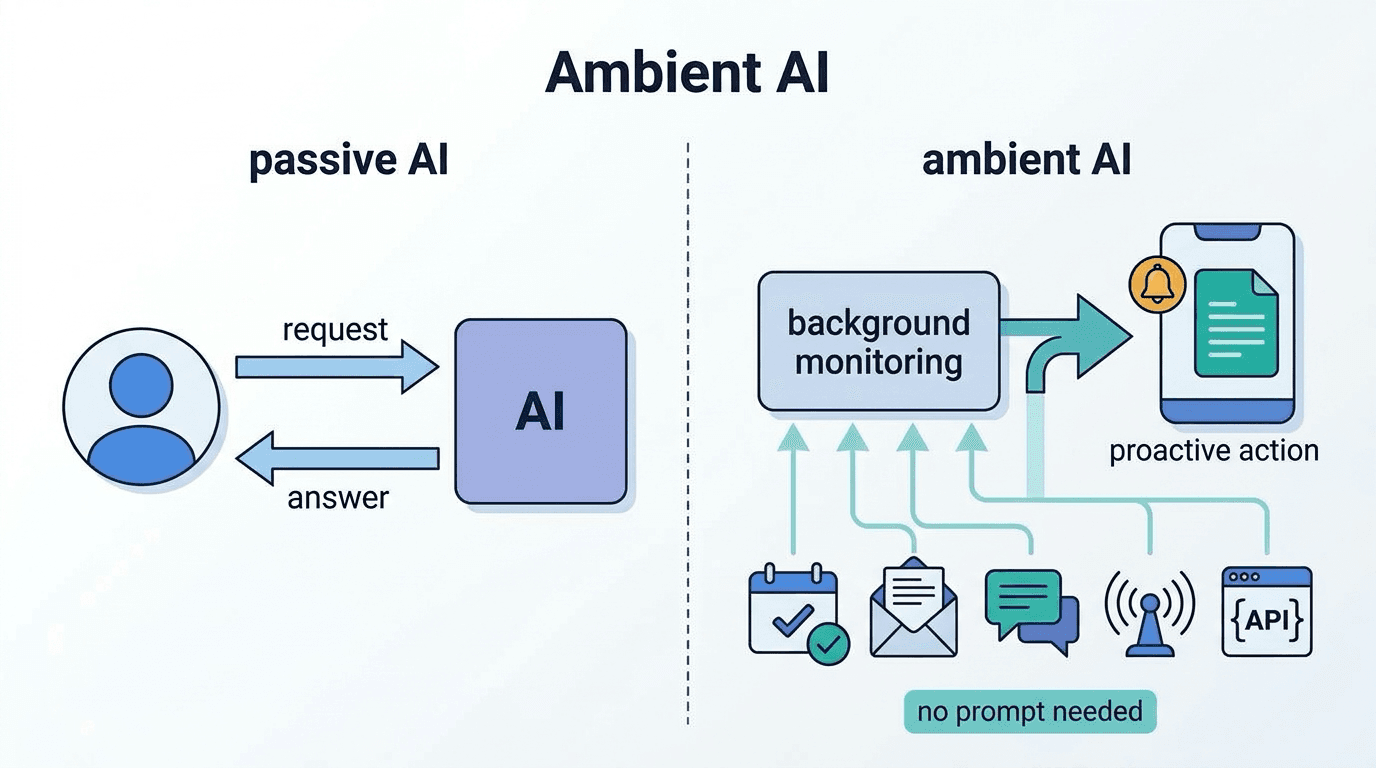
Ambient AI
Ambient AI refers to an AI system that is seamlessly embedded in the user's environment, continuousl
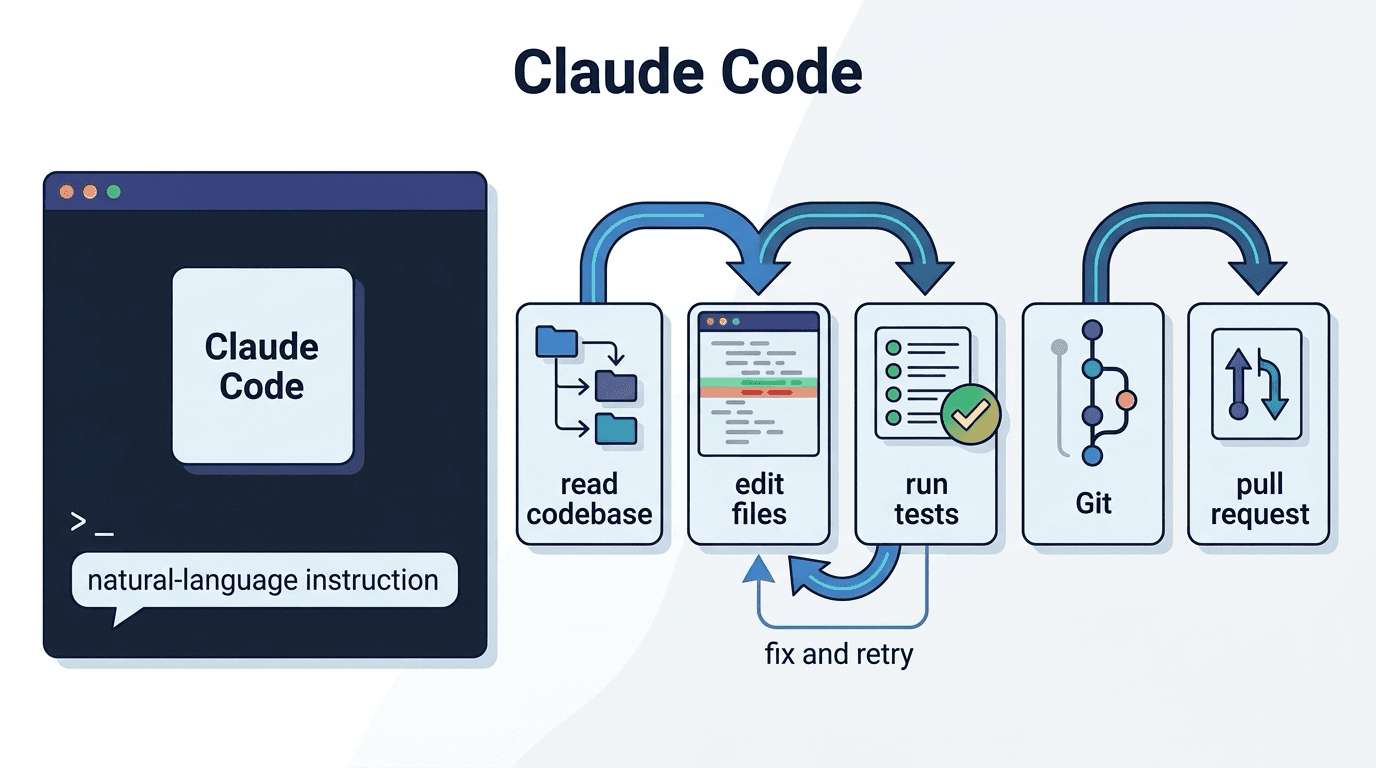
Claude Code
Claude Code is a terminal-resident AI coding agent developed by Anthropic. It is a CLI tool that ena
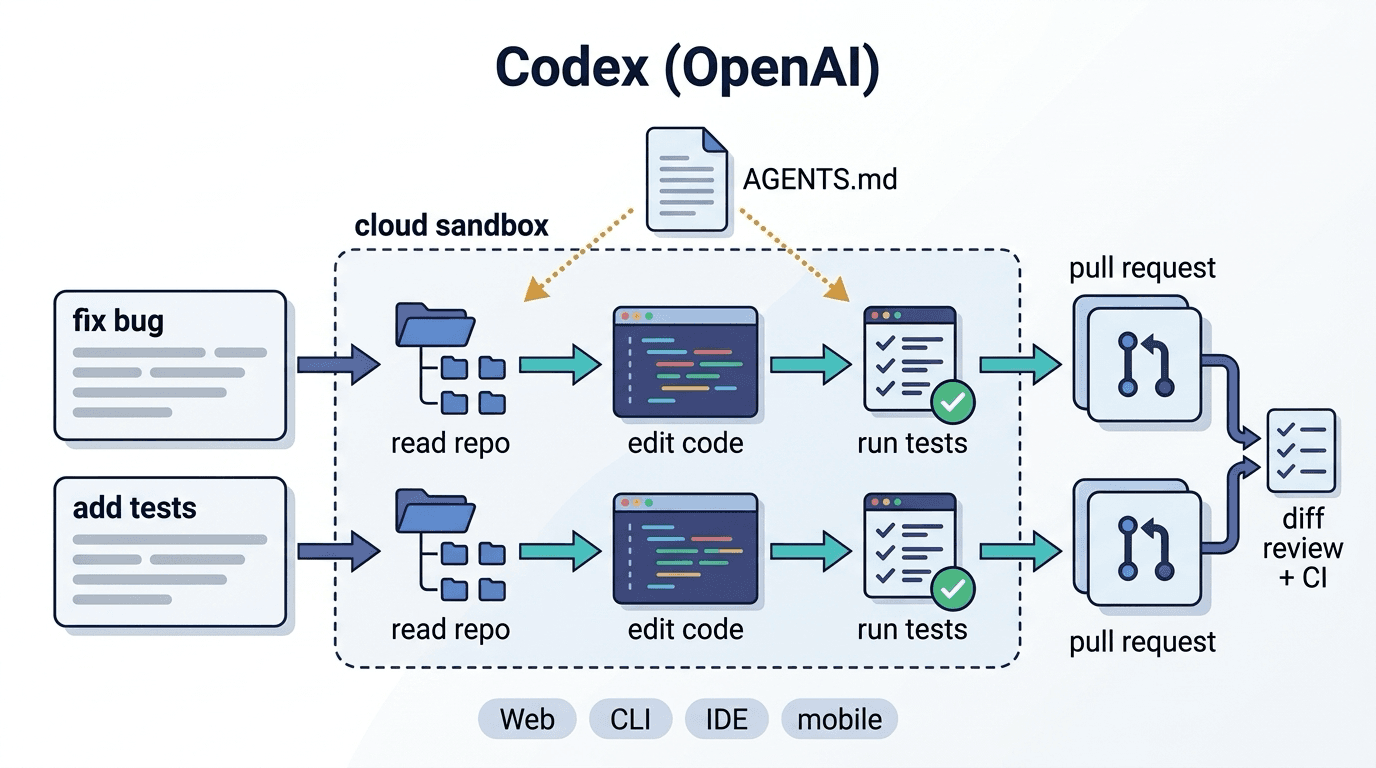
Codex (OpenAI)
Codex is OpenAI's AI coding agent. It reads a repository and carries a task through implementation,
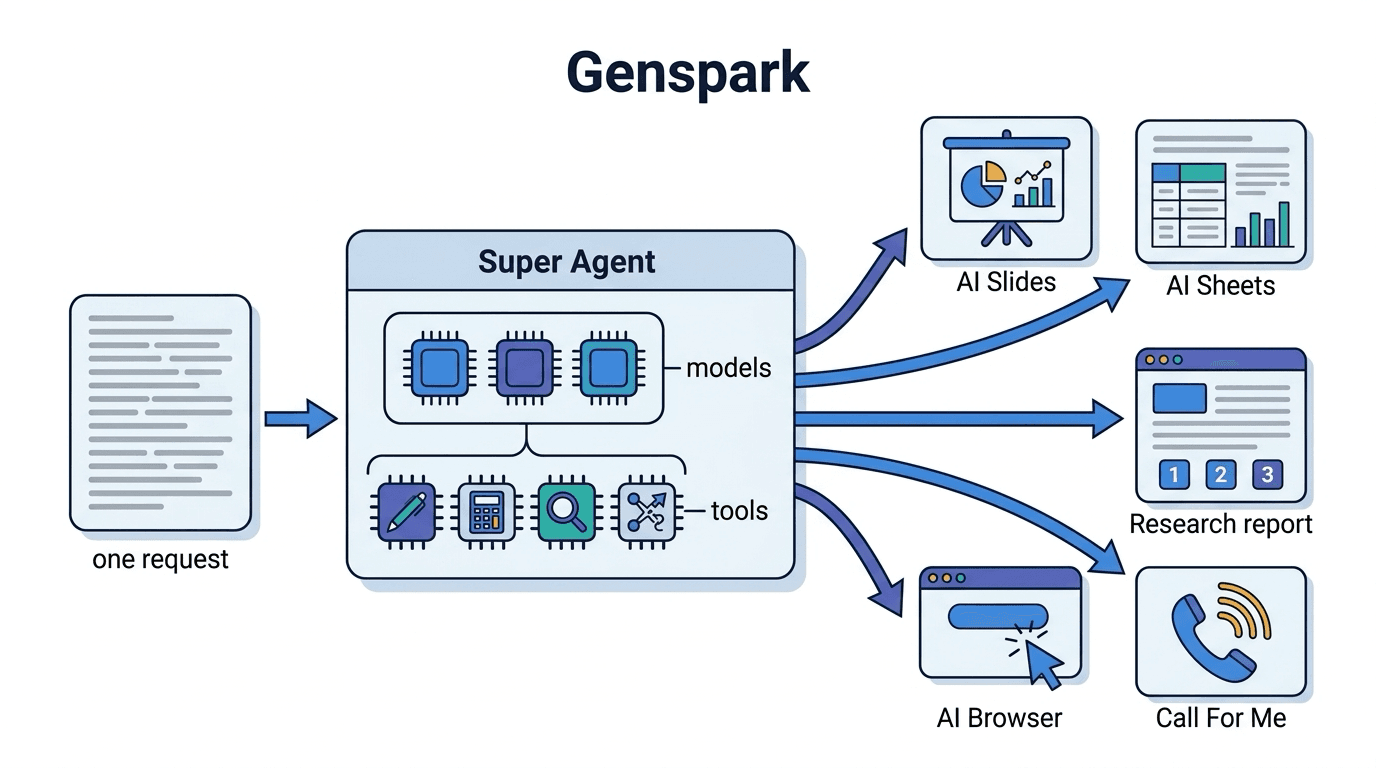
Genspark
Genspark is an AI workspace in which AI agents take on research, slide and spreadsheet creation, and