AI Agent
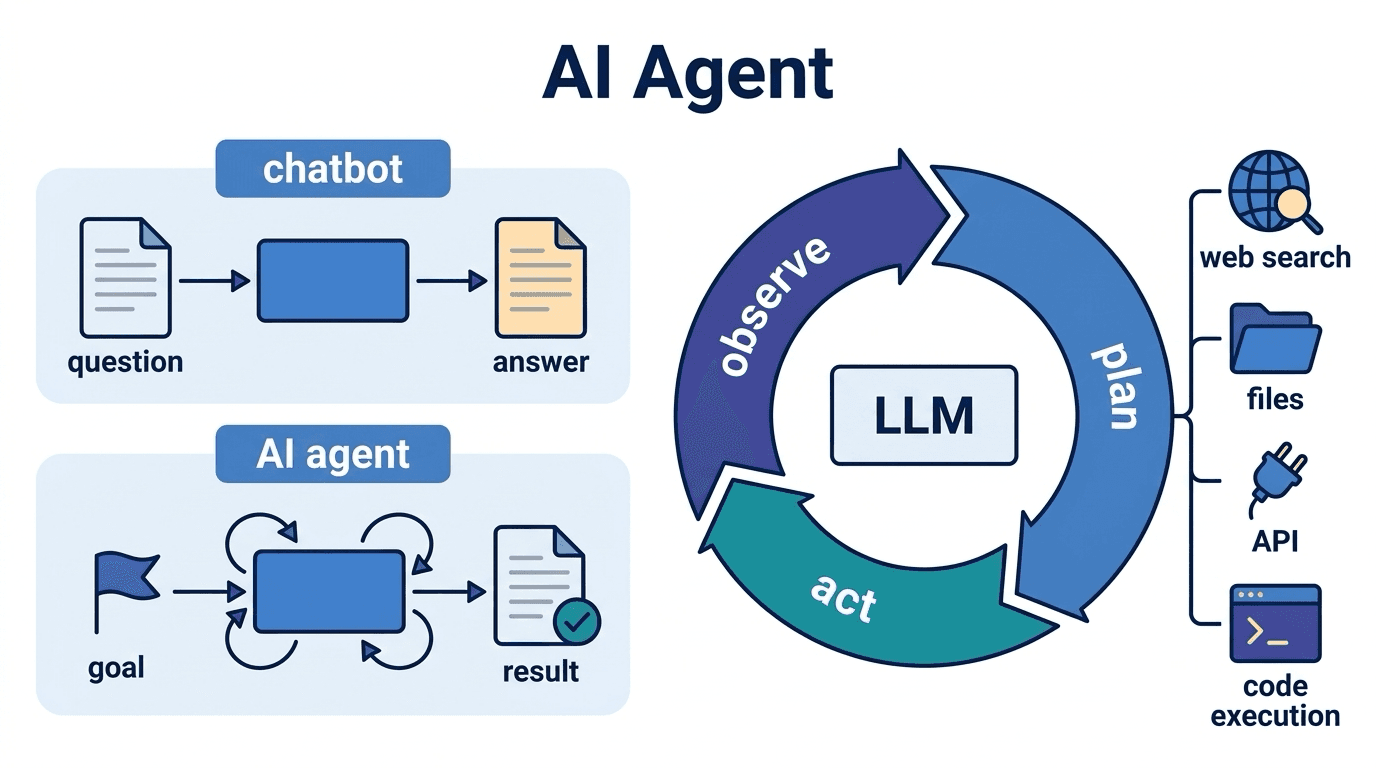
An AI agent is an AI system that autonomously formulates plans toward given goals and executes tasks by invoking external tools.
Fundamental Differences from Traditional Chatbots
Traditional AI assistants operated in a "one question, one answer" format, where a user asks a single question and receives a single response. AI agents differ from this model: given a goal, they independently construct the intermediate steps required to achieve it, performing API calls, file operations, web searches, and more as needed, before returning a final deliverable. Their defining characteristic is that humans do not need to provide step-by-step instructions.
How They Work
AI agents generally operate on the following loop:
- Observe — Grasp the current situation (user instructions, tool outputs, error messages, etc.)
- Think — Reason about what action to take next
- Act — Perform concrete operations such as calling external tools, executing code, or editing files
- Iterate — Observe the results and repeat until the goal is reached
Underpinning this loop are the reasoning capabilities of LLMs (Large Language Models) and tool-connectivity mechanisms such as MCP (Model Context Protocol).
Why They Are Attracting Attention in 2026
Coding agents capable of autonomously handling software development tasks—such as Claude Code, Devin, and OpenAI Codex—have reached the stage of practical use. Furthermore, in the realm of enterprise workflow automation, "multi-agent" architectures, in which multiple agents work in coordination, are becoming increasingly widespread. Google's A2A (Agent-to-Agent) protocol is being developed as a standard specification enabling agents from different vendors to communicate with one another.
However, granting agents excessive permissions carries the risk of unintended operations. In production environments, it is essential to incorporate sandboxed execution and approval workflows for critical operations.
Articles covering this term
- What Are AI Agents? A Next-Generation AI Utilization Guide for Thai Businesses to Autonomously Automate OperationsLearn how AI agents work and how Thai businesses can use them. Discover differences from chatbots, implementation steps, and real use cases.
- What is Agentic Commerce? Preparing for the B2B Era Where AI Agents Make PurchasesLearn how "agentic commerce"—where AI agents autonomously buy and transact—works, and the key practices B2B companies need for sales and marketing success.
- What Is an AI-Native Management Strategy? How to Fundamentally Redesign Your Business ModelFrom "adding AI" to "redesigning with AI." Learn AI-native management transition steps, ERP/FMS integration strategies, and real-world examples from Thai and Japanese companies.
- What Are AI Agent Protocols (MCP & A2A)? How Multi-Agent Collaboration WorksLearn how AI agent protocols like MCP and A2A work. A foundational guide to tool integration and inter-agent communication design in multi-agent systems.


Related Terms
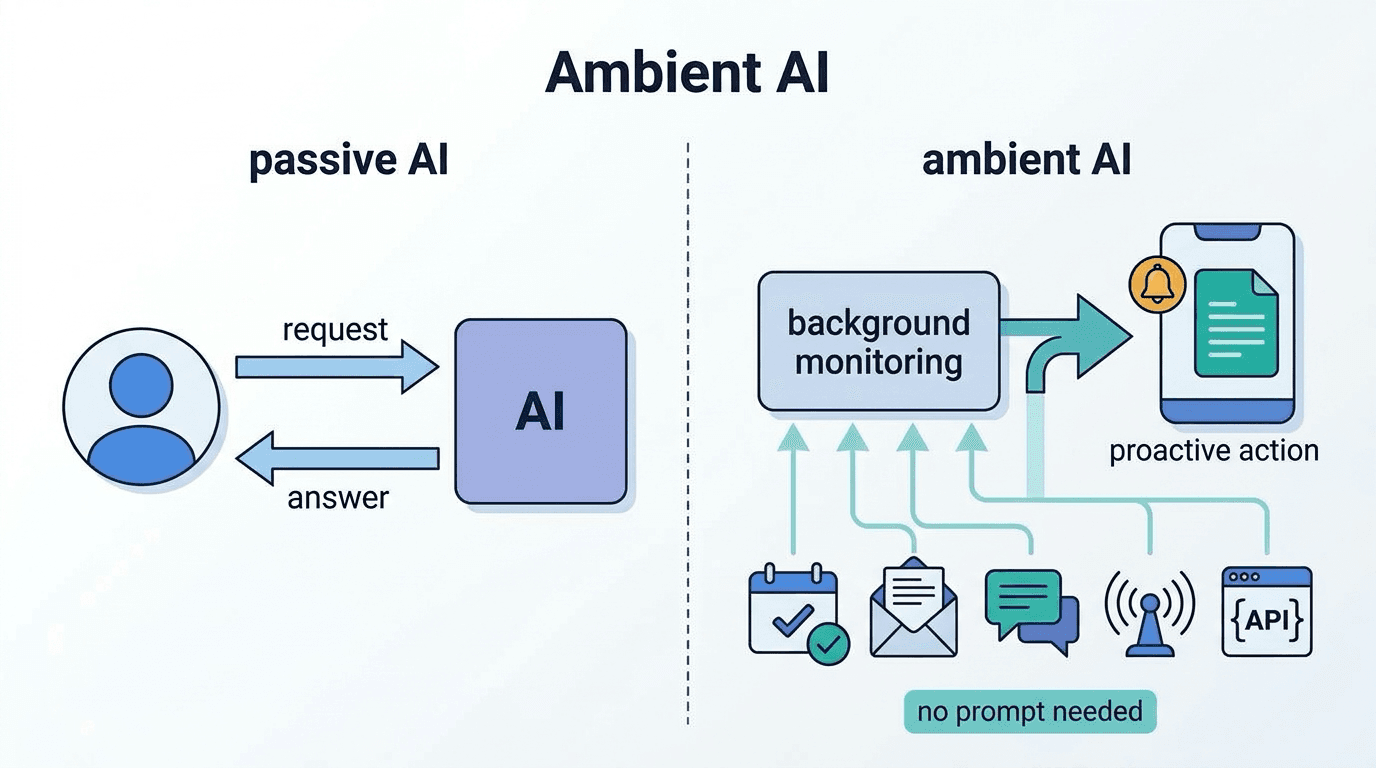
Ambient AI
Ambient AI refers to an AI system that is seamlessly embedded in the user's environment, continuousl
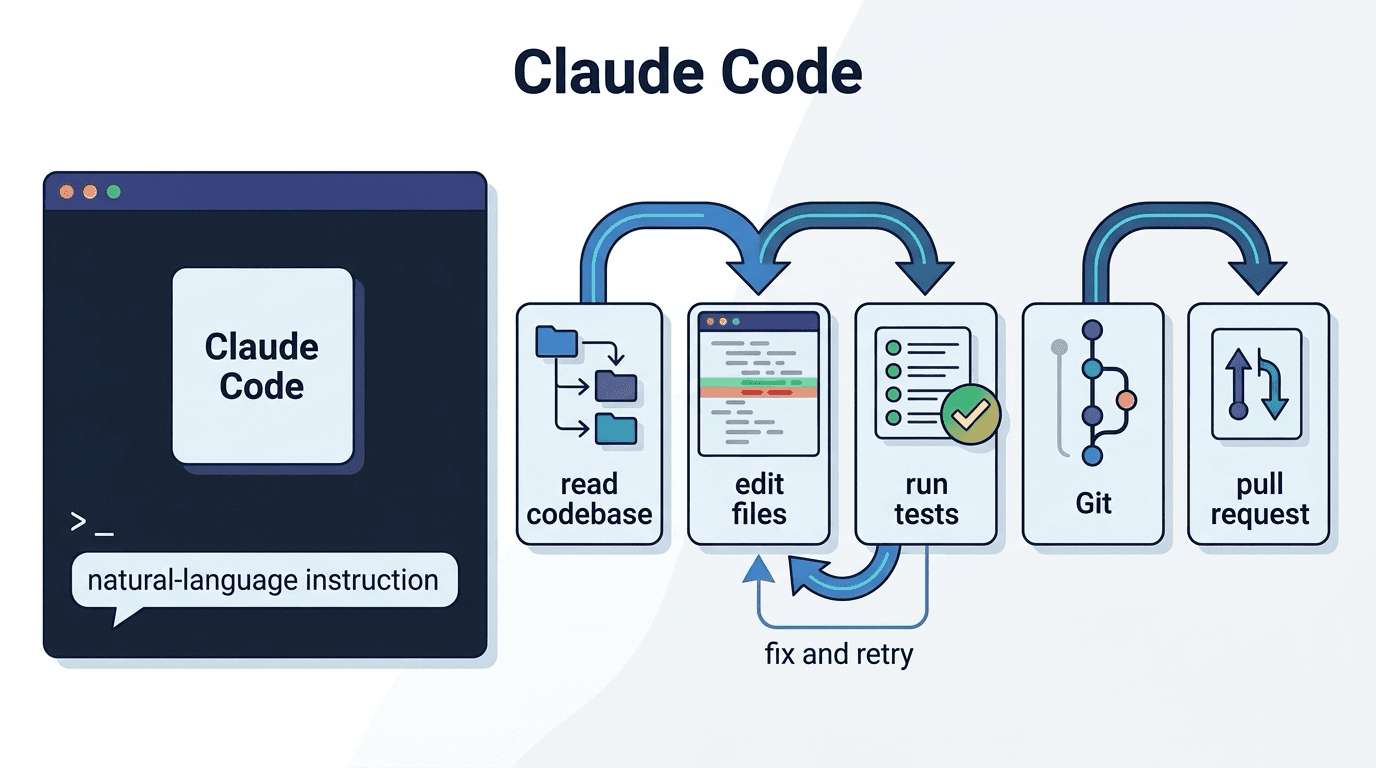
Claude Code
Claude Code is a terminal-resident AI coding agent developed by Anthropic. It is a CLI tool that ena
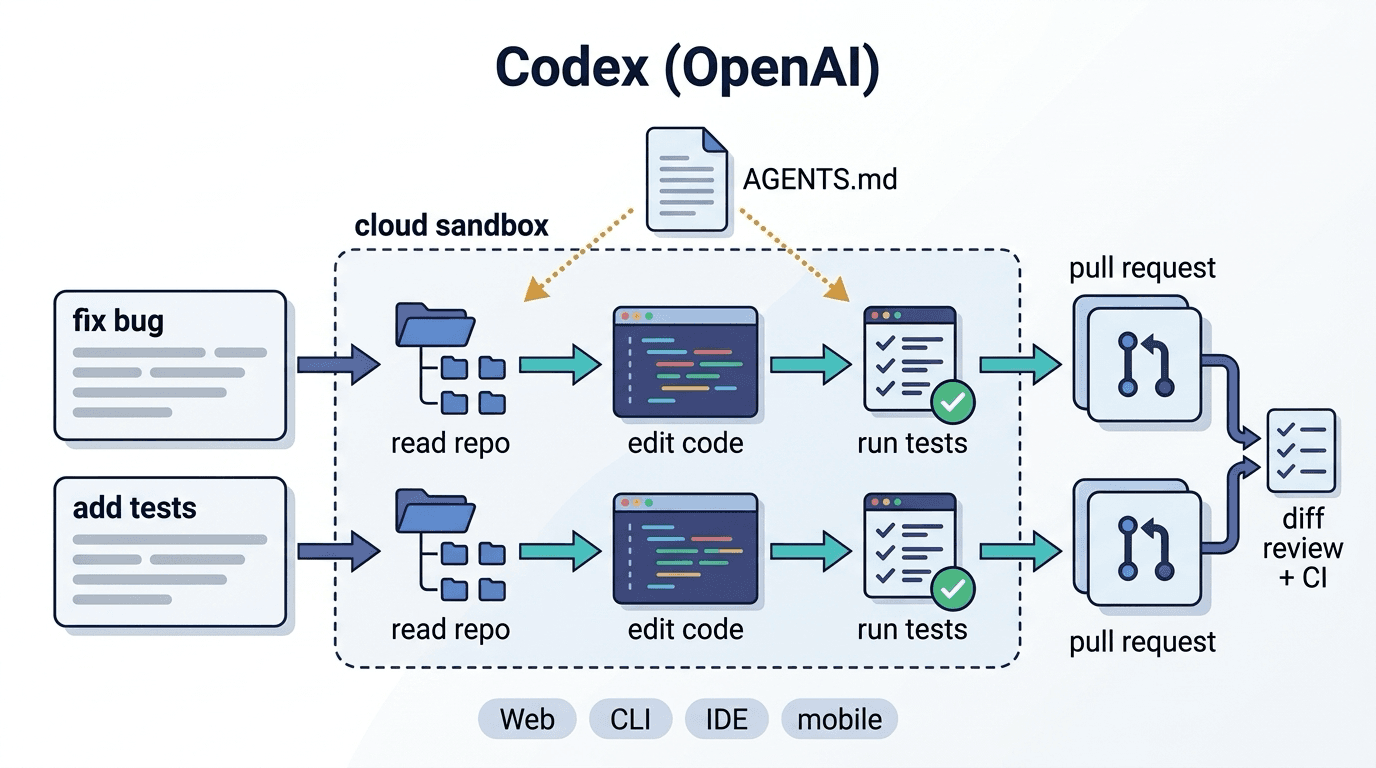
Codex (OpenAI)
Codex is OpenAI's AI coding agent. It reads a repository and carries a task through implementation,
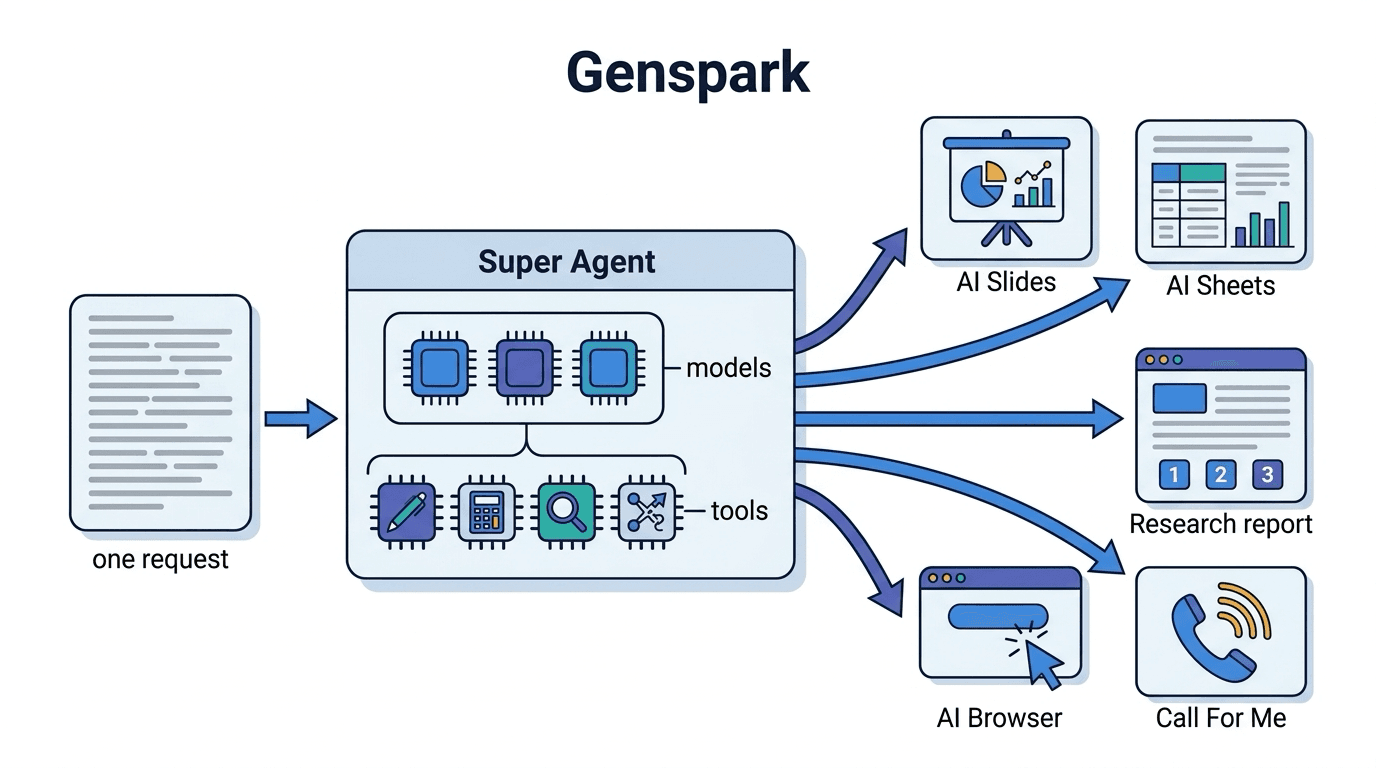
Genspark
Genspark is an AI workspace in which AI agents take on research, slide and spreadsheet creation, and