Acceptance Testing
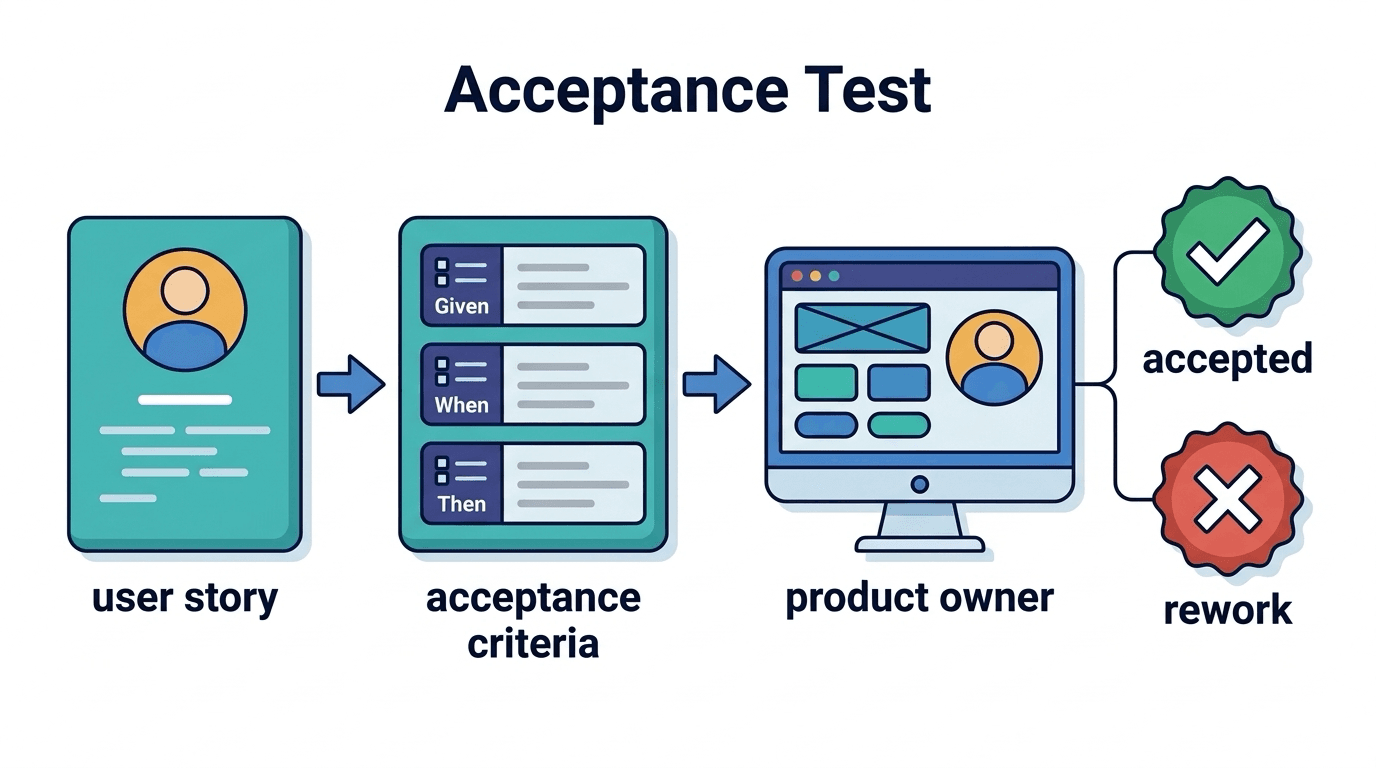
Acceptance testing is a testing method that verifies whether developed features meet business requirements and user stories, from the perspective of the product owner and stakeholders.
"Working" and "Usable" Are Different
While unit tests and functional tests verify "whether the code works correctly," acceptance tests verify "whether the product meets what the business requires." Even if there are no bugs, a release cannot proceed if the behavior differs from the requirements.
Acceptance tests are often written in a format close to natural language. Scenarios are described in terms of user actions and expected outcomes — for example, "When an administrator logs in and opens the employee list, only employees belonging to their own tenant are displayed." The Gherkin (Given-When-Then) syntax is a representative format for this.
Degree of Automation
Some acceptance tests are executed manually, while others are automated using tools such as Playwright. In ATDD (Acceptance Test-Driven Development), acceptance criteria are defined first, implemented as automated tests, and then development begins. Since relying on manual testing tends to reduce execution frequency, automating critical scenarios has become standard practice.
Relationship with Sprint Reviews
In Scrum development, the results of acceptance tests are often reviewed during the Sprint Review. Since these results serve as the basis for the Product Owner to determine "whether this feature is acceptable," it is ideal for the team to agree on test scenarios during Sprint Planning.
Articles covering this term
- Implementing ATDD (Acceptance Test-Driven Development): Differences from BDD and TDD, and Adoption PatternsExplains ATDD implementation steps. Covers differences from BDD/TDD, adoption patterns, and phased rollout for teams—a practical guide for QA engineers.
- **Causes of PoC Failure and Lessons from Real Cases: Designing AI Adoption with Specification-Driven Development (SDD) and Acceptance Test-Driven Development (ATDD)**AI PoC failures often stem from ignoring AI-specific traits—inconsistent outputs, data-dependent performance, no clear pass/fail line—at the planning stage. Learn common failure patterns and how SDD and ATDD fix this.

Related Terms
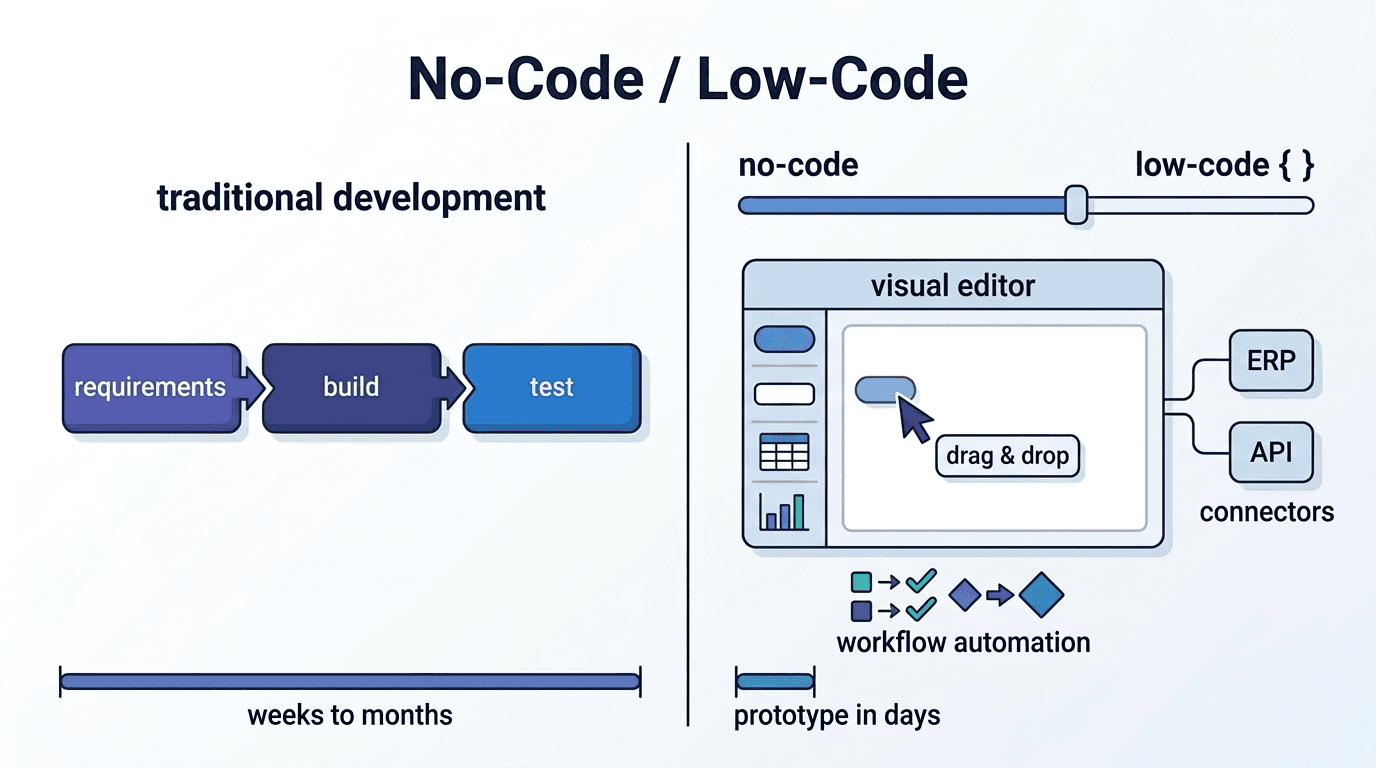
No-Code/Low-Code Development
No-code/low-code development is a development approach that minimizes the need for programming exper

E2E Test
E2E testing (End-to-End testing) is a testing methodology that simulates user interactions to drive

SSM (AWS Systems Manager)
AWS Systems Manager (SSM) is an AWS managed service for centrally operating and managing EC2 instanc

ATDD
ATDD (Acceptance Test-Driven Development) is a development methodology in which the entire team defi