Demand Forecasting AI

Demand forecasting AI refers to a system that analyzes historical sales data and external factors using machine learning to predict future demand with high accuracy. It is utilized in inventory optimization, dynamic pricing, and supply chain management.
Demand Forecasting AI refers to a system that analyzes past sales data and external factors such as weather, events, and economic indicators using machine learning to predict future demand with high accuracy. It is applied across a wide range of business domains, including resolving inventory shortages and surpluses, maximizing revenue through dynamic pricing, and optimizing the entire supply chain.
The Decisive Difference from Conventional Methods
Traditional demand forecasting relied on the experience and intuition of practitioners, along with simple statistical methods such as moving averages and seasonal adjustments. While these approaches function adequately in stable markets with few variables, they have a fundamental weakness: they cannot adequately respond to sudden shifts in consumer behavior or unexpected external shocks.
What Demand Forecasting AI has changed is the variety and volume of data it can handle. It simultaneously processes diverse signals—POS data, inventory history, social media trends, competitor pricing, weather forecasts, and holiday calendars—and automatically learns non-linear correlations. Its ability to detect subtle patterns that human analysts tend to overlook represents the essential difference from conventional methods.
Key Technical Architectures
The primary models adopted in Demand Forecasting AI are as follows:
- Time-series models (ARIMA / Prophet-based): Strong at decomposing periodicity and trends, with high explainability
- Gradient boosting (XGBoost / LightGBM-based): Works well with feature engineering and excels with tabular data
- Deep learning (LSTM / Transformer-based): Superior at learning long-term dependencies and capable of simultaneous multi-series forecasting
- Application of Foundation Models: In recent years, general-purpose time-series foundation models have emerged, enabling high-accuracy predictions even with limited data
The mechanism for continuously cycling through model training, deployment, and monitoring is closely tied to the practice of MLOps, making it essential to build pipelines that detect prediction accuracy degradation (drift) and trigger automatic retraining. Additionally, the adoption of a Feature Store for centralized management of features used in prediction is a critical factor that determines operational quality.
Three Domains Where Adoption Is Advancing
Retail and E-commerce: Order quantities are automatically adjusted based on demand forecasts for individual products, simultaneously suppressing stockouts and excess inventory. For apparel and food products with strong seasonality, improvements in forecast accuracy directly translate to reductions in disposal losses.
Manufacturing and Supply Chain: In the context of Smart Factories, Demand Forecasting AI functions as the core engine linking production planning, parts procurement, and logistics scheduling. Integration with ERP (Enterprise Resource Planning) is also enabling structures where demand signals are reflected in production instructions in real time.
Hotels, Aviation, and Energy: In Revenue Management, where prices are dynamically adjusted in response to demand fluctuations, Demand Forecasting AI is used directly as input for price optimization algorithms.
Challenges Commonly Encountered During Implementation
Building and operating a high-accuracy Demand Forecasting AI requires attention to several pitfalls.
First, data quality issues are easily overlooked. Missing values, outliers, and discontinuities in historical data caused by system migrations distort model training. Deploying sophisticated models without first establishing data cleansing and quality monitoring mechanisms will not yield the expected accuracy.
Next, there is the black-box problem. Because deep learning-based models offer limited visibility into the reasoning behind predictions, frontline staff often cannot trust the results and continue making manual corrections. It is important to deliberately incorporate HITL (Human-in-the-Loop) design into operations, establishing workflows that appropriately combine AI predictions with human judgment.
Furthermore, measuring AI ROI (AI Return on Investment) presents its own challenge. The design of KPIs (Key Performance Indicators) that quantify how improvements in demand forecast accuracy affect inventory costs, opportunity losses, and disposal costs should be clearly defined before implementation.
Demand Forecasting AI is not merely a prediction tool—it is infrastructure that transforms the quality of decision-making itself. Simultaneously pursuing both accuracy and operational design is what drives long-term value creation.
Articles covering this term
- What Is AI Cross-Supply Chain Integration? A Design Approach to Breaking Down Silos and Achieving ROIDiscover how to design AI integration architecture across manufacturing, procurement, and logistics data silos—and solve the data quality issues blocking ROI for 89% of companies.
- How Thailand's Food & Restaurant Industry Can Start Using AI for Demand Forecasting, Shift Optimization, and Food Waste ReductionDiscover how Thai restaurant owners can use AI to forecast customer demand, optimize staff scheduling, reduce food waste, and streamline orders. Real-world steps & case studies.
- How Thailand's Logistics Industry Can Start Using AI for Delivery Optimization, Warehouse Automation, and Demand Forecasting — A Practical 3PL Guide for the EEC EraHow Thai logistics firms can use AI for delivery optimization, warehouse automation & demand forecasting in the EEC/China-Thailand Railway era—practical use cases, pitfalls, and BOI/PDPA compliance.
- How Thailand's Hotel and Travel Industry Can Start Dynamic Pricing with AILearn how Thailand's hotel & travel industry implements AI-driven dynamic pricing and revenue management—from demand forecasting to price optimization strategies.


Related Terms
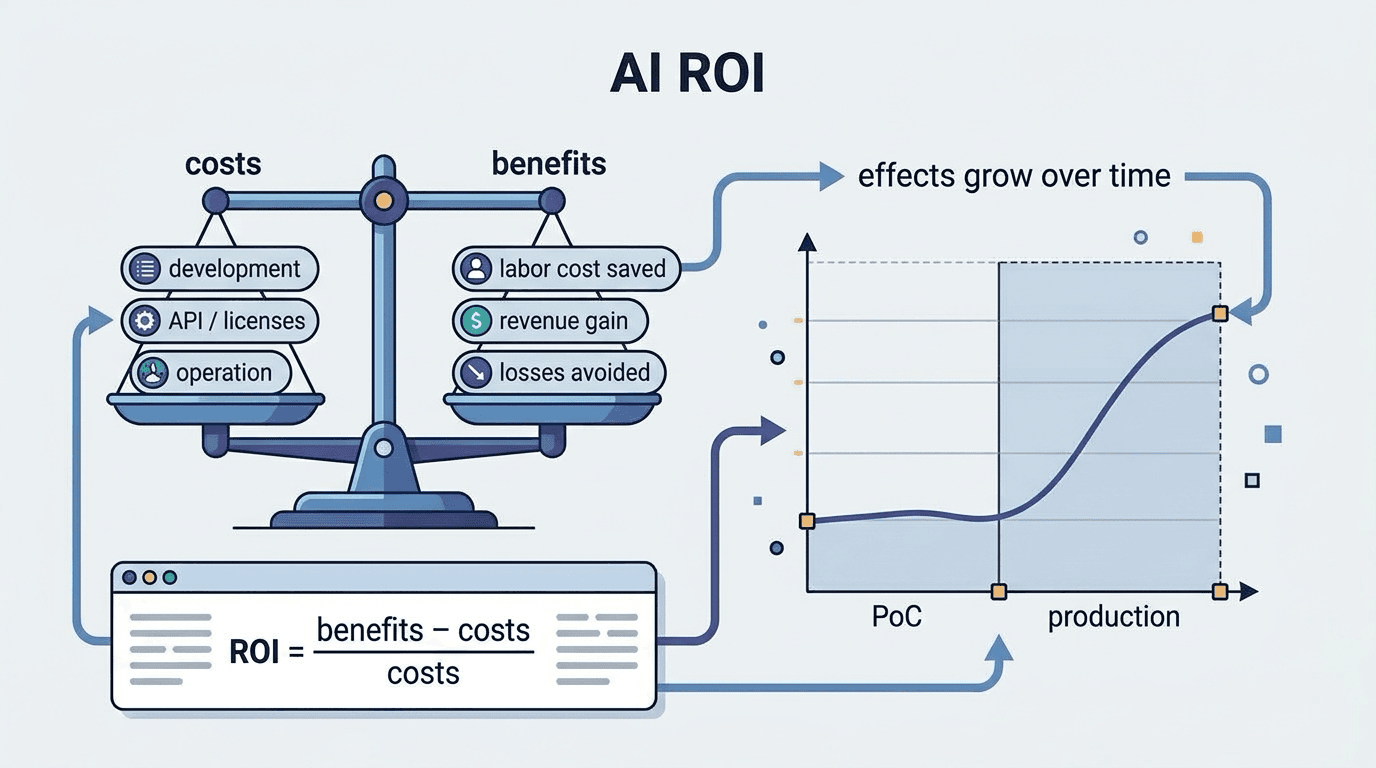
AI ROI (Return on Investment in AI)
AI ROI is a metric that quantitatively measures the effects obtained — such as operational efficienc

AI Observability
An operational practice of continuously monitoring and visualizing the inputs/outputs, latency, cost
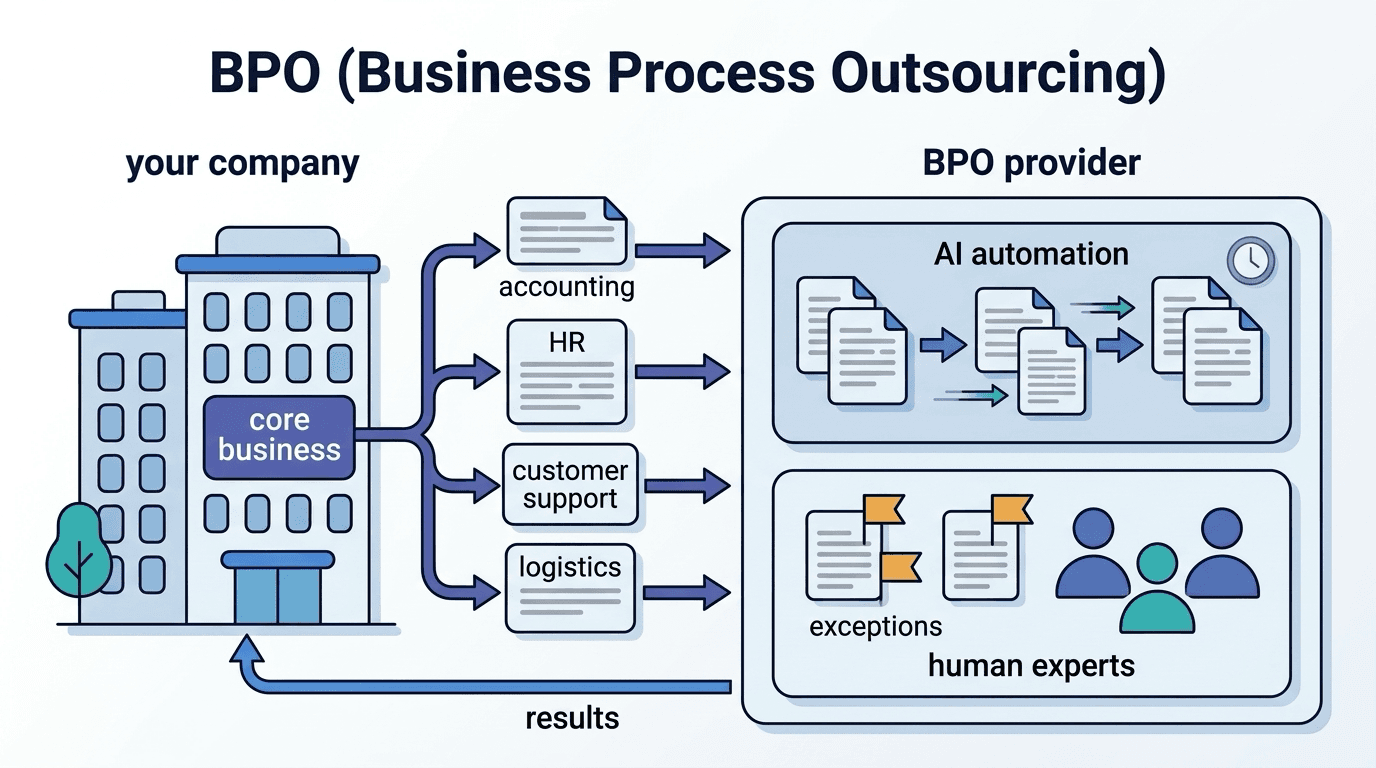
BPO (Business Process Outsourcing)
BPO refers to a form of outsourcing in which a company delegates specific business processes to an e

ERP (Enterprise Resource Planning)
ERP (Enterprise Resource Planning) is an integrated business management system that centrally manage