What is AI Hybrid BPO? Next-Generation Outsourcing Strategy Achieved Through Optimal Human-AI Collaboration

AI Hybrid BPO is a next-generation outsourcing strategy that optimally allocates AI automation and human expert judgment at the business process level.
Combining AI with BPO (Business Process Outsourcing) enables simultaneous cost reduction and quality improvement — this is the core concept of "AI Hybrid BPO." Traditional BPO primarily focused on cost compression through labor-intensive approaches, but the practical adoption of generative AI has made a new outsourcing strategy a reality: one that optimally allocates tasks between "work that humans should do" and "work that can be entrusted to AI." This article compiles the key information needed to evaluate adoption of AI Hybrid BPO, covering everything from its definition and implementation steps to common failure patterns and real-world operational improvement case studies. The content is aimed at corporate planning, IT promotion, and back-office executives who are considering revisiting their BPO arrangements or exploring AI utilization.
Definition of AI Hybrid BPO and Differences from Traditional BPO

AI Hybrid BPO refers to an outsourcing model that combines automated AI processing with human expert judgment within business processes, allocating the optimal handler on a task-by-task basis. The key lies not in "full automation" but in "collaboration."
Limitations and Challenges of Traditional BPO
Traditional BPO is a model that reduces costs by transferring routine tasks to locations with lower labor costs. However, this model has structural limitations.
First, processing volume scales directly with headcount. When invoice processing peaks at month-end, the only options are to increase staff or rely on overtime. When I was setting up a BPO center in Southeast Asia, a client engagement with a 3x peak-to-trough variance was always either overstaffed or understaffed—there was no middle ground.
Second, quality inconsistencies are unavoidable. Even when the same manual is provided, judgment standards subtly diverge depending on the individual handler. There is an inherent dilemma: implementing a double-check system to keep data entry error rates below 0.5% erodes the cost advantage.
Furthermore, proposals for operational improvement rarely emerge. Vendors tend to be evaluated on "doing exactly what they are told," which creates no incentive to revisit the processes themselves.
Problems Solved by AI Hybrid BPO
AI Hybrid BPO addresses each of the three limitations of the traditional model through distinct approaches.
Fluctuations in processing volume → Absorbed by AI. By having AI handle tasks that can be patterned—such as OCR reading of invoices and data entry—fluctuations between busy and slow periods can be absorbed without increasing or decreasing headcount. Human staff focus on exception handling and cases requiring judgment.
Inconsistent quality → Standardized by AI. AI applies the same rules with the same level of accuracy every time. By eliminating human error in tasks such as classification, matching, and format conversion, humans transition to a role of reviewing and correcting AI output.
Absence of improvement proposals → Visualized by data. AI automatically detects bottlenecks and anomalous patterns from the data it processes, providing a starting point for improvement. "Somehow slow" becomes "an average delay of 2.3 days at this particular step."
Comparison of Three Models (Traditional / Fully Automated AI / Hybrid)
The following comparison table organizes the characteristics of three outsourcing models.
| Comparison Axis | Traditional BPO | Full AI Automation | AI Hybrid BPO |
|---|---|---|---|
| Cost Structure | Proportional to labor costs | High initial investment, low operating costs | Moderate (phased investment possible) |
| Scalability | Dependent on hiring | Instant scaling | AI portion is instant, human portion is gradual |
| Quality Consistency | Dependent on individual staff | Uniform but weak against exceptions | Standardized tasks are uniformly handled by AI + exceptions judged by humans |
| Exception Handling | High (handled by humans) | Low (weak against unexpected cases) | High (complementary human + AI) |
| Implementation Lead Time | Short (staff deployment) | Long (development and training) | Moderate (phased implementation possible) |
| Improvement Cycle | Slow (person-dependent) | Data-driven | Fusion of data and human expertise |
Full automation may appear attractive, but cases where AI can cover 100% of operations remain limited. Taking invoice processing as an example, reading accuracy for standard formats exceeds 95%, but human intervention becomes essential for invoices with handwritten notes or non-standard layouts. The hybrid model is designed with this reality in mind.
Why Is AI Hybrid BPO Attracting Attention Now?

The combination of AI and BPO is not new in itself. Since the RPA boom, the concept of "automation × outsourcing" has been discussed. So why is it attracting renewed attention now? Behind this lies three structural changes.
A Turning Point Brought About by the Practical Application of Generative AI
Traditional RPA was rule-based automation focused on tasks like "clicking buttons on a screen" or "transcribing data into fixed cells." It would stop whenever input fell outside the defined rules.
Generative AI has significantly relaxed these constraints. Classifying the content of emails written in natural language, reading line items from invoices even when the layout changes, determining the intent of an inquiry and drafting a response — AI can now handle these tasks that involve "ambiguity," which has dramatically expanded the scope of processes eligible for automation in BPO.
When our company analyzed a client's accounting BPO operations, approximately 40% of all processes were categorized as "structured but with inconsistent formatting." This was an area that RPA struggled to handle, but the introduction of generative AI has transformed it into a candidate for automation.
Simultaneous Progression of Labor Shortages and Increasing Operational Complexity
In Japan, the working-age population continues to decline, making it increasingly difficult to secure staff at BPO centers. At overseas BPO locations as well, labor costs have risen sharply in countries such as the Philippines and India, undermining the fundamental BPO premise of "cheap labor."
At the same time, the complexity of the work being outsourced is growing. The required skill level has risen, shifting from simple data entry to multilingual customer support, compliance checks, and the creation of data analysis reports. The reality that simply increasing headcount is no longer sufficient is driving the transition toward a collaborative model with AI.
Shifting Expectations: From "Cost Reduction" to "Value Creation"
In the past, BPO adoption proposals were approved on the basis of "annual cost savings of X million yen." However, management expectations are shifting.
According to a Gartner study, more than half of companies that have adopted BPO report expecting their outsourcing partners to deliver not only cost reductions, but also improvements in operational quality and decision-making support through data utilization. The paradigm is shifting from BPO as a cost center to BPO as a value driver. Meeting these expectations goes beyond what manual, labor-intensive approaches can achieve, making a hybrid model that incorporates AI's analytical and processing capabilities an essential requirement.
Steps for Implementing AI Hybrid BPO

The introduction of AI hybrid BPO follows the principle of "phased transition" rather than "all-at-once implementation." The process proceeds in the following 4 steps.
Step 1: Visualizing and Classifying Business Processes
The first step is to visualize the business processes targeted for outsourcing and classify them by task unit.
There are two axes for classification: standardization level (whether it can be rule-based) and decision complexity (whether specialized knowledge or contextual understanding is required). Mapping these two axes across four quadrants makes AI implementation priorities clear.
| Simple Decision | Complex Decision | |
|---|---|---|
| Standardized | AI automation (top priority) | AI draft + human review |
| Non-standardized | AI assistance + human execution | Human-led (AI analytical support) |
In the author's experience, this classification work itself takes one to two weeks—but skipping it means you end up starting with "the loudest department's work" rather than "work that is easy to automate with AI," making it difficult to see results.
Step 2: Selection Criteria for AI Application Domains
Based on the classification results, select the areas to apply AI. The selection criteria are the following three:
- High processing volume: Operations with several hundred or more transactions per month. Introducing AI into low-volume operations will not yield a positive ROI.
- Low impact when errors occur: Operations where AI misjudgments do not immediately lead to serious damage. Start with areas where corrections can be made through human review.
- Training data is available: Operations where past processing records have been accumulated as data. Without data, AI cannot learn.
Operations that satisfy all three conditions become the first candidates for AI implementation. Typical examples include invoice processing, expense reimbursement, initial inquiry classification, and data cleansing.
Step 3: PoC Design and Impact Measurement
Conduct a small-scale PoC (Proof of Concept) for the selected business process. The key to designing a PoC is clearly defining what you are comparing against.
Specifically, run the same business process in parallel using both "conventional manual processing" and "AI hybrid processing" for 2–4 weeks, and compare the following metrics:
- Processing speed: Time per transaction
- Accuracy: Error rate and rework rate
- Cost: Combined total of labor costs and AI usage fees
- Exception handling: Number of cases the AI could not process, and the man-hours required for human coverage
In one of our company's PoCs, when we delegated the automatic categorization of expense reports to AI, the results showed a 60% reduction in processing time compared to conventional methods, and an accuracy rate of 97.2% (versus 94.8% for manual processing). However, for complex overseas business trip expenses, the AI's misclassification rate spiked to 15%, which led us to switch to a human-led design for that area. A PoC is indispensable not only for determining where to introduce AI, but also for deciding where not to.
Step 4: Full-Scale Deployment and Governance Building
Once the PoC has confirmed effectiveness, gradually expand the scope of target operations. What tends to be overlooked in this phase is the establishment of a governance framework.
Governance for AI hybrid BPO requires the following elements in addition to traditional BPO management:
- AI model accuracy monitoring: A mechanism to regularly measure AI output accuracy and detect degradation
- Escalation rules: Defining criteria for routing tasks to humans when AI confidence falls below a threshold
- Data security: Agreements on the scope of data input into AI and the AI vendor's data retention policy
- Improvement cycle: A feedback loop that collects AI misclassification patterns and incorporates them into model improvements
Without sufficient governance, even a smooth initial rollout can lead to a situation six months later where AI accuracy has declined, causing a regression to "humans are more reliable after all."
Common Failure Patterns and How to Avoid Them

Companies that fail to achieve results with AI hybrid BPO adoption share common patterns. These are all issues that can be avoided if identified in advance.
The Pitfall of Designing Business Processes Around "AI First"
The most common failure is when "implementing AI" itself becomes the goal.
Management issues a directive like "we need to leverage AI too," and without conducting sufficient analysis of on-site operations, pushes forward with "let's just apply AI to this task for now." The result is that AI gets forced onto tasks it is ill-suited for (tasks where decision criteria change frequently, where there are too many exception patterns, etc.), accuracy suffers, and trust on the ground is lost.
Mitigation: Do not skip the task classification in Step 1. Select AI automation targets from "tasks where AI excels." Ask management to set "rate of operational efficiency improvement" as the KPI, rather than "AI adoption rate."
Cases of Misjudging Areas That Require Human Judgment
There is also the opposite pattern: over-trusting AI's accuracy and delegating to AI even decisions that humans should inherently be making.
At one company, AI was given full responsibility for drafting initial responses to customer complaints. While the quality of responses to routine inquiries was high, an incident occurred in which the AI returned a mechanical reply to an emotionally charged complaint, amplifying the customer's anger. Situations that require emotional understanding and empathy remain an area where AI currently struggles.
Mitigation: Draw the boundary between AI and humans not by "task" but by "the nature of the judgment." Decisions based on data go to AI; decisions based on context, emotion, and ethics go to humans. Always build in an escalation design that routes uncertain cases to a human.
Cases Where Post-Implementation Operations Are Insufficient
Even when implementation goes smoothly, there is a pattern where effectiveness declines after 3 to 6 months. The cause is inadequate operational structure.
When the trends in input data change, AI model accuracy drops. Invoice formats change, new account categories are added, legal revisions alter classification standards — without a system in place to update the model in response to these changes, accuracy gradually deteriorates. On-site staff conclude that "the AI is unusable" and revert to manual processing.
Mitigation: Build a structure for reviewing AI accuracy metrics on a monthly basis. Design the operational workflow in advance so that model retraining is triggered when accuracy falls below a threshold. At our company, we share a precision monitoring dashboard with clients and configure automatic alerts for when accuracy drops below the threshold.
Use Cases at Our Company: Operational Improvements Achieved Through BPO × AI

Since the discussion has been abstract, I will introduce an actual case study of AI hybrid BPO that our company has worked on.
Target Operations and Pre-Implementation Challenges
The client is a manufacturing company with approximately 500 employees. The accounting department had outsourced invoice processing and expense settlement to an external BPO, but faced the following challenges:
- 4 dedicated BPO staff constantly assigned to process approximately 3,000 invoices per month
- Processing delays occurring during end-of-month peaks, impacting payment cycles
- An annual data entry error rate of 2.1%, consuming 20 hours per month on rework and corrections
- Annual BPO costs of approximately ¥18 million, with an upward trend tied to annual labor cost increases
"Costs keep rising, yet quality stays flat" — this single remark from the accounting manager became the catalyst for exploring a switch to an AI hybrid BPO.
Before / After (Man-hours / Quality / Cost)
After a 3-month PoC, our company transitioned to the following hybrid structure.
AI-handled areas: Invoice OCR reading → Data extraction → Automatic account classification → Provisional entry into the accounting system Human-handled areas: Review of AI classification results (those with confidence below 80%) → Exception handling → Final approval → Vendor communication
| Metric | Before (Traditional BPO) | After (AI Hybrid) | Improvement |
|---|---|---|---|
| Monthly processing time | 640 hours (4 staff × 160h) | 280 hours (2 staff × 140h) | 56% reduction |
| Error rate | 2.1% | 0.4% | 81% improvement |
| Month-end peak delay | Average 3.2 days | 0.5 days | 84% reduction |
| Annual cost | Approx. ¥18 million | Approx. ¥12 million (incl. AI usage fees) | 33% reduction |
Notably, the improvement in error rate was more significant than the cost reduction. By having AI handle routine processing with high accuracy, humans were able to focus on exception cases, resulting in fewer oversights.
Lessons Learned and Key Takeaways
Here are three key lessons learned from this case study.
1. Routing by "AI confidence score" is critical. If the confidence threshold is set too low, too many cases get referred back to humans, undermining efficiency. Set it too high, and AI misclassifications increase. During the PoC, we tested the threshold incrementally and settled on 80%. Since this figure varies depending on the nature of the business process, it must always be validated against real data.
2. Redefining the roles of frontline staff is essential. Resistance rooted in the fear of "AI taking our jobs" was a real challenge. By clearly communicating to BPO staff that "your role is shifting from data entry to reviewing AI output and managing quality," and by providing training in review skills, we were able to facilitate a smooth transition.
3. Start small, then scale. For the first two weeks, only 30% of invoices were routed to AI processing, while the remaining 70% were handled by humans as before. Once accuracy and operational workflows had stabilized, we gradually increased the ratio. The AI processing rate ultimately reached 85%, though the remaining 15% is intentionally designed to be handled by humans.
FAQ

Here is a compilation of frequently asked questions received when considering the introduction of AI hybrid BPO.
Q1: What is the difference between AI Hybrid BPO and traditional RPA implementation?
RPA is a rule-based automation that "repeats fixed procedures exactly as defined." It stops when the format of input data changes. AI hybrid BPO is fundamentally different in that it uses generative AI and machine learning to handle tasks that involve "ambiguity." Furthermore, while RPA automates existing business workflows as-is, AI hybrid BPO redesigns the business processes themselves into those suited for "AI" and those suited for "humans."
Q2: Which tasks are most effective to start with?
The golden rule is to start with tasks that have high processing volume, high standardization, and accumulated historical data. Typical first candidates include invoice processing, expense reimbursement, primary classification of inquiries, and data cleansing. Conversely, tasks where judgment criteria are person-dependent and frequently changing, or tasks with only a few dozen cases per month, tend to be difficult to justify from an ROI perspective.
Q3: How much does implementation cost?
Costs vary depending on scale and target operations, but the following provides a general guideline. The PoC phase (2–3 months) typically runs ¥3–8 million, while initial full-scale implementation costs ¥5–20 million. Monthly operating costs—comprising AI usage fees plus personnel expenses—tend to come in at around 60–80% of conventional BPO costs. The key is to quantitatively verify results during the PoC phase before committing to full-scale investment; a "full rollout from the start" approach should be avoided.
Q4: What about security and data management?
In AI hybrid BPO, in addition to conventional BPO security requirements, it is necessary to clearly define in contracts "the scope of data input into AI" and "whether the data may be used for AI model training." When inputting personal information or confidential information into AI, anonymization of data, verification of the AI vendor's data retention policy, and preservation of processing logs along with audit readiness are all mandatory. At our company, we create a data flow diagram for each client to visualize which data passes through which AI services before commencing operations.
Summary & Next Steps

AI Hybrid BPO is an outsourcing strategy that optimally allocates AI-driven automated processing and human expert judgment at the business process level. It transcends the limitations of traditional BPO—which focused solely on cost reduction—to achieve simultaneous improvements in quality, speed, and flexibility.
Here is a recap of the key points for implementation.
- Classify business processes by "degree of standardization" and "complexity of judgment" to prioritize AI adoption
- Quantitatively verify effectiveness through a PoC before scaling up incrementally
- Draw the boundary between AI and humans based on the "nature of the judgment" rather than the "task" itself
- Design accuracy monitoring and governance frameworks after implementation in advance
"BPO costs keep rising while quality remains flat." "We want to advance AI adoption but don't know where to start." — If these challenges resonate with you, we encourage you to begin by visualizing and classifying your current business processes. Our company provides end-to-end support, from business analysis and PoC design through to full-scale implementation. Please feel free to contact us to discuss the adoption of AI Hybrid BPO.
Author & Supervisor

Yusuke Ishihara
Started programming at age 13 with MSX. After graduating from Musashi University, worked on large-scale system development including airline core systems and Japan's first Windows server hosting/VPS infrastructure. Co-founded Site Engine Inc. in 2008. Founded Unimon Inc. in 2010 and Enison Inc. in 2025, leading development of business systems, NLP, and platform solutions. Currently focuses on product development and AI/DX initiatives leveraging generative AI and large language models (LLMs).
Recommended Articles


Terms related to this article

HITL (Human-in-the-Loop)
HITL (Human-in-the-Loop) is an approach that incorporates into the design a process by which humans
Agentic AI
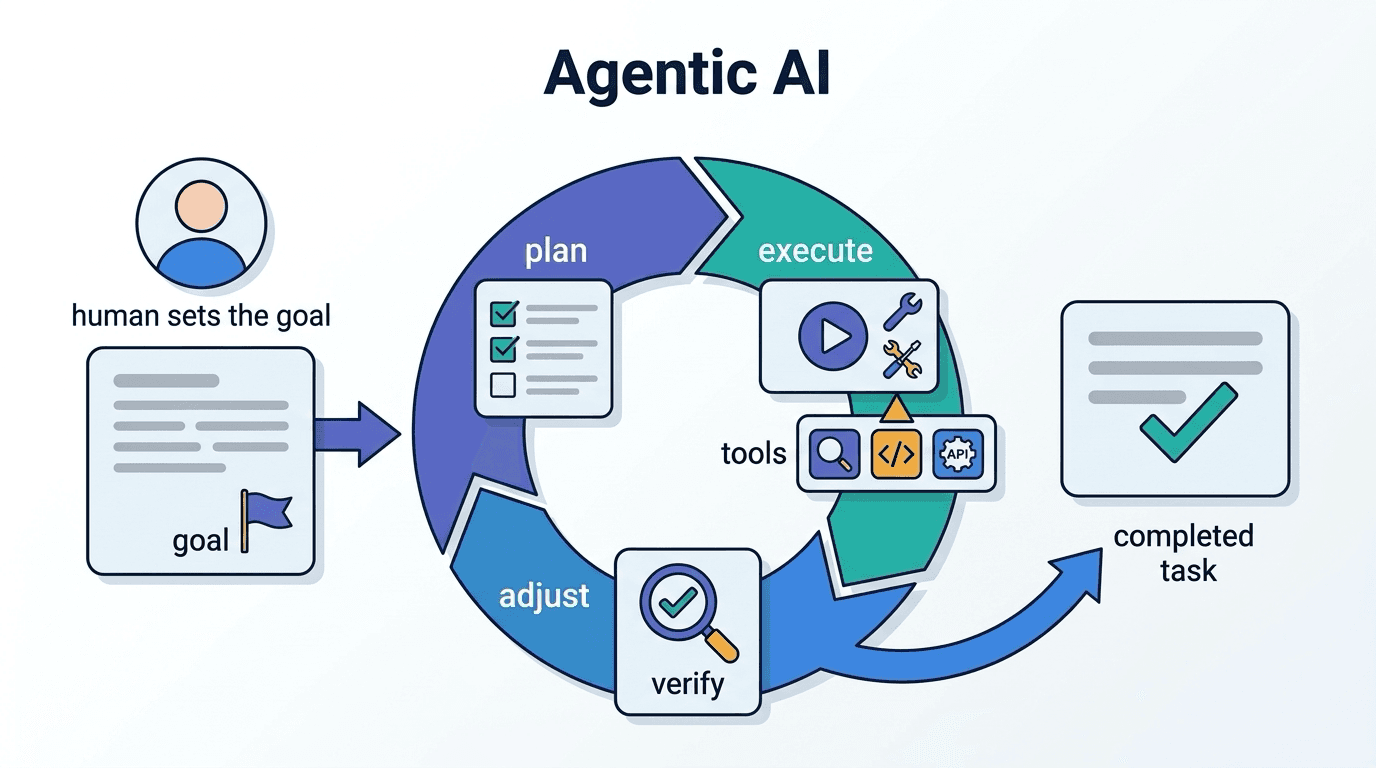
Agentic AI is a general term for AI systems that interpret goals and autonomously repeat the cycle o
AI Employee (AI Employee)
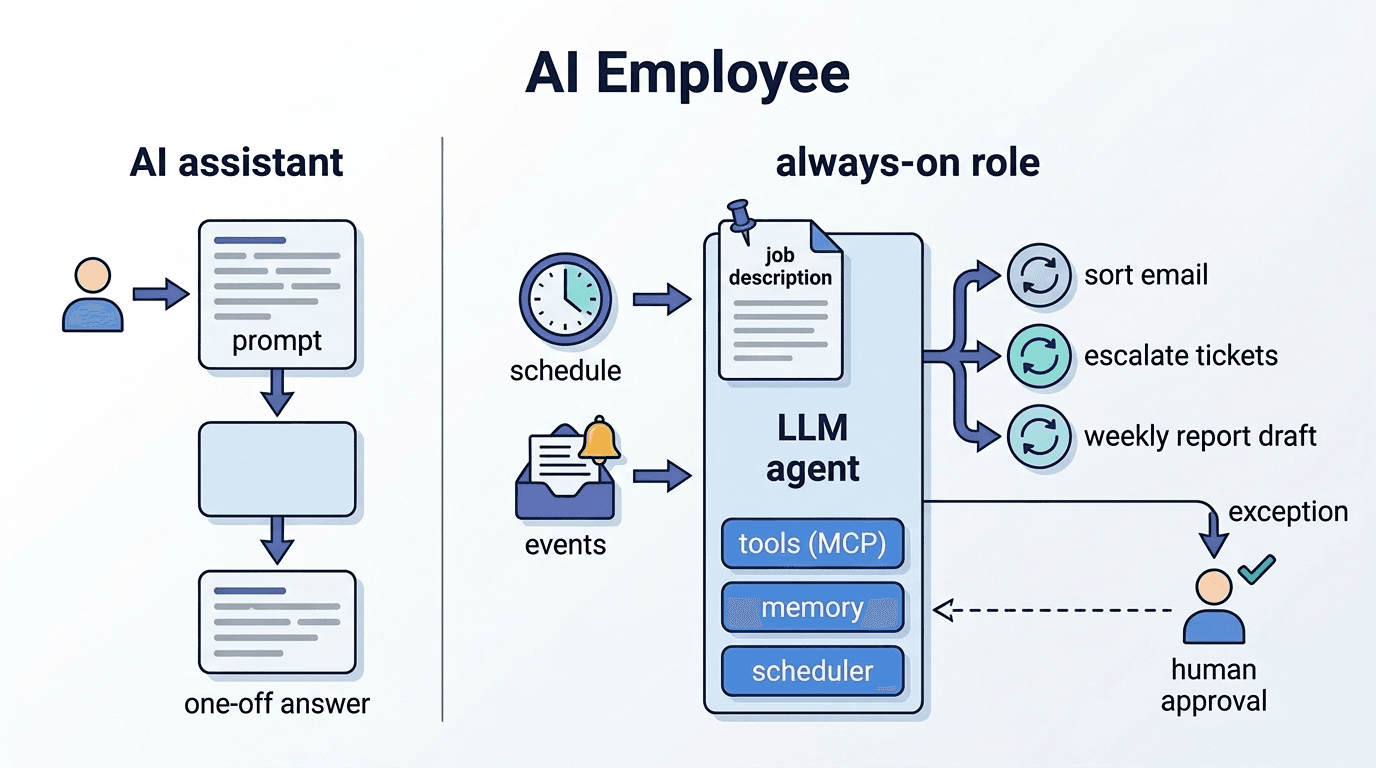
An autonomous AI agent that takes on a specific business role and continuously performs tasks in the