Knowledge Transfer
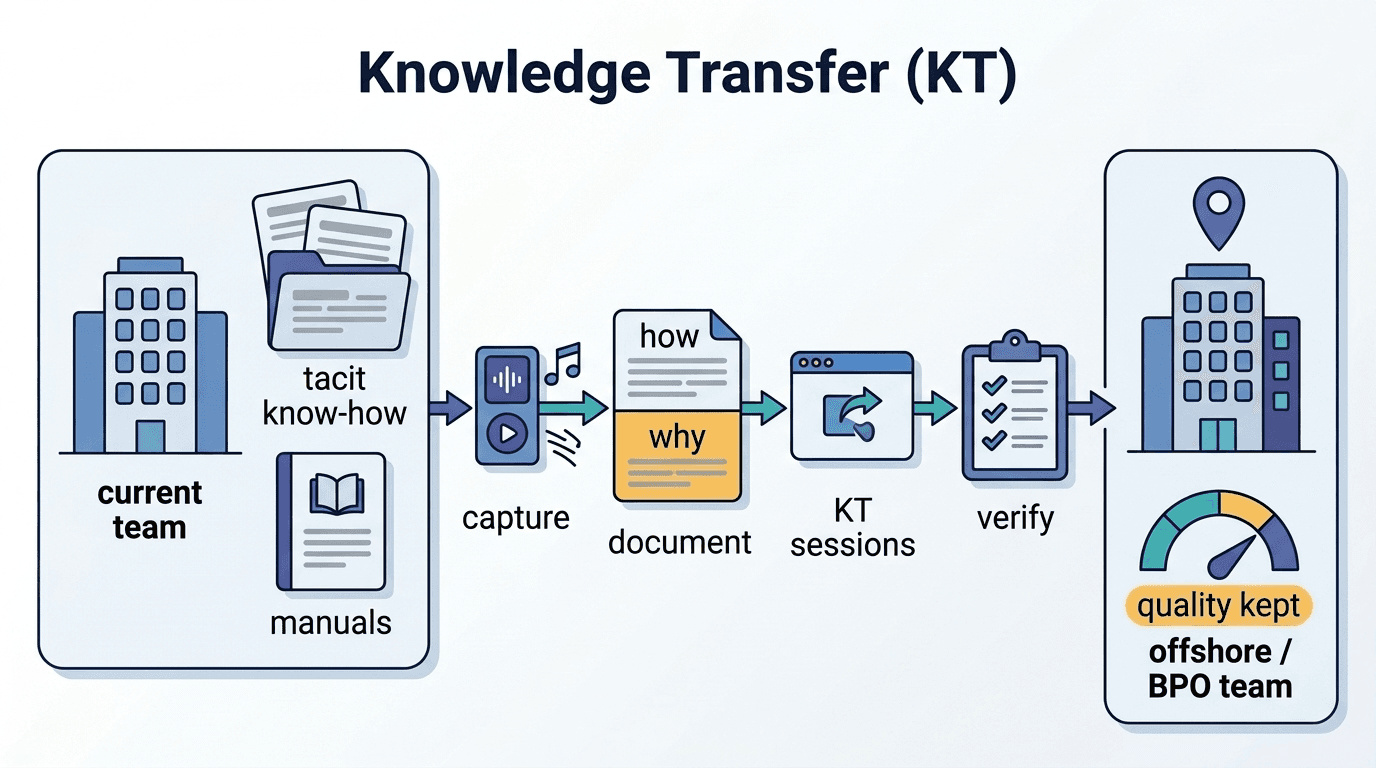
Knowledge transfer refers to the process of systematically transferring business knowledge, know-how, and skills from specific individuals or departments to others within an organization. It is considered important in the context of maintaining quality during offshore development and BPO transitions, as well as improving training efficiency through AI utilization.
Knowledge Transfer refers to the process of systematically transferring business knowledge, know-how, and skills from specific individuals or departments to others within an organization. Unlike simple handovers or information sharing, its purpose is to convert deep practical experience—including tacit knowledge—into a reusable organizational asset, thereby ensuring sustained operational quality.
Why It Matters Now
Growing interest in Knowledge Transfer stems from several structural shifts.
First, the widespread adoption of offshore development and BPO (Business Process Outsourcing) has played a significant role. When transferring operations to overseas locations or external vendors, failure to properly convey the tacit knowledge held by the current team leads to quality degradation and project failure. The contextual background behind "why a particular rule exists" is precisely the kind of core information that surface-level manuals cannot capture.
Additionally, the accelerating retirement of veteran employees due to an aging population has made the risk of knowledge discontinuity increasingly apparent. A situation in which know-how cultivated through years of experience exists only inside an individual's head represents a serious organizational risk.
Components of Knowledge Transfer
Knowledge targeted for transfer can be broadly classified into two types.
Explicit Knowledge Knowledge that can be documented and systematized. This includes information that can be recorded, such as operational manuals, design documents, code comments, and KPI definitions.
Tacit Knowledge Knowledge grounded in experience and intuition that is difficult to verbalize. Typical examples include practical sensibilities such as "this client dislikes this particular phrasing" or "this system tends to become unstable at month-end."
Effective Knowledge Transfer is fundamentally different from simple documentation work in that it includes the process of converting tacit knowledge into explicit knowledge.
Transformation Through AI
In recent years, the rise of generative AI has begun to significantly transform Knowledge Transfer methodologies.
Traditionally, the dominant approach was a labor-intensive process of documenting interviews with veteran employees and distilling that content into training materials. Today, however, it has become a realistic option to incorporate internal past emails, meeting minutes, and code review comments into a RAG (Retrieval-Augmented Generation) framework, enabling new members to acquire knowledge by asking questions in natural language.
Efforts to leverage knowledge graphs to visualize relationships among organizational knowledge—and to structurally understand "who knows what"—are also becoming more widespread. Furthermore, the concept of an agentic flywheel, in which AI agents autonomously execute business processes while accumulating and passing on knowledge, is attracting attention as a vision for the future of Knowledge Transfer.
Common Pitfalls in Implementation
The most frequent causes of Knowledge Transfer failure are "insufficient time" and "passivity on the part of the recipient." A pattern in which a busy sender hands over only formal documentation and the recipient does nothing more than read it amounts to nothing more than a superficial transfer.
The issue is also not unrelated to Shadow AI. When employees begin using their own AI tools while bypassing official procedures, actual operational knowledge becomes intermingled with the usage patterns of unofficial tools, making systematic organization difficult after the fact.
The key to success lies in designing the transfer process not as a one-time event, but as a continuous mechanism. By incorporating the HITL (Human-in-the-Loop) approach—embedding a cycle in which humans regularly review and correct AI-driven knowledge organization—the freshness and accuracy of knowledge can be maintained.
An organization's competitive strength depends on how effectively it can convert knowledge dormant within individuals' minds into an asset belonging to the organization as a whole. Knowledge Transfer is the central practice through which that conversion is realized.
Articles covering this term
- How to Streamline In-House Training and Knowledge Transfer with AIDiscover how to use AI for employee training, onboarding & knowledge transfer. Learn steps to systemize FAQ, manuals & knowledge sharing to eliminate training silos.
- Preventing Knowledge Leakage and Establishing a Phased Skill Transfer Process in Offshore DevelopmentWe explain concrete processes and organizational structures to prevent knowledge loss from offshore development team turnover and achieve phased skill transfer beyond language and cultural barriers.
- AI Skill Gap in Offshore Development Teams: Skill Acquisition Roadmap and Training FrameworkTraining system and skill roadmap to bridge AI tech gaps in offshore development teams. Explains tech trend tracking, knowledge sharing, and phased learning programs with implementation methods.
- What Is an AI-Native Management Strategy? How to Fundamentally Redesign Your Business ModelFrom "adding AI" to "redesigning with AI." Learn AI-native management transition steps, ERP/FMS integration strategies, and real-world examples from Thai and Japanese companies.


Related Terms
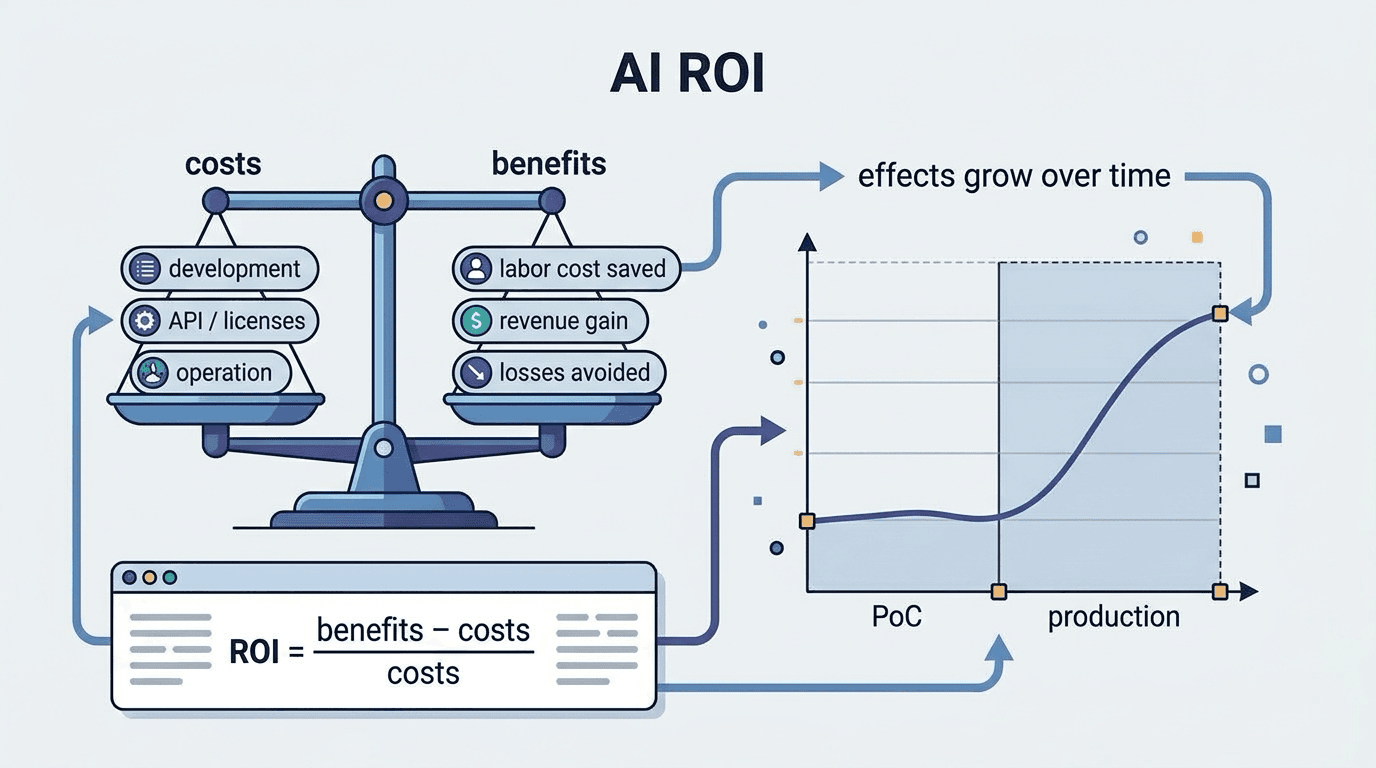
AI ROI (Return on Investment in AI)
AI ROI is a metric that quantitatively measures the effects obtained — such as operational efficienc

AI Observability
An operational practice of continuously monitoring and visualizing the inputs/outputs, latency, cost
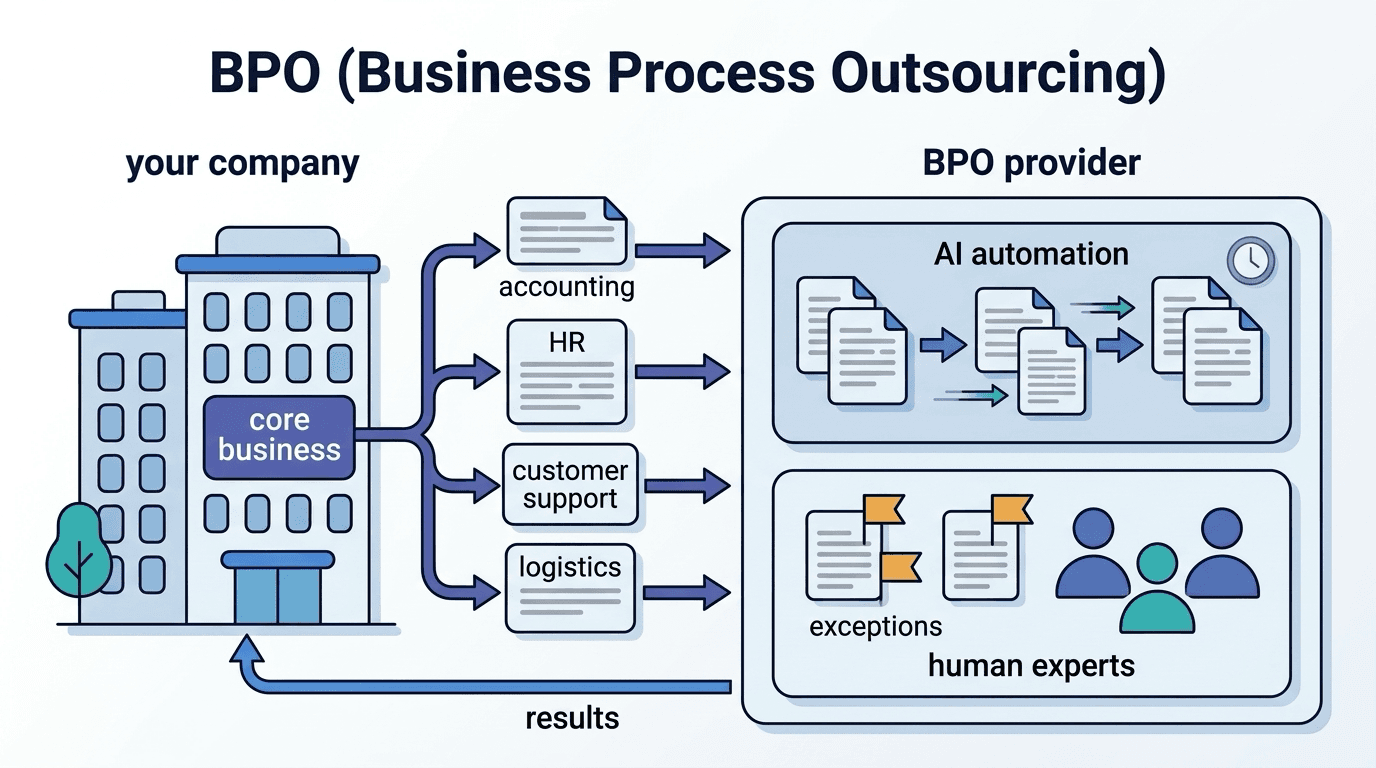
BPO (Business Process Outsourcing)
BPO refers to a form of outsourcing in which a company delegates specific business processes to an e

Demand Forecasting AI
Demand forecasting AI refers to a system that analyzes historical sales data and external factors us