Knowledge Graph

A data model that represents entities and their relationships in a graph structure. It is used to improve the accuracy of RAG and AI search.
What is a Knowledge Graph?
A knowledge graph is a data model that represents real-world entities (people, organizations, concepts, products, etc.) and the relationships between them using a graph structure consisting of nodes and edges.
Differences from Relational Databases
While relational databases manage data using rows and columns in tables, knowledge graphs store data as subject → predicate → object triples. Like "Tokyo → is the capital of → Japan," it is a structure in which the data itself carries meaning.
This structure allows multi-hop relationship queries such as "Who are the competitors of Company A's business partners?" to be naturally handled through graph traversal — the kind of query that would require joining multiple tables in a relational database.
Integration with AI Search
Knowledge graphs are a core technology in GraphRAG. Whereas vector search retrieves documents based on semantic similarity of text, knowledge graphs retrieve structured knowledge by traversing paths between entities. Combining both approaches is expected to reduce hallucinations and improve the accuracy of multi-hop reasoning.
Construction Costs
The biggest hurdle with knowledge graphs is the cost of building and maintaining them. Although automation has advanced through LLM-based entity extraction and relationship inference, there remain situations where expert review is indispensable for accurately mapping domain-specific knowledge systems into a graph.
Articles covering this term
- What Is Graph Engineering? A Practical Guide to Designing and Operating Production-Quality Knowledge GraphsFrom defining Graph Engineering to production operation: entity design, edge quality, RAG integration, and monitoring metrics explained from a practical standpoint.
- What is a Vector Database? A Complete Guide to How It Works, Top Product Comparisons, and RAG ApplicationsFrom basic vector database concepts to comparing top products like Pinecone, Weaviate, and pgvector, plus RAG system integration—a clear guide for AI implementation managers.
- What is Hybrid Search? How It Works and Implementation to Improve RAG Accuracy with Vector Search × Full-Text SearchExplains hybrid search using vector search, BM25, and RRF. Practical design patterns and implementation tips to improve RAG system retrieval accuracy.
- What is an AI-Ready Data Foundation? Conditions for AI-Usable Business Data and the 3-Layer ModelLearn what an AI-Ready data foundation means, how it differs from DWH and RAG, and the 3 layers and 5 requirements explained in a vendor-neutral way.


Related Terms
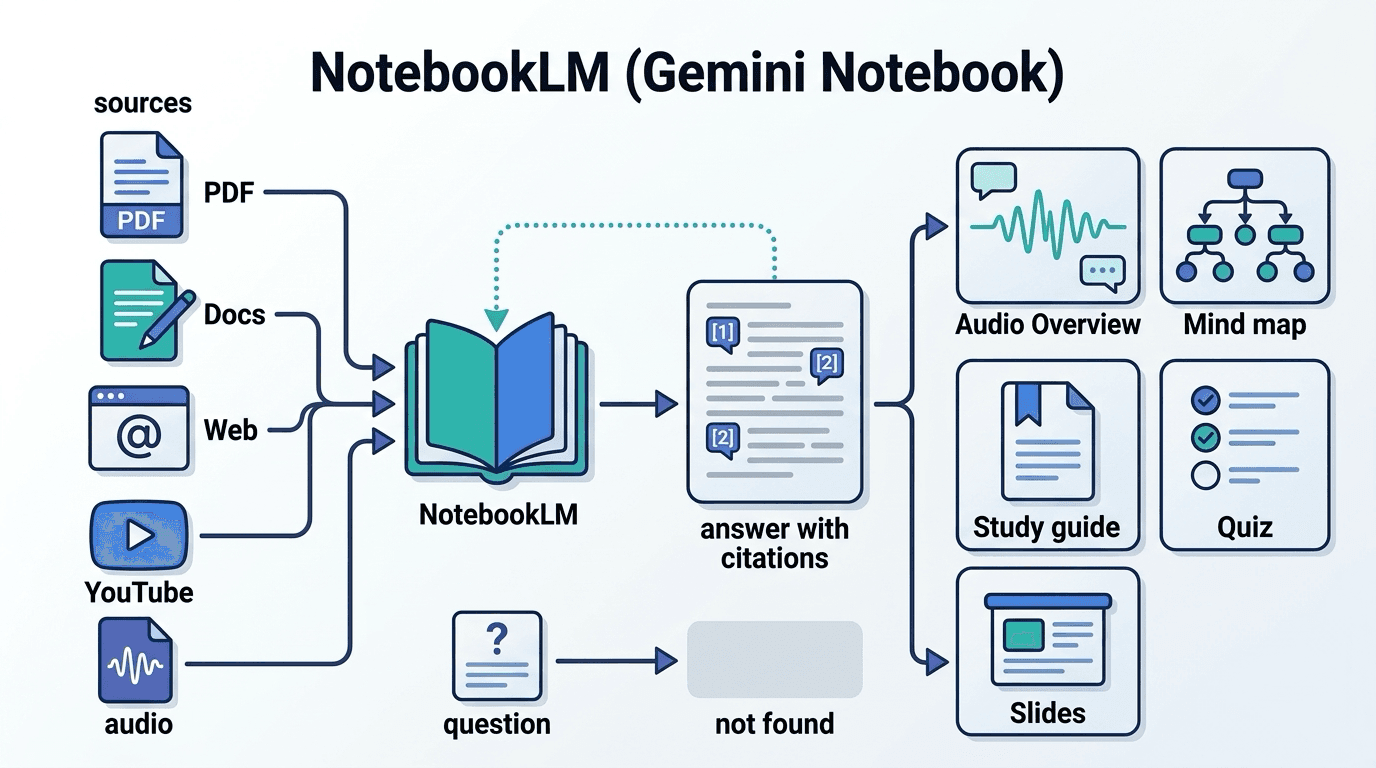
NotebookLM (now Gemini Notebook)
NotebookLM is Google's notebook-style AI that summarizes, answers questions and creates audio explan

RRF
RRF (Reciprocal Rank Fusion) is a scoring method that integrates ranking results returned by multipl
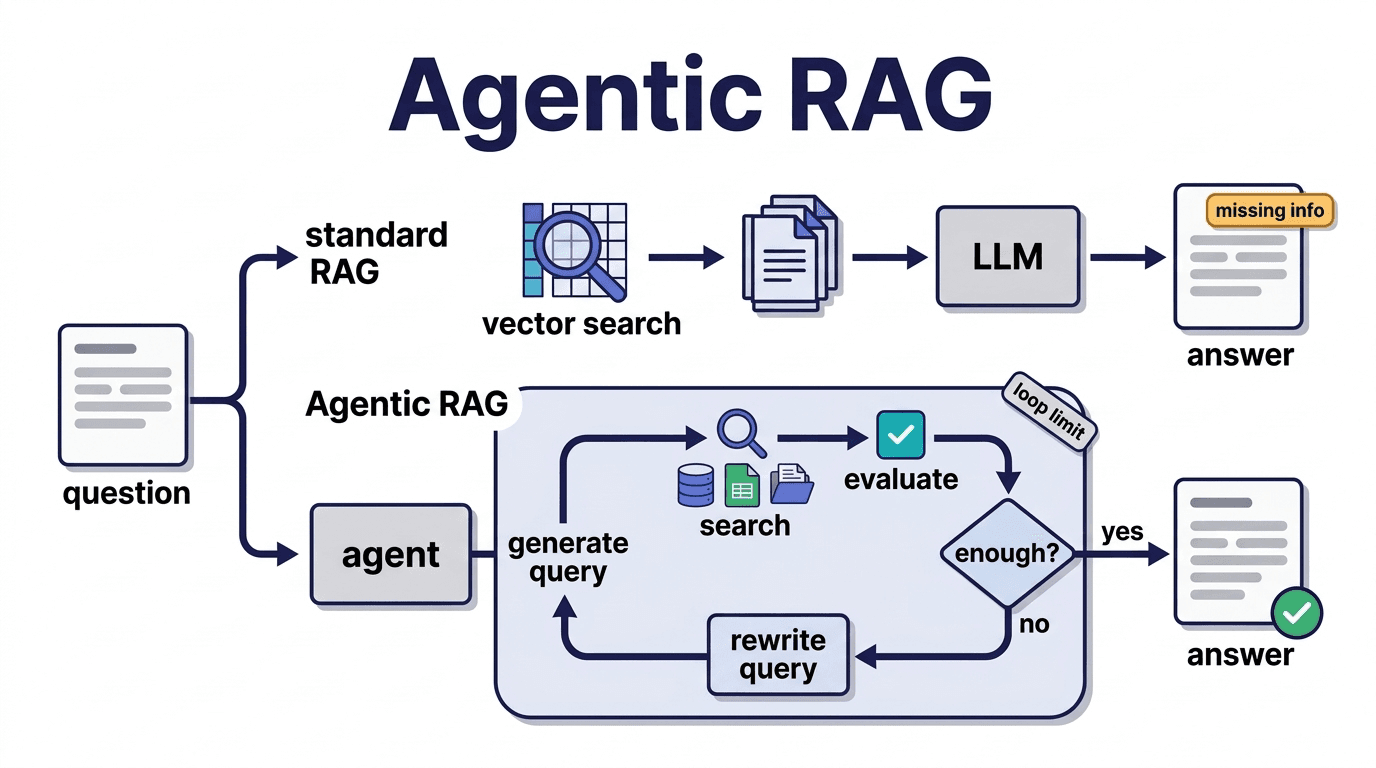
Agentic RAG
Agentic RAG is an architecture in which an LLM autonomously and iteratively generates search queries
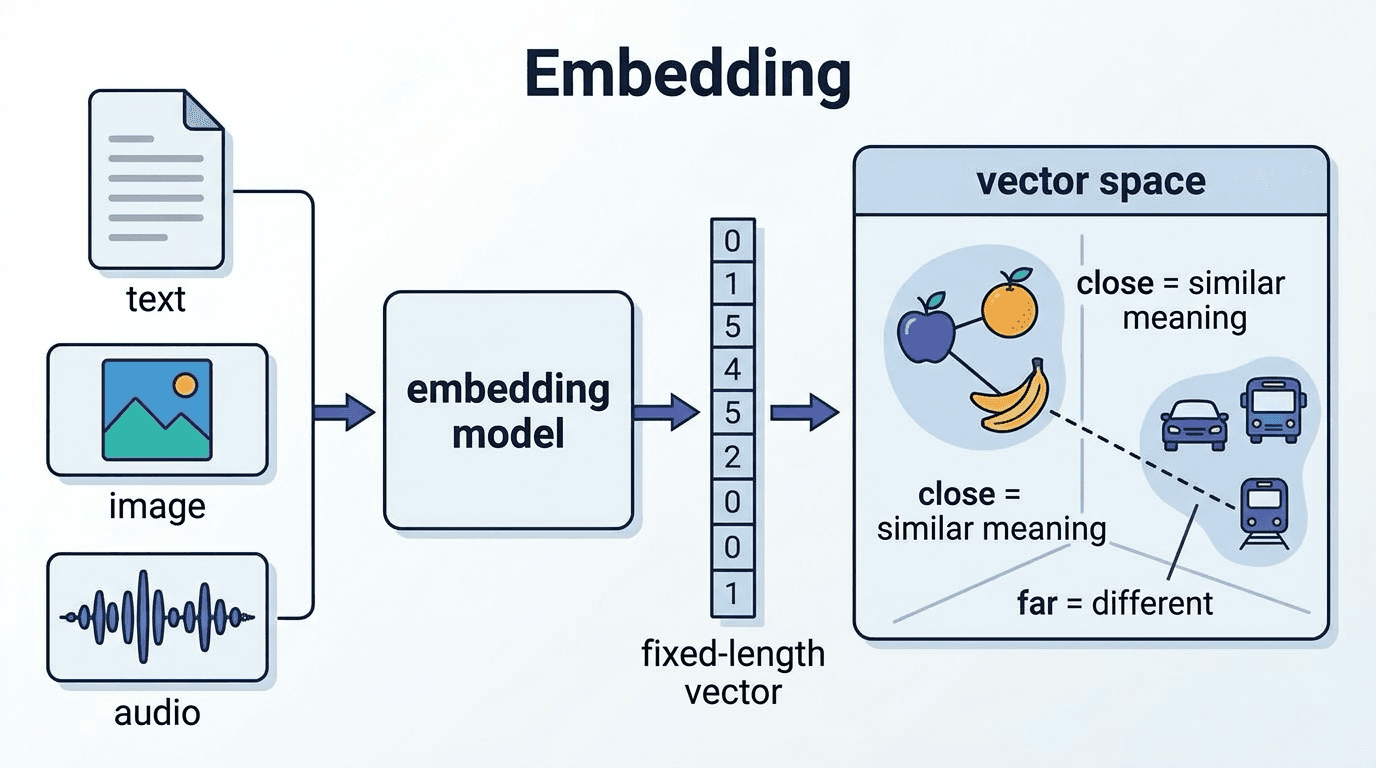
Embedding
Embedding is a technique that transforms unstructured data such as text, images, and audio into fixe