QLoRA
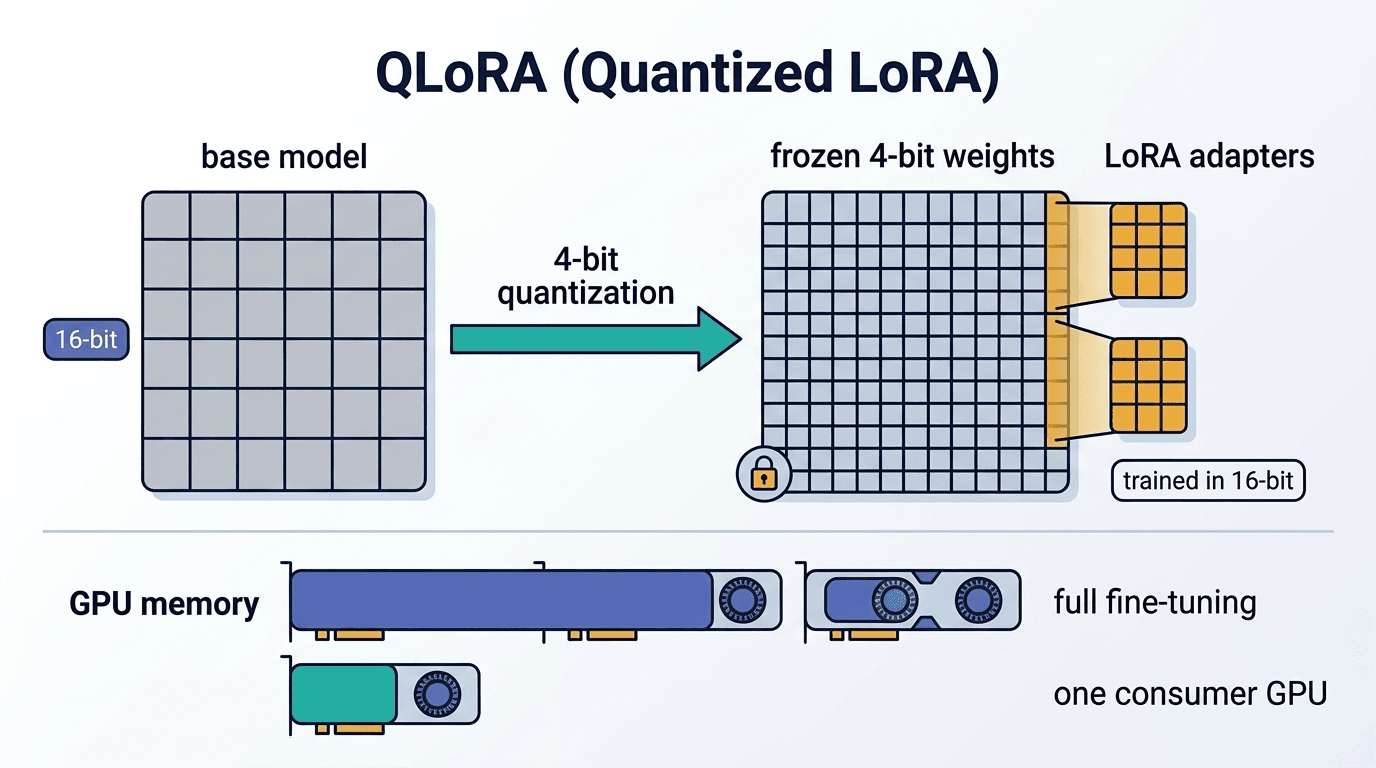
QLoRA (Quantized LoRA) is a method that combines LoRA with 4-bit quantization, enabling fine-tuning of large language models even on consumer-grade GPUs.
QLoRA, announced in 2023, was a direct answer to the urgent voices from practitioners saying "we don't have enough GPUs."
The core idea is simple: quantize the base model weights to 4-bit to dramatically reduce GPU memory consumption, then train only the LoRA adapters in 16-bit. In other words, it adopts a two-stage design philosophy of "lightweight loading, precise training."
In concrete numbers, loading a 65B parameter model at full precision requires multiple A100 80GB GPUs, but QLoRA fits it onto a single card. For 7B models, training can even run on an RTX 3090 (24GB) or RTX 4090. The cost of renting GPU instances in the cloud can often be reduced to less than 1/10 of that of full fine-tuning.
However, there are caveats. Accuracy degradation from 4-bit quantization is not zero. Based on the author's own experiments, the difference from full-precision LoRA was negligible for simple classification and summarization tasks, but a score drop of around 1–3% was observed for tasks requiring mathematical reasoning or logical development in long-form text. In practice, the rational approach seems to be: "start with QLoRA, and switch to full-precision LoRA if the accuracy is insufficient."
Articles covering this term
- PEFT Explained: LoRA, QLoRA and Adapters for Low-Cost TuningPEFT explained for decision-makers: how LoRA, QLoRA and adapters cut AI model customization costs, common mistakes, industry use cases and investment insights.
- Introduction to Fine-Tuning — The Fundamentals and Decision Criteria B2B Companies Should Know Before Building Their Own LLMLearn how fine-tuning works from the basics. Covers PEFT/LoRA, when to use RAG, cost estimates, and a checklist for B2B companies evaluating custom model development.
- Local LLM / SLM Deployment Comparison — AI Utilization Without Cloud API DependencyCompare open-weight models like GPT OSS, Phi-4, and Llama 4 Scout against cloud APIs on GPU requirements, task accuracy, and TCO. A local AI deployment guide for data sovereignty and cost optimization.
- Choosing Between Fine-Tuning and RAG: A Practical Guide Comparing Cost, Accuracy, and Use CasesFine-tuning vs RAG: which should you choose? We compare both across 4 axes—cost, accuracy, update frequency, and security—to guide your decision by use case.


Related Terms
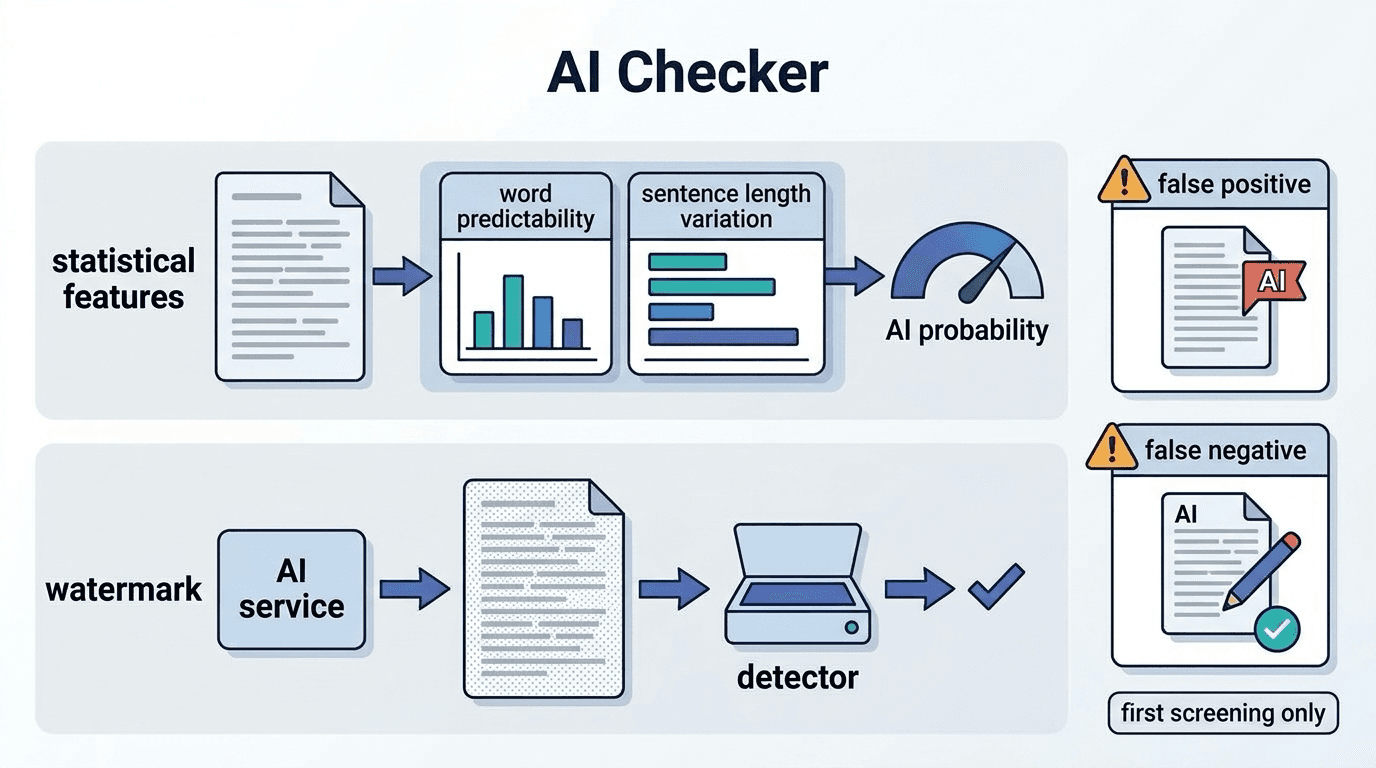
AI Checker (AI-generated text detector)
An AI checker is a tool that estimates whether a piece of writing was generated by AI, mainly from s
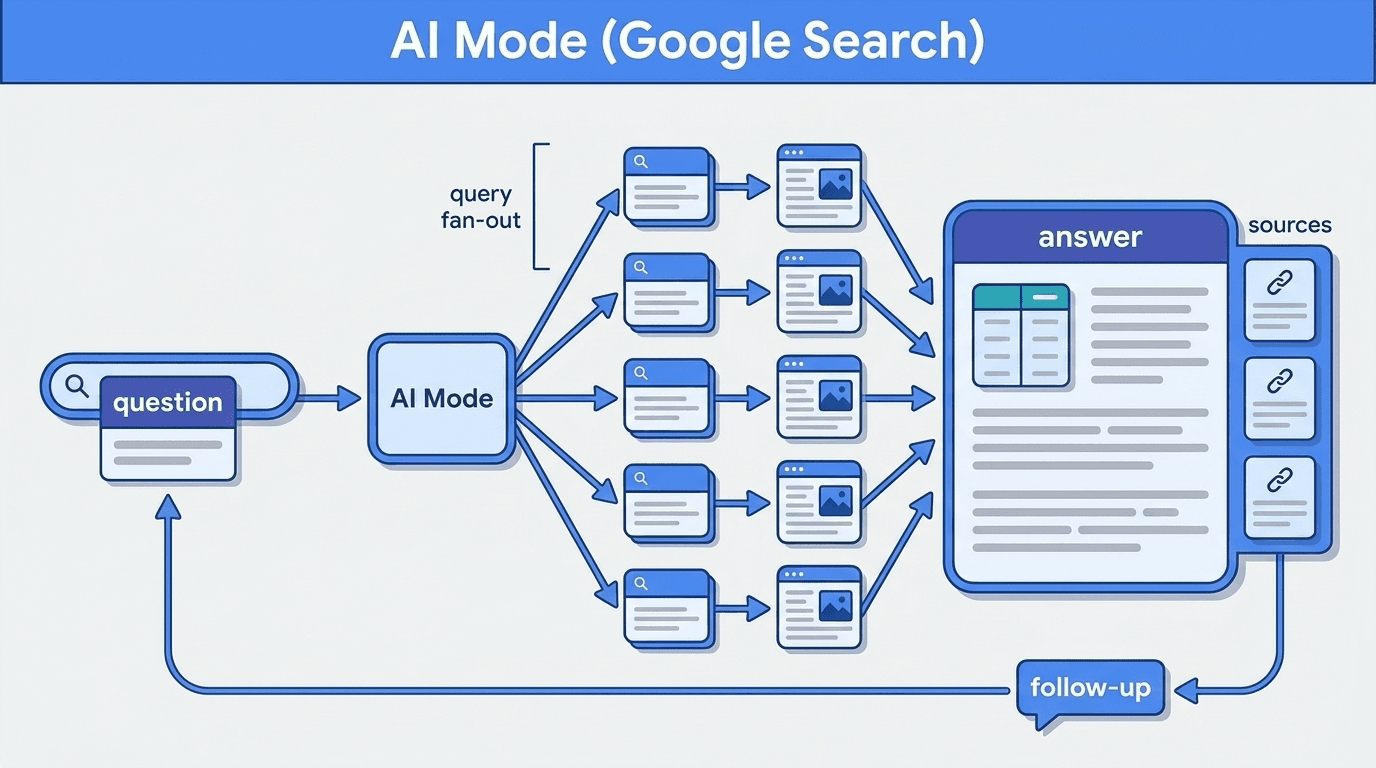
AI Mode (Google AI Mode)
AI Mode is a generative AI search mode built into Google Search that answers questions conversationa

Context Window
A context window refers to the maximum number of tokens an LLM can process at one time, indicating t
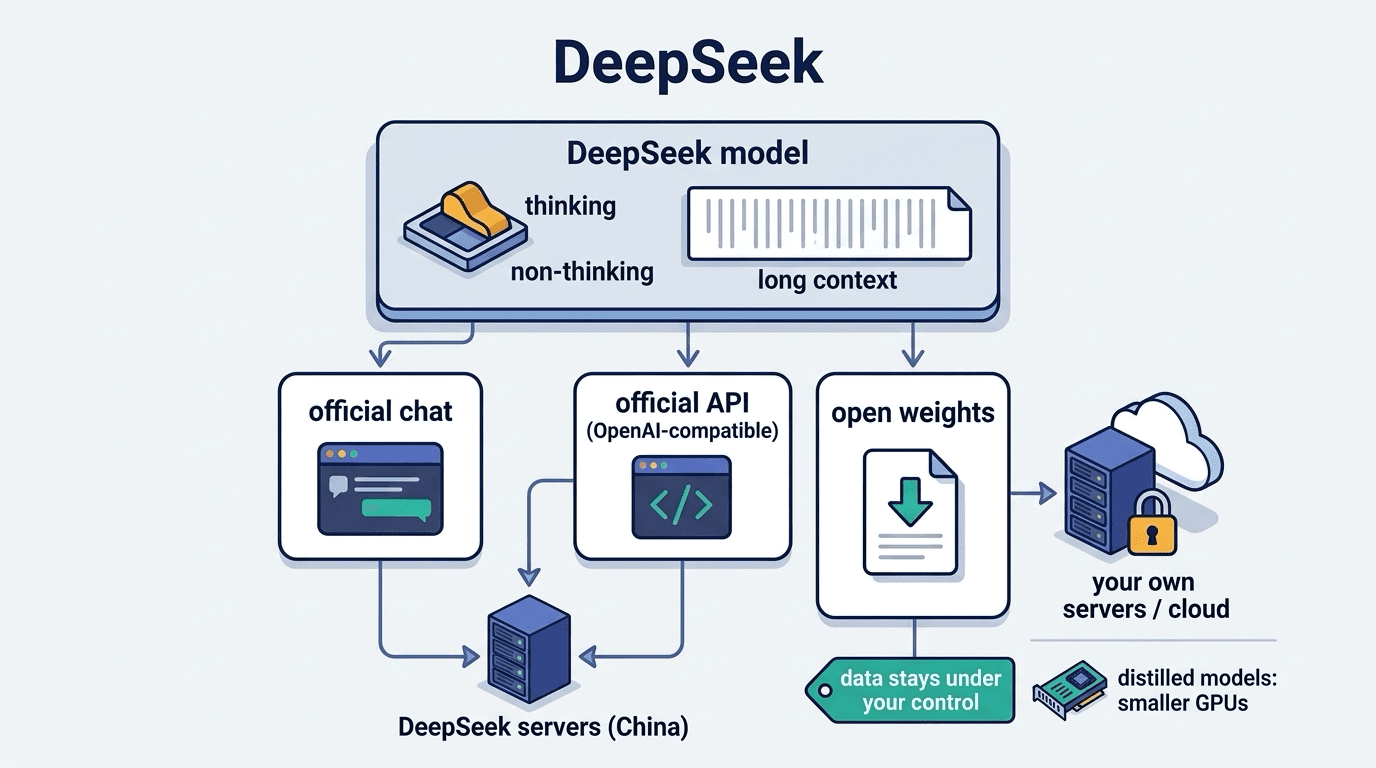
DeepSeek
DeepSeek is a family of large language models and a chat service developed by the Chinese company De