PoC (Proof of Concept)
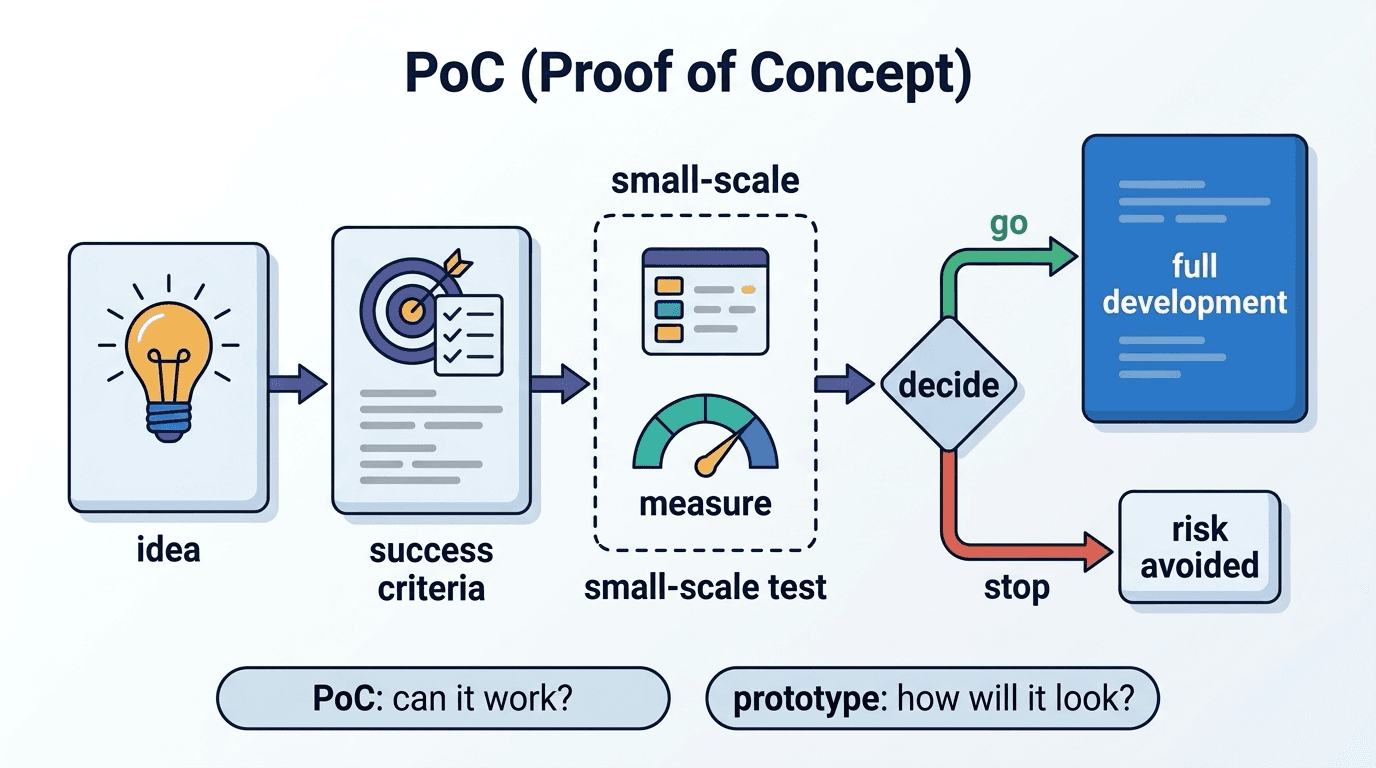
PoC (Proof of Concept) is the process of verifying the feasibility of a new technology or idea on a small scale. It is conducted to identify risks before investing in full-scale development and to determine whether a given approach can achieve the intended objective.
Differences from Prototypes
PoC and prototype are often confused, but they serve different purposes. A PoC verifies "whether something is technically feasible," regardless of appearance or usability. A prototype verifies "whether something works as a user experience," and is often conducted after the PoC.
For example, in a PoC for an AI chatbot, it is sufficient to connect to an API and measure response accuracy. A minimal command-line interface is perfectly acceptable for the UI. Screen design and user flows are only developed in detail at the prototype stage.
How to Conduct a PoC
The process generally follows these steps.
First, clearly articulate the hypothesis to be validated—in a specific and measurable form, such as "Using RAG to search internal documents will reduce inquiry response time by 50%." Next, build a minimal system configuration and collect data to validate the hypothesis. The process typically takes two to four weeks.
Common Traits of Failed PoCs
There are several patterns in which PoCs fall apart. Expanding the scope of validation too broadly, having vague success criteria, and validating with sample data instead of production data—when these factors combine, the result is often a situation where "the PoC succeeded, but it couldn't be used in production."
This is especially true for AI-related PoCs, where the quality and volume of training data have a significant impact on outcomes. Even if 90% accuracy is achieved with 100 sample records, it is not uncommon for accuracy to drop sharply when applied to tens of thousands of records in production. Using data that closely resembles production data from the PoC stage onward is key to preventing costly rework.
Articles covering this term
- PoC Development: Costs, 5-Step Process, and Vendor SelectionPoC development explained: costs, a 5-step process, what to put in PoC requirements, go-live criteria that prevent PoC fatigue, and how to choose a partner.
- **Causes of PoC Failure and Lessons from Real Cases: Designing AI Adoption with Specification-Driven Development (SDD) and Acceptance Test-Driven Development (ATDD)**AI PoC failures often stem from ignoring AI-specific traits—inconsistent outputs, data-dependent performance, no clear pass/fail line—at the planning stage. Learn common failure patterns and how SDD and ATDD fix this.
- AI Implementation PoC Design Guide — Practical Steps for Thai B2B Companies to Make Go-Live DecisionsLearn why AI PoCs fail and how to design ones that lead to production. Covers scope, success criteria, stakeholder alignment, and go/no-go gates from a B2B perspective.
- What is Computer Use? How AI Automates Tasks by Controlling Your ScreenAI agents see screens, click, and type like humans to automate tasks without APIs—Computer Use explained. Learn how it works, RPA differences, and B2B implementation steps.


Related Terms
AI ROI (Return on Investment in AI)
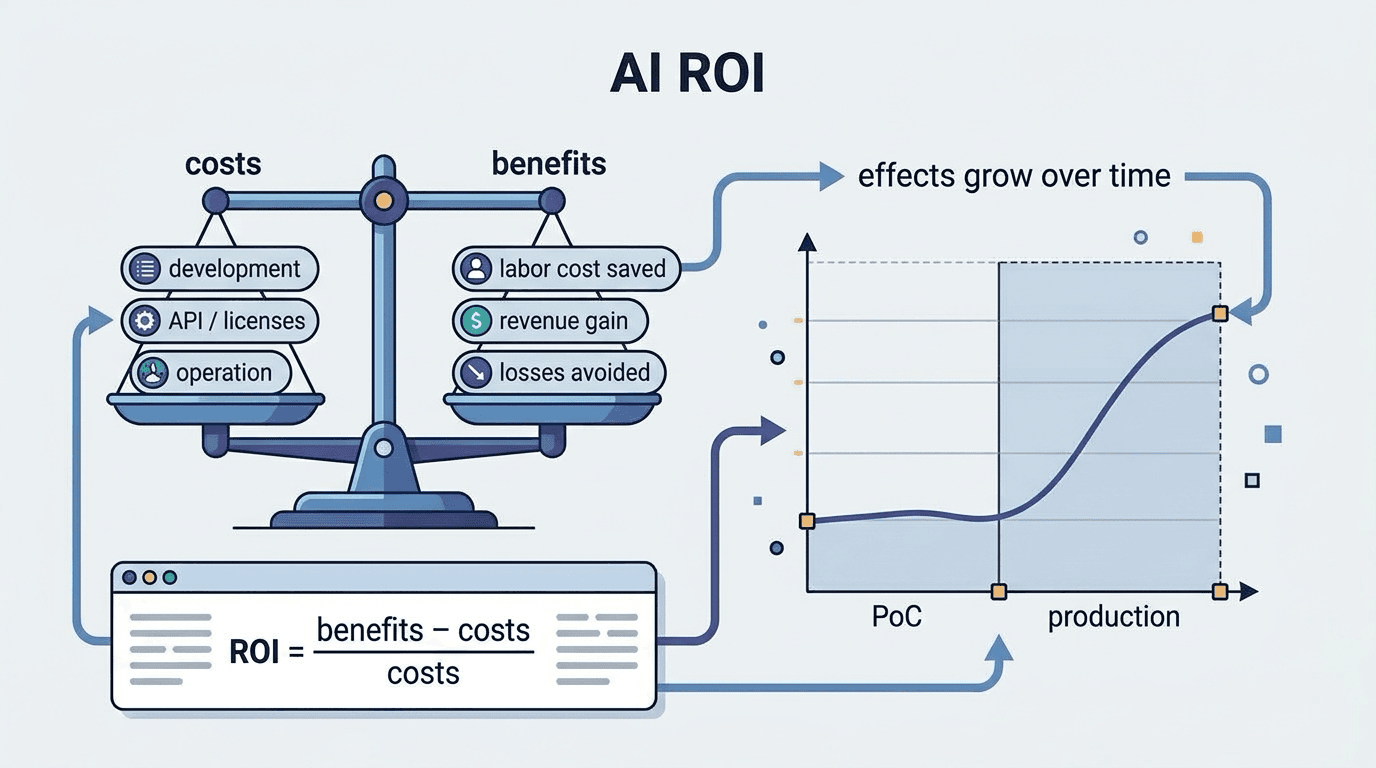
AI ROI is a metric that quantitatively measures the effects obtained — such as operational efficienc

AI Observability
An operational practice of continuously monitoring and visualizing the inputs/outputs, latency, cost
BPO (Business Process Outsourcing)
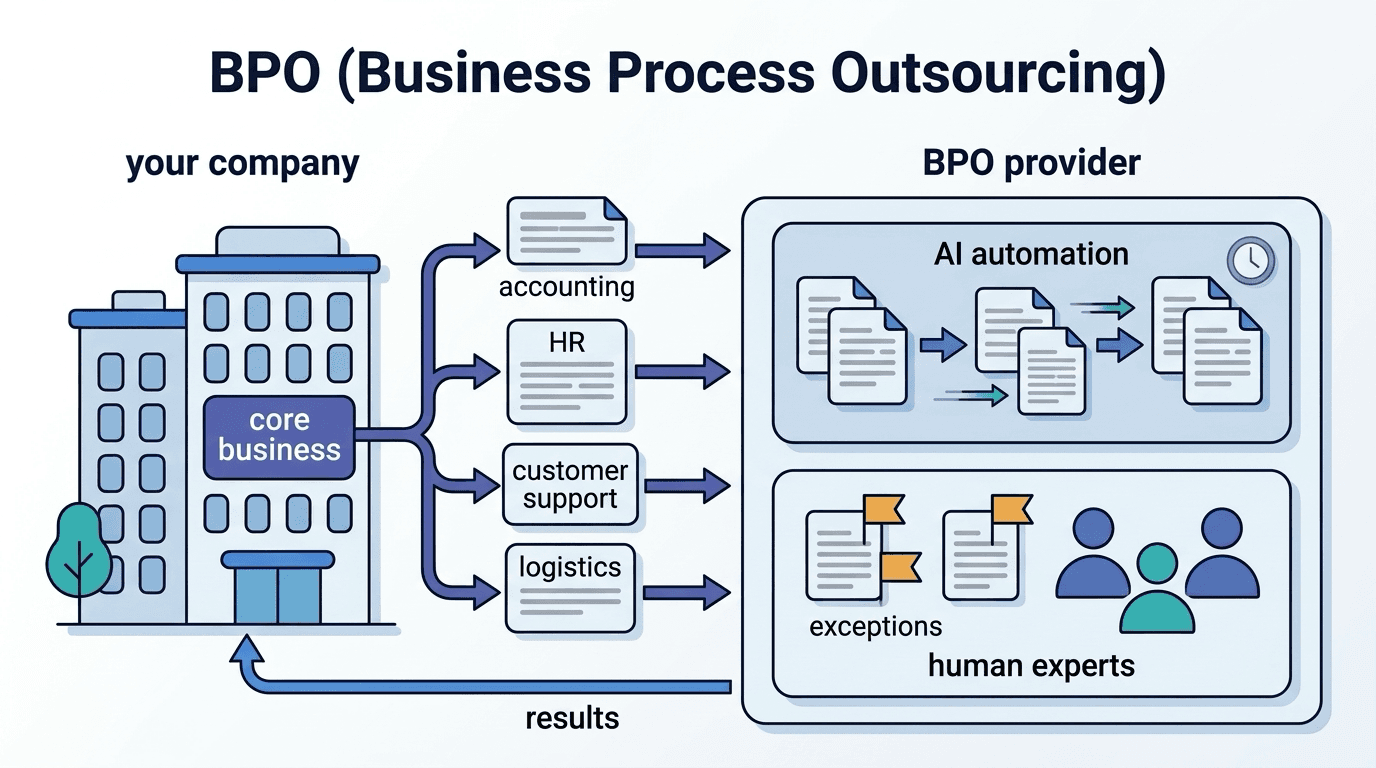
BPO refers to a form of outsourcing in which a company delegates specific business processes to an e

Demand Forecasting AI
Demand forecasting AI refers to a system that analyzes historical sales data and external factors us