In the Loop
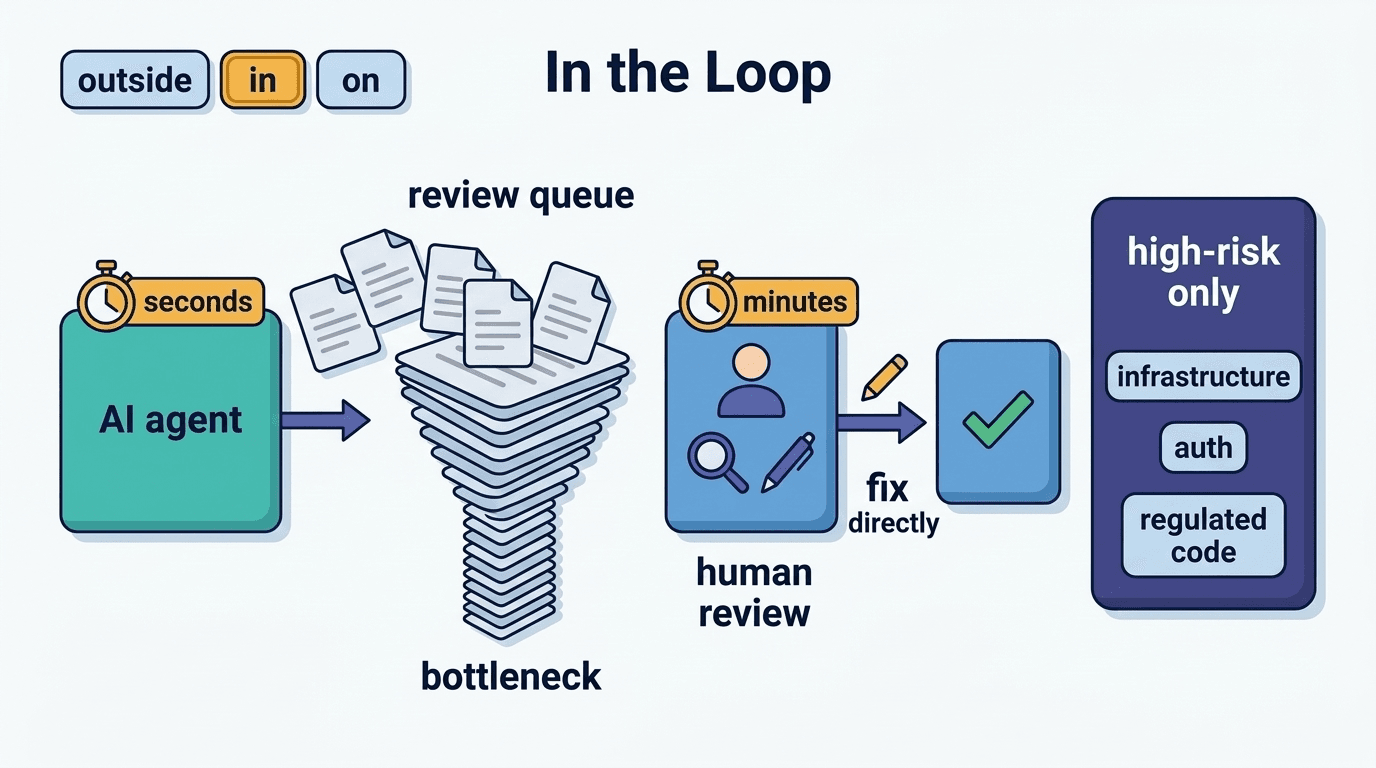
"In the Loop" is a collaborative mode in which humans review and correct AI agent outputs one by one. While quality control is reliable, it tends to create a bottleneck where human review cannot keep pace with the agent's generation speed.
One of the three collaboration modes between humans and AI agents (Outside the Loop / In the Loop / On the Loop) organized by Birgitta Böckeler, co-author with Martin Fowler. It refers to a way of working in which humans review each piece of code or output generated by an agent and directly correct any issues found.
Why It Becomes a Bottleneck
An agent can generate code in seconds, but human review takes anywhere from several minutes to tens of minutes. This asymmetry is the fundamental limitation of In the Loop. A queue of items awaiting review accumulates, making it impossible to fully leverage the agent's high-speed generation capabilities. In the author's own experience, it was not uncommon for an agent to create five PRs in 30 minutes, only for the reviews to take half a day.
When In the Loop Is Appropriate
That said, there are cases where In the Loop is effective. Infrastructure changes that directly affect production environments, authentication and authorization implementations involving security, financial or medical code subject to regulatory compliance—in these domains, the cost of having humans verify each step is worth paying. The key is to not operate everything under In the Loop. A practical balance is to apply In the Loop only to high-risk changes and shift everything else to On the Loop.
Articles covering this term
- What Is a Token Trap? Practical Token Consumption Management to Prevent Hidden Cost Explosions in AI AgentsLearn how "token traps" cause billing spikes in high-frequency agent loops, and how to prevent cost explosions with budget caps, throttling, and smart loop design.
- AI Agents from Pilot to Production: 5 Barriers and FixesThe 5 barriers that stop AI agents from moving from pilot to production, with practical steps for quality control, system integration, governance and ROI.
- What is Loop Engineering? The New Standard in AI Agent Design Coming After Prompt EngineeringFrom prompting to designing "loops" where AI works autonomously. We explain Loop Engineering—its meaning, evolution, components, and implementation considerations.
- AI Automation Bias: Causes and 3-Layer CountermeasuresWhat AI automation bias is, typical failure scenarios, and countermeasures across organization, design and operations: confidence display, HITL and audit logs.


Related Terms
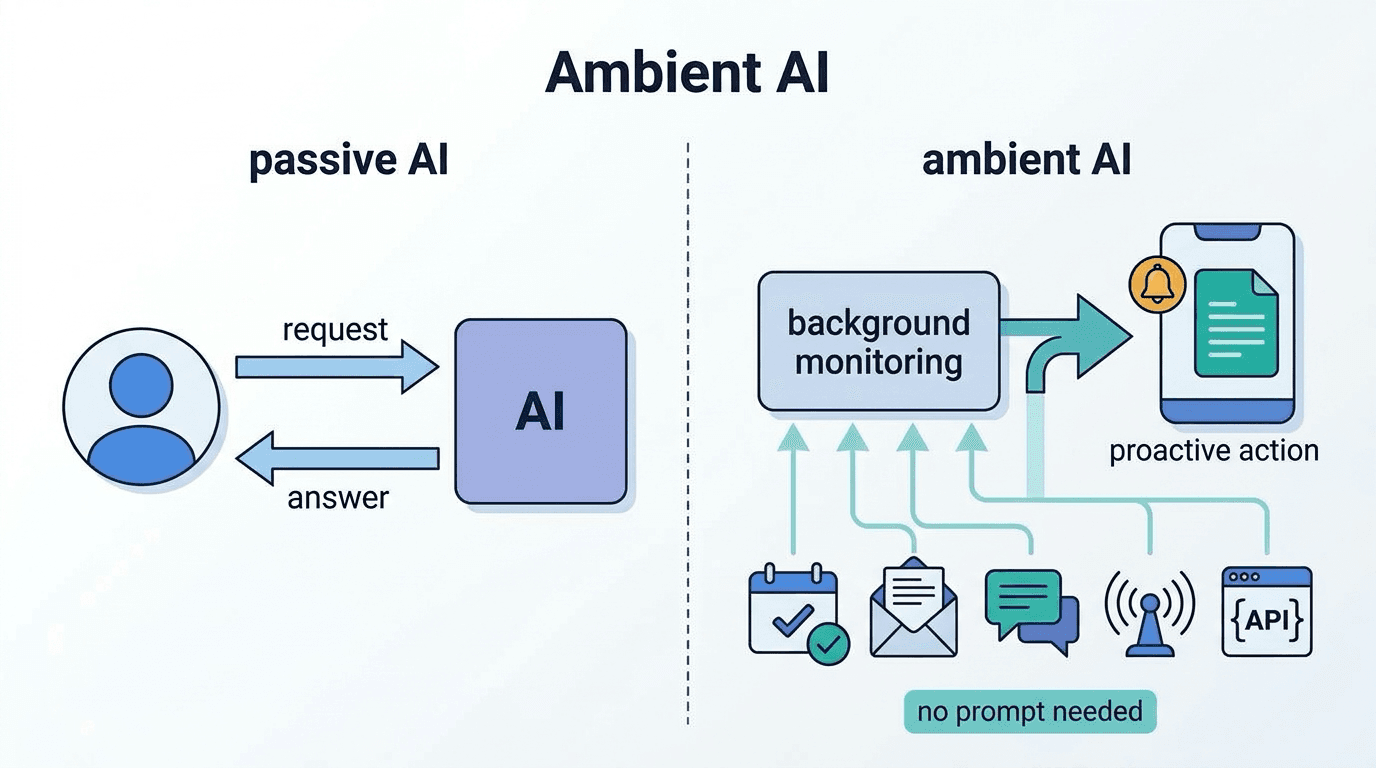
Ambient AI
Ambient AI refers to an AI system that is seamlessly embedded in the user's environment, continuousl
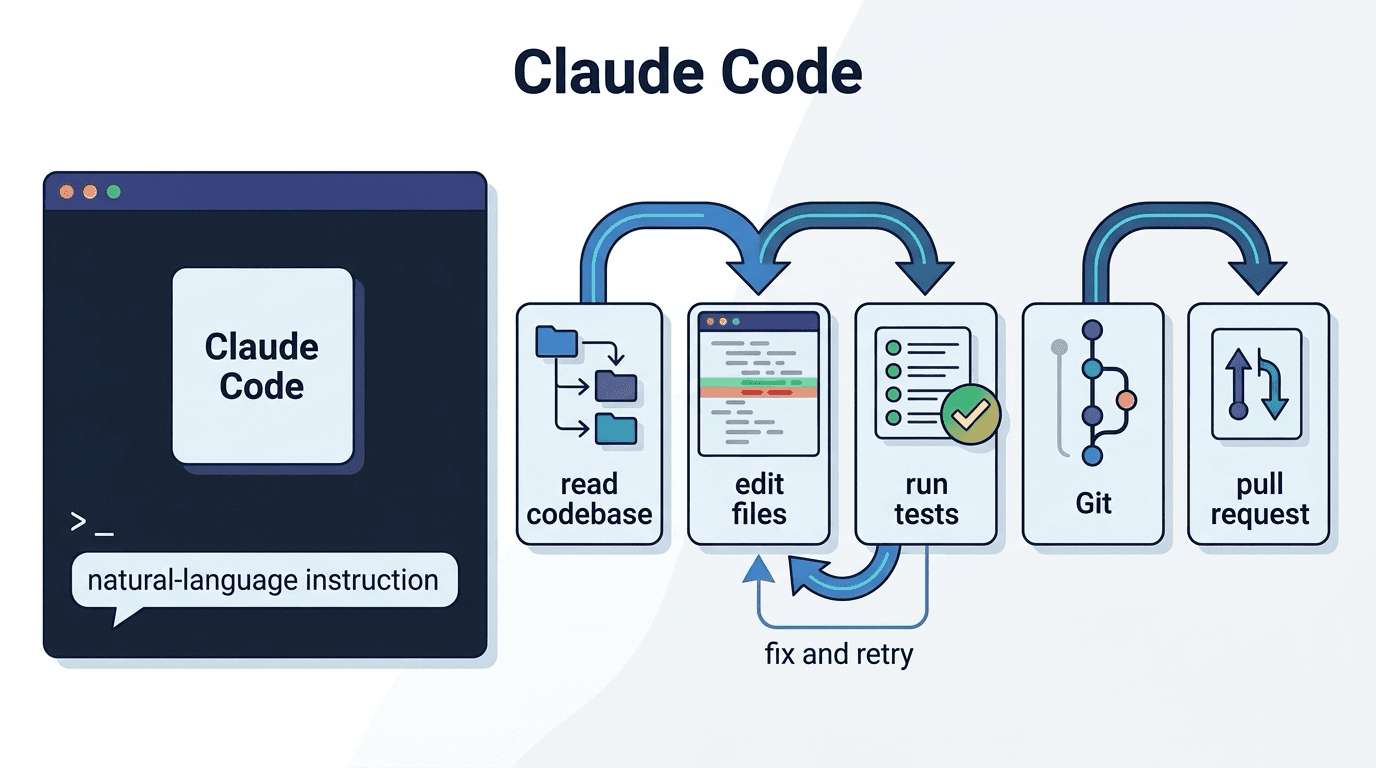
Claude Code
Claude Code is a terminal-resident AI coding agent developed by Anthropic. It is a CLI tool that ena
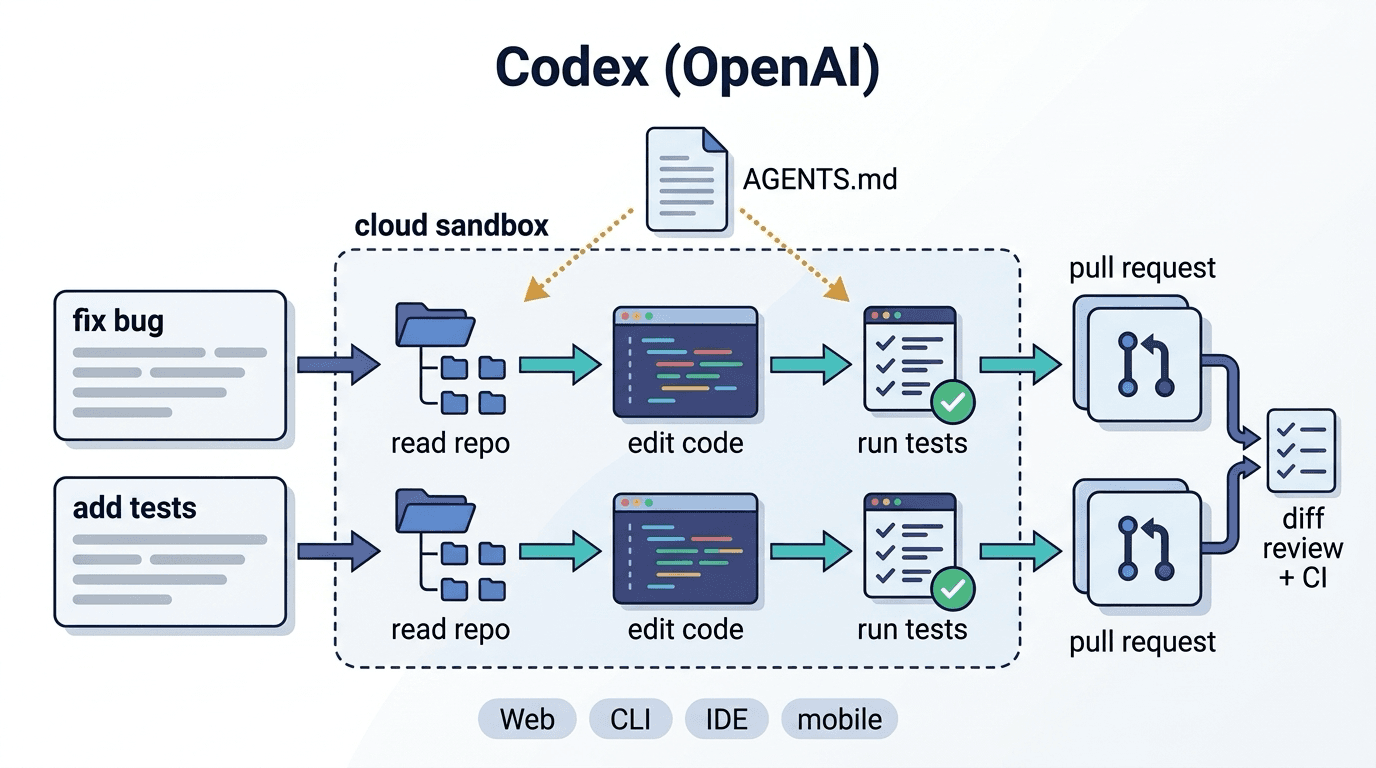
Codex (OpenAI)
Codex is OpenAI's AI coding agent. It reads a repository and carries a task through implementation,
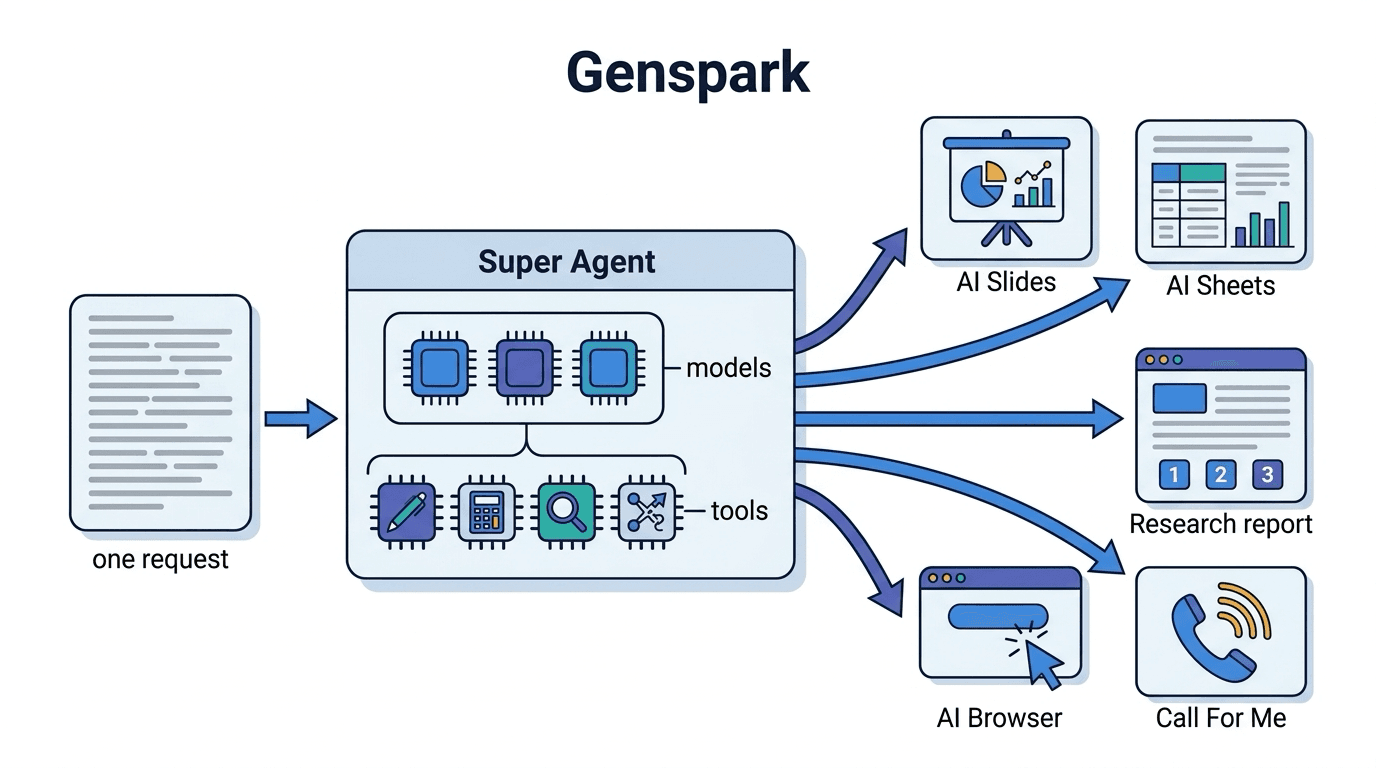
Genspark
Genspark is an AI workspace in which AI agents take on research, slide and spreadsheet creation, and