RRF

RRF (Reciprocal Rank Fusion) is a scoring method that integrates ranking results returned by multiple retrieval methods. By summing the reciprocal ranks from each method, it enables the fusion of different scoring systems without normalization.
The Key to Hybrid Search
In RAG pipelines, a hybrid configuration combining keyword search via BM25 and vector search (semantic search) is common. However, since BM25 scores and cosine similarity differ entirely in scale and distribution, simply adding them together does not produce a meaningful integration.
RRF solves this problem simply. It uses only the "rank" of documents returned by each search method, summing the 1 / (k + rank) score across all methods. The constant k (typically 60) is a parameter that adjusts rank weighting — the larger the value, the smaller the gap between higher and lower ranks.
Calculation Example
If a document appears at rank 3 in BM25 and rank 7 in vector search:
RRF score = 1/(60+3) + 1/(60+7) = 0.0159 + 0.0149 = 0.0308
Documents that rank reasonably well in both searches tend to score higher than documents that only appear in one. This contributes to the stability of hybrid search.
Implementation Notes
Since RRF does not use the absolute values of original scores, it has the advantage of requiring no score calibration between search engines; however, care must be taken when many documents share the same rank or when handling long-tail documents. Major vector databases including Elasticsearch 8.x and later, Weaviate, and Qdrant natively support RRF.
Articles covering this term
- What is Hybrid Search? How It Works and Implementation to Improve RAG Accuracy with Vector Search × Full-Text SearchExplains hybrid search using vector search, BM25, and RRF. Practical design patterns and implementation tips to improve RAG system retrieval accuracy.
- What is a Vector Database? A Complete Guide to How It Works, Top Product Comparisons, and RAG ApplicationsFrom basic vector database concepts to comparing top products like Pinecone, Weaviate, and pgvector, plus RAG system integration—a clear guide for AI implementation managers.
- 10 RAG Implementation Failure Patterns and How to Avoid Them — Preventing Production Issues Before They Happen10 common RAG failures before & after production: chunk design errors, retrieval accuracy drops, hallucination fixes & more. Learn key avoidance strategies before you build.
- What is Adaptive RAG? How to Balance Cost and Accuracy with Query-Driven Dynamic RetrievalLearn how Adaptive RAG eliminates inefficiencies of traditional RAG by selectively retrieving only when needed—covering mechanisms, implementation patterns, and B2B use cases.


Related Terms
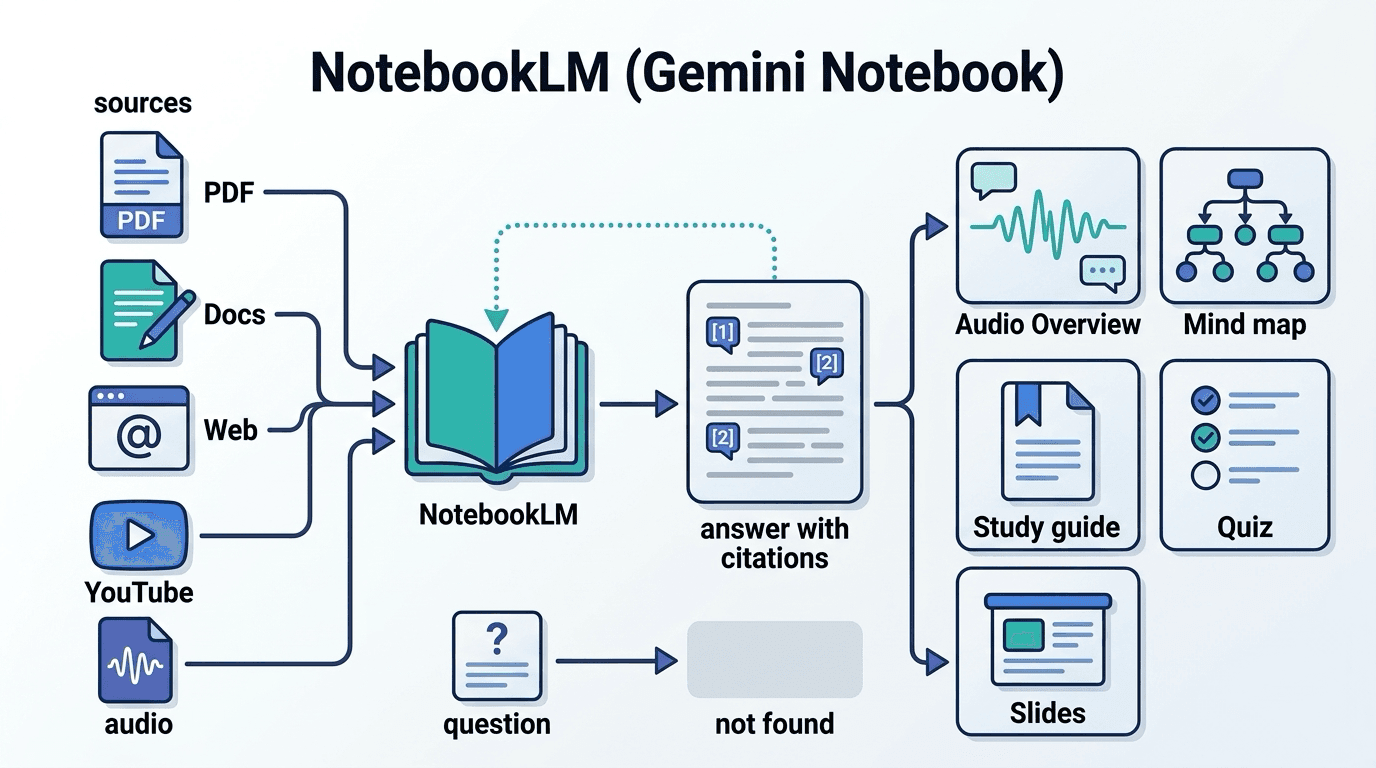
NotebookLM (now Gemini Notebook)
NotebookLM is Google's notebook-style AI that summarizes, answers questions and creates audio explan
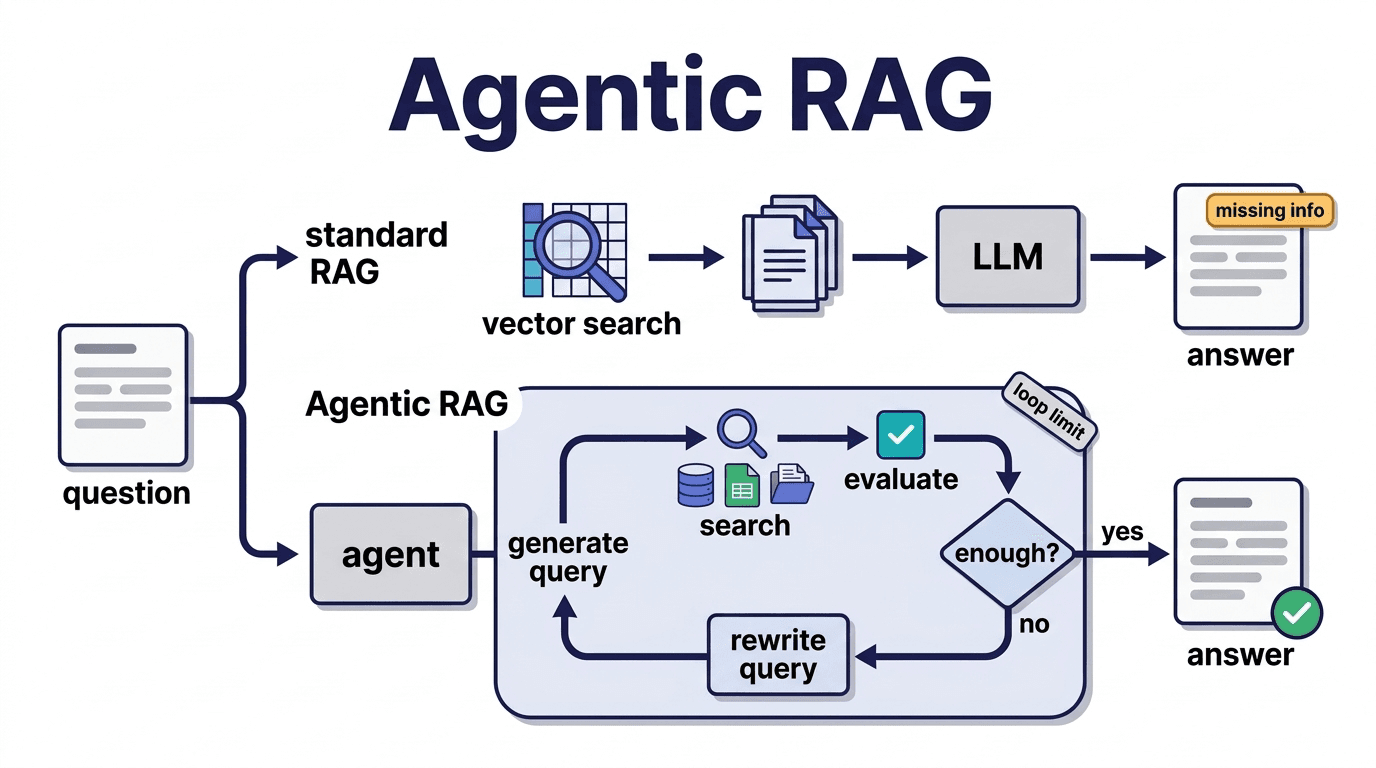
Agentic RAG
Agentic RAG is an architecture in which an LLM autonomously and iteratively generates search queries
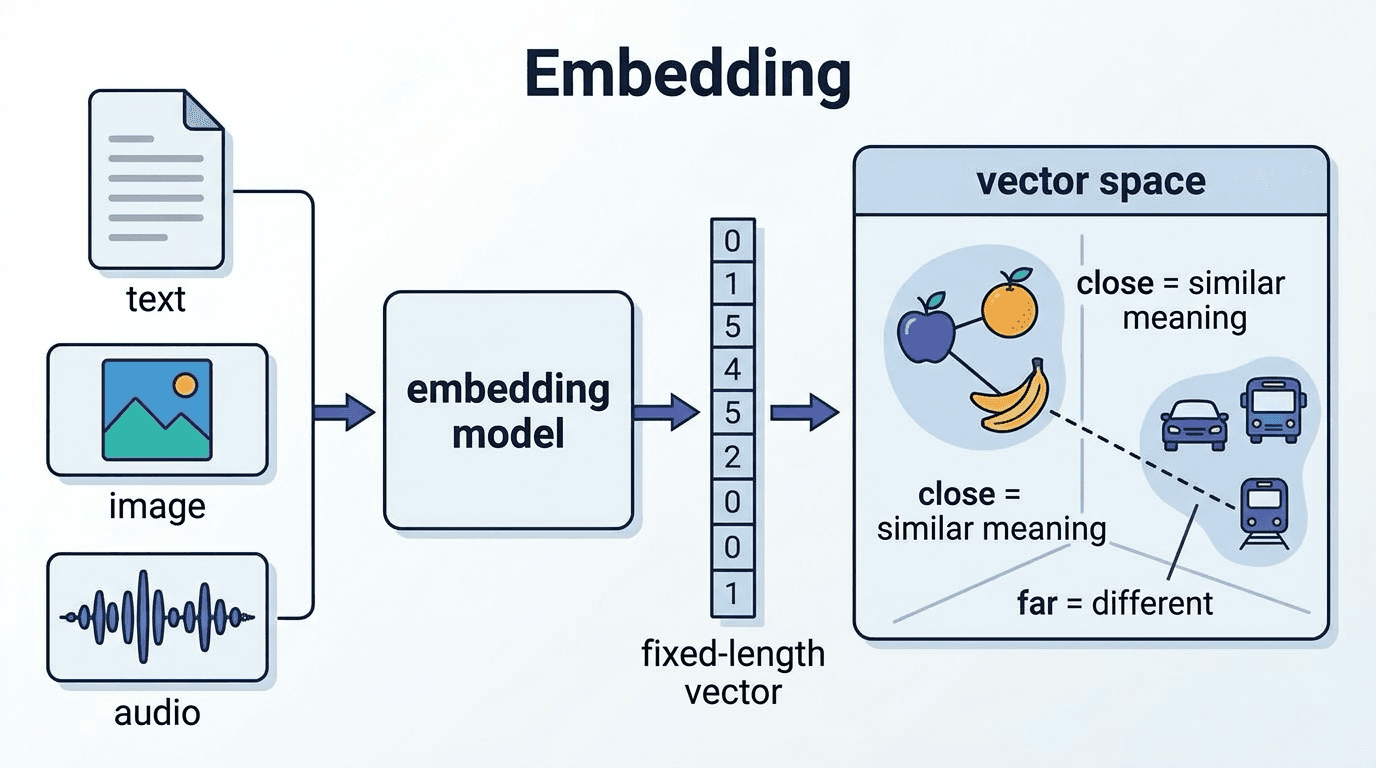
Embedding
Embedding is a technique that transforms unstructured data such as text, images, and audio into fixe

GraphRAG
A next-generation RAG architecture that combines knowledge graphs and vector search, leveraging rela