Harness Engineering
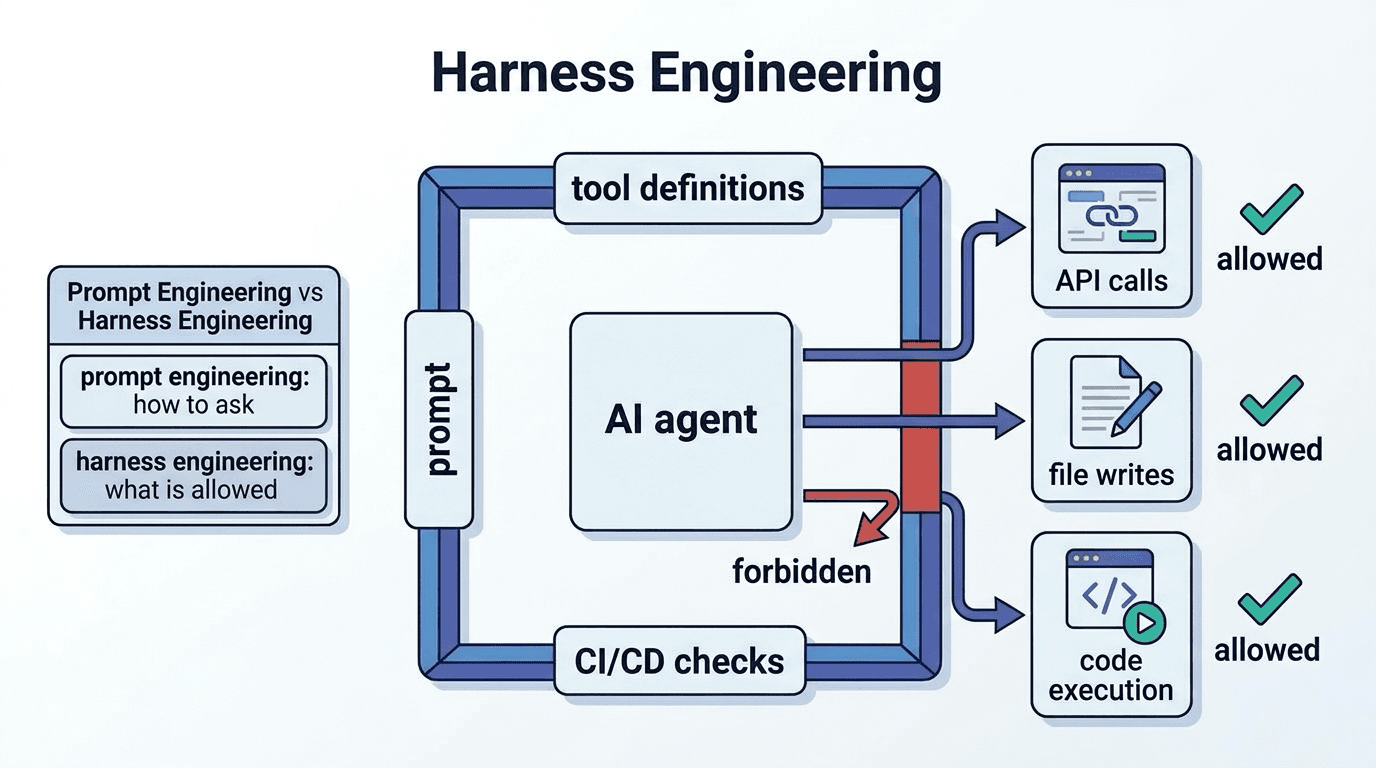
Harness engineering is a methodology for designing structural constraints—such as prompts, tool definitions, and CI/CD pipelines—to prevent AI agents from malfunctioning.
Harness Engineering refers to a methodology for designing structural constraints—such as prompts, tool definitions, and CI/CD pipelines—to prevent AI agents from malfunctioning. The term "harness" derives from horse tack (equipment used to control a horse), conveying the concept of safely controlling powerful energy. As AI agents have become capable of autonomously executing tasks in recent years, how to design the "structures that control" their capabilities has emerged as a central challenge determining the reliability of the overall system.
Why Harness Engineering Is Needed Now
[AI agents](slug: ai-agent) perform actions with real-world consequences—such as operating external APIs, reading and writing files, and executing code—through tool calls (Function Calling) and [multi-agent systems](slug: multi-agent-system). If traditional [prompt engineering](slug: prompt-engineering) is a technique that optimizes how to communicate with a model, then Harness Engineering is a technique that designs the structure itself of what to permit and what to prohibit.
The more autonomously an agent operates, the greater the risks of [hallucination](slug: hallucination) and [prompt injection](slug: prompt-injection). These are not problems that can be addressed with a single prompt revision; constraints must be embedded at the level of system architecture.
Components of Harness Engineering
Harness Engineering consists of design spanning multiple layers:
- Constraint design for prompt structure: Explicitly describing behavioral norms, prohibitions, and escalation conditions in the system prompt to define the "frame" within which the agent makes decisions
- Scope restriction for tool definitions: Minimizing the permissions of tools passed to the agent and physically eliminating unnecessary operation pathways
- Integration into CI/CD pipelines: Building mechanisms that route code and outputs generated by the agent through automated validation gates such as [unit tests](slug: unit-test), [E2E tests](slug: e2e-test), and [acceptance tests](slug: acceptance-test)
- Design of human oversight loops: Incorporating concepts such as [HITL (Human-in-the-Loop)](slug: hitl) and [On the Loop](slug: on-the-loop) to establish flows that require human approval for high-risk decisions
- Implementation of [AI Guardrails](slug: ai-guardrails): Deploying output filtering and input validation in multiple layers
Implementation Philosophy
Whereas [context engineering](slug: context-engineering) optimizes the quality and quantity of information passed to an LLM, Harness Engineering is the work of drawing the boundary between what an agent can and cannot do. It has strong affinity with the [Shift Left](slug: shift-left) philosophy—rather than fixing problems after they occur, risks are eliminated proactively by embedding constraints at the design stage.
When operating a coding agent such as [Claude Code](slug: claude-code) in a production environment, explicitly defining policies—such as which directories to permit access to and which commands to prohibit from executing—represents a typical practice of Harness Engineering. This design philosophy is also indispensable for maintaining alignment with [AI governance](slug: ai-governance) and [OWASP](slug: owasp) security standards.
Caveats and Limitations
Harness Engineering is not a silver bullet. Overly strict constraints undermine the agent's usefulness, while overly loose ones invite unexpected behavior akin to [Shadow AI](slug: shadow-ai). Finding the right balance requires iterative validation through [PoC (Proof of Concept)](slug: poc) and intentional adversarial testing via [AI Red Teaming](slug: ai-red-teaming).
The more sophisticated an agent's capabilities become, the more its harness design must continuously evolve to keep pace. This is not a document to be completed once and set aside, but rather an engineering asset that should be treated as something continuously improved alongside the operation of the agent.
Articles covering this term
- What is Harness Engineering? A Design Method to Structurally Prevent AI Agent ErrorsHarness Engineering is a method to structurally prevent AI agent errors from recurring using documents, tools, and constraints. Learn concepts, components, and practical steps.
- AI Agent Guardrail Operations Checklist: Permissions, Review, CI, and Kill Switch DesignChecklist of operational rules to prevent AI agent incidents in production: permissions, human review, CI/testing, and kill switches—use alongside Harness design.
- What is AI Grounding? An Implementation Guide to Fact Verification and Improving LLM Answer Accuracy with Web SearchAI grounding anchors LLM responses to authoritative sources. Learn how RAG and web search reduce hallucinations, plus implementation steps for enterprise deployment.
- What is Harness AI? How It Integrates AI into DevOps and Step-by-Step Implementation GuideHarness AI is a suite of AI agents by DevOps platform Harness. Learn agent roles, supported models, pre-deployment checks, PoC steps, and HITL design in one practical guide.


Related Terms
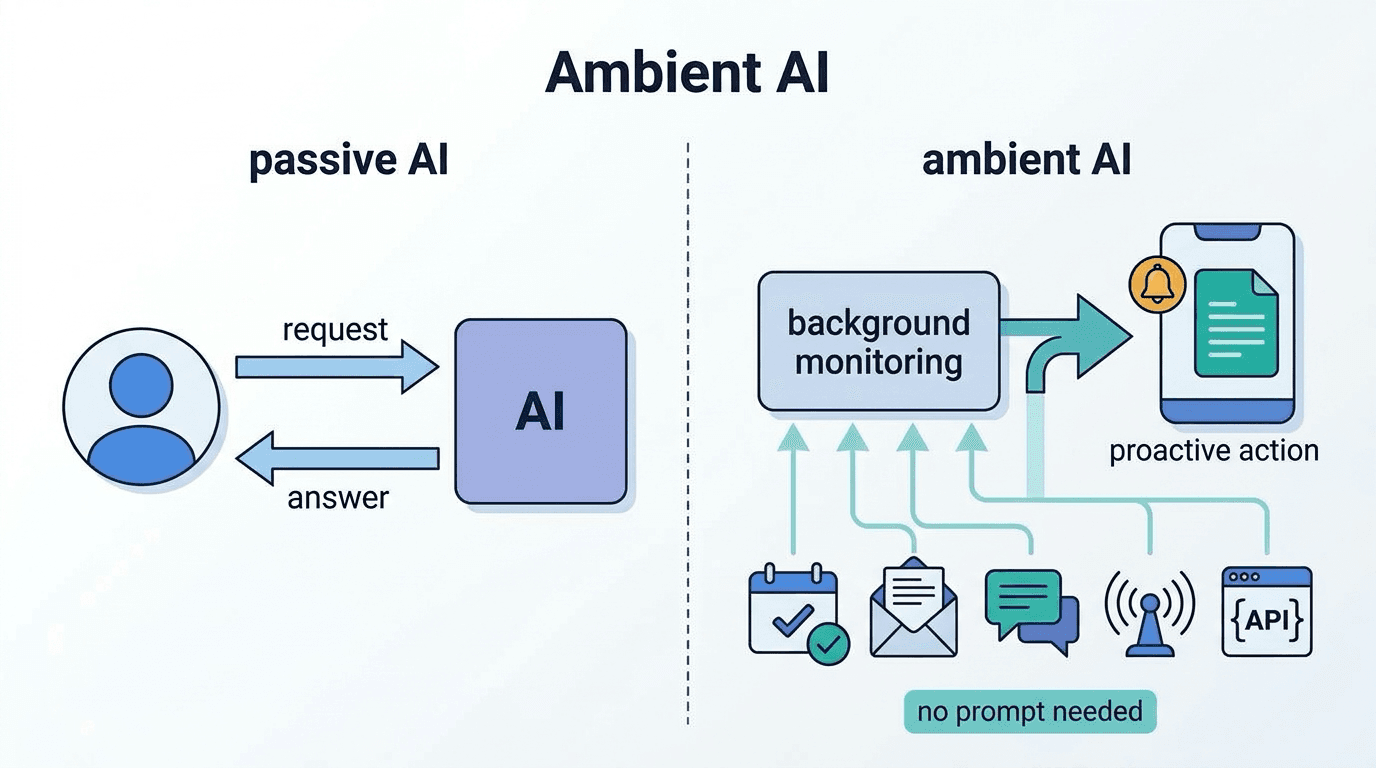
Ambient AI
Ambient AI refers to an AI system that is seamlessly embedded in the user's environment, continuousl
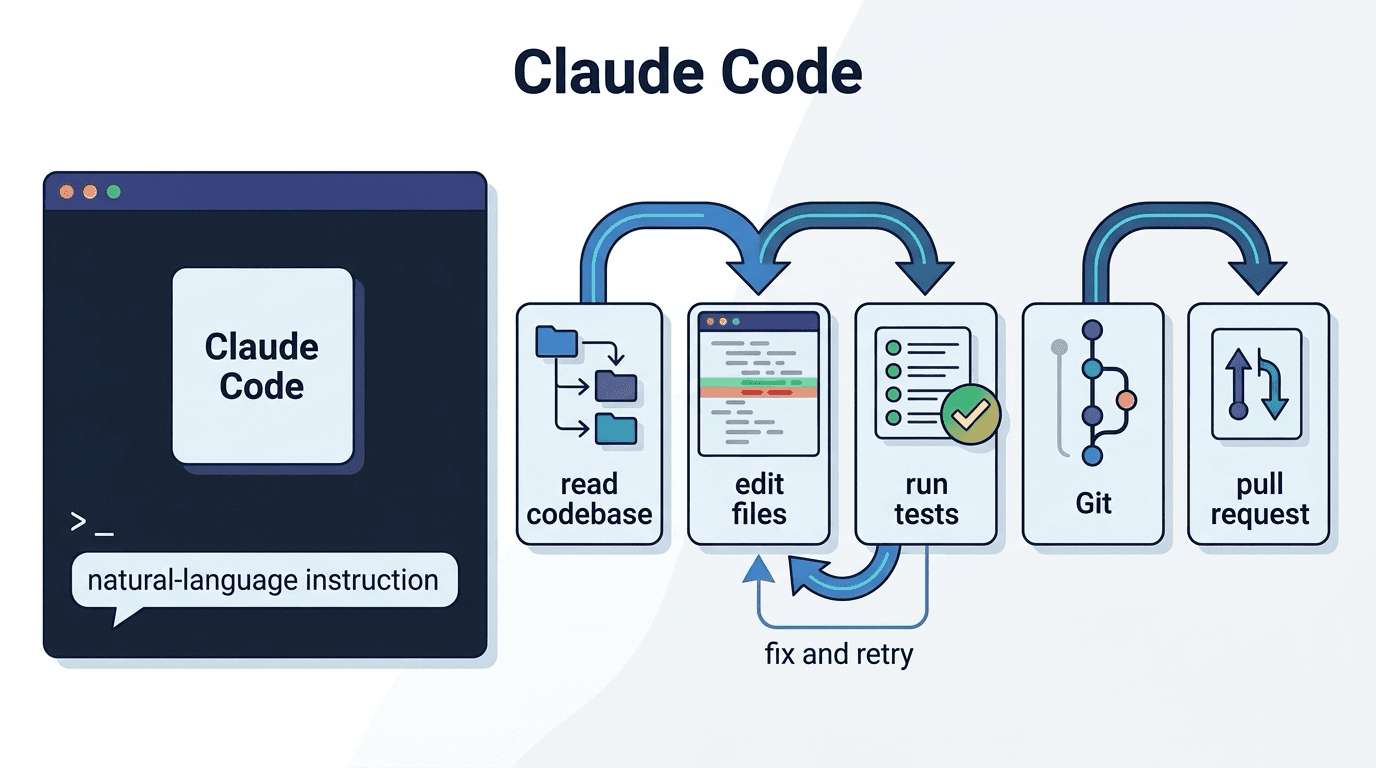
Claude Code
Claude Code is a terminal-resident AI coding agent developed by Anthropic. It is a CLI tool that ena
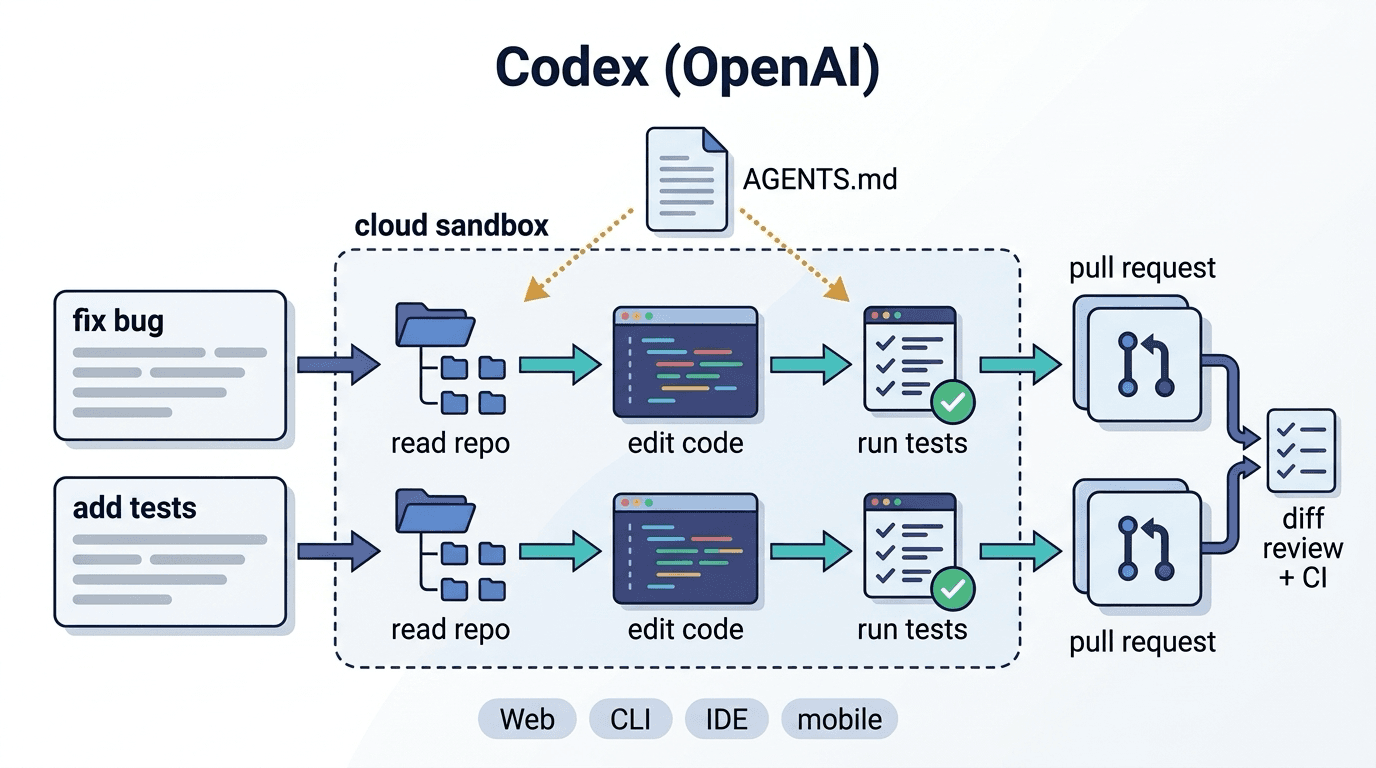
Codex (OpenAI)
Codex is OpenAI's AI coding agent. It reads a repository and carries a task through implementation,
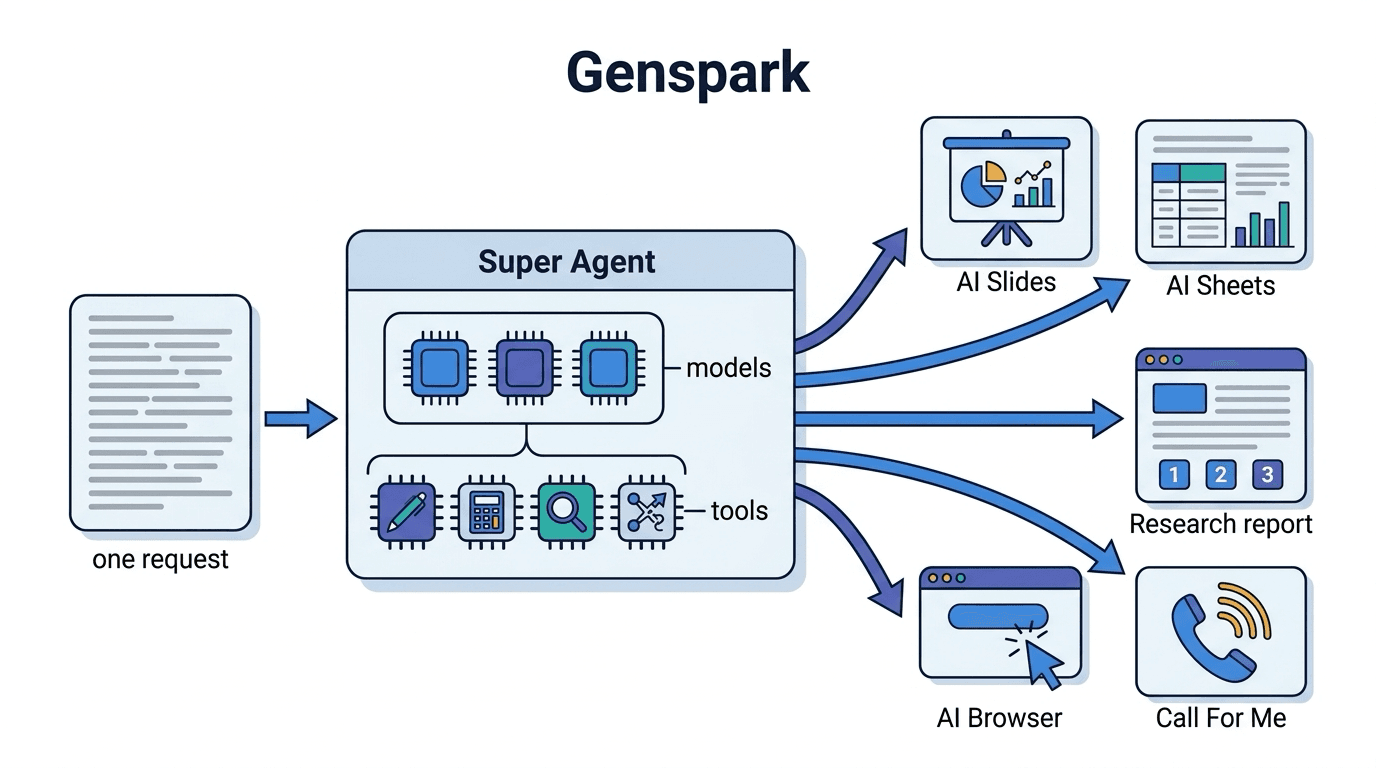
Genspark
Genspark is an AI workspace in which AI agents take on research, slide and spreadsheet creation, and