Hybrid Search
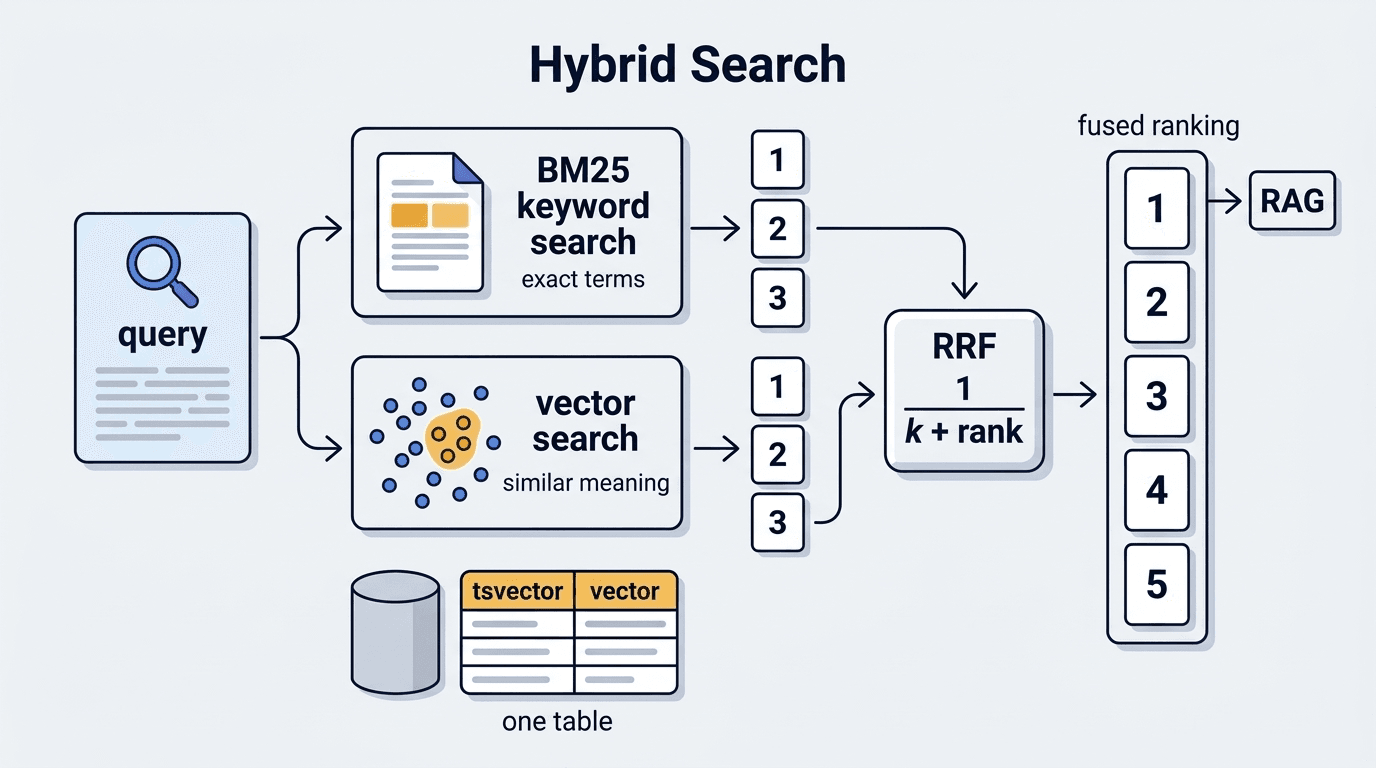
Hybrid search is a technique that combines keyword-based full-text search (such as BM25) with vector search (semantic search), leveraging the strengths of both to improve retrieval accuracy.
The single biggest factor in RAG retrieval accuracy is whether relevant documents are correctly retrieved. Vector search alone struggles with exact matches for proper nouns like "ISO 27001," while BM25 alone cannot handle semantic paraphrases like "international standard for information security." Hybrid search compensates for these two weaknesses.
The most common implementation pattern runs BM25 and vector search independently, then merges results using RRF (Reciprocal Rank Fusion). It sums the reciprocals of each method's rankings to produce a final reranked score. The formula is simple, yet it consistently outperforms either search method alone.
Combining pgvector with PostgreSQL's full-text search enables hybrid search without additional infrastructure. On Supabase, maintaining both a vector column and a tsvector column in the same table and computing both scores within SQL is a practical approach.
Chunk size design also affects accuracy. Smaller chunks improve vector search precision but lose context for BM25. In practice, chunks of 500-1000 tokens with overlapping context from adjacent segments are common.
Articles covering this term
- What is Hybrid Search? How It Works and Implementation to Improve RAG Accuracy with Vector Search × Full-Text SearchExplains hybrid search using vector search, BM25, and RRF. Practical design patterns and implementation tips to improve RAG system retrieval accuracy.
- 10 RAG Implementation Failure Patterns and How to Avoid Them — Preventing Production Issues Before They Happen10 common RAG failures before & after production: chunk design errors, retrieval accuracy drops, hallucination fixes & more. Learn key avoidance strategies before you build.
- What is a Vector Database? A Complete Guide to How It Works, Top Product Comparisons, and RAG ApplicationsFrom basic vector database concepts to comparing top products like Pinecone, Weaviate, and pgvector, plus RAG system integration—a clear guide for AI implementation managers.
- What is Adaptive RAG? How to Balance Cost and Accuracy with Query-Driven Dynamic RetrievalLearn how Adaptive RAG eliminates inefficiencies of traditional RAG by selectively retrieving only when needed—covering mechanisms, implementation patterns, and B2B use cases.


Related Terms
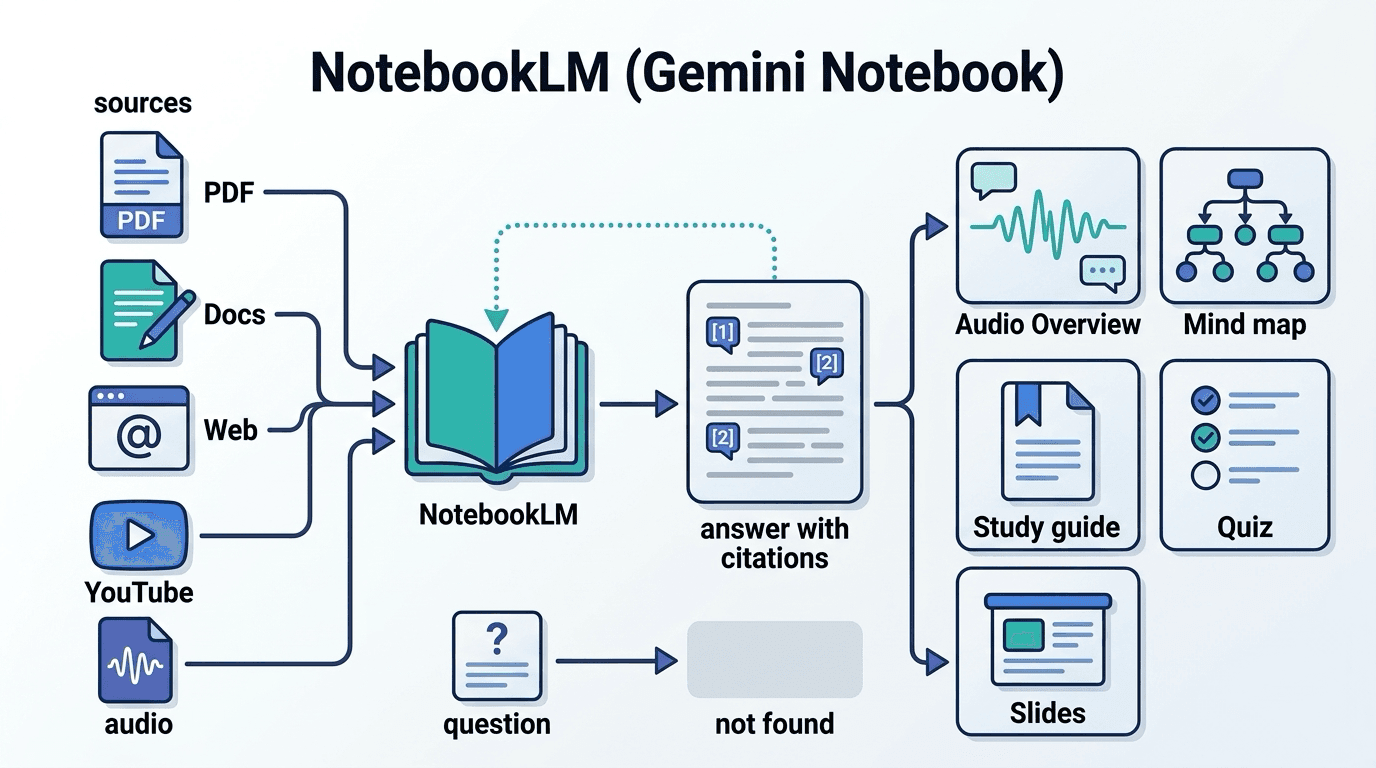
NotebookLM (now Gemini Notebook)
NotebookLM is Google's notebook-style AI that summarizes, answers questions and creates audio explan

RRF
RRF (Reciprocal Rank Fusion) is a scoring method that integrates ranking results returned by multipl
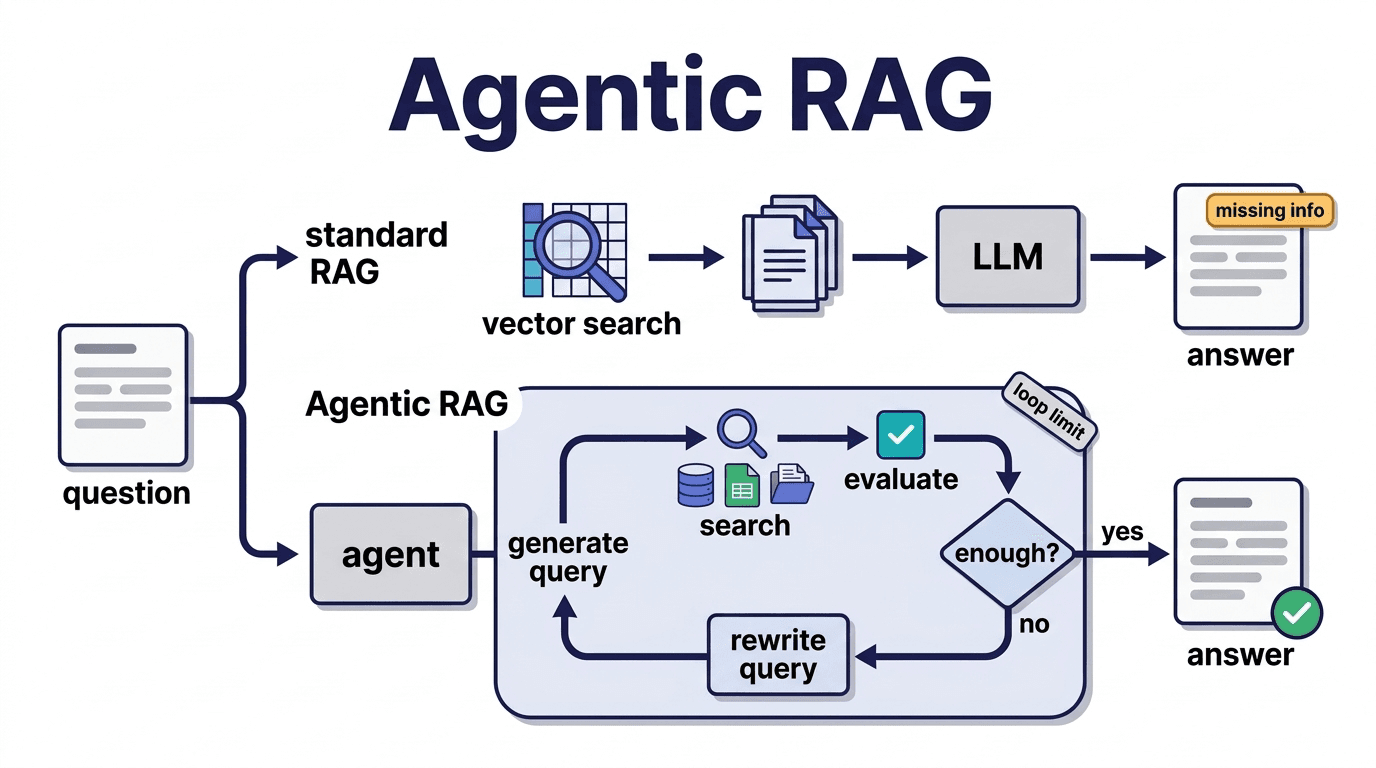
Agentic RAG
Agentic RAG is an architecture in which an LLM autonomously and iteratively generates search queries
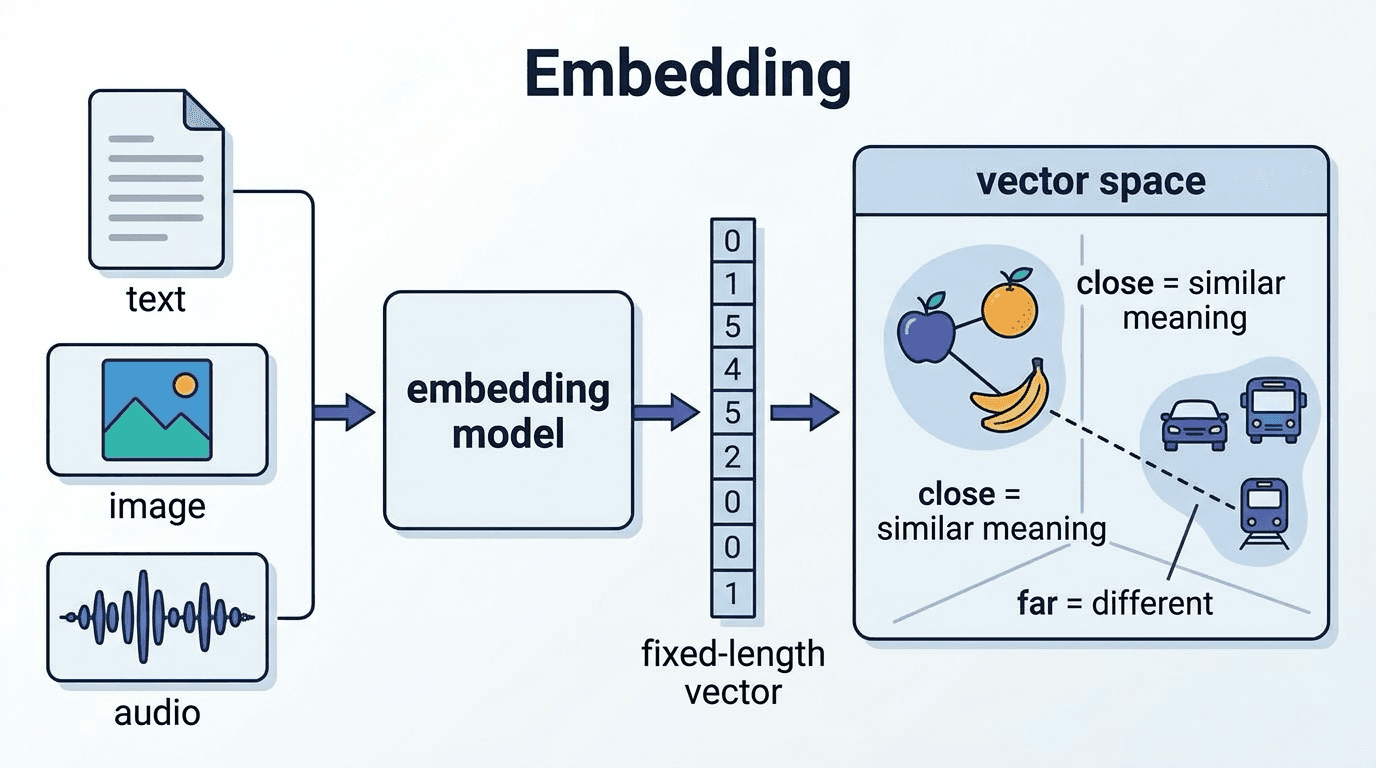
Embedding
Embedding is a technique that transforms unstructured data such as text, images, and audio into fixe