GraphRAG

A next-generation RAG architecture that combines knowledge graphs and vector search, leveraging relationships between entities to improve retrieval accuracy.
What is GraphRAG
GraphRAG is a next-generation architecture that combines knowledge graphs with vector search to leverage relationships between entities in retrieval—relationships that conventional RAG (Retrieval-Augmented Generation) has been unable to capture.
Scenarios Where Traditional RAG Struggles
In a standard RAG pipeline, chunks are retrieved based on embedding similarity against a query. It performs poorly on questions that require reasoning across relationships spanning multiple documents, such as "Who are Company A's competitors?" Individual retrieved chunks often do not contain the answer on their own, making them a common source of hallucinations.
What Graph Structure Solves
GraphRAG first extracts entities (people, organizations, concepts, etc.) and their relationships from a corpus to construct a knowledge graph. At retrieval time, it performs path traversal over the graph in addition to vector similarity search, enabling multi-hop reasoning such as "A → competitive relationship → B." It is also a technology that Gartner has designated as a "Critical Enabler" for generative AI in 2026.
Key Considerations for Adoption
Building the graph requires processing the entire corpus with an LLM, resulting in significant upfront costs. For small-scale FAQ chatbots, hybrid search is often sufficient, so the practical approach is to first assess whether cross-document relationships are operationally significant—for example, cross-references between clauses in legal documents or supplier relationships in a supply chain—before deciding to adopt GraphRAG.
Articles covering this term
- What Is Graph Engineering? A Practical Guide to Designing and Operating Production-Quality Knowledge GraphsFrom defining Graph Engineering to production operation: entity design, edge quality, RAG integration, and monitoring metrics explained from a practical standpoint.
- What is a Vector Database? A Complete Guide to How It Works, Top Product Comparisons, and RAG ApplicationsFrom basic vector database concepts to comparing top products like Pinecone, Weaviate, and pgvector, plus RAG system integration—a clear guide for AI implementation managers.
- What is Hybrid Search? How It Works and Implementation to Improve RAG Accuracy with Vector Search × Full-Text SearchExplains hybrid search using vector search, BM25, and RRF. Practical design patterns and implementation tips to improve RAG system retrieval accuracy.
- 10 RAG Implementation Failure Patterns and How to Avoid Them — Preventing Production Issues Before They Happen10 common RAG failures before & after production: chunk design errors, retrieval accuracy drops, hallucination fixes & more. Learn key avoidance strategies before you build.


Related Terms
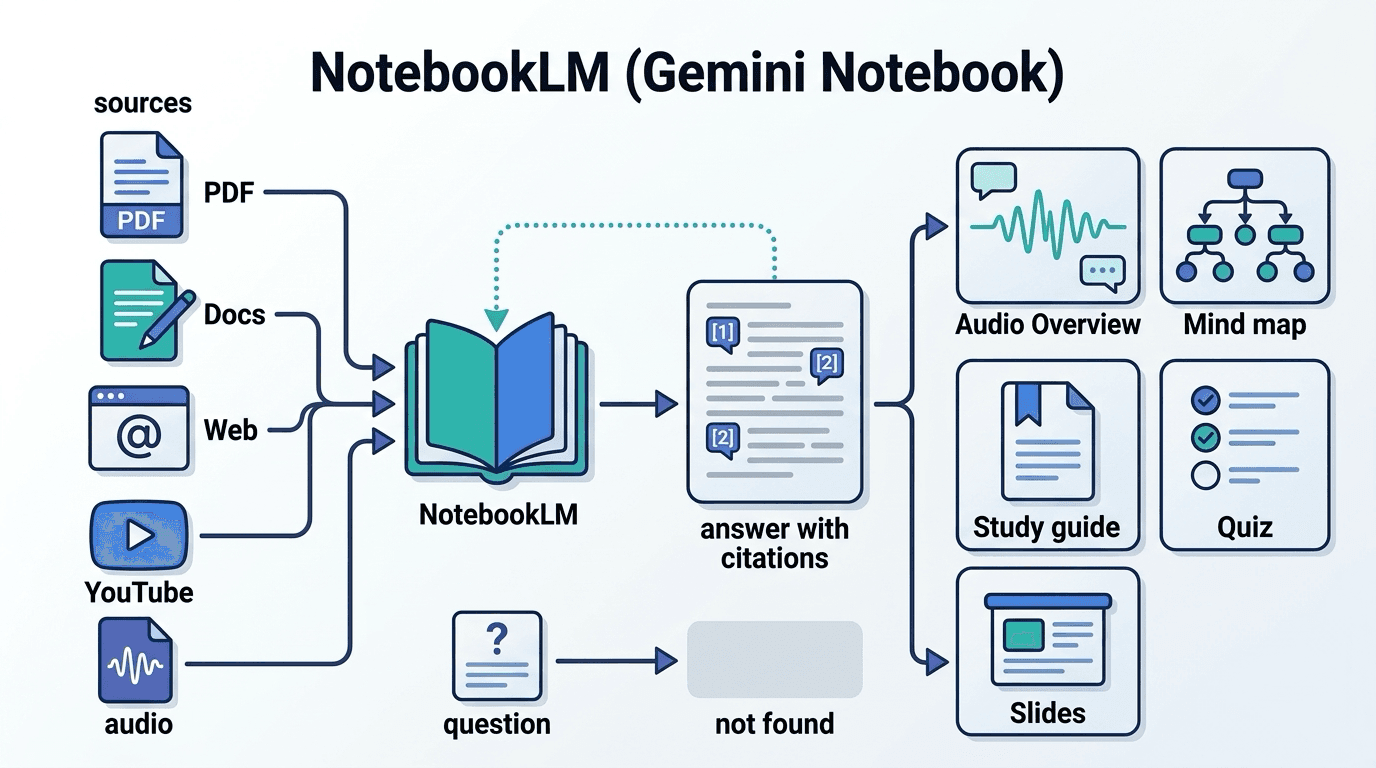
NotebookLM (now Gemini Notebook)
NotebookLM is Google's notebook-style AI that summarizes, answers questions and creates audio explan

RRF
RRF (Reciprocal Rank Fusion) is a scoring method that integrates ranking results returned by multipl
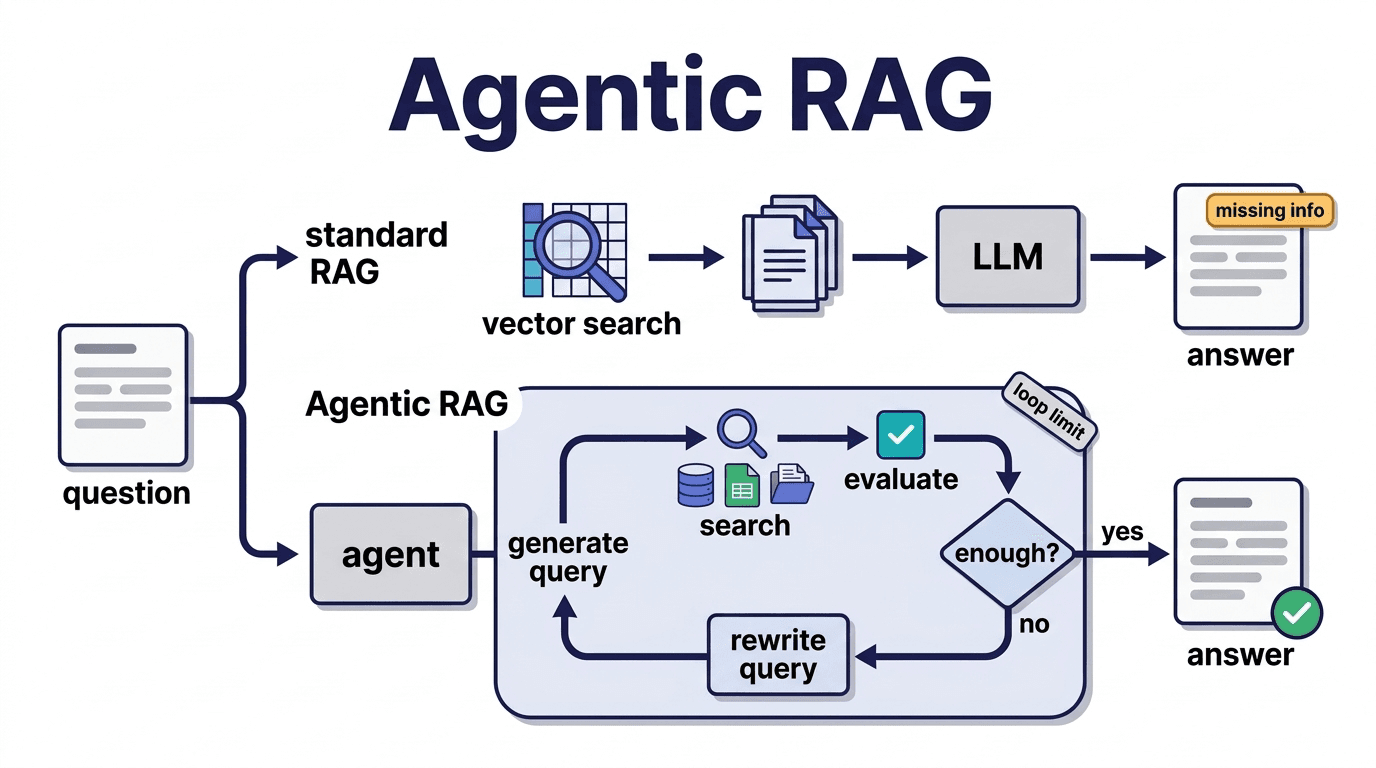
Agentic RAG
Agentic RAG is an architecture in which an LLM autonomously and iteratively generates search queries
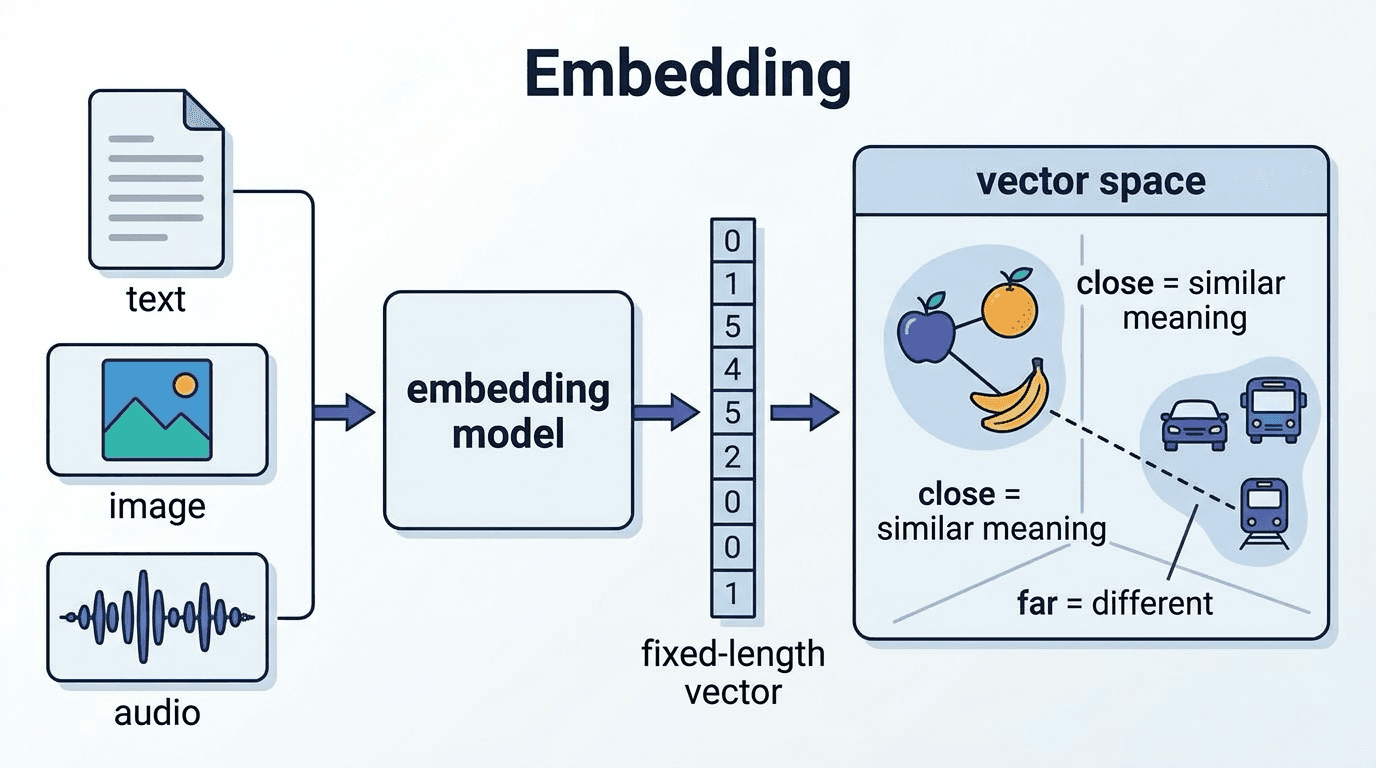
Embedding
Embedding is a technique that transforms unstructured data such as text, images, and audio into fixe