Multilingual NLP (Multilingual Natural Language Processing)
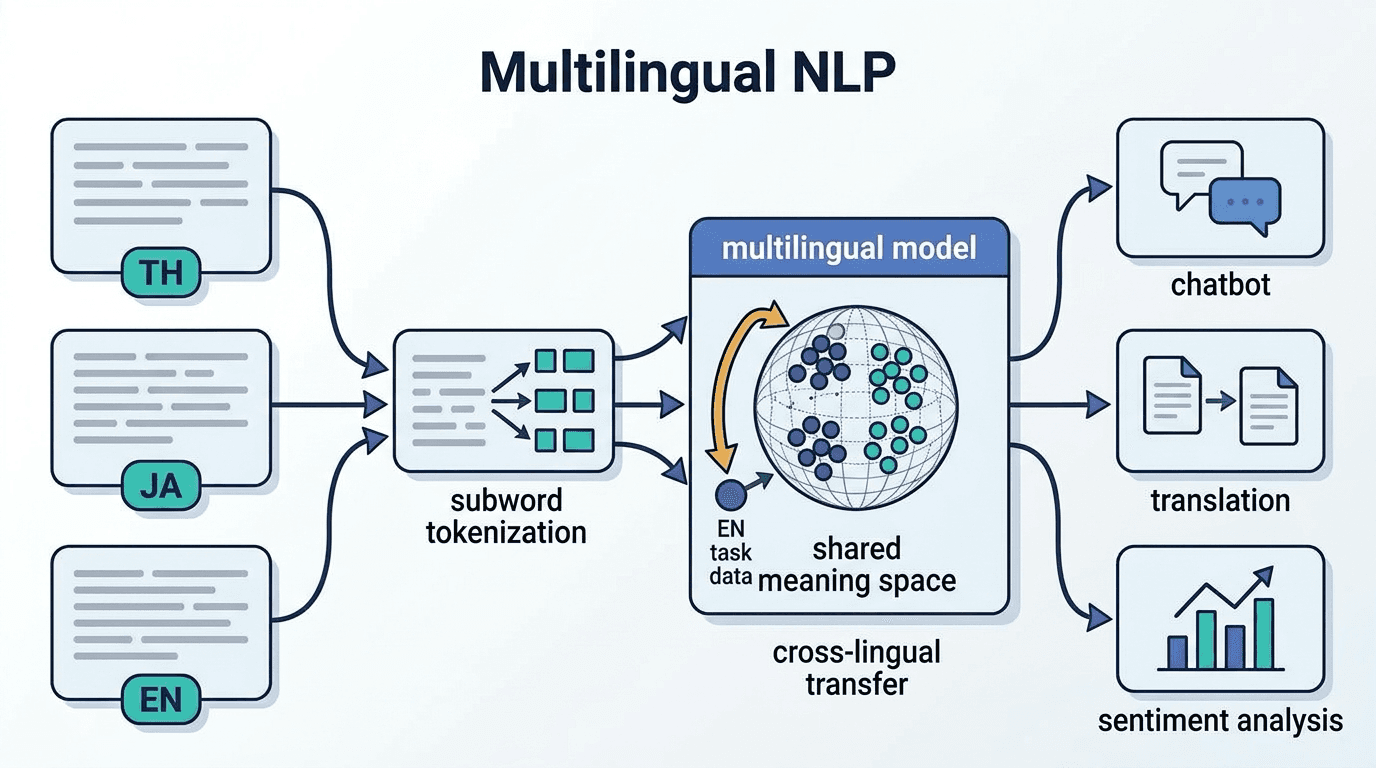
Multilingual NLP is a natural language processing technology capable of analyzing and generating text across multiple languages, such as Thai, Japanese, and English, and serves as the foundation for multilingual chatbots and translation systems.
Multilingual NLP (Multilingual Natural Language Processing) is a natural language processing technology capable of cross-linguistically analyzing and generating text in multiple languages such as Thai, Japanese, and English. It serves as the foundational technology for multilingual chatbots and translation systems.
Technical Mechanisms
At the core of Multilingual NLP are large-scale pre-trained models represented by LLMs (Large Language Models). Models such as mBERT (Multilingual BERT) and XLM-RoBERTa acquire cross-lingual semantic representations by training simultaneously on corpora spanning dozens to over a hundred languages.
This characteristic, known as "cross-lingual transfer," enables task knowledge learned in one language to be applied to another. For example, a model trained on English sentiment analysis data can in some cases achieve reasonable accuracy on Thai and Japanese sentiment analysis as well.
The key technical components can be summarized as follows:
- Tokenization diversity: Since word boundaries are not explicitly marked in Japanese and Chinese, subword segmentation methods such as BPE Tokenizers (Byte-Pair Encoding Tokenizers) are essential
- Embedding space integration: By projecting the semantics of different languages into a shared vector space, cross-lingual search and comparison become possible
- Fine-tuning and PEFT: For adaptation to specific languages and domains, parameter-efficient methods such as LoRA are widely utilized
Key Use Cases
There are numerous scenarios where Multilingual NLP delivers practical value.
In multilingual customer support, AI chatbots can handle inquiries in multiple languages using a single model, significantly reducing the cost of building separate systems for each language. Services targeting Thai, Japanese, and English-speaking markets require designs that incorporate compliance with local regulations such as PDPA (Thailand's Personal Data Protection Act).
In global information retrieval and RAG construction, combining Multilingual NLP with RAG (Retrieval-Augmented Generation) enables cross-lingual search — for instance, asking a question in Japanese while generating answers from English documents. Leveraging multilingual embeddings stored in vector databases can further enhance the accuracy of hybrid search.
In content localization, translation and rewriting powered by Generative AI tends to preserve contextual naturalness more effectively compared to conventional machine translation.
Accuracy and Tradeoffs
Multilingual support also presents structural challenges. Compared to high-resource languages such as English, low-resource languages like Thai and Swahili have less training data available, making models more prone to performance degradation. It is also well known that handling multiple languages within a single model can cause accuracy in specific languages to fall short of dedicated monolingual models — a phenomenon known as the "Curse of Multilinguality."
The risk of Hallucination also varies by language, with low-resource languages tending to be more susceptible to incorrect information generation. Prior to deployment in production environments, language-specific quality validation through PoC (Proof of Concept) is essential.
From an AI governance perspective, multilingual systems also warrant careful attention. Regulations across different countries, including the EU AI Act, have varying requirements depending on language and region, making multifaceted legal risk assessment necessary when expanding globally.
Future Outlook
In recent years, models such as GPT and Claude have significantly improved their multilingual capabilities, enabling support for a wide range of languages without additional fine-tuning. Research is actively underway on enhancing low-resource languages using Synthetic Data and on model lightweighting through Knowledge Distillation. Combined with Edge AI, on-device multilingual processing is becoming an increasingly viable option. Establishing MLOps practices for continuously monitoring and improving multilingual quality will be a critical factor in the stable operation of production systems.
Articles covering this term
- Guide to AI Investment Decisions for Thai Businesses — Implementation Priorities Based on ROI Comparisons by IndustryA sector-by-sector guide for Thai B2B companies choosing AI investments. Compare manufacturing, logistics, tourism, healthcare & retail by ROI, complexity, and talent needs.
- How Thai Healthcare Providers Are Automating Foreign Patient Support with AI ChatbotsLearn how AI chatbots support Thailand's medical tourism. Covers multilingual triage, department guidance, insurance claims, foreign patient automation, and PDPA compliance.
- Thailand B2B AI Agent Deployment in Production — A Framework Selection and Multilingual Local Operations Implementation GuideA framework selection guide for Thai B2B companies deploying AI agents in production. Compares LangGraph, CrewAI, Mastra & AutoGen on multilingual support, PDPA compliance, and local engineer fit.
- How AI Streamlines HR and Recruitment for Thai Companies — From Applicant Response to Turnover PredictionAI in HR & recruitment for firms in Thailand: applicant screening, attendance/labor query automation, attrition prediction, PDPA compliance, and practical implementation steps.


Related Terms
AI Checker (AI-generated text detector)
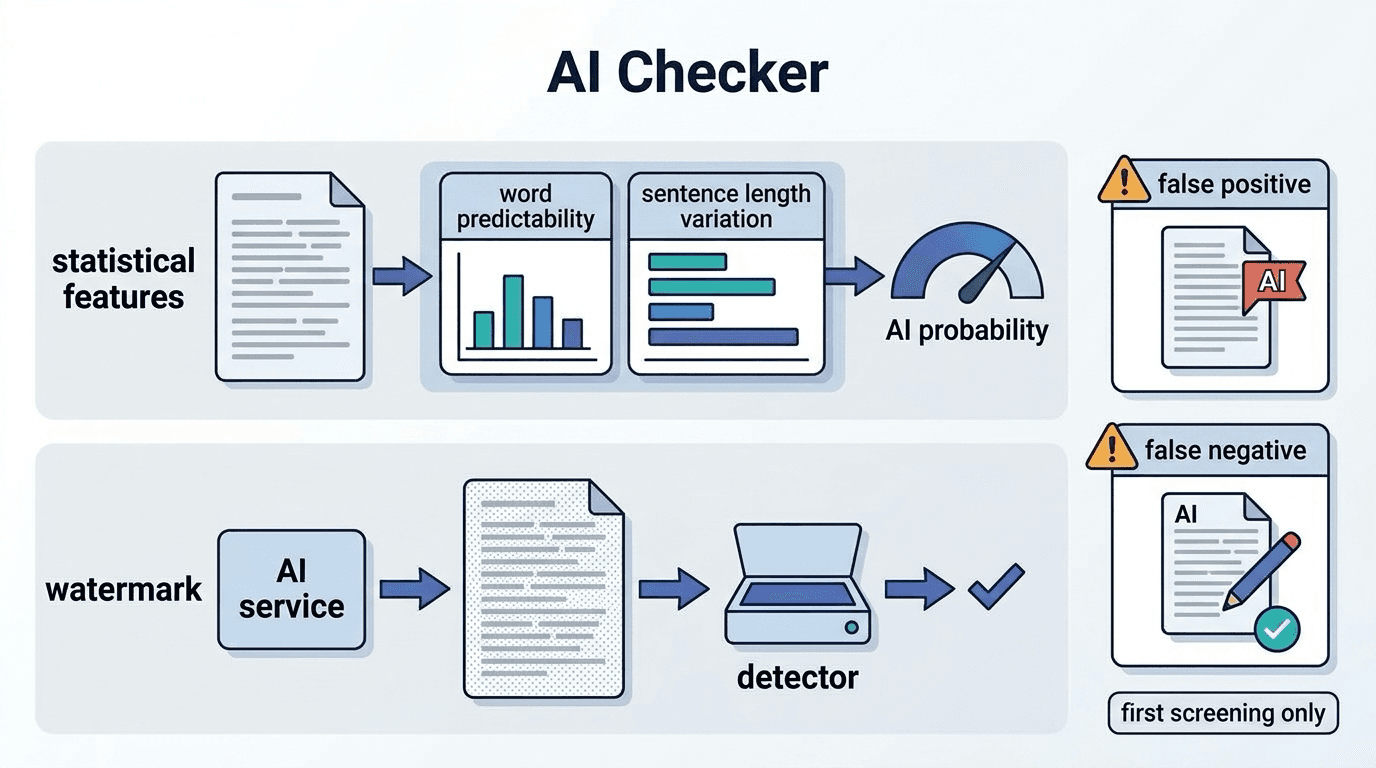
An AI checker is a tool that estimates whether a piece of writing was generated by AI, mainly from s
AI Mode (Google AI Mode)
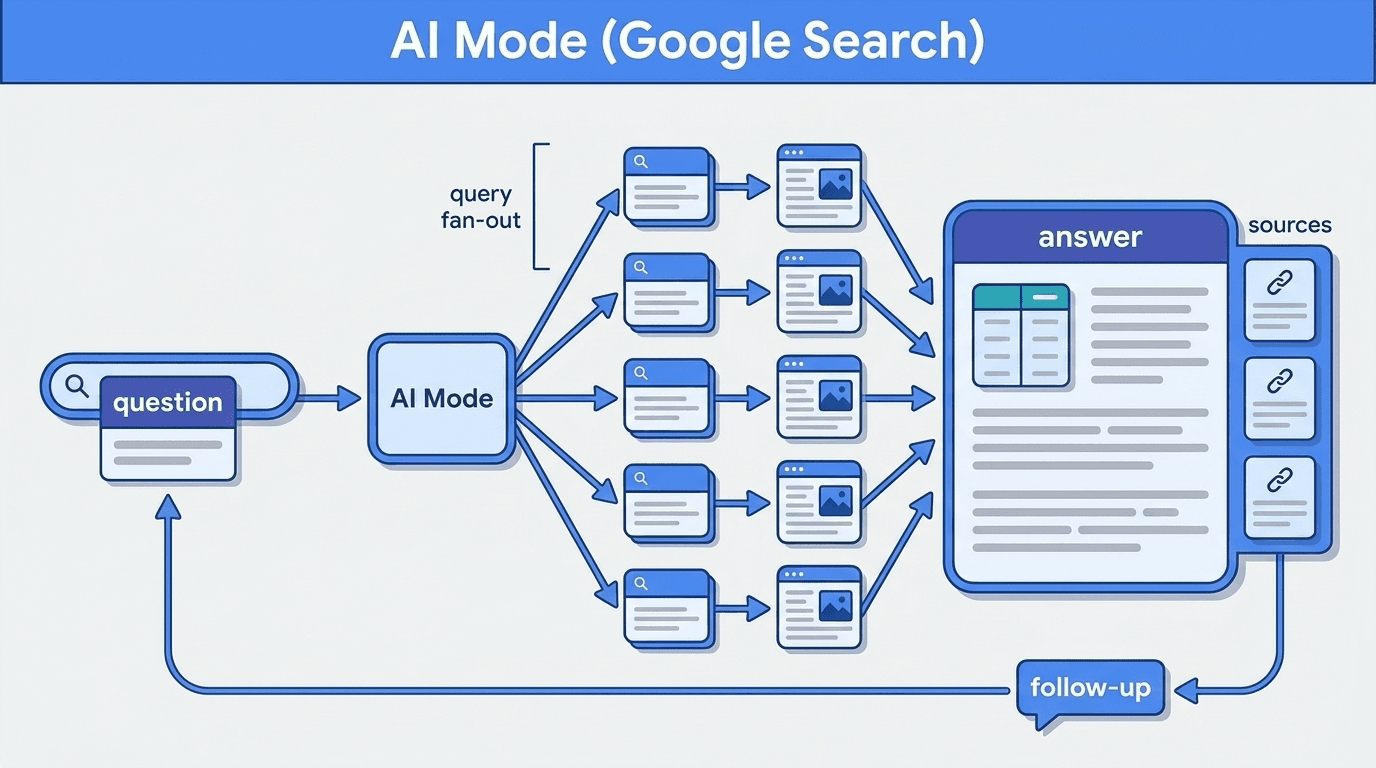
AI Mode is a generative AI search mode built into Google Search that answers questions conversationa

Context Window
A context window refers to the maximum number of tokens an LLM can process at one time, indicating t
DeepSeek
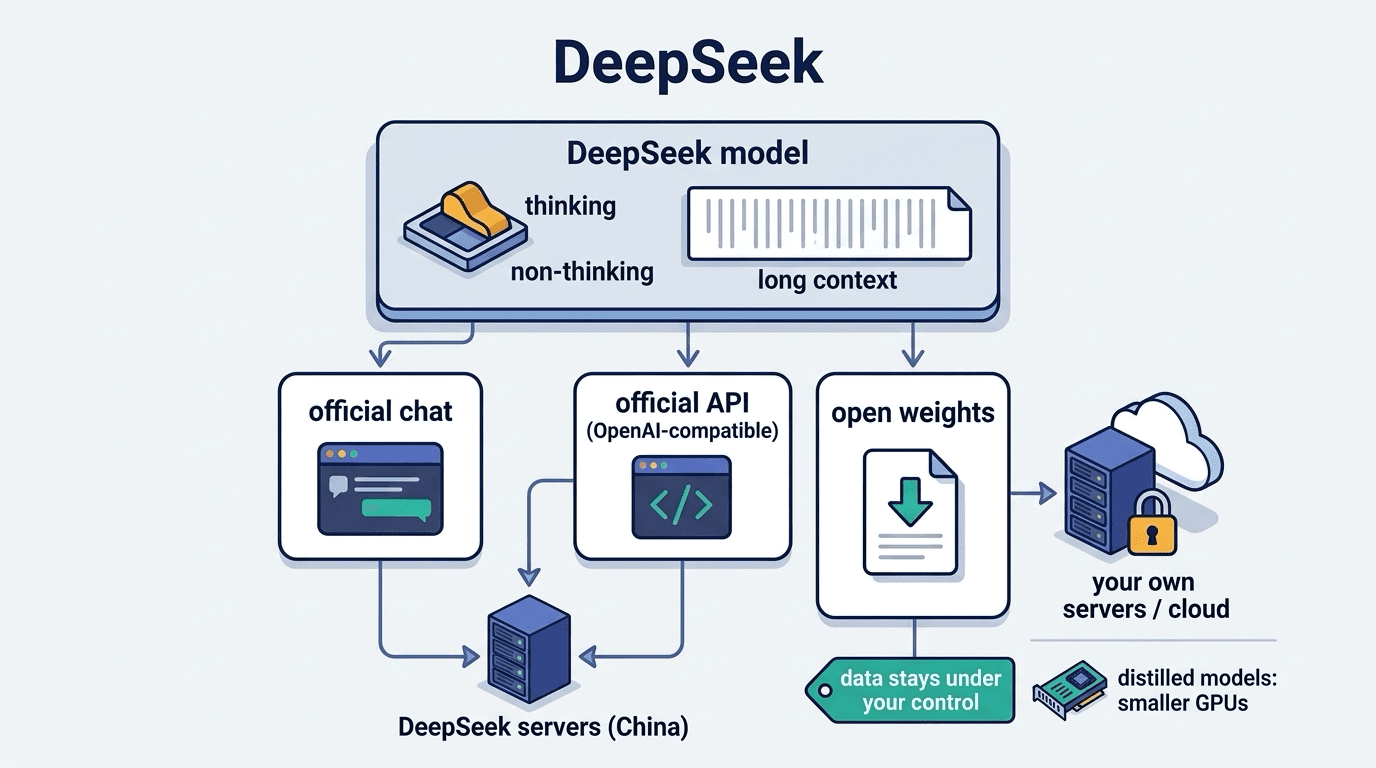
DeepSeek is a family of large language models and a chat service developed by the Chinese company De