Fine-tuning
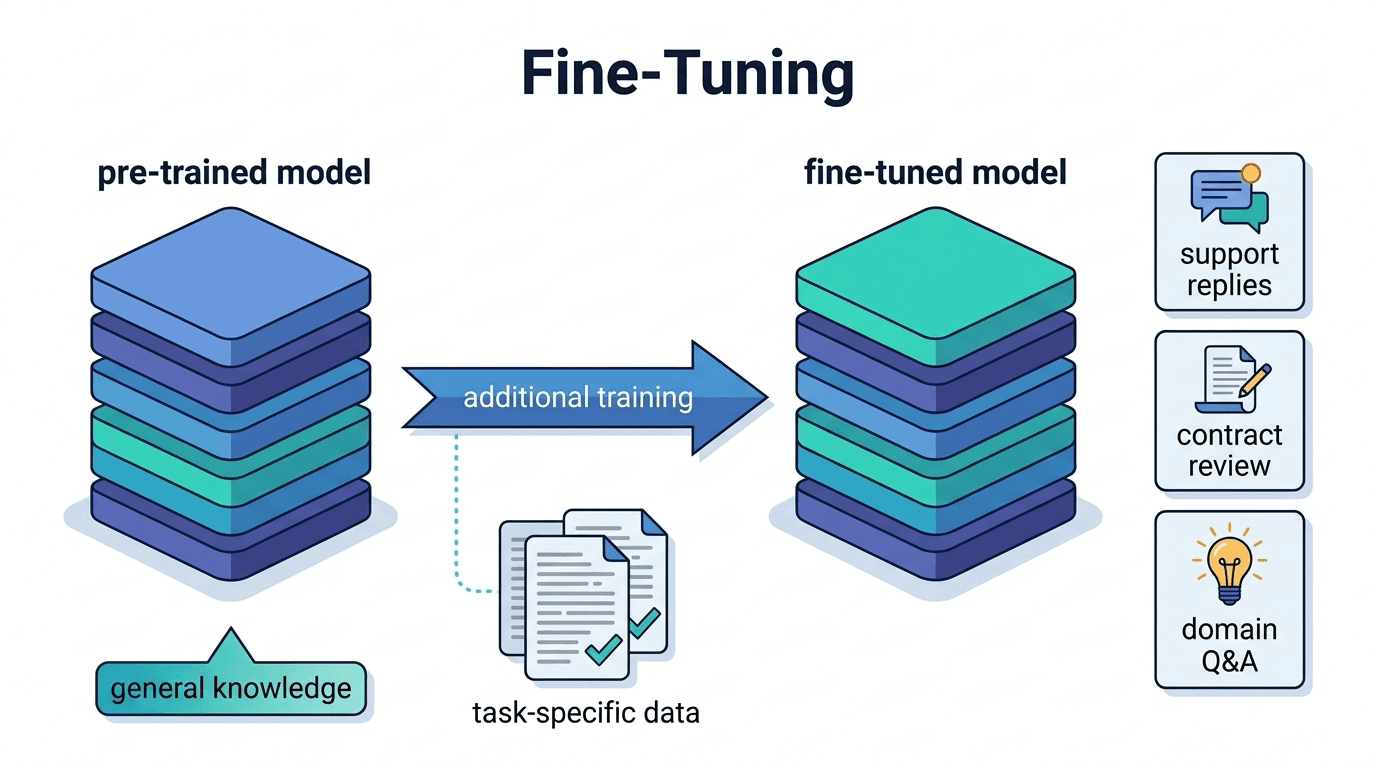
Fine-tuning refers to the process of providing additional training data to a pre-trained machine learning model in order to adapt it to a specific task or domain.
"Generically intelligent, but unaware of our business operations" — this is a wall you will almost certainly hit when trying to deploy an LLM in practice. Fine-tuning is the process of tailoring this general-purpose model to your organization's specific needs.
Historically, this has been established as a standard NLP workflow since the era of BERT (around 2018). The two-stage learning framework — learning the general structure of language through pre-training, then overwriting task-specific patterns through fine-tuning — remains unchanged today. What has changed is the scale of models and the associated cost challenges.
Modern fine-tuning broadly falls into three categories.
Full FT updates all parameters of the model. It can achieve the highest accuracy, but for a 70B model, it typically requires 8 or more A100 80GB GPUs, and training can take several days. This is suited for research institutions and big tech companies with ample budget and time.
PEFT (LoRA / QLoRA, etc.) updates only a subset of parameters. It achieves accuracy approaching Full FT on many tasks at 1/10 to 1/100 of the cost. Since 2024, this has been becoming the dominant approach in practical applications.
Instruction Tuning is somewhat different in nature — it teaches the model the ability to follow instructions. The reason ChatGPT can engage in natural dialogue is also a result of fine-tuning the base model on a large number of instruction-response pairs.
Regardless of which method you choose, the quality of training data determines everything. A thousand carefully annotated data points will yield better results than ten thousand pieces of rough data — this is a lesson the author has learned time and again firsthand.
Articles covering this term
- Introduction to Fine-Tuning — The Fundamentals and Decision Criteria B2B Companies Should Know Before Building Their Own LLMLearn how fine-tuning works from the basics. Covers PEFT/LoRA, when to use RAG, cost estimates, and a checklist for B2B companies evaluating custom model development.
- Choosing Between Fine-Tuning and RAG: A Practical Guide Comparing Cost, Accuracy, and Use CasesFine-tuning vs RAG: which should you choose? We compare both across 4 axes—cost, accuracy, update frequency, and security—to guide your decision by use case.
- PEFT Explained: LoRA, QLoRA and Adapters for Low-Cost TuningPEFT explained for decision-makers: how LoRA, QLoRA and adapters cut AI model customization costs, common mistakes, industry use cases and investment insights.
- What is SLM Distillation? How to Create Small Specialized Models from Large LLMsLearn how SLM distillation uses large LLMs as teachers to build cost-effective, task-specific private models—covering the mechanism and implementation steps.


Related Terms
AI Checker (AI-generated text detector)
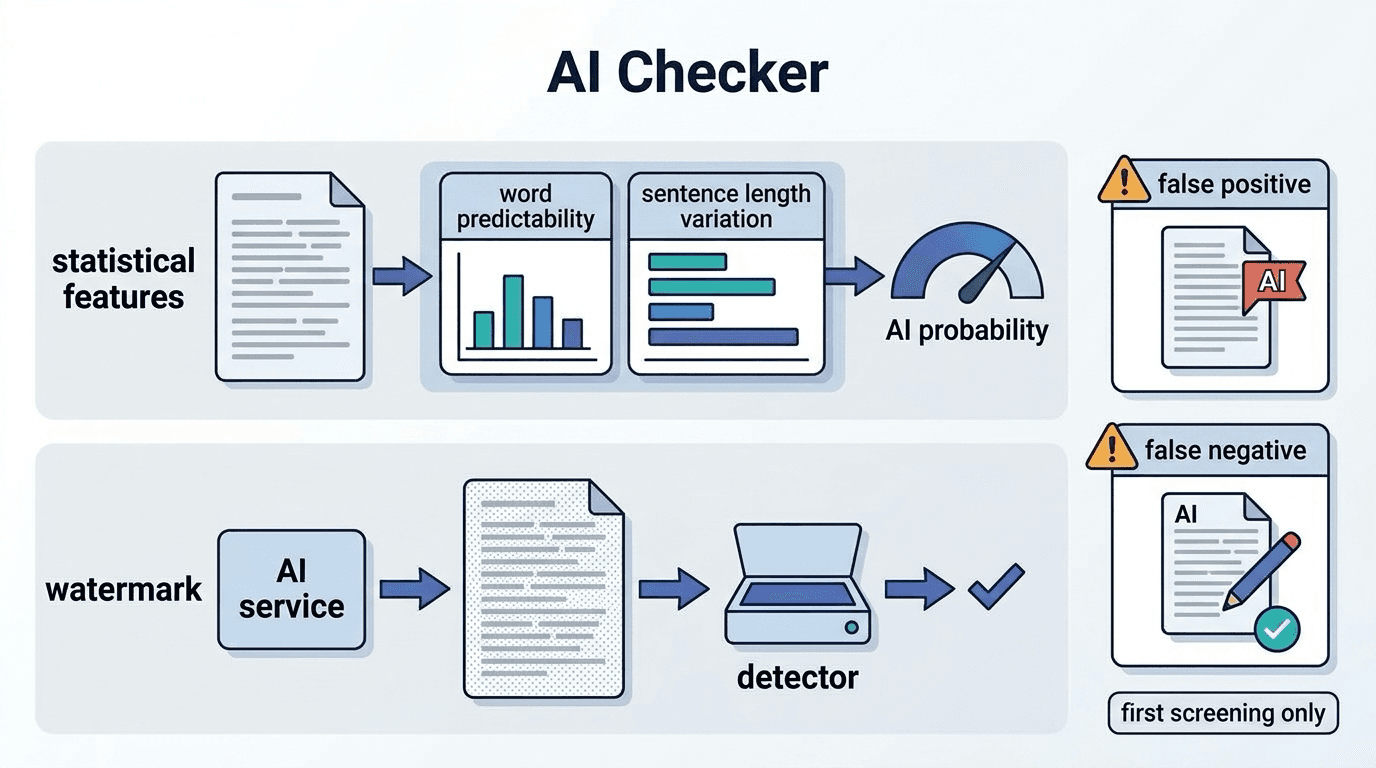
An AI checker is a tool that estimates whether a piece of writing was generated by AI, mainly from s
AI Mode (Google AI Mode)
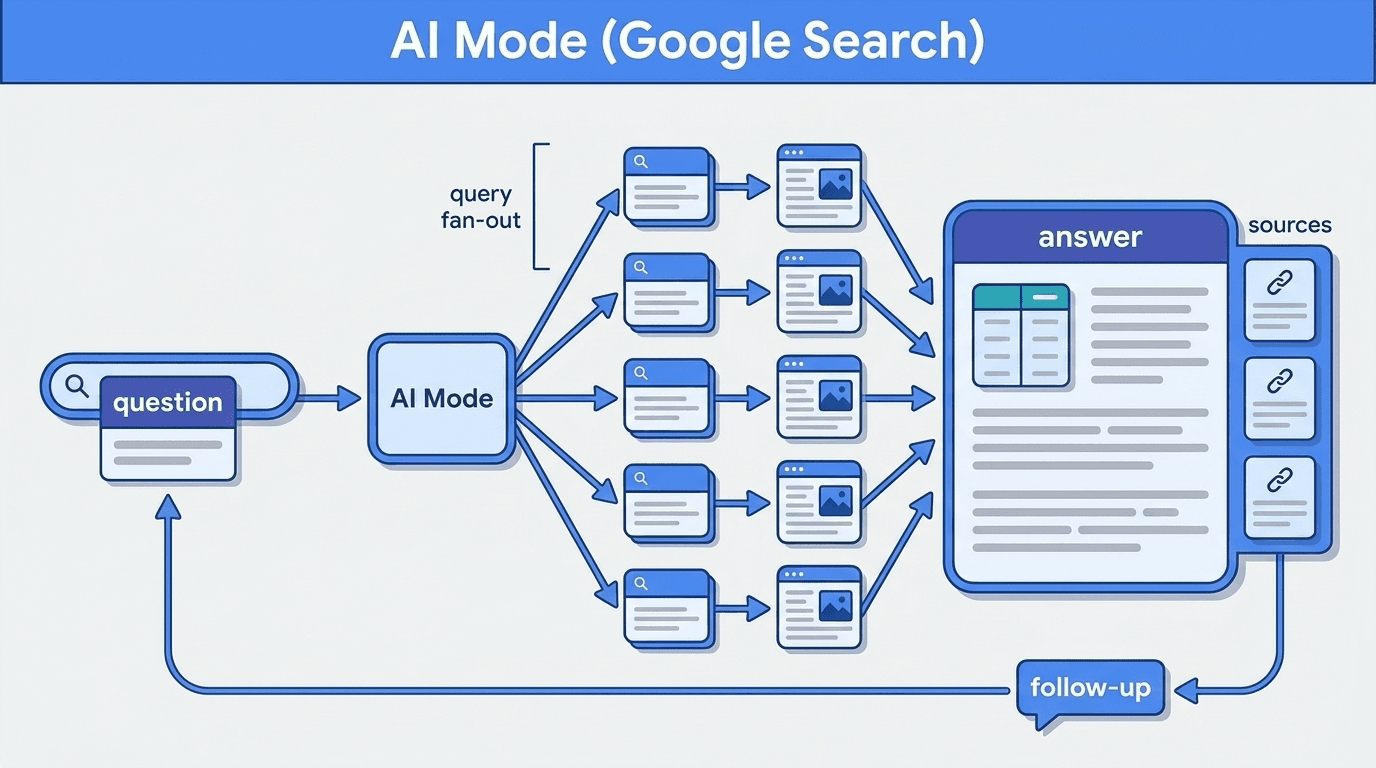
AI Mode is a generative AI search mode built into Google Search that answers questions conversationa

Context Window
A context window refers to the maximum number of tokens an LLM can process at one time, indicating t
DeepSeek
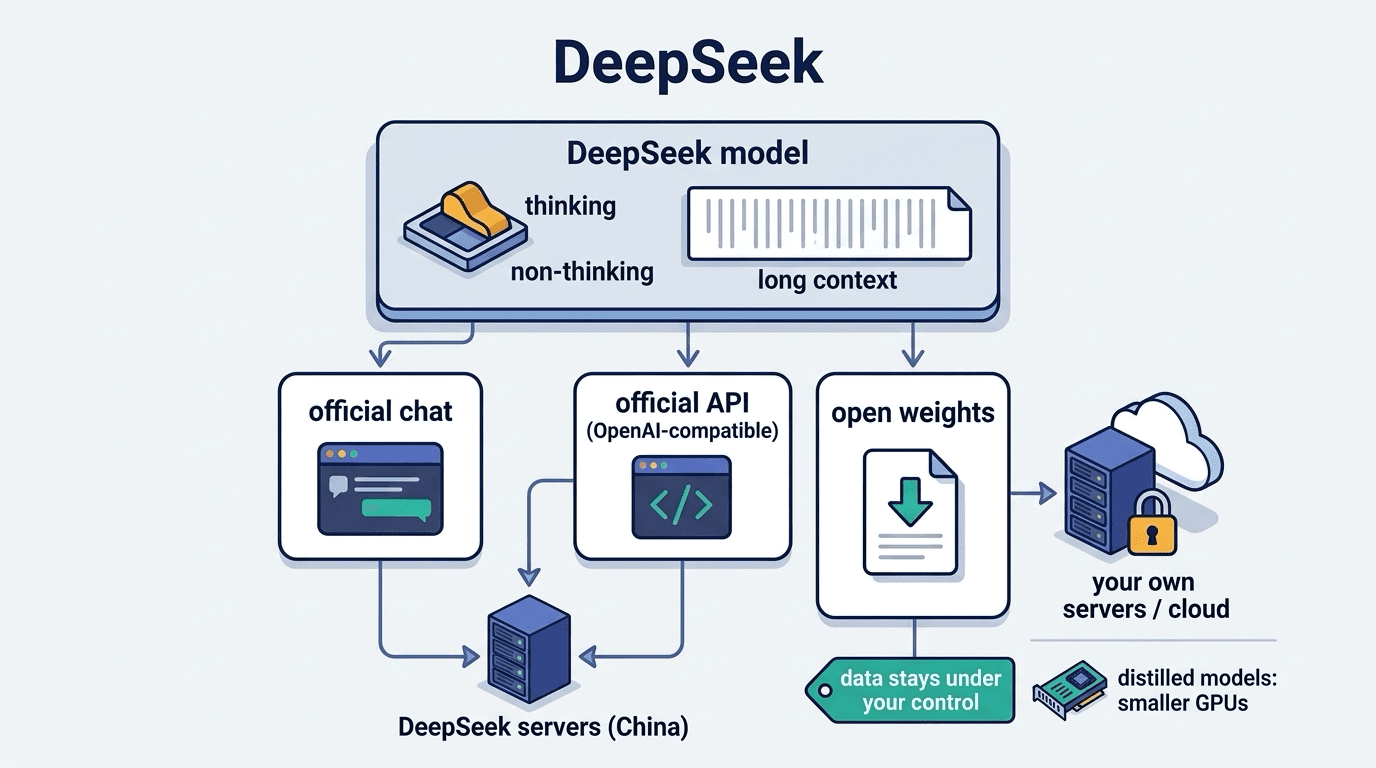
DeepSeek is a family of large language models and a chat service developed by the Chinese company De