Synthetic Data
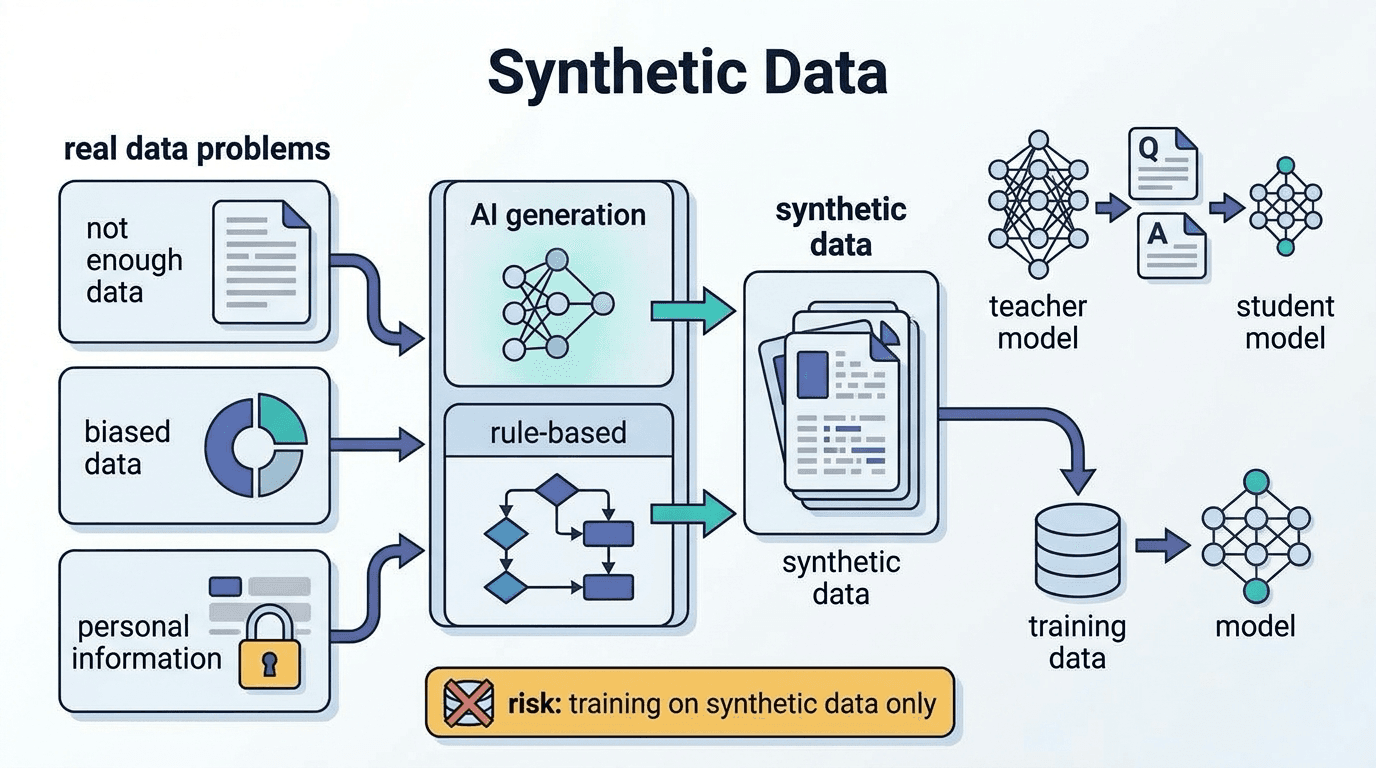
Training data generated by AI. It is used to supplement the lack of real data and to train and evaluate models while protecting privacy.
What is Synthetic Data?
Synthetic data refers to datasets artificially generated by AI or rule-based algorithms, rather than using real data directly. It is widely used for model training, evaluation, and distillation.
When Synthetic Data Becomes Necessary
Real data faces three fundamental barriers: insufficient volume, inherent bias, and the inclusion of personally identifiable information. In the medical field, for example, image data for rare diseases is extremely scarce, and in finance, fraudulent transaction data often accounts for less than 0.1% of the total. Synthetic data is a practical means of bridging these gaps.
Synthetic Data in the LLM Era
Its combination with knowledge distillation is rapidly gaining traction. The pipeline involves feeding diverse prompts to a large teacher model to generate responses, then using that output as training data for a student model — a workflow validated by the success of the Microsoft Phi series.
It is also used to create fine-tuning training data. An approach in which LLMs automatically generate Q&A pairs from internal documents, which are then used to improve the response quality of RAG systems, has proven effective in the author's own projects as well.
Risks to Be Aware Of
Training exclusively on synthetic data can lead to "model collapse," where a model progressively reinforces its own output patterns. An operational design that manages the mixing ratio with real data and incorporates regular human quality verification is essential.
Articles covering this term
- What is AI × Synthetic Testing? A Framework for Evaluating LLMs and AI Agents with Synthetic DataSynthetic Test evaluates AI using synthetic data. We explain its role in LLM & AI agent quality assurance, differences from LLM-as-a-Judge, and 4 implementation steps.
- What is SLM Distillation? How to Create Small Specialized Models from Large LLMsLearn how SLM distillation uses large LLMs as teachers to build cost-effective, task-specific private models—covering the mechanism and implementation steps.
- What Is an AI Data Readiness Audit? How to Assess Your Internal Data Before Implementing Agentic AIMost AI agent failures stem from data, not models. Learn how to run a data readiness audit—evaluating quality, accessibility, and structure of internal data.
- What is Eval-Driven Development (EDD)? An Evaluation-First AI Development ProcessLearn how EDD integrates evaluation metrics throughout the entire cycle—not gut feeling—plus practical steps to auto-tune prompts and parameters.


Related Terms
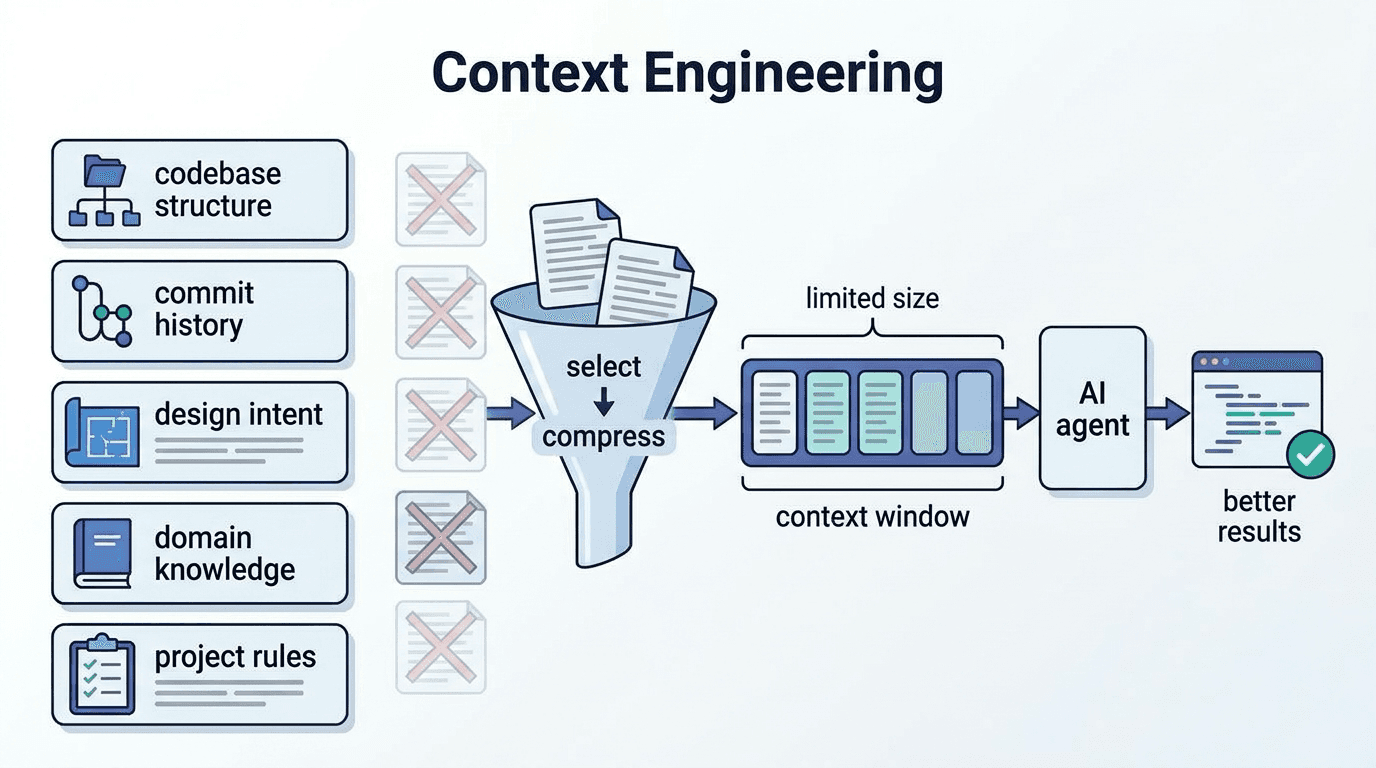
Context Engineering
Context Engineering is a technical discipline focused on systematically designing and optimizing the

System Prompt
A system prompt is an instruction given to an LLM before the start of a conversation with a user, de

AI Red Teaming (AI Red Teaming)
An evaluation method that systematically tests AI system vulnerabilities from an attacker's perspect
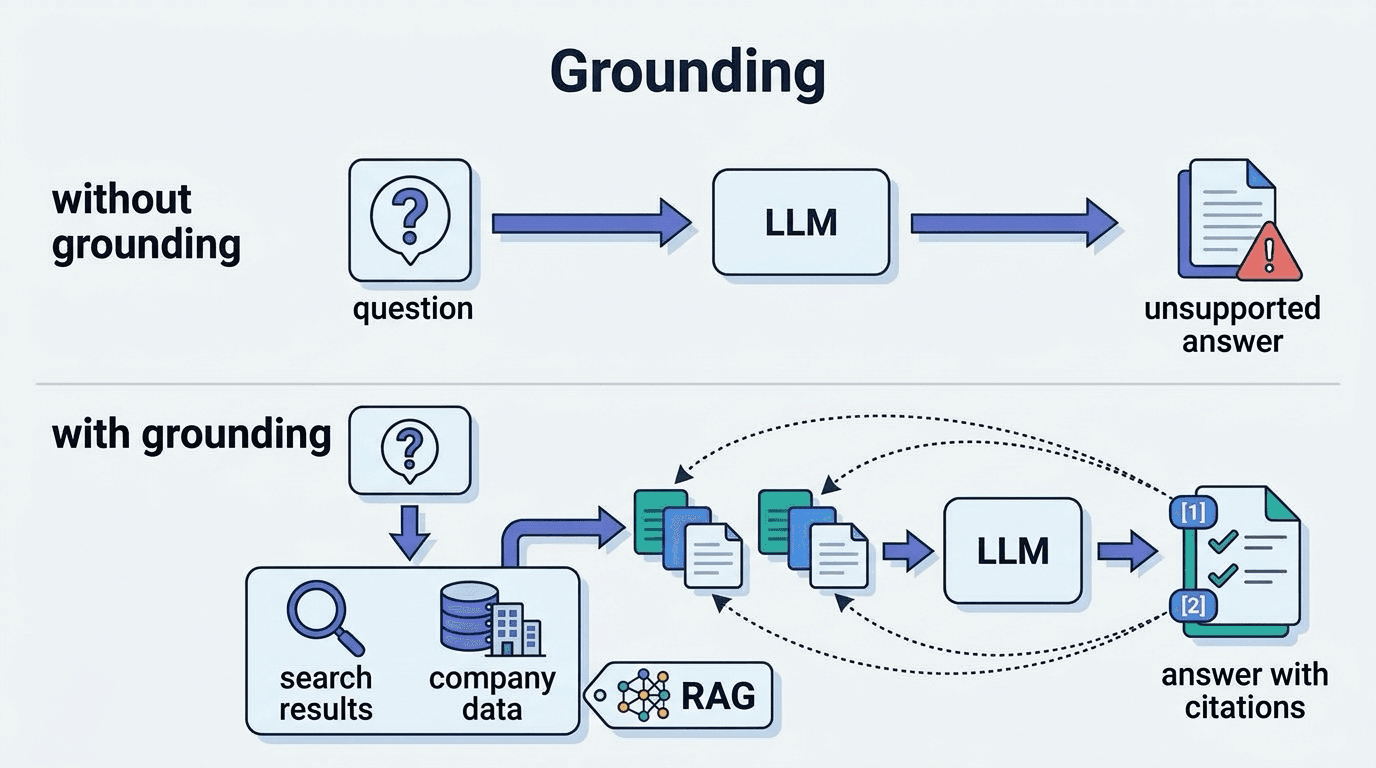
Grounding
A technique that cross-references LLM outputs with external data sources and search results to gener