AI Consulting in Bangkok: How to Choose a Partner in Thailand

Bangkok's AI Consulting market is maturing rapidly. For multinational companies operating in Thailand, choosing the right partner can mean the difference between a successful Digital Transformation and an expensive proof of concept (PoC) that never reaches production. This article is intended for managers at foreign-owned companies (Japanese, European, American, and others) who are considering AI-driven operational improvements but are unsure where to begin. By reading to the end, you will gain a clear framework for evaluating AI consulting firms in Bangkok, understand common pitfalls, and see a real-world case study in which monthly administrative work was reduced from 40 hours to 8 hours — an 80% reduction. Whether you are exploring your first AI implementation or looking to scale up from a pilot, this guide will give you the criteria you need to move forward with confidence.
Why Bangkok is Emerging as a Hub for AI Consulting in Southeast Asia

Over the past five years, Bangkok has steadily established itself as one of the most compelling hubs for AI consulting and implementation in Southeast Asia. While Singapore often captures the majority of media attention, Thailand's capital offers a unique combination of government support, a growing pool of technical talent, and cost efficiency, making it an increasingly attractive option for companies seeking AI transformation.
Promotion of Thailand's Digital Economy
The Thai government's "Thailand 4.0" initiative, along with the subsequent programs of the Digital Economy Promotion Agency (DEPA), are building a supportive ecosystem that encourages AI adoption. Tax incentives for technology companies, investment in digital infrastructure, and an innovation-friendly regulatory framework are creating a business environment where AI consulting firms can thrive. The Eastern Economic Corridor (EEC) is further accelerating this trend by attracting foreign technology investment.
For multinational companies already operating in Thailand, this means an expanding local ecosystem of partners, vendors, and talent, reducing the need to source expertise from higher-cost markets.
Expanding AI Talent Pool
Thailand's leading universities — Chulalongkorn University, Thammasat University, King Mongkut's University of Technology Thonburi (KMUTT), and others — are producing an increasing number of graduates with skills in Machine Learning, Data Science, and Software Engineering. Combined with experienced professionals who have returned after working abroad, Bangkok has developed a talent pool capable of handling sophisticated AI implementations.
This talent base is further strengthened by the presence of multinational technology companies that have established regional headquarters in Bangkok, creating a knowledge-sharing ecosystem that benefits the consulting market as a whole.
Cost Advantages Over Singapore and Hong Kong
One of the most practical reasons to choose AI consulting in Bangkok is cost. Compared to Singapore and Hong Kong, consulting fees and development costs in Thailand are typically 40–60% lower for equivalent quality. This cost advantage does not imply lower quality; rather, it reflects differences in operating costs. For companies looking to maximize ROI on their AI investments, Bangkok presents an attractive base.
For companies with regional headquarters in Bangkok, this means they can drive AI pilots and full-scale deployments without the budget constraints that tend to stall initiatives in higher-cost markets.
Common AI Challenges Faced by Companies in Thailand

Before entering the partner selection process, it is important to understand the unique challenges that multinational companies face when implementing AI solutions in Thailand. These challenges often determine which type of consulting partner is the best fit.
Data Silos and Legacy Systems
Many companies operating in Thailand — particularly those established before the digital era — run on a patchwork of legacy systems. ERP platforms from the 2000s, spreadsheet-based reporting, and fragmented databases across departments create data silos, making AI adoption significantly more difficult. Before machine learning models can deliver value, the underlying data infrastructure must first be properly established.
This is an area where strategy-focused consulting firms often fall short. While they may be able to identify opportunities, they sometimes lack the engineering capabilities needed to integrate disparate data sources and build AI-ready pipelines.
Language and Cultural Barriers in AI Adoption
Thailand's business environment operates across multiple languages — Thai, English, Japanese, and Chinese are the most common in the corporate sector. AI systems handling natural language processing (NLP), document automation, and customer interactions must be able to reliably process these languages.
Beyond language issues, cultural factors also influence how AI projects are executed. Communication styles, decision-making processes, and organizational hierarchies in Thai business culture differ from Western and Japanese practices. AI consulting partners who understand these nuances can facilitate stakeholder consensus more effectively than companies operating unilaterally from overseas.
Gap Between PoC and Production Environment
The most common frustration experienced by companies attempting to implement AI in Thailand is the so-called "PoC graveyard" — the problem of proof-of-concept projects that demonstrate impressive results in controlled environments but never reach production. This gap typically stems from underestimating integration complexity, inadequate Change Management, or the selection of partners who excel at demos but lack experience in operational deployment.
According to industry estimates, fewer than 30% of AI PoCs in Southeast Asia are fully deployed to production. Bridging this gap requires partners who possess both technical depth and a proven operational track record in the Thai market.
How to Evaluate AI Consulting Partners in Bangkok

Based on the challenges outlined above, here is a practical framework for evaluating potential AI consulting partners in Bangkok. These criteria go beyond surface-level capabilities and focus on the factors that most significantly determine the success or failure of a project.
Established Track Record vs. Strategy-Focused Firms
The most important distinction in Bangkok's AI consulting market is the difference between companies that implement and companies that advise. Both have their roles, but the gap between them becomes significant when it comes to delivering measurable results.
Ask prospective partners the following:
- How many AI projects have you deployed in production environments? (Not just PoCs or strategy reports)
- Can you share measurable outcomes from past implementations? (Revenue impact, cost reduction, time savings)
- Do you have an in-house engineering team, or do you outsource development?
Companies with a strong implementation track record — including those with a portfolio of proprietary products — generally possess deeper technical capabilities than pure advisory firms. For example, our company has been operating in Bangkok since 2010, serving more than 1,850 clients, and has developed products such as Corason (AI-ERP) and Tralio (AI fleet management system) alongside its consulting work.
Multilingual and Cross-Cultural Competency
For foreign companies, the ability to operate across multiple languages is an essential requirement. Evaluate whether your partner candidates meet the following criteria:
- Can they conduct workshops and stakeholder interviews in your preferred language?
- Can they provide documentation and training materials in multiple languages?
- Can they build AI systems that handle Thai, English, Japanese, and other relevant languages?
- Can they effectively navigate cultural differences in project management and change management?
Companies that have native speakers of multiple languages on their team and experience working with both local Thai staff and foreign management tend to experience fewer communication misunderstandings and achieve smoother implementations.
Technical Stack and AI Expertise
Not all AI consulting firms possess the same level of technical expertise. When evaluating a partner, consider the following:
| Area | Questions to Ask |
|---|---|
| Machine Learning | Do they build custom models, or do they rely solely on third-party APIs? |
| Data Engineering | Can they handle data pipeline design and integration with legacy systems? |
| Cloud Infrastructure | Do they have experience deploying on AWS, GCP, and Azure in the APAC region? |
| AI Frameworks | Do they work with the latest frameworks (PyTorch, TensorFlow, LangChain, etc.)? |
| Product Development | Do they have their own AI-powered products? (An indicator of deep expertise) |
Companies that build and operate their own AI products — rather than offering consulting services alone — tend to have battle-tested engineering practices.
Pricing Structure and ROI Transparency
AI consulting fees in Bangkok vary widely. Understanding the common models will help you set realistic expectations:
- Time & Materials: Hourly or daily rates. Suitable for exploration phases
- Fixed Price: Defined scope and deliverables. Suitable for projects with clear requirements
- Outcome-Based: Fees tied to measurable results. Increasingly common, but requires clearly defined KPIs
- Retainer: Ongoing support and optimization. Suitable for long-term partnerships
Regardless of the model, demand transparency around ROI. A trustworthy partner should be willing to define success metrics at the start of the engagement and report on progress throughout. Be cautious of firms that avoid discussing concrete outcomes.
Comparison: Types of AI Consulting Firms in Bangkok

Comparison Table
| Evaluation Criteria | Global Consulting (Big 4, etc.) | Local Boutique Firm | Hybrid (Local + Proprietary Products) |
|---|---|---|---|
| Strategic Depth | High | Moderate | Moderate to High |
| Implementation Capability | Low to Moderate (heavy outsourcing) | Moderate | High (in-house engineering) |
| Local Market Knowledge | Low to Moderate | High | High |
| Multilingual Support | English-centric | Thai-centric | Multilingual (Thai/English/Japanese) |
| Cost | High ($$$$) | Low to Moderate ($$) | Moderate ($$$) |
| PoC to Production Transition Rate | Low | Moderate | High |
| Proprietary AI Products | Rarely available | Rarely available | Available |
| Typical Contract Type | Strategy reports, roadmaps | Development projects | End-to-end transformation |
How to Choose Each Type
When to Choose Global Consulting:
- When you need board-level strategy validation or investor-facing reports
- When a globally recognized brand name is required for internal consensus-building
- When budget is not a primary constraint
When to Choose a Local Boutique Firm:
- When you have a clearly defined, limited scope (e.g., a single chatbot or data dashboard)
- When budget optimization is a priority
- When the project does not require deep cross-cultural communication
When to Choose a Hybrid Firm (Local + Proprietary Products):
- When you need end-to-end implementation, not just strategy
- When cross-cultural adaptability and multilingual capability matter
- When you want a partner with proven, already-deployed AI products
- When long-term partnership and continuous optimization are important
our company falls into this third category — combining over 15 years of local market experience with proprietary AI products (Corason, Tralio) and a multilingual team capable of operating in Thai, English, and Japanese.
Case Study — AI-Driven ERP Transformation by Corason

Challenges
A mid-sized manufacturing company with operations in Thailand and Japan was struggling with fragmented business processes. The management team was spending approximately 40 hours per month on manual administrative tasks — generating reports from disparate systems, reconciling data between the Thailand and Japan offices, and managing workflows through email chains and spreadsheets.
The company had previously engaged a strategic consulting firm to develop a comprehensive AI roadmap, but the initiative had stalled at the proof-of-concept stage due to the complexity of integrating with existing systems.
Solutions
our company implemented Corason, an AI-powered ERP system customized to fit the company's unique business workflows. The implementation focused on three key areas:
- Data Integration Automation — Connecting previously siloed systems into a unified data layer
- AI-Assisted Reporting — Replacing manual report creation with intelligently auto-generated summaries
- Bilingual Workflow Automation — Enabling seamless task management between the Thai and Japanese teams
The implementation was carried out in phases: following an intensive 4-week PoC, a 3-month production rollout was conducted, with our company's bilingual team managing stakeholder communications between both countries.
Result: Monthly Administrative Work Reduced from 40 Hours to 8 Hours
| Metric | Before Implementation | After Implementation (6 Months) | Improvement Rate |
|---|---|---|---|
| Monthly Management Man-Hours | 40 hours | 8 hours | 80% reduction |
| Inventory Accuracy | 78% | 96% | +18pt |
| Stockout Rate | 12% | 2.3% | 81% improvement |
| Order Lead Time | 3 days | Same day | Same-day fulfillment |
The company's logistics manager reflects: "We used to manage inventory in Excel, so the end-of-month stocktake would take a full two days. Now that AI handles demand forecasting and automatic ordering, we've been able to focus on customer service."
Frequently Asked Questions (FAQ)

Here is a compilation of frequently asked questions from clients regarding AI consulting in Bangkok.
Q1: What are the costs of AI consulting in Bangkok?
It varies greatly depending on the scale and complexity of the project. General benchmarks are as follows:
- PoC (Proof of Concept): 500,000–1,500,000 THB (approximately 2,000,000–6,000,000 JPY), duration 2–3 months
- Full-scale implementation project: 2,000,000–8,000,000 THB (approximately 8,000,000–32,000,000 JPY), duration 6–12 months
- Monthly retainer: 300,000–1,000,000 THB/month (approximately 120,000–400,000 JPY/month)
Compared to Western consulting firms, cost reductions of 40–60% are achievable at equivalent quality. We recommend starting with a free consultation to obtain a rough estimate.
Q2: How long does a typical AI implementation take?
The standard timeline for each phase is as follows:
- Current State Analysis & Requirements Definition: 2–4 weeks
- PoC (Proof of Concept): 4–8 weeks
- Production Environment Setup: 8–16 weeks
- Operational Adoption & Optimization: 4–8 weeks
In other words, from PoC to production launch, the typical timeframe is a minimum of 3–4 months, and 6–9 months for a full implementation. However, this may vary depending on the state of data readiness and internal organizational structure.
Q3: Can Bangkok-based AI consulting firms handle business in Japanese?
There are several AI consulting firms in Bangkok with expertise in the Japanese market. Key points to verify are as follows:
- Project management in Japanese: Japanese language support from requirements definition to reporting
- Understanding of Japanese business practices: Ringi processes, quality standards, and Horenso culture
- Japanese language data processing capabilities: Japanese language support in natural language processing (NLP)
- Experience collaborating with Japan-based offices: Development structure that leverages time zone advantages
At our company, our company, we employ a bilingual structure in which native Japanese-speaking consultants lead projects in collaboration with our Thai engineering team.
Next Steps — Start Your AI Journey in Bangkok

Bangkok is an ideal location for AI adoption, offering the perfect combination of cost efficiency, technical talent, and government support. That said, the most important thing is "starting small first."
3 Actions You Can Take Today
- Audit your own challenges — Identify three business problems you want to solve with AI
- Book a free consultation — Spend 30 minutes with an expert to explore how AI can address your challenges
- Secure a budget for a PoC — Starting with small-scale validation minimizes your risk
The era of "AI adoption is only for large enterprises" is over. By leveraging Bangkok's ecosystem, even small and medium-sized businesses can benefit from AI with accessible, affordable investment.
Book a Free Consultation → Tell us about your challenges first. We'll propose the optimal AI utilization plan for your company.
Author & Supervisor

Yusuke Ishihara
Started programming at age 13 with MSX. After graduating from Musashi University, worked on large-scale system development including airline core systems and Japan's first Windows server hosting/VPS infrastructure. Co-founded Site Engine Inc. in 2008. Founded Unimon Inc. in 2010 and Enison Inc. in 2025, leading development of business systems, NLP, and platform solutions. Currently focuses on product development and AI/DX initiatives leveraging generative AI and large language models (LLMs).
Recommended Articles


Terms related to this article
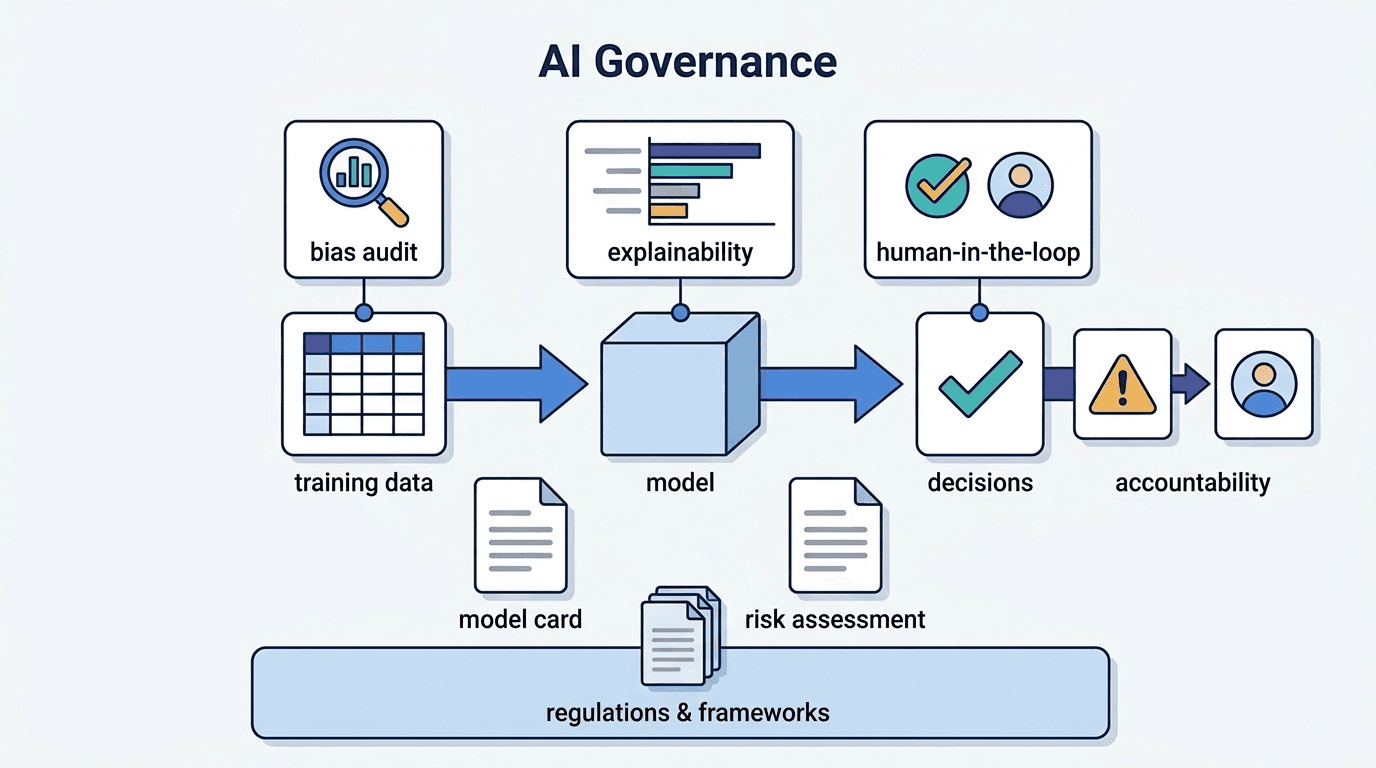
AI Governance
AI governance refers to the organizational policies, processes, and oversight mechanisms that ensure
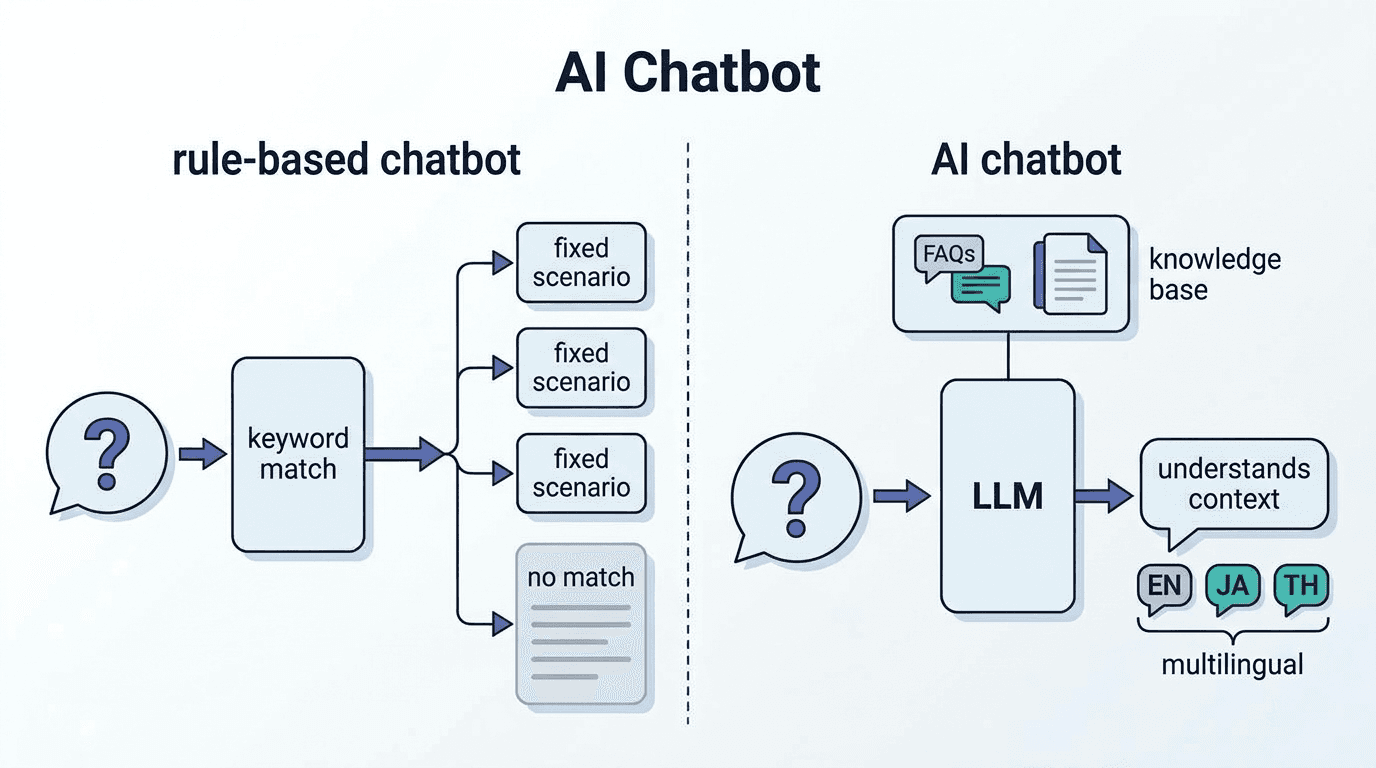
AI Chatbot
An AI chatbot is software that leverages natural language processing (NLP) and LLMs to automatically
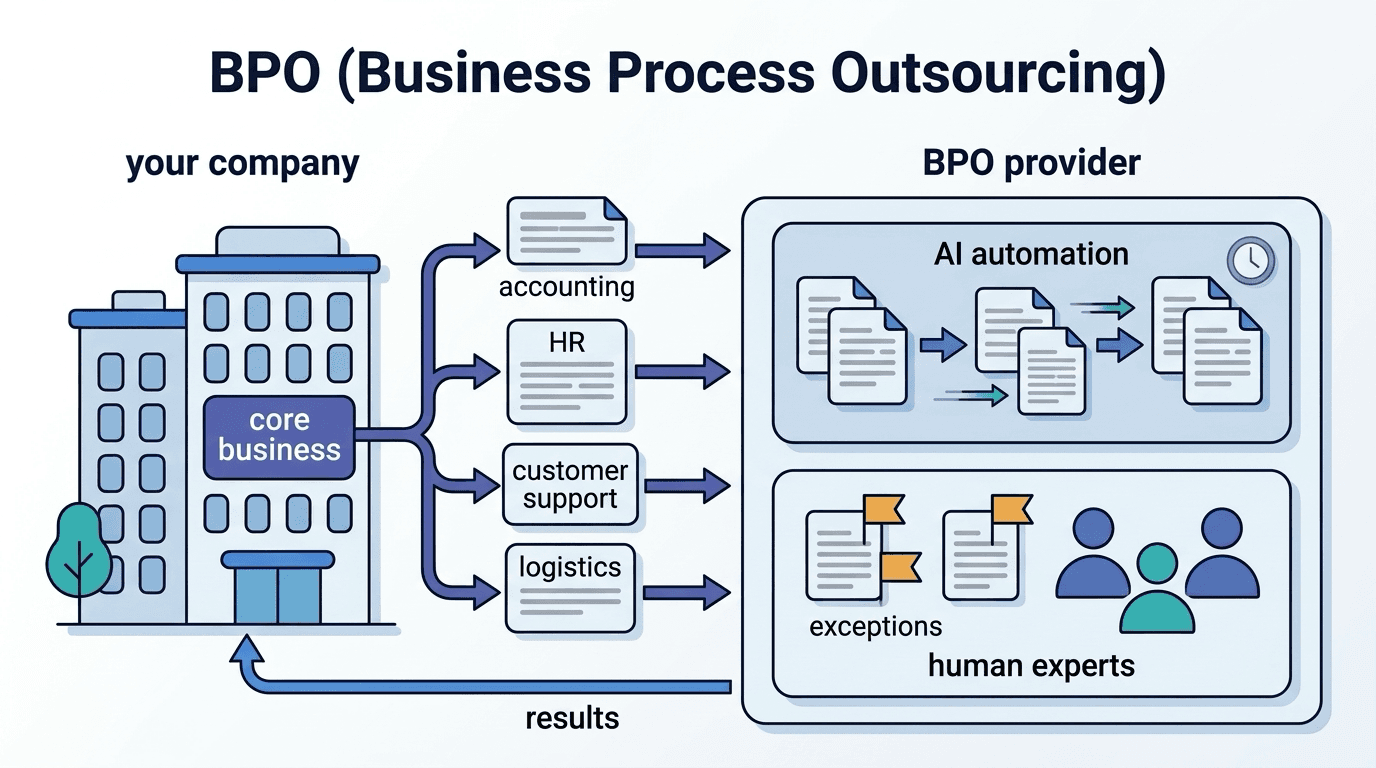
BPO (Business Process Outsourcing)
BPO refers to a form of outsourcing in which a company delegates specific business processes to an e