Economic Models and Operational Cost Design for AI Agents — Design Principles Supporting Production Deployment in 2026

Lead
In production deployments of AI agents, the issue is no longer the quality of prompts or model selection—it is the phenomenon of operational costs ballooning to 3–10 times the projected amount, effectively destroying the ROI calculation itself. Gartner predicts that by the end of 2027, approximately 40% of agent deployment projects will be cancelled due to cost overruns and unclear value, and there is a rapid shift toward elevating cost optimization from an "afterthought adjustment" to a "design-layer principle." This article is intended for B2B architects and operations managers, and focuses not on tactical measures such as token reduction or switching to cheaper models, but on how to embed an economic model into the design of AI agents themselves. By the time you finish reading, you should have a concrete picture of the steps needed to introduce "budget boundaries" and "unit cost design" into your own agents.
Up until 2025, the dominant cost discussion centered on tactics for reducing the cost of "individual LLM calls"—shortening prompts, swapping in cheaper models, and leveraging caching. But AI agents chain multiple steps together, invoke tools, and retry upon failure. Cutting the cost of a single call by 30% means nothing if the overall process expands fivefold, resulting in a net negative. The idea of embedding an economic model as a "design principle" emerged as a response to this chained nature of agents and became mainstream in 2026.
Differences from Single-Shot LLM Call Optimization
Optimizing individual LLM calls is about "calling cheaply," whereas designing AI agent operations is about "determining the structure of how calls are made"—they operate at entirely different layers.
The LLM Cost Optimization Guide covers per-request efficiency improvements such as token reduction, model selection, and prompt caching. These remain important as baseline considerations, but the calculus changes when agents are involved. When a single task involves an average of 12–25 tool calls and LLM calls, cutting the per-call unit cost by 30% still results in a 40% increase in total cost if the number of loop iterations doubles.
In agents, the design layer that governs the number, timing, and branching of calls becomes the dominant factor—not whether a single call is cheap. Decisions such as "how many failures should a sub-agent be allowed before stopping," "where to resume upon retry," and "where to cache tool results" do not appear in token unit pricing, yet they are the primary cost drivers. Without embedding these as design principles, you will end up applying piecemeal, reactive fixes during the operations phase.
Cost Drivers That Explode in Agent Operations
The factors that actually cause costs to explode in AI agents are concentrated outside of token unit pricing.
- Unbounded loops: In ReAct or PlanExecute-style architectures, not setting a
max_iterationslimit—or setting one but having the stopping condition fail when an observation tool breaks down - Excessive context bundling: Including history, tool definitions, and knowledge in every turn, causing input tokens to balloon
- Parallel sub-agent runaway: An orchestrator executing all paths in parallel "just in case," and being billed for results that are 99% discarded
- Re-execution for idempotency: When a tool call with side effects fails, restarting the entire task from scratch to be safe
- Observability costs: Running an LLM-as-a-Judge alongside the main process for tracing, incurring costs in the background equivalent to the primary workload
Each of these may seem trivial in isolation, but in production they occur simultaneously. When you look at the distribution of per-task costs, it is typical for the p95 to be 3–8 times higher than the mean, and the p95 behavior is what ultimately determines the monthly bill. Making "p95 and the upper bound"—rather than the "average"—the target of design is the starting point for 2026-era operations.
What Is a "First-Class Architectural Concern" as Discussed in 2026?
What multiple industry reports in 2026 consistently point out is the idea that cost optimization should not be a tuning item addressed after deployment, but rather a first-class architectural concern embedded from the very beginning as a prerequisite of system design.
Beam AI's Enterprise AI Agent Trends 2026 states: "Organizations are beginning to embed economic models into agent design, rather than taking an approach of bolting on cost management after deployment." PwC's 2026 AI Business Predictions also notes: "Enterprises are no longer asking whether agents work, but whether they can scale with the same reliability as other production systems."
"Scaling with reliability" means, in essence, that unit costs and p95 costs remain within expected ranges even as request volumes and concurrency increase. This cannot be achieved through after-the-fact savings; it requires deciding on data flows, call graphs, and failure behavior at the design level. In the 2026 phase of bringing AI agents into production (How to Move AI Agents into Production?), investment in this design layer is what makes the difference.
Five Components of the AI Agent Economic Model

The economic model of AI agents is not one that pursues a single optimization metric, but rather is expressed as a combination of multiple budget boundaries and unit cost designs. In this section and the two that follow, we organize the five core elements at its heart. This section covers per-task budgets, hybrid routing, and interruption/retry design.
Per-Task Budget Allocation
A Per-Task Budget is the principle of predefining the upper limits on LLM call count, token count, and cost allowed per task, and designing—as a package—how the system should behave when those limits are exceeded.
A budget is not a single metric; at minimum, it should have the following three defined separately.
| Budget Type | Example | Behavior on Exceeded |
|---|---|---|
| Hard Limit | 0.50 USD per task | Forced interruption + HITL escalation |
| Soft Limit | 0.30 USD per task | Alert + fallback to a cheaper model |
| Call Limit | 30 LLM calls / 50 tool calls | Forced loop termination |
Appropriate limits vary by task type. Tasks that converge easily, such as information extraction or format conversion, tend to be inexpensive, while long-term planning or research tasks have unpredictable iteration counts. By classifying tasks into categories such as exploratory / extractive / generative and assigning separate budget allocations to each, you can avoid the situation where "the same limit is applied to all tasks, leaving 90% too loose and 10% too strict."
Per-Task Budgets are not only relevant to cost management—they are also directly tied to AI agent ROI measurement. Without a defined cost per task, the denominator in ROI calculations becomes unstable.
Cost Boundaries of Hybrid Model Routing
Hybrid model routing is a technique in which a single agent uses a "cheap model" and an "expensive model" according to their respective roles, with the escalation boundaries determined by design in advance.
A typical breakdown is as follows:
- Cheap models (Haiku / mini / Flash class): Input summarization, tool selection, simple branching decisions, progress message generation
- Expensive models (Opus / full Sonnet / full GPT): Long-term planning, complex reasoning, final answer quality assurance
Defining boundaries by hardcoding "this is intuitively difficult" does not hold up over time. In production, a practical approach is to insert a task classifier as an intermediate step and update the boundaries with observed data drawn from past successes and failures. When combining locally executable lightweight models, the break-even analysis covered in Local LLM / SLM Deployment Comparison applies equally here.
One caveat: using an LLM for the routing itself adds cost at that layer as well. Boundary determination can often be handled with embedding similarity or regular expressions, so it is safer to start with LLM-free routing and replace it with a classifier only as needed.
Economic Rationale for Interruptions and Retries
How to handle failed tasks is one of the most overlooked design decisions in operational costs.
There are three main options.
- Restart the entire task from scratch: Simple to implement and easy to ensure idempotency, but costs can explode for long tasks.
- Resume from a checkpoint: Save intermediate state (plans, collected data, tool call results) and continue from the point of failure.
- Partially give up and hand off to HITL: Abandon full automation and delegate the final decision to a human.
The economically rational approach is to compare options using the expected cost, calculated by multiplying the estimated unit cost of a task by the retry probability. For example, for a task with a 10% failure rate, restarting from scratch yields an expected cost of approximately 1.11× the single-run cost. With checkpointing, if the resume cost is 30% of a single run, the expected cost is approximately 1.03×. The difference may seem small, but when multiple agents are chained together, the effect compounds exponentially.
Retry limits should also be tied to the budget. Defining it as "up to a cumulative cost of 0.20 USD" rather than "a maximum of 5 retries" aligns better with cost-driven operations. Routing failure behavior toward HITL (Human-in-the-Loop) makes it easier to keep both cost and risk in check.
How to Design Cost-Effectiveness in Multi-Agent Orchestration

In multi-agent configurations, where multiple agents call one another, costs grow not by simple addition but multiplicatively. The design target here is not "the unit cost of each individual agent" but rather "the expected cost of the coordination pattern as a whole."
Unit Cost Design: Orchestrator vs. Sub-Agent
Orchestrators and sub-agents inherently have different economic characteristics.
The responsibilities of agent orchestration include planning, task distribution, and result integration, all of which require long context windows and complex reasoning. Using a cheaper model here degrades plan quality and ultimately leads to rework. Sub-agents, on the other hand, are tasked with "completing a given small task," where context is short and decision-making is often straightforward.
Implementation guidelines are as follows:
- Orchestrator: Use the full model. Compensate by limiting the number of calls (1–2 calls per task for planning).
- Sub-agents: Default to lightweight models, escalating to the full model only when complex extraction is required.
- Parallelism: Set an upper limit on the number of sub-agents running in parallel. Running "10 in parallel just to be safe" wastes the cost of 9 parallel runs.
When adopting multi-agent AI design patterns, always document the per-agent unit cost design and apply the same framework to any sub-agents added later.
Expected Cost Calculation Incorporating Failure Rates
In multi-agent operations, multiplying the success rate of each step as independent events often yields an overall success rate lower than expected. From an economic modeling perspective, calculating expected cost = single-run cost × average number of attempts back from the success rate makes risks visible before deployment.
For example, if three sub-agents are chained in sequence and each has a 90% success rate, the overall success rate is 0.9³ ≈ 0.73. The remaining 27% will require re-execution due to mid-chain failures. If the retry strategy restarts the entire chain, the expected cost is simply 1 + 0.27 = 1.27×—meaning a constant 27% cost overhead is always present.
Gartner's warning that "40% of agent projects risk cancellation due to unclear value and excessive costs" is largely because this multiplicative effect is not factored into the design. Efforts to reduce the failure rate by even 1%—through prompt improvements, tool hardening, and guardrails—have a direct impact as cost optimization. In economic model design, quality improvement and cost improvement are treated within the same equation.
Typical Patterns That Erode Costs in Production

Even with a well-designed economic model, falling into typical anti-patterns during production operations can nullify its effectiveness. Here we cover the three most commonly observed patterns in 2026. All are detectable in code review, but tend to be overlooked once the system enters the operational phase.
Unbounded Loops and Insufficient Guards
Unbounded loops are the single greatest factor destroying costs in AI agent operations.
There are three primary forms:
- Missing max_iterations: Forgetting to set an iteration limit in ReAct loops or PlanExecute.
- Logical errors in stop conditions: A tool that returns "completion check always false" breaks in production.
- Runaway self-improvement loops: A pattern where the agent is instructed to "review and improve results," which enters infinite refinement if the satisfaction check is too lenient.
The following implementation guards must always be in place:
- Always set both a maximum iteration count and a timeout for LLM loops.
- Emit a warning log if the same tool is called three or more times consecutively within a loop.
- Force-terminate when cumulative cost reaches 80% of the Per-Task Budget.
The guardrails covered in the AI Guardrails Implementation Guide are design elements that directly serve not only quality protection but also cost protection, and it is efficient to handle both at the same layer.
Unused Caching and Redundant Re-Invocations
Failing to utilize caching is a classic pattern of continuously paying costs that could otherwise be avoided.
There are three types of cacheable targets that agents handle:
| Cache Type | Target | Effect |
|---|---|---|
| Prompt cache | System prompts, tool definitions | Reduces input token charges to roughly 1/10 |
| Tool result cache | API call results (e.g., prices or inventory where immediacy is not required) | Completely skips identical calls |
| Agent memory | Past interactions, intermediate results | Avoids recomputing the same query in a separate task |
Prompt caching in particular will not work if the system prompt is modified slightly on every call. Simply restructuring the prompt so that fixed portions appear at the top can significantly reduce input token costs. Anthropic, OpenAI, and Google all provide prompt caching mechanisms; since the applicable conditions (e.g., whether requests must be consecutive, TTL duration) differ by model, always consult the latest documentation for the model you are using.
Tool result caching should be introduced only for read-only tools with no side effects. For frequently changing data such as inventory or customer information, either set a short TTL or exclude it from caching altogether.
Excessive Context Bundling
Context bloat directly drives up the input side of token-based billing.
Typical causes of bloat:
- Including the full conversation history: Even at turn 100, all turns 1–99 are sent in full
- Including the entire knowledge base every turn: Data that should be retrieved via RAG is kept resident in the context
- Including unused tool definitions: 100 tool definitions are sent with every request, but only 3–5 are actually used
Address these issues incrementally. Start with history summarization (keep the last 5 turns in full, summarize everything before that), then dynamically narrow down tool definitions by task type. As a rule, knowledge should be retrieved on demand using Agentic RAG.
The term context engineering has taken hold because context design has become an engineering discipline independent of prompt engineering—one that cannot be ignored in production, both from a cost and quality standpoint. See also: What is Context Engineering?
Steps to Translate the Economic Model into Implementation

To move beyond economic model design as a mere concept and embed it into operational workflows, three elements must be built into the implementation: observability, budget enforcement, and alignment with pricing models. This section covers each in turn.
Defining and Monitoring Cost SLOs/SLAs
Without explicitly defining cost as an SLO/SLA, the operations team has no clear standard to uphold.
At a minimum, four metrics should be defined:
| Metric | Example | Purpose |
|---|---|---|
| Target cost per task | $0.10 USD / task | Design baseline |
| p50 / p95 cost | p95 ≤ $0.30 USD | Anomaly detection threshold |
| Hard cost cap per task | Forced termination at $0.50 USD | Runaway prevention |
| Monthly budget cap | $50,000 USD / month | Commitment to management |
A cardinal rule for monitoring dashboards: display these cost metrics on the same screen as task completion rate, user satisfaction, and revenue metrics. Keeping cost on a separate screen makes it impossible to see the causal relationship between quality changes and cost increases or decreases.
Design alerts in stages: log a warning at 50% of the daily budget, notify the operations team at 80%, and have a Kill Switch ready to toggle features on or off at 100%. Per-Task Budget overruns should not be evaluated in isolation—use a window-based approach, such as sustained overrun for 5 minutes, rather than reacting to individual spikes.
Cost Aggregation and Limit Control via AI Gateway
When aggregating multiple LLM providers or multiple sub-agents, the practical approach is to route all calls through an AI Gateway, consolidating billing and observability into a single point.
The mechanism covered in What is an AI Gateway? An Implementation Guide for Safely Integrating Multiple LLM Providers offers the following benefits from a cost management perspective:
- Centralized aggregation: The Gateway records total costs per task ID and user ID
- Centralized budget enforcement: Monetary caps and RPM/TPM limits can be enforced per task, user, and tenant
- Centralized model switching: Fallback to cheaper models and A/B switching are handled upstream
- Improved observability: Traces, latency, and error rates can be compared across models
Implementation options include off-the-shelf products such as LiteLLM, Cloudflare AI Gateway, and Portkey, as well as adding LLM-specific middleware on top of an in-house API gateway. A natural path is to start with an off-the-shelf product and migrate to an in-house implementation as tenant isolation and security requirements evolve.
One important caveat: the Gateway itself must not become a single point of failure—always incorporate health checks and failover. Losing service availability for the sake of cost aggregation defeats the purpose entirely.
Alignment with Product Pricing Models
Unit cost design for agents is only meaningful if it is ultimately aligned with the pricing model presented to customers.
Three patterns for achieving that alignment:
- Pay-as-you-go: Customers are also billed per task. The margin between cost and price directly equals gross profit, and the validity of the Per-Task Budget can be verified directly.
- Subscription: Fixed monthly fee. The expected number of tasks per customer multiplied by the Per-Task Budget becomes the cost ceiling, and behavior upon overrun (throttling, cap notifications) should be explicitly defined in the contract.
- Outcome-based pricing (Service as Software): Billing only upon task completion. Retry costs on failure are borne by the provider, meaning the failure rate directly erodes the gross margin.
As discussed in What is Service as Software (SaS)? Why AI Is Transforming SaaS Delivery Models and Pricing Strategies, outcome-based pricing is expanding in 2026. To protect gross margins, failure rates and retry costs must be estimated conservatively, and the economic model must be validated before setting prices.
When the pricing model and agent design remain disconnected, contracts agreed upon by sales diverge from operational reality, and per-customer loss-making engagements accumulate. Economic model design should, by nature, be discussed as an integral part of product strategy.
Frequently Asked Questions (FAQ)

This addresses two questions frequently heard in operational settings regarding economic model design for AI agents.
Is Token Reduction Alone Sufficient?
For short tasks used in a manner close to one-off LLM calls (such as summarization, translation, and classification), the tactical layer of token reduction, model selection, and caching is often sufficient.
However, the tactical layer falls short if any of the following apply:
- The number of steps is hard to predict due to loops or recursion
- Tool calls are chained and re-execution runs on failure
- Sub-agents are executed in parallel
- The pricing model presented to customers is something other than pay-per-use (subscription, outcome-based billing, etc.)
If even one of these conditions applies, costs will balloon in areas that single-call optimization cannot capture. The cost-effectiveness of embedding an economic model at the design layer becomes clearly apparent once operations exceed around three months.
Is Economic Model Design Necessary Even for Small-Scale Agents?
For small-scale agents (a single internal function, monthly task volume in the hundreds or fewer, etc.), the total cost is low, so the priority of economic model design decreases.
That said, the right approach is not "skip the design because it's small-scale," but rather "lower the resolution of the design." Simply having the concept of a Per-Task Budget and setting a single hard limit is enough to dramatically reduce the damage in the event of a runaway. Setting a monthly budget cap with a single line on the Gateway side is sufficient to avoid incidents where an infinite loop occurring overnight destroys the invoice.
Rather than retrofitting a design when agent usage expands, having a lightweight economic model from the start reduces the transition cost when moving to full production later.
Conclusion — Agent Operations Start with Economic Design

In 2026, when running AI agents in production has become a realistic option, cost optimization is no longer an afterthought added post-deployment—it has become a first-class principle to be built in at design time.
The five components covered in this article—Per-Task Budget, hybrid routing, the economic rationale for interruption and retry, expected cost calculation for multi-agent orchestration, and cost metrics as SLO/SLA—can each be introduced independently, but their effects compound when combined. For organizations already running agents in production, simply starting with the quantification of Per-Task Budgets and cost aggregation via a Gateway will significantly improve the predictability of monthly invoices.
As a next step, it is advisable to select one of your organization's primary agents and begin by generating a per-task cost distribution (mean, p95, maximum) for the past month. The moment that distribution becomes visible, you will be able to make quantitative judgments about "where to set budget boundaries" and "which tasks should be hybrid-routed." Economic model design is part of a real operational loop that begins with observation.
Author & Supervisor

Yusuke Ishihara
Started programming at age 13 with MSX. After graduating from Musashi University, worked on large-scale system development including airline core systems and Japan's first Windows server hosting/VPS infrastructure. Co-founded Site Engine Inc. in 2008. Founded Unimon Inc. in 2010 and Enison Inc. in 2025, leading development of business systems, NLP, and platform solutions. Currently focuses on product development and AI/DX initiatives leveraging generative AI and large language models (LLMs).
Recommended Articles


Terms related to this article
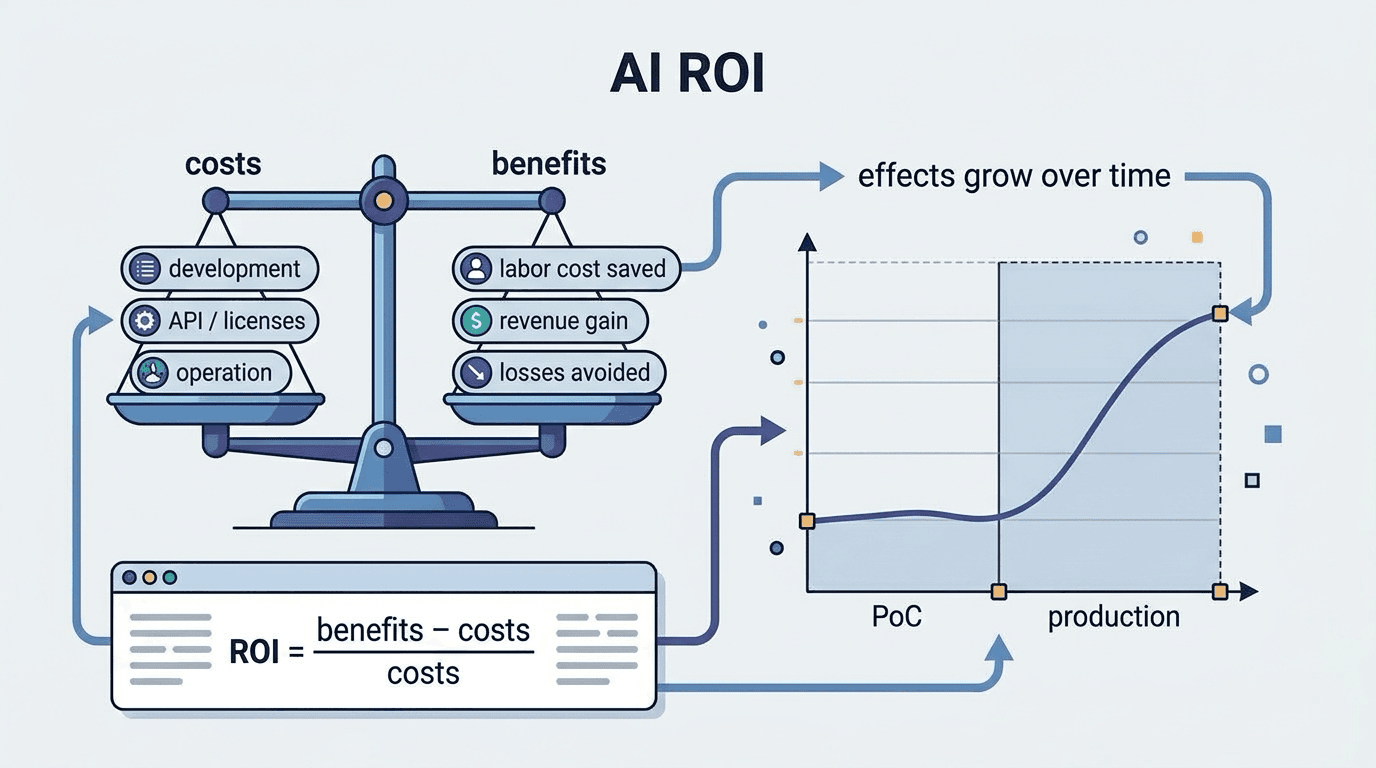
AI ROI (Return on Investment in AI)
AI ROI is a metric that quantitatively measures the effects obtained — such as operational efficienc

AI Observability
An operational practice of continuously monitoring and visualizing the inputs/outputs, latency, cost
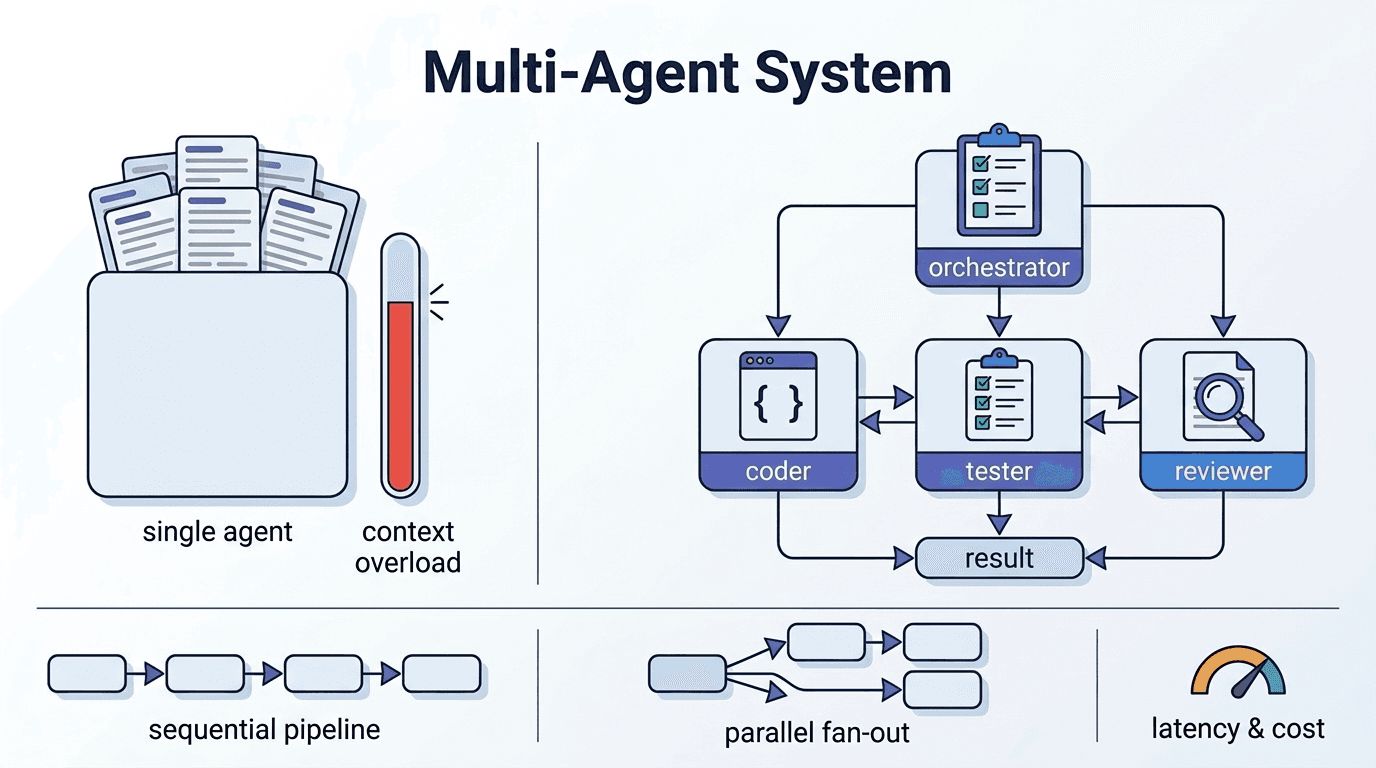
Multi-Agent System
A multi-agent system is an architecture in which multiple AI agents divide roles and coordinate with