How Thai Healthcare Providers Are Automating Foreign Patient Support with AI Chatbots

Lead
A medical chatbot is a system that leverages AI to automate patient inquiry handling, medical interviews, and appointment management. In Thailand's medical tourism sector, these systems are increasingly being adopted as a means of providing 24-hour multilingual support for foreign patients.
Thailand is one of Southeast Asia's leading medical tourism destinations. The country attracts large numbers of foreign patients from the Middle East, Western countries, and East Asia, who come seeking high-quality medical care at affordable prices. However, the language barrier poses a serious challenge: translation failures in situations requiring precise communication—such as describing symptoms, processing insurance claims, and conducting post-operative follow-ups—can create critical risks where lives are at stake.
This article explains, in three steps, the specific procedures for Thai medical institutions to introduce AI chatbots and automate foreign patient care, covering everything from organizing medical questionnaires to EMR (Electronic Medical Record) integration. Given that this falls within the YMYL (Your Money or Your Life) domain, the article also addresses key points for ensuring the accuracy of medical terminology and maintaining PDPA compliance.
This article is intended for informational purposes only and does not constitute advice regarding medical practice or diagnosis. For specific medical decisions, please consult a qualified medical professional.
Thailand's medical institutions are said to not always have sufficient multilingual support and automated pre-procedure processes to handle the increasing number of foreign patients, and AI chatbots are a promising means of complementing both.
As medical tourism grows, the challenges faced by hospitals and clinics carry a gravity distinct from those of the tourism industry. Here, we examine two key challenges in depth.
Challenges of Multilingual Support as a Major Medical Tourism Destination
Large private hospitals in Thailand receive hundreds of thousands of foreign patients annually. Many facilities have English-language services in place, but a considerable number of patients communicate in languages other than English—including Arabic, Japanese, Chinese, and Burmese.
The language barrier in medical settings is of an entirely different magnitude than in the tourism industry. Booking the wrong type of room at a hotel is an inconvenience, but failing to communicate a drug allergy at a hospital can be a matter of life and death. International hospitals in Bangkok employ on-site interpreters, but covering every medical department and every language is nearly impossible. Particularly during nighttime and holiday emergencies, there have been reports of medical interviews being conducted using translation apps in the absence of an interpreter.
Moreover, medical terminology involves specialized vocabulary that differs significantly from everyday conversation. Even something as seemingly simple as "chest pain" requires entirely different treatment approaches depending on whether the cause is angina, intercostal neuralgia, or gastroesophageal reflux disease. Establishing a system that allows patients to accurately convey their symptoms in their native language is an urgent priority from the standpoint of patient safety.
Pre-automation Needs for Medical Interviews and Insurance Procedures
The procedures that foreign patients must complete before visiting a clinic are numerous. Filling out medical questionnaires, obtaining Prior Authorization from insurance companies, sharing pre-travel test results, and declaring allergies and current medications — handling each of these individually by phone or email can require several hours of staff time per patient.
Insurance procedures are particularly complex. International health insurance varies by provider in terms of coverage scope and documentation formats, generating a high volume of pre-visit inquiries such as "Will this treatment be covered?" and "What will my out-of-pocket costs be?" Only a limited number of staff members are equipped to answer these questions accurately.
When pre-visit communication takes too long, patients choose other hospitals instead. Especially for elective treatments such as cosmetic procedures and orthodontics, the speed of the initial response directly determines whether a patient commits. By automating routine pre-visit procedures with an AI chatbot, staff can focus on complex cases while patients receive the information they need without being kept waiting.
Implementation Procedures for AI Chatbots in Medical Institutions

Implementing a medical chatbot proceeds in 3 steps: organizing FAQs and medical questionnaires → building → EMR integration. It is essential to incorporate the precision requirements and safety measures specific to healthcare into each step.
The following explains how to approach each step, along with considerations unique to medical institutions.
Step 1: Organizing FAQ and Medical Interview Form Templates by Medical Department
Chatbots in medical institutions face a significant challenge: the nature of inquiries varies widely by department. The information required and the structure of responses differ entirely between an internal medicine query like "I want to know which department to visit based on my symptoms" and a cosmetic surgery query like "I want to know the cost and downtime of a procedure."
Items to organize:
- Department-specific FAQs — Extract the top questions for each department from past inquiry history (approximately 20–30 questions as a guideline). A recommended sampling approach involves ranking by inquiry frequency, consolidating similar phrasings, and then prioritizing based on evaluation criteria such as resolution rate, unanswered rate, and changes over time. In most cases, questions tend to concentrate in the following categories:
- Patient flow and first-visit procedures
- Hours of operation and appointment methods
- Estimated costs and insurance coverage
- Post-treatment care and follow-up
- Access, parking, and shuttle services
-
Multilingual medical questionnaire templates — Digitize existing paper-based questionnaires and translate them into major languages (English, Chinese, Japanese, and Arabic). Rather than relying on dynamic translation via LLMs, pre-translation by certified medical translators is strongly recommended. Mistranslations in medical questionnaires can affect diagnosis, so sole reliance on AI translation should be avoided.
-
Triage (urgency assessment) rules — Design a flow in which, upon detecting emergency keywords such as "chest pain," "difficulty breathing," or "impaired consciousness," the chatbot does not attempt to respond but instead immediately transfers the user to the emergency desk.
In medical chatbots, the judgment to "not answer" is even more critical than in other industries. Diagnosing conditions from symptoms is the physician's role, and the chatbot must never make presumptive statements such as "It's probably X."
Step 2: Building a Multilingual Chatbot and Ensuring Accuracy of Medical Terminology
The most challenging aspect of medical chatbots is multilingual support for specialized terminology. General-purpose translation APIs frequently produce mistranslations of medical terms.
Rule-Based vs. LLM-Based Comparison (Medical Use):
| Item | Rule-Based | LLM-Based + Medical Knowledge Base |
|---|---|---|
| Standard FAQ Responses | Accurate and safe | Accurate and flexible |
| Symptom Intake | Multiple choice only | Capable of understanding free-text input |
| Medical Terminology Accuracy | Supports predefined terms only | High accuracy when combined with medical dictionary |
| Hallucination Risk | None | Present (mitigation required) |
| Multilingual Support | Built per language | Multiple languages supported via prompting |
Conclusion: If symptom intake or free-text input handling is required, an LLM-based approach is appropriate — however, implementing guardrails to prevent suggesting diagnoses is essential.
Medical-Specific Considerations for LLM-Based Development:
- Building a Medical Knowledge Base — Store the hospital's own service menus, physician profiles, and treatment descriptions in a vector database for RAG. By limiting responses to "treatments offered at this hospital" rather than general medical knowledge, hallucination risk can be significantly reduced.
- Prohibiting Diagnostic Suggestions — Explicitly include instructions in the system prompt such as "do not infer disease names from symptoms" and "respond to diagnostic questions with 'We recommend consulting a physician.'"
- Integrating a Medical Terminology Dictionary — Reference standard medical terminology systems such as ICD-10 (International Classification of Diseases) and SNOMED CT to ensure translation consistency. Note, however, that SNOMED CT may be subject to licensing requirements, and its implementation and operation involve costs and practical considerations (such as term mapping and localization); mapping to ICD-10 is also non-trivial. Consulting health authorities or medical informatics specialists is recommended prior to adoption.
Step 3: Integration with Reservation System and Electronic Medical Records (EMR)
Once FAQ and medical interview responses are stable, the next step is to integrate with the appointment system and EMR to create a seamless patient visit experience end-to-end.
Systems to integrate:
- HIS (Hospital Information System) / EMR — Enables availability checks and real-time booking. The ideal outcome is being able to instantly return available slots and confirm appointments in response to requests such as "I'd like to book an appointment with Dr. Somchai next Monday." Where existing HIS vendors (InterSystems, Oracle Health, etc.) provide APIs, those should be utilized.
- Insurance company data integration — Automatically displays coverage details and estimated out-of-pocket costs simply by entering the patient's insurance information. Since integrating with every insurance company is not realistic, start by covering the top 5–10 insurers among existing patients.
- Payment and deposit system — Allows first-visit deposit payments to be completed entirely within the chatbot. For domestic patients, PromptPay (Thailand's instant transfer system, available to users with a Thai bank account) should be incorporated as a primary payment option, while international patients should also be supported with international credit cards, international wire transfers, PayPal, and other overseas payment methods.
A phased approach is the most practical path forward. Start with FAQ responses and pre-visit intake form completion only, then progress through appointment integration → insurance integration → payment integration in stages. Since API integration with HIS carries a high technical barrier, a manageable starting point is a flow that simply "accepts appointment requests and notifies staff."
AI Utilization Patterns for Enhancing Patient Experience

AI chatbots are not just for handling inquiries—they are a powerful tool for dramatically improving the patient experience before and after a visit.
Once FAQ responses have stabilized, it is worth turning attention to enhancing the patient experience.
Digitization of Pre-consultation Interviews and Reduction of Waiting Times
Foreign patients experience the most stress during the waiting time between arrival and consultation. Waiting in an environment where communication is difficult, with no way of knowing when they will be called, causes significant anxiety.
Digitalizing pre-visit medical interviews with an AI chatbot can dramatically reduce this waiting time.
Pre-visit interview flow:
- Chatbot automatically initiates the interview after booking confirmation — Symptoms, medical history, allergies, and current medications are gathered step by step in the patient's native language. Multiple-choice questions form the basis of the interview, with free-text input accepted where necessary.
- Interview results are automatically transferred to the EMR — Physicians can review the interview content before the patient arrives and prepare for the consultation. Patients no longer need to fill out paper questionnaires upon arrival.
- Streamlined check-in on the day of the visit — Check-in is completed simply by presenting a QR code. There is no longer any need to queue at the reception desk.
There are documented cases at international hospitals in Bangkok where facilities that introduced pre-visit interviews achieved a significant reduction in average waiting time from reception to entering the consultation room. Simply eliminating the step of filling out and translating paper questionnaires reduces the burden on both patients and staff.
Automated Guidance for Insurance Claims and Cost Estimates
For foreign patients, "how much will the treatment cost?" is one of their biggest concerns. In particular, since out-of-pocket expenses can vary significantly depending on whether insurance is applicable, advance estimates are directly tied to decision-making.
Cost guidance patterns in chatbots:
- Without insurance — Present reference price ranges by medical department and procedure. Clearly separate the estimate from "exact quotes to be provided separately," such as: "The cost of total hip replacement is ○○–○○ baht (reference price). An accurate estimate will be provided by the attending physician based on test results."
- With insurance — When the insurance company name and plan name are entered, automatically display the coverage scope and estimated out-of-pocket costs. However, always include a disclaimer stating that "final determination of insurance coverage is subject to the insurance company."
- Package pricing — Health checkup packages and bundled cosmetic medical treatment fees should be displayed as a list within the chatbot, with comparison functionality available.
Always make clear that cost guidance represents "reference values." Disputes arising from situations such as "I thought I could receive treatment at this price, but the actual cost was different" directly lead to a loss of trust in the hospital.
Common Mistakes and Solutions When Getting Started

The greatest risk of medical chatbots is that incorrect information can directly impact patient health. Safety design, rather than technical sophistication, determines success or failure.
Unlike chatbots in other industries, "apologizing for a mistake" is simply not good enough.
Risks of Medical Terminology Mistranslation and Safety Measures
In LLM-based chatbots, the accuracy of medical terminology translation can be a matter of life and death. While translating "allergy" as "arerugii" is correct, there is a risk of mistranslating "drug allergy" as "drug poisoning" rather than the correct term.
Essential Safety Measures:
- Review by Medical Translators — Translations of medical questionnaires and FAQs should use confirmed translations reviewed by medical translation specialists. Dynamic translation by LLMs should be limited to a supplementary role.
- Whitelist of Critical Keywords — For items where mistranslation could be fatal — such as allergies, contraindicated medications, blood type, and pregnancy status — LLM translation should not be used; instead, a predefined translation table should be referenced.
- Double-Check Functionality — For critical information entered by patients (allergies, current medications), the chatbot should repeat it back — e.g., "Your allergy is [X], correct?" — and ask the patient to confirm.
- Complete Prohibition of Diagnostic Suggestions — Output such as "Those symptoms may indicate [condition]" should be blocked at both the system prompt and output filter levels.
There is a case from a hospital in Bangkok where a chatbot feature that listed "possible conditions" based on a patient's symptom description was piloted, only to be immediately removed after instances arose in which patients delayed seeking treatment based on their own judgment. AI should remain strictly a "bridge for information," leaving all "judgment" to physicians.
Compliance with PDPA and Medical Data Protection
Medical data belongs to the most sensitive category of personal data. Consideration must be given not only to Thailand's PDPA (Personal Data Protection Act), but also to the laws and regulations of foreign patients' home countries (GDPR, HIPAA, etc.).
Essential PDPA Compliance Items:
| Item | Action Required |
|---|---|
| Consent Acquisition | At the start of chatbot use, clearly disclose the purpose and scope of data collection and obtain consent |
| Data Minimization | Collect only the minimum personal information necessary to handle inquiries |
| Retention Period | Clearly state the retention period for conversation logs (to be defined in organizational policy in accordance with applicable laws and medical guidelines) |
| Right to Erasure | Establish a workflow to handle data deletion requests from patients |
| Cross-border Transfer | When transmitting data to an LLM API, clearly disclose where data is stored and processed |
Special Considerations When Using LLMs:
When transmitting patient symptoms or personal information to a cloud LLM API, confirm through contract that the data will not be used for training by the API provider. In practice, it is important to clearly address the following points in contracts and Data Processing Agreements (DPA).
- Explicit prohibition on secondary use and training (the provider shall not use data for model training or service improvement)
- Provisions for data retention periods and log management (retention periods, log storage locations, and deletion procedures)
- Distinction between data processors and data controllers, and the obligations of each party
- Restrictions on cross-border transfers and explicit disclosure of data storage and processing locations
- Security standards (encryption, access controls, etc.) and audit and reporting obligations
- Procedures for deletion requests and data erasure, and obtaining evidence of their execution
The risk of sensitive patient medical data being incorporated into model training data is legally and ethically unacceptable. Where data sovereignty requirements are stringent, consider operating the LLM on-premises or in a private cloud.
Frequently Asked Questions (FAQ)

Q1: Can medical chatbots make diagnoses?
No. AI chatbots are tools that automate patient inquiry handling, appointment management, and the digitization of pre-consultation questionnaires — diagnosis remains the exclusive domain of physicians. Chatbots suggesting "this could be X" should be prohibited from a patient safety standpoint.
Q2: Can small clinics adopt this technology?
Yes. By using the LINE Official Account's auto-reply feature, appointment reception and basic FAQ responses can be set up at low cost. For clinics with a high volume of foreign patients, simply incorporating English and Chinese FAQs into a LINE rich menu can significantly reduce the workload on staff.
Q3: How is patient data security ensured?
PDPA-compliant data management — including consent acquisition, storage period limitations, and the right to deletion — is the minimum requirement. When sending data to an LLM API, verify through the contract that the data will not be used for model training, and where possible, apply anonymization before transmission.
Q4: Is technical integration with existing HIS/EMR systems feasible?
Integration is possible when major HIS vendors provide APIs based on standard specifications such as HL7 FHIR. If APIs are not yet in place, a practical starting point is a "semi-automated" workflow in which the chatbot notifies staff of appointment requests, and staff manually enter the data into the HIS.
Summary

Here are the key points for Thai healthcare facilities looking to automate foreign patient interactions using AI chatbots.
- Prioritize safety by design — The most critical capability of a medical chatbot is knowing when not to answer. Prohibit any suggestion of diagnoses, and design a flow that immediately escalates to a human when emergency keywords are detected.
- Use pre-translated intake forms — Rather than relying on dynamic LLM translation, use finalized translations reviewed by medical translators. For critical fields in particular — such as allergies, contraindicated medications, and blood type — mistranslations are unacceptable.
- Scale incrementally — Expand in stages: FAQ responses → pre-visit intake → appointment integration → insurance integration, verifying effectiveness at each step. API integration with HIS/EMR systems carries a high technical barrier, so avoid targeting full automation from the outset.
- Address PDPA and cross-border data transfers — Protecting patient data is a legal obligation. Verify the safety of transmitting data to LLM APIs at the contractual level.
A medical chatbot is both an efficiency tool and a means of building trust — helping foreign patients feel confident that choosing your hospital was the right decision. For a broader look at AI-driven workflow automation, see "How Thai Businesses Can Adopt AI into Their Operations." PDPA compliance is covered in detail in "A Compliance Checklist for Balancing Thailand's PDPA Requirements with AI Adoption."
Author & Supervisor

Yusuke Ishihara
Started programming at age 13 with MSX. After graduating from Musashi University, worked on large-scale system development including airline core systems and Japan's first Windows server hosting/VPS infrastructure. Co-founded Site Engine Inc. in 2008. Founded Unimon Inc. in 2010 and Enison Inc. in 2025, leading development of business systems, NLP, and platform solutions. Currently focuses on product development and AI/DX initiatives leveraging generative AI and large language models (LLMs).
Recommended Articles


Terms related to this article
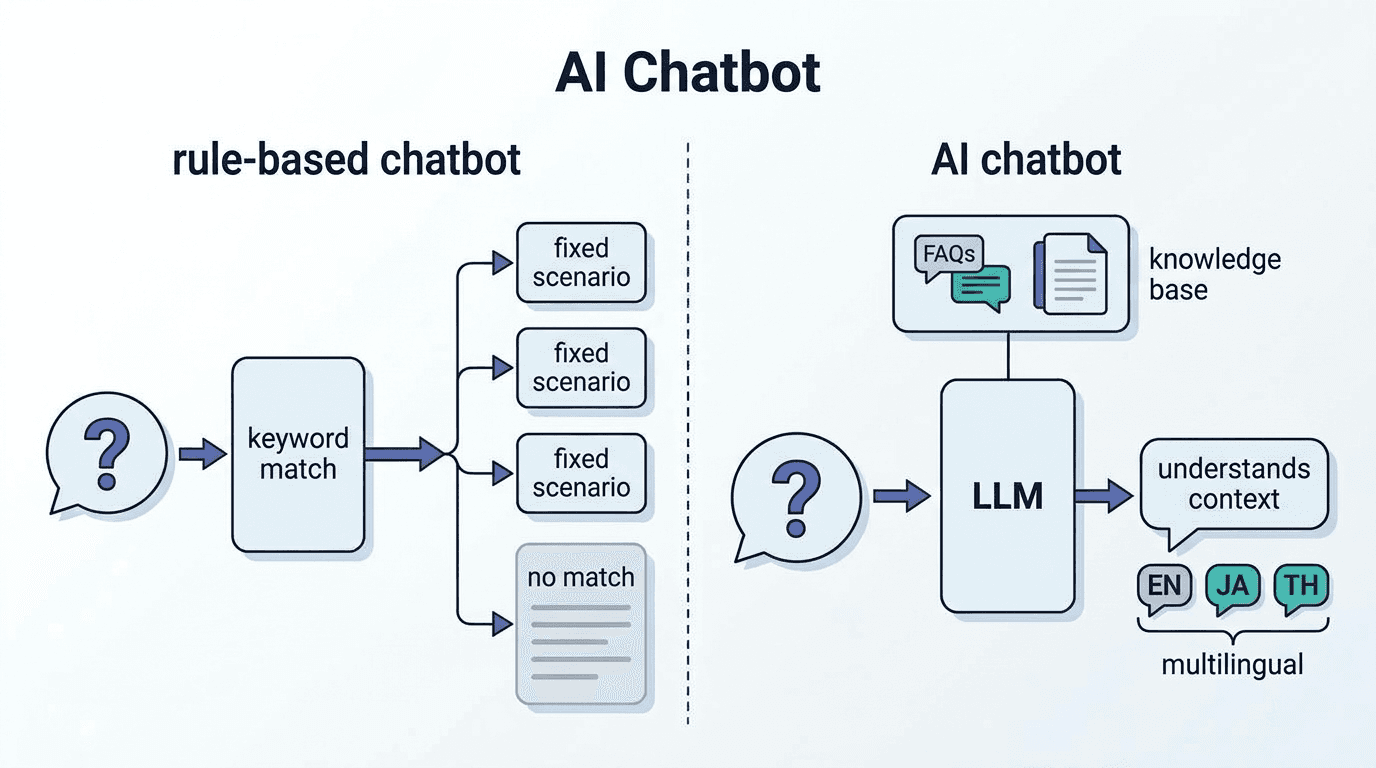
AI Chatbot
An AI chatbot is software that leverages natural language processing (NLP) and LLMs to automatically
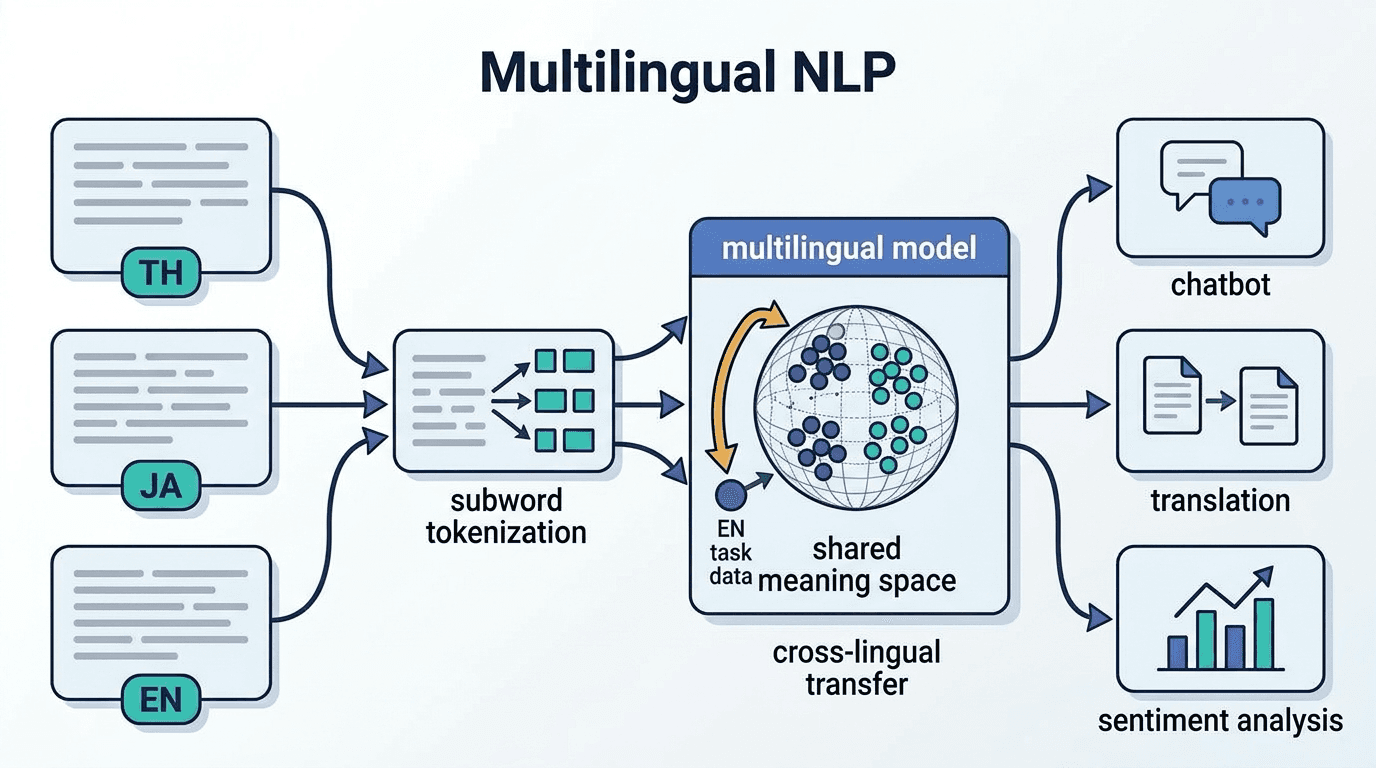
Multilingual NLP (Multilingual Natural Language Processing)
Multilingual NLP is a natural language processing technology capable of analyzing and generating tex
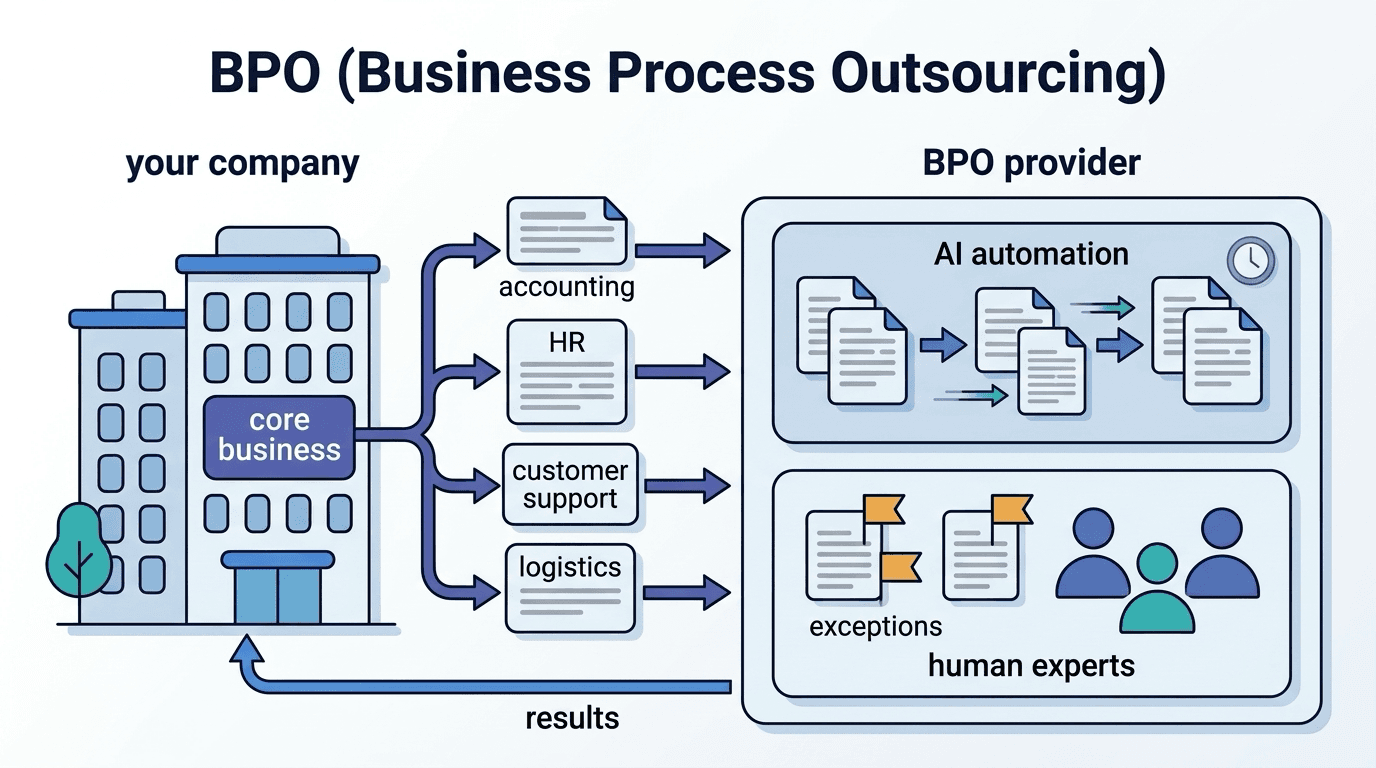
BPO (Business Process Outsourcing)
BPO refers to a form of outsourcing in which a company delegates specific business processes to an e