AI Chatbot
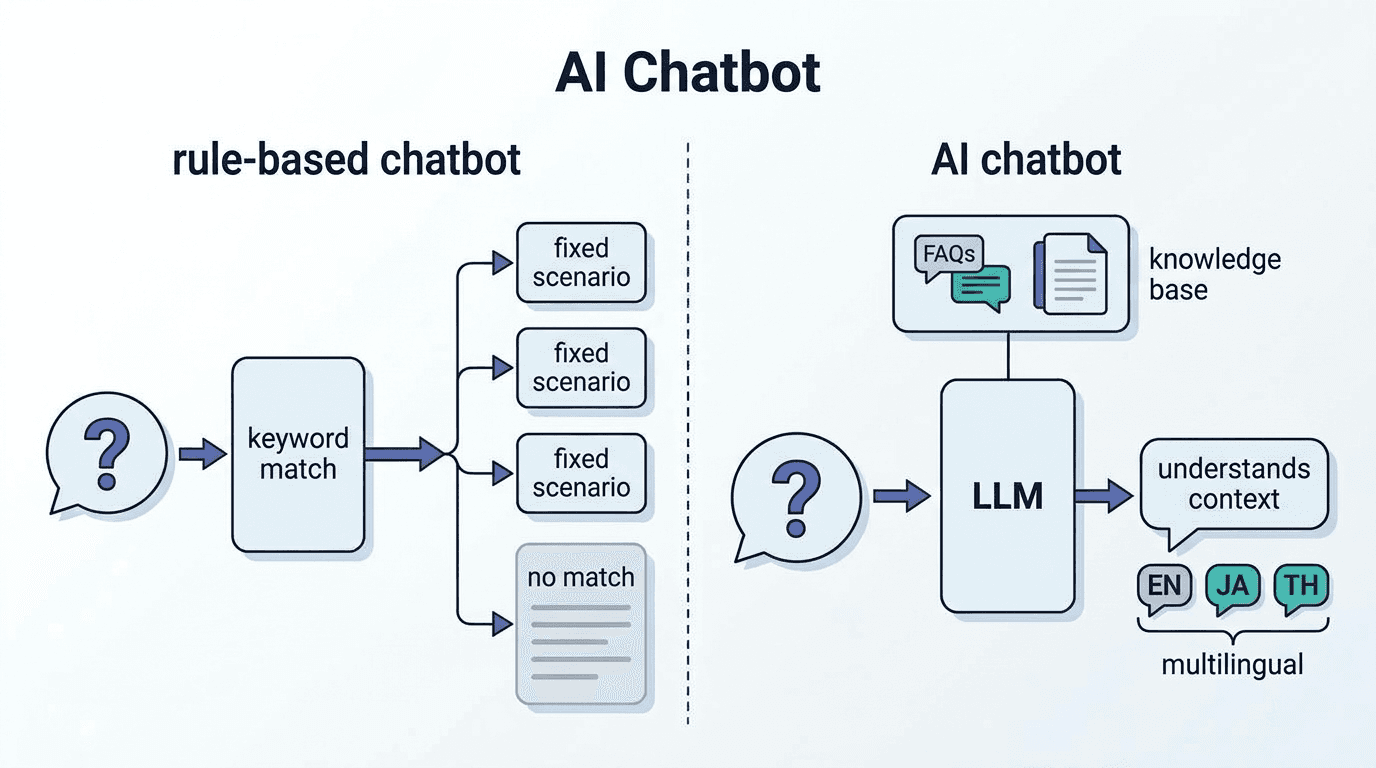
An AI chatbot is software that leverages natural language processing (NLP) and LLMs to automatically conduct conversations with humans. Unlike traditional rule-based chatbots, it is characterized by its ability to understand context and respond to questions that have not been predefined.
Evolution from Rule-Based Systems
Early chatbots operated on keyword matching and scenario branching. They could answer questions like "What are your business hours?" but struggled with phrasings such as "How late are you open today?"—a limitation that had long been recognized as a problem.
The emergence of LLMs has significantly relaxed this constraint. Through language understanding capabilities acquired during pre-training, these models can respond flexibly to variations in expression. Furthermore, combining them with RAG makes it possible to generate accurate answers based on a company's own FAQs and product databases.
Multilingual Support in Practice
AI chatbots deliver particular value in multilingual environments. Taking Thailand's tourism industry as an example, visitors submit inquiries in a variety of languages—Japanese, English, Chinese, Korean, and more. Traditionally, the only options were to staff agents fluent in each language or to give up and offer English-only support.
An LLM-based chatbot can handle multiple languages within a single system. However, response quality varies by language; compared to English, which benefits from abundant training data, response accuracy tends to be lower for Thai and Lao. Measures such as incorporating domain-specific glossaries into RAG or supplementing with fine-tuning become necessary.
Anti-Patterns in Deployment
Projects that start with the mindset of "just connect the ChatGPT API and that's enough" frequently fail. There are many chatbot-specific considerations to address: countermeasures against hallucination, handling of personal information, and designing escalation (handoff to a human agent) flows. In environments subject to regulations such as the PDPA (Thailand's Personal Data Protection Act) in particular, it is essential to clearly define where users' input data is stored and processed.
Articles covering this term
- How Thailand's Tourism Industry Is Automating Foreign Traveler Support with AI ChatbotsLearn how Thailand's tourism industry uses AI chatbots to automate multilingual support and traveler inquiries. Explore implementation steps and key operational tips.
- How Thai Healthcare Providers Are Automating Foreign Patient Support with AI ChatbotsLearn how AI chatbots support Thailand's medical tourism. Covers multilingual triage, department guidance, insurance claims, foreign patient automation, and PDPA compliance.
- How Thai E-Commerce Stores Can Automate Customer Support with AI ChatbotsLearn how Thai EC businesses automate product inquiries, order tracking & returns with AI chatbots. Practical setup guides for Shopee, Lazada & LINE integration included.
- How Thailand's Real Estate Industry Can Automate Property Inquiries from Foreign Buyers with AI ChatbotsLearn how to automate LINE inquiries from foreign buyers in Bangkok's condo market using AI chatbots. Covers property info, viewing bookings, and contract guidance.


Related Terms
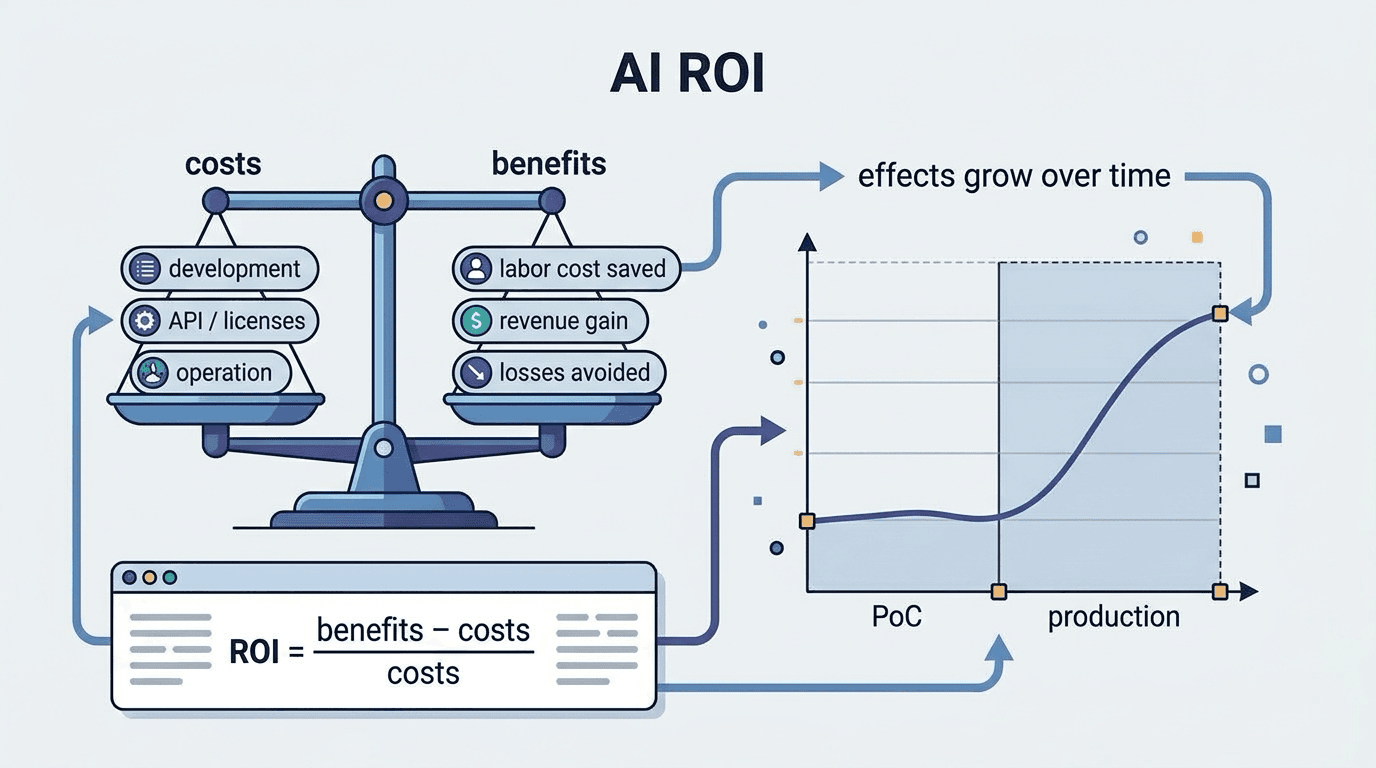
AI ROI (Return on Investment in AI)
AI ROI is a metric that quantitatively measures the effects obtained — such as operational efficienc

AI Observability
An operational practice of continuously monitoring and visualizing the inputs/outputs, latency, cost
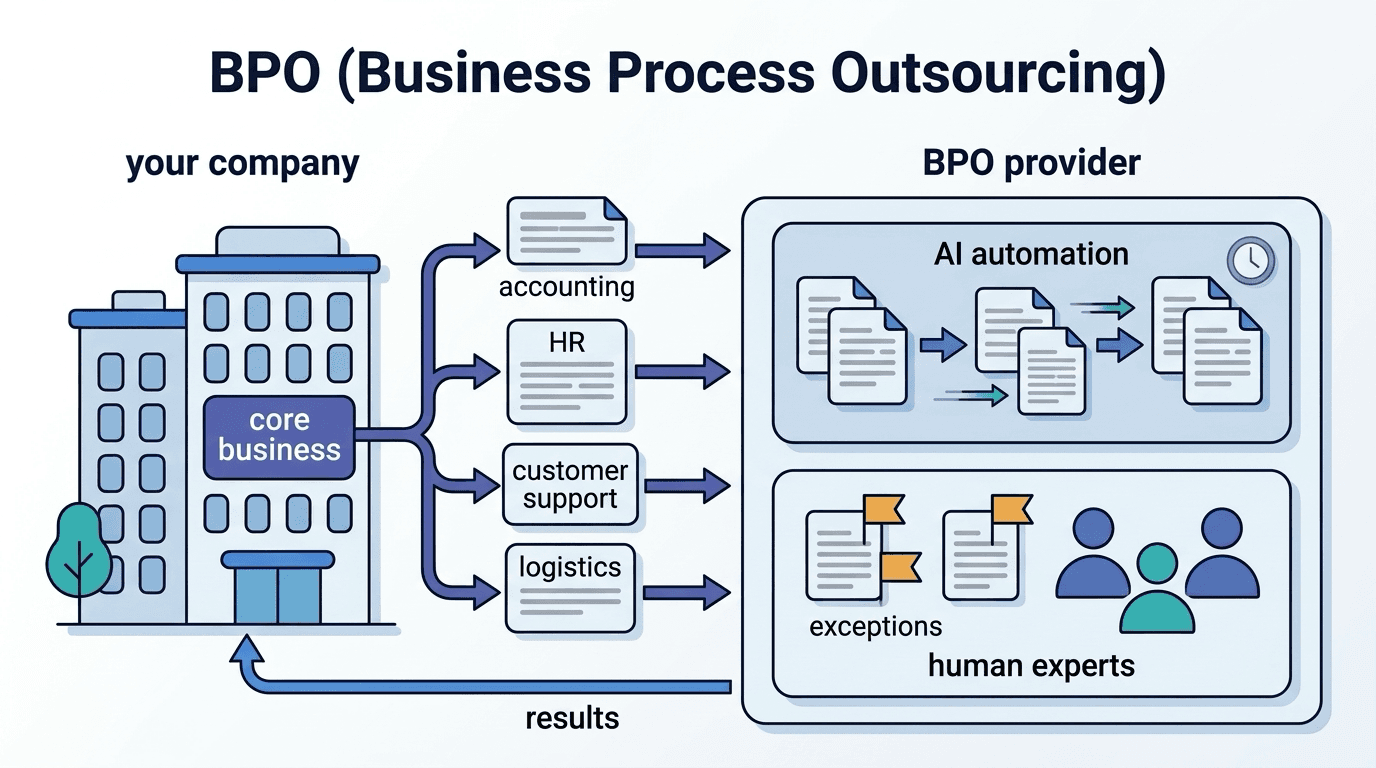
BPO (Business Process Outsourcing)
BPO refers to a form of outsourcing in which a company delegates specific business processes to an e

Demand Forecasting AI
Demand forecasting AI refers to a system that analyzes historical sales data and external factors us