TurboQuant
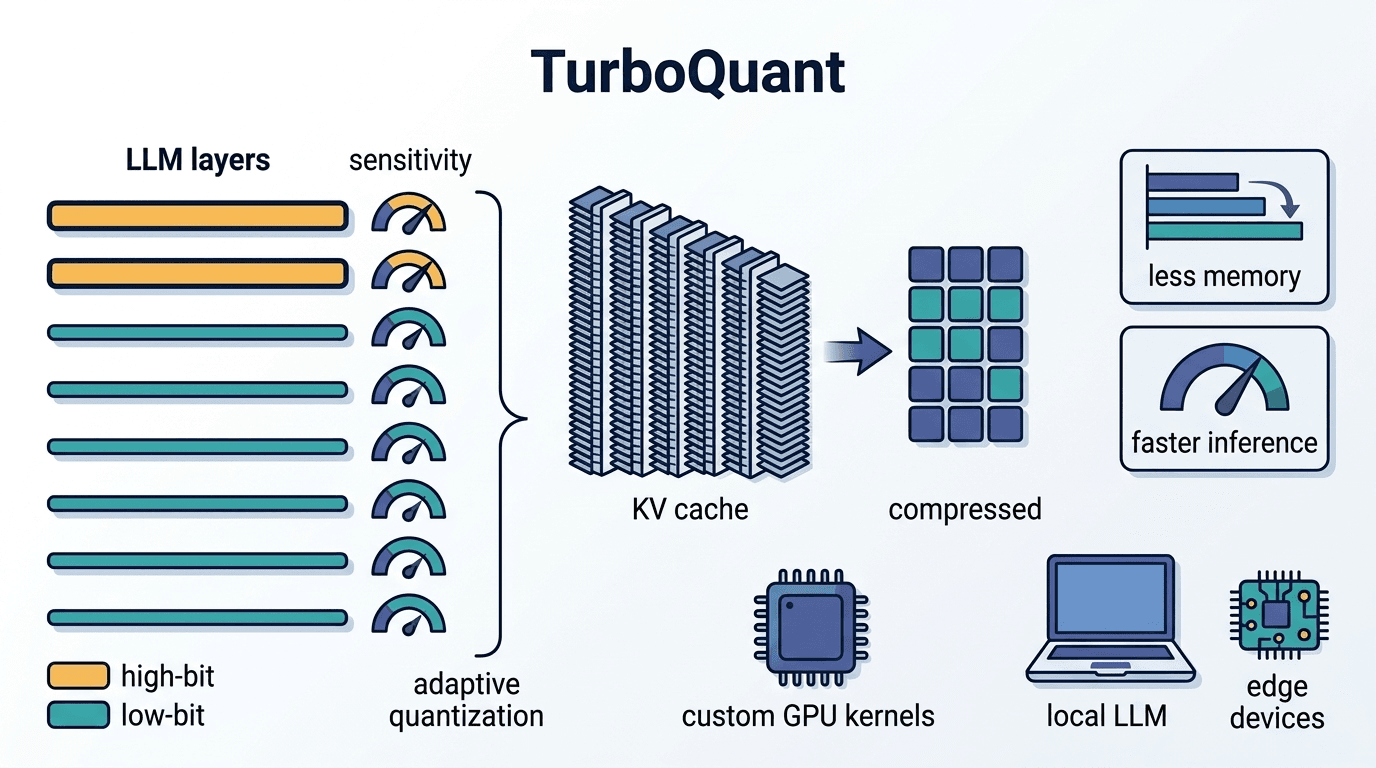
A memory compression technology for LLMs developed by Google. It reduces memory consumption by up to 1/6 through quantization and accelerates inference speed by up to 8 times.
TurboQuant is a memory compression technology for LLMs (Large Language Models) reportedly developed by Google. However, as of the time of writing, this technology has not been confirmed under this name in any official Google announcement, and caution is warranted regarding the accuracy of this information. In general, leveraging Quantization is said to significantly reduce a model's memory consumption and improve inference speed. As the scale of AI models continues to grow, this approach is attracting attention as a means of simultaneously reducing both deployment costs and latency.
Why Memory Compression Matters Now
Improvements in LLM performance are inseparable from increases in the number of model parameters. However, as parameters grow, the GPU (Graphics Processing Unit) memory required during inference expands accordingly, causing real-world operational costs to skyrocket. This is especially true for tasks involving Reasoning Models or multi-step reasoning, where the memory consumed in a single inference pass can easily be orders of magnitude larger.
While conventional quantization methods have enabled memory reduction, they have always come with the tradeoff of accuracy degradation. There is a clear need for designs that confront these challenges head-on, aiming to achieve both high compression ratios and fast inference speeds while maintaining accuracy.
How the Technology Works
At the core of this type of quantization technology is a quantization process that converts model weights into low-bit representations. Normally, LLM weights are stored in FP32 (32-bit floating point) or BF16 (16-bit), and this technology compresses them further into lower bit widths. What is critical here is not simple rounding, but an adaptive quantization scheme that accounts for the sensitivity of each layer.
The key characteristics can be summarized as follows:
- Per-layer sensitivity analysis: Rather than compressing the entire model uniformly, layers with a greater impact on accuracy are quantized at higher bit widths, while those with less impact are quantized at lower bit widths.
- Kernel optimization: Dedicated kernels are implemented to efficiently execute post-quantization operations on GPUs, eliminating memory bandwidth bottlenecks.
- Integration with cache compression: By including the KV cache (the region that holds intermediate representations during inference) as a target for compression, memory efficiency is improved when processing long-context inputs.
This design makes deployment in resource-constrained environments — such as local LLMs and Edge AI — a practical option.
Anticipated Use Cases
The environments most likely to benefit from memory compression technologies of this kind are production settings where both latency and cost are under strict scrutiny. For example, in multi-agent systems where AI agents coordinate multiple models, individual inference costs accumulate, making the effect of reducing per-inference memory consumption significant. Similarly, in architectures like Agentic RAG that repeatedly cycle through retrieval and generation, the benefits to throughput are pronounced.
It is also effective when serving fine-tuned Foundation Models, enabling more requests to be processed in parallel on the same GPU resources. Infrastructure costs that go unnoticed during the PoC (Proof of Concept) phase often surface abruptly at production scale. Quantization technology is one technical option for bridging that gap.
Key Considerations for Adoption
As is true of memory compression technologies in general, quantization is not a silver bullet. The higher the compression ratio, the greater the risk of accuracy degradation on specific tasks. Quality-critical metrics — such as the frequency of Hallucination and the consistency of Structured Output — must always be compared and validated before and after compression.
Furthermore, for quantization technology to deliver its maximum effect, a compatible GPU architecture and optimized kernels are prerequisites. When integrating into an existing MLOps pipeline, verifying compatibility with the MLOps infrastructure is also essential. While the improvements in speed and cost are compelling, conducting thorough benchmarks on the target model and tasks prior to adoption is the surest path to stable production operation.
Articles covering this term
- Local LLM / SLM Deployment Comparison — AI Utilization Without Cloud API DependencyCompare open-weight models like GPT OSS, Phi-4, and Llama 4 Scout against cloud APIs on GPU requirements, task accuracy, and TCO. A local AI deployment guide for data sovereignty and cost optimization.
- Latency Budget Design for AI Agents — How to Control the Trade-off Between Thinking Time and Response TimeExplore how "thinking time" causes response delays in multi-step reasoning agents, and compare latency budget allocation strategies and implementation patterns based on task complexity.
- Lightweight AI Inference with Firecracker: Running LLMs in MicroVM Environments and Cost OptimizationLearn how to build a lightweight AI inference environment using Firecracker. This guide covers running LLMs in microVMs, plus implementation steps, scaling strategies, and best practices to optimize inference costs.
- What is Edge AI? How On-Device LLMs Work and How to Choose One for BusinessLearn the basics of edge AI & on-device LLMs, and how to design workflows requiring low latency, data privacy, or unstable connectivity—where cloud LLMs fall short.


Related Terms
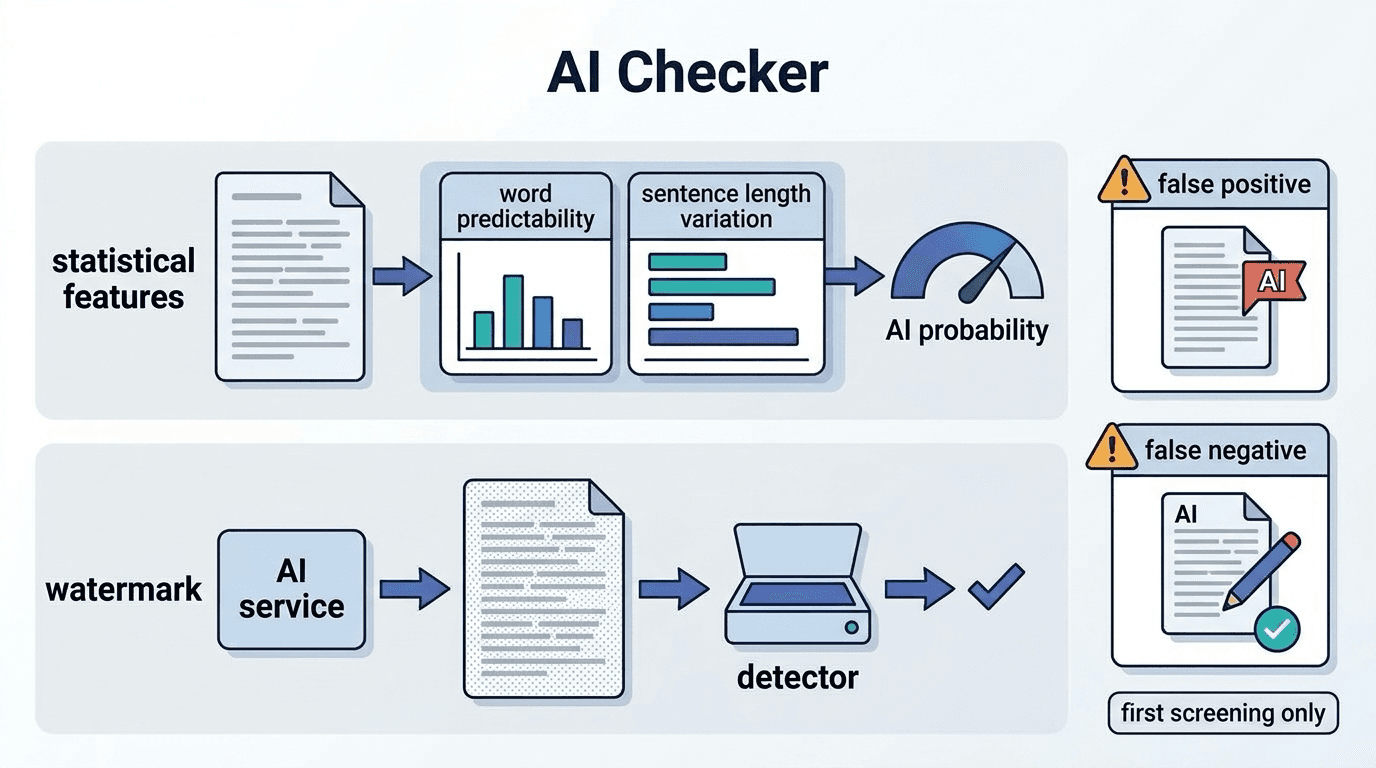
AI Checker (AI-generated text detector)
An AI checker is a tool that estimates whether a piece of writing was generated by AI, mainly from s
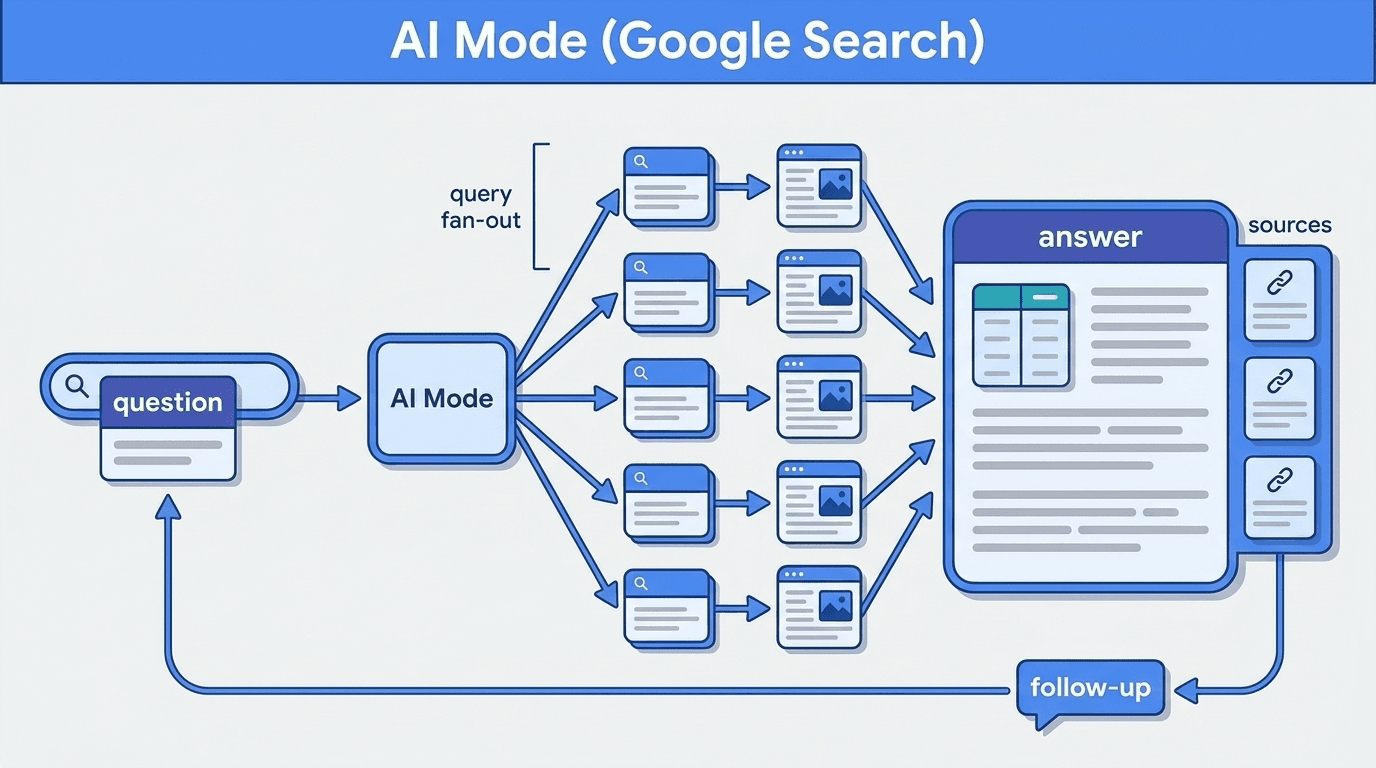
AI Mode (Google AI Mode)
AI Mode is a generative AI search mode built into Google Search that answers questions conversationa

Context Window
A context window refers to the maximum number of tokens an LLM can process at one time, indicating t
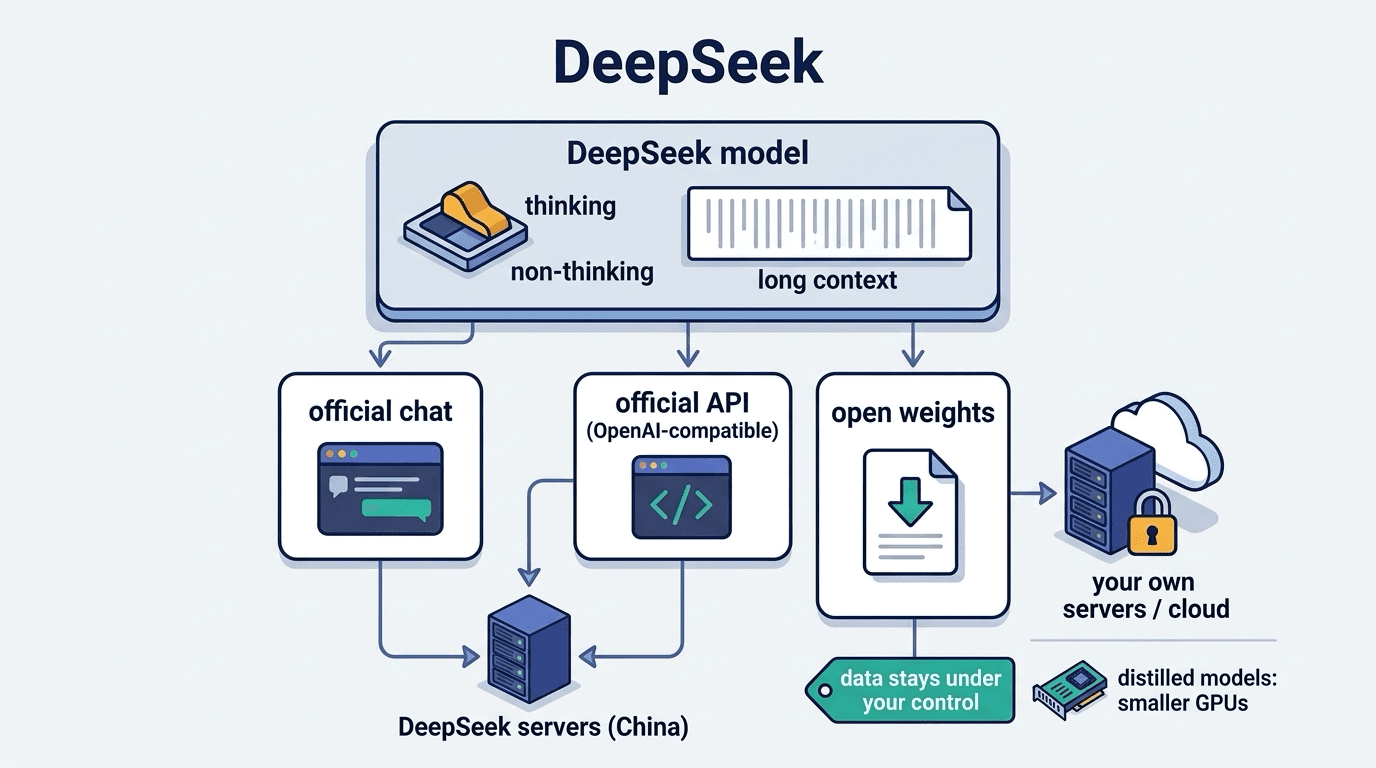
DeepSeek
DeepSeek is a family of large language models and a chat service developed by the Chinese company De