Dense Model (Tightly Coupled Model)

A Dense Model is a neural network architecture in which all of the model's parameters are used for computation during inference. In contrast to MoE (Mixture of Experts), which activates only a subset of experts, a Dense Model always involves all weights in computation regardless of the input.
Why Is It Called "Dense"?
In the world of neural networks, there has long been a convention of referring to fully connected layers as dense layers. The term Dense Model succinctly captures a structural characteristic of the architecture: the entire model is composed of these "gap-free connections" — meaning all parameters are activated on every inference pass.
The counterpart that emerged is the MoE (Mixture of Experts) architecture. In MoE, a routing mechanism selects only a small number of experts for each input token, leaving the rest dormant. As a result, even when the total parameter count is the same, the computational cost (FLOPs) during inference is significantly reduced. This is the mechanism behind the description of Mixtral 8x7B as having "46.7B parameters, but only 12.9B active parameters."
Strengths and Limitations of Dense Models
The greatest advantage of Dense Models lies in their design simplicity. There is no need to worry about routing imbalances or load balancing issues between experts, which makes training highly stable. The fact that major models such as the Llama 3 series and Claude continue to adopt the Dense architecture is because this stability carries significant weight in large-scale training.
On the other hand, the unavoidable drawback is that parameter count directly translates to inference cost. A Dense Model with 70B parameters must read and compute all 70B weights on every inference pass. If equivalent quality can be achieved with MoE, the inference cost can sometimes be reduced to a fraction of that.
Decision Criteria in Practice
When selecting a model, it is more practical to evaluate fitness for the workload rather than framing the choice as a binary opposition between Dense and MoE.
For latency-sensitive real-time dialogue, or for tasks with diverse input/output patterns where bias toward specific experts is unpredictable, the predictable computational cost of Dense Models makes them easier to operate. Conversely, for batch inference processing large volumes of text or throughput-oriented scenarios, the computational efficiency of MoE comes into its own.
In the author's experience, when switching models in a production environment, the factor with the greatest impact was not "parameter count itself" but rather "how the model fits into GPU memory." A Dense 70B model barely fits on two A100 80GB GPUs, whereas a MoE model with 13B active parameters can run on a single card — and this difference has a decisive effect on infrastructure costs.
Articles covering this term
- Latency Budget Design for AI Agents — How to Control the Trade-off Between Thinking Time and Response TimeExplore how "thinking time" causes response delays in multi-step reasoning agents, and compare latency budget allocation strategies and implementation patterns based on task complexity.
- What Are Liquid Neural Networks? Next-Generation AI Inference with Dynamic BehaviorLearn how LNNs dynamically adapt time-constants during inference, how they differ from traditional models, and their edge AI potential—all while keeping trained weights fixed.
- Local LLM / SLM Deployment Comparison — AI Utilization Without Cloud API DependencyCompare open-weight models like GPT OSS, Phi-4, and Llama 4 Scout against cloud APIs on GPU requirements, task accuracy, and TCO. A local AI deployment guide for data sovereignty and cost optimization.
- What is SLM Distillation? How to Create Small Specialized Models from Large LLMsLearn how SLM distillation uses large LLMs as teachers to build cost-effective, task-specific private models—covering the mechanism and implementation steps.


Related Terms
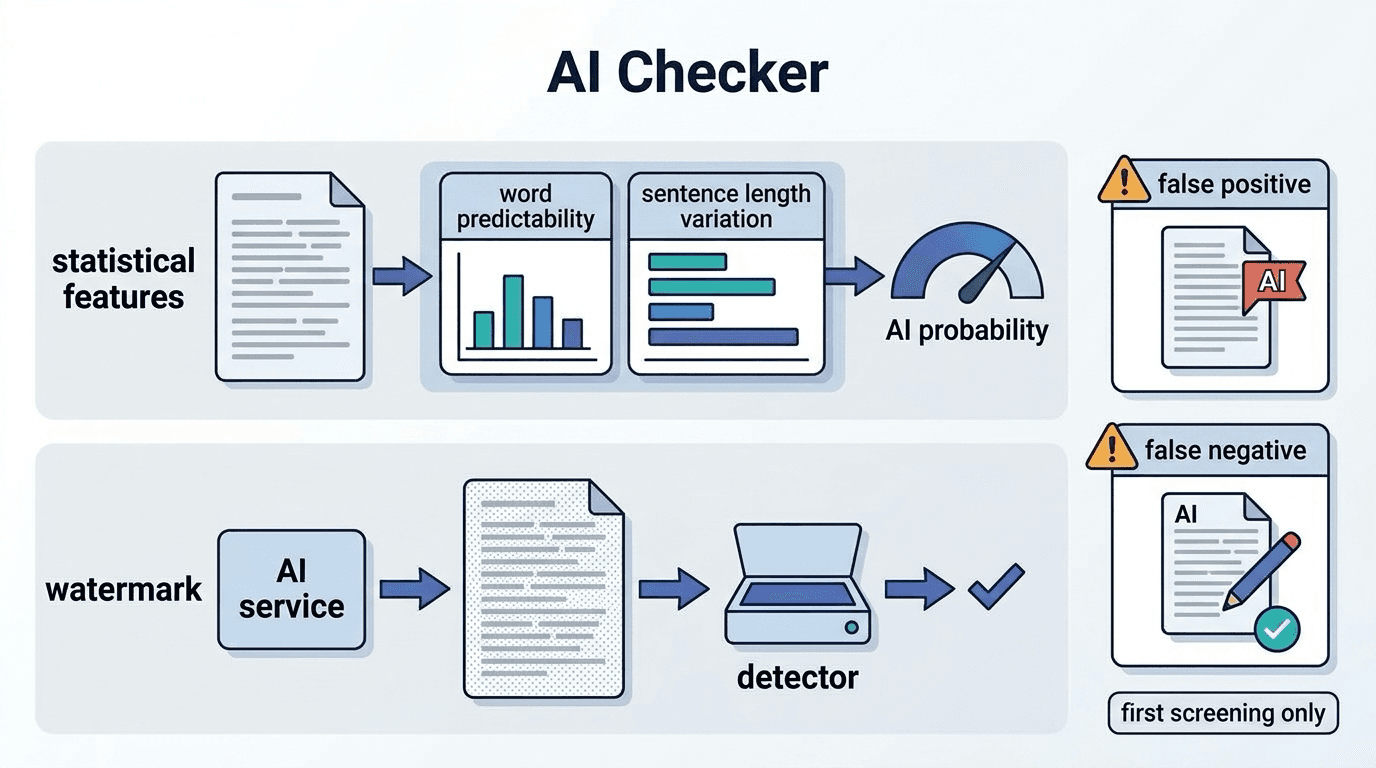
AI Checker (AI-generated text detector)
An AI checker is a tool that estimates whether a piece of writing was generated by AI, mainly from s
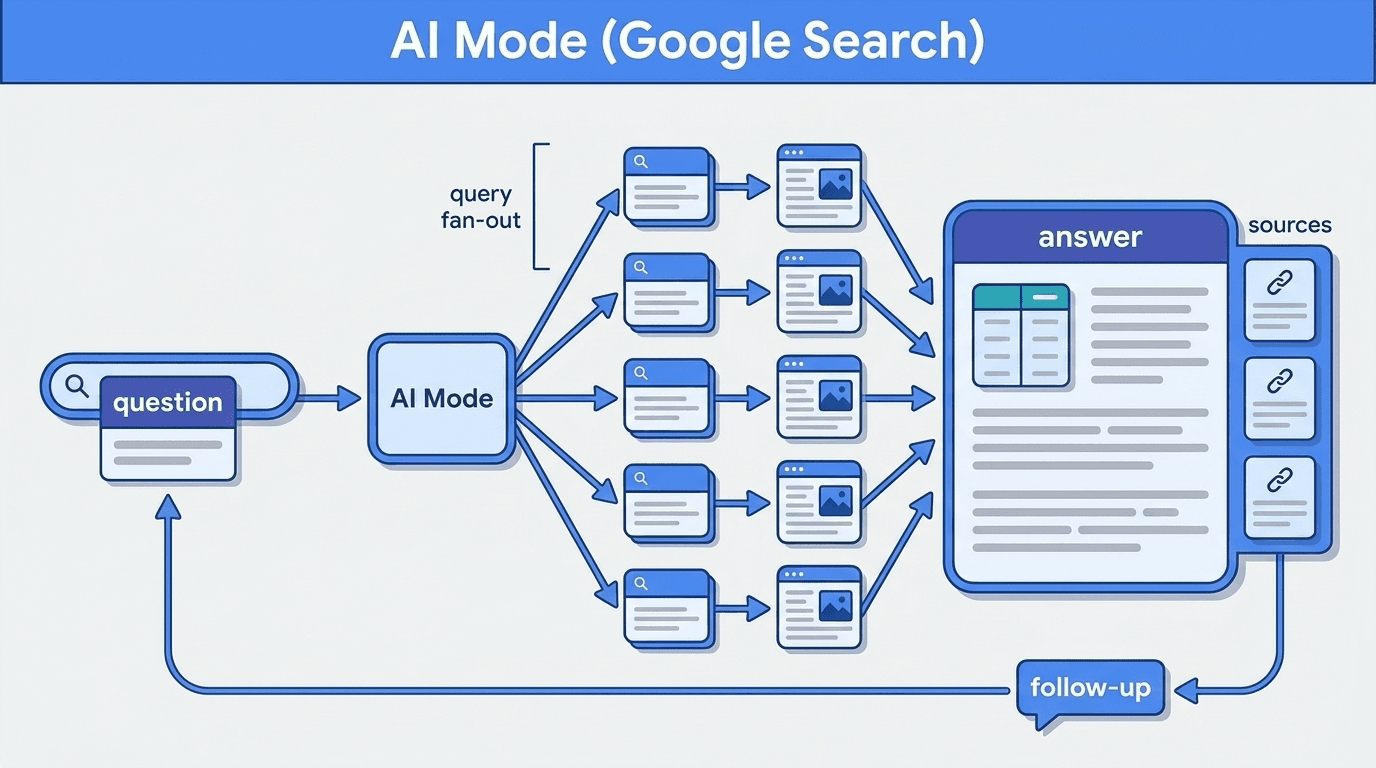
AI Mode (Google AI Mode)
AI Mode is a generative AI search mode built into Google Search that answers questions conversationa

Context Window
A context window refers to the maximum number of tokens an LLM can process at one time, indicating t
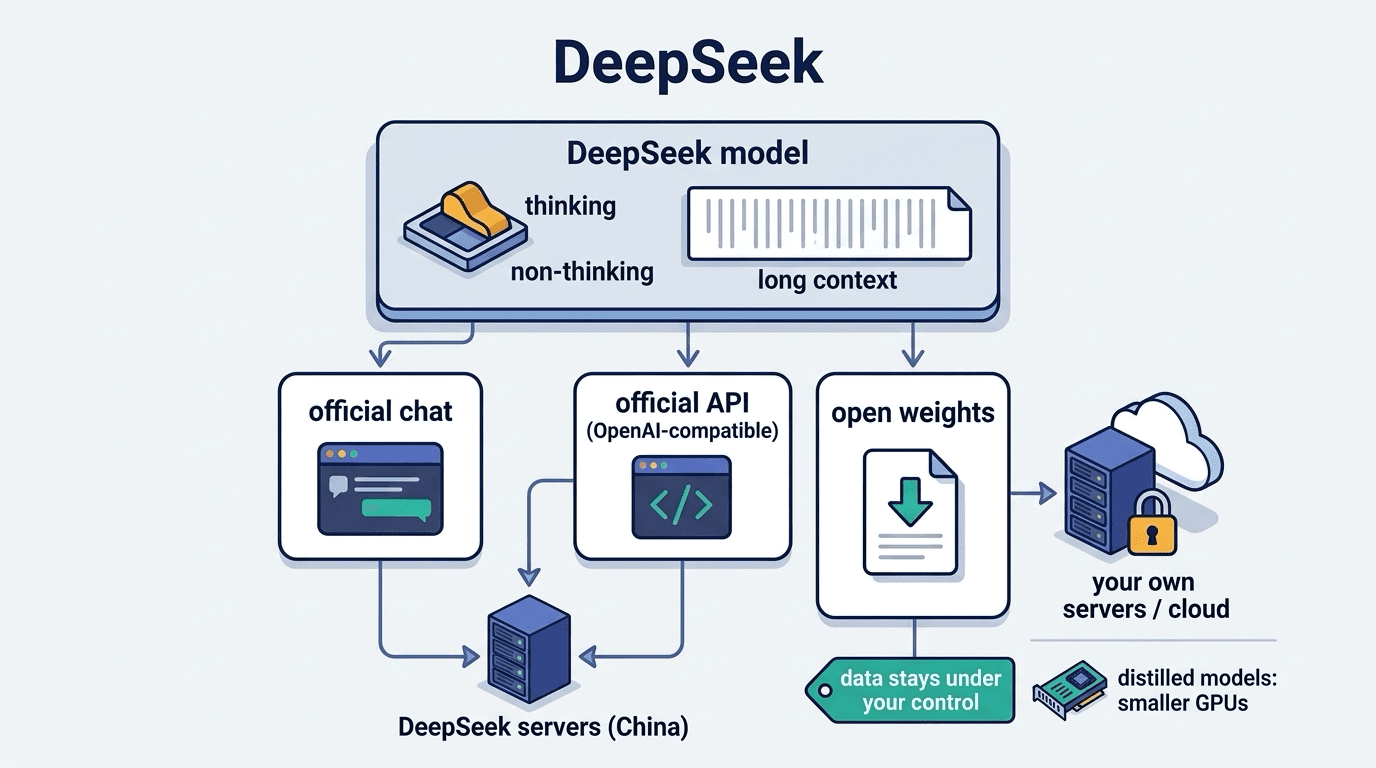
DeepSeek
DeepSeek is a family of large language models and a chat service developed by the Chinese company De