Speculative Decoding
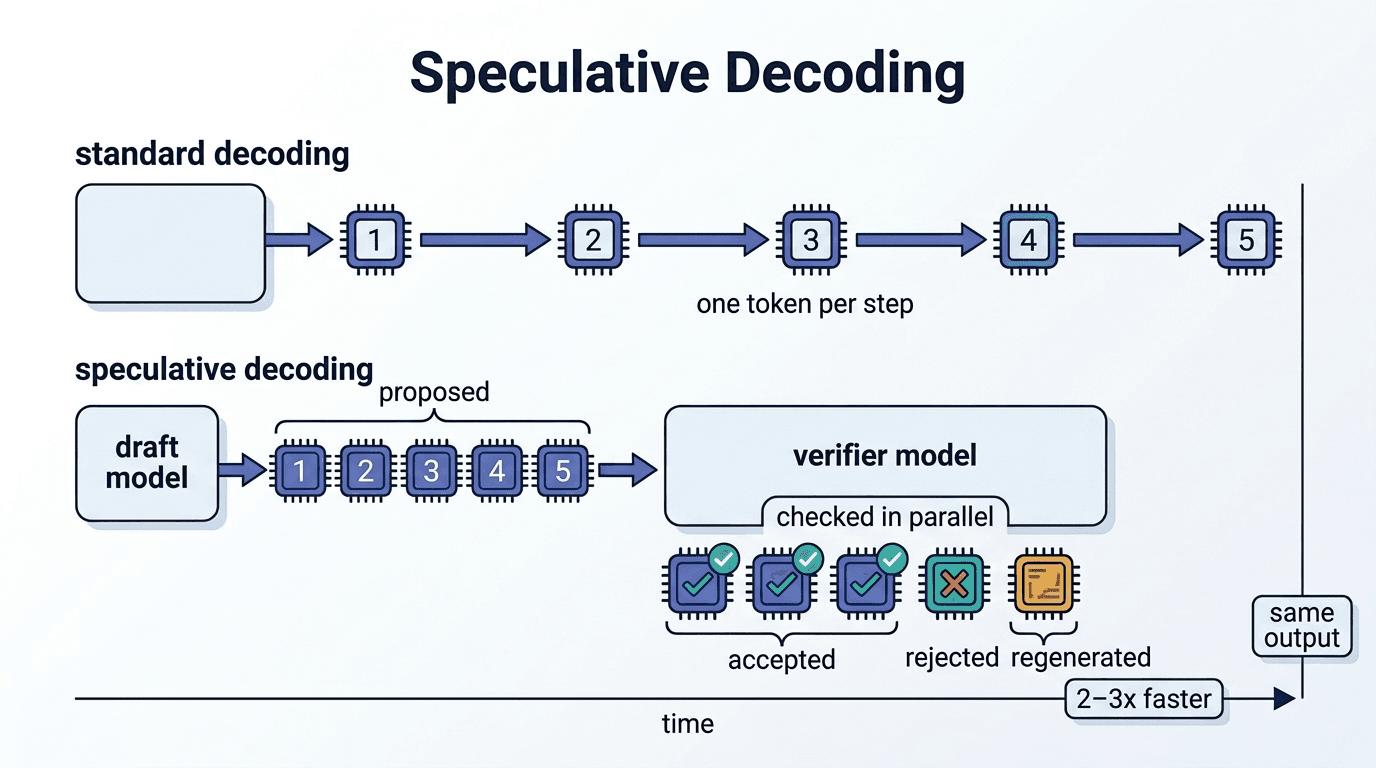
A inference acceleration technique in which a small draft model proposes multiple tokens speculatively in advance, and a large model verifies them in parallel.
What is Speculative Decoding?
Speculative Decoding is a technique that accelerates inference speed by 2–3× by having a small "draft model" propose multiple tokens in advance, while a large "verification model" validates and accepts or rejects them in parallel.
Overview of the Mechanism
Standard LLM inference generates tokens one at a time sequentially, meaning the larger the model, the greater the computational cost per step and the slower the response. Speculative Decoding alleviates this sequential bottleneck.
- The draft model (small and fast) generates several tokens ahead all at once
- The verification model (large and high-accuracy) validates the proposed token sequence in a single pass
- Tokens that pass verification are accepted as-is; from the first rejected token onward, the verification model regenerates
The higher the probability that the draft model's proposals are correct, the fewer times the verification model needs to be called, and the greater the speedup.
Impact on Output Quality
An important point is that Speculative Decoding does not alter the output distribution of the verification model. Mathematically, it produces identical output to running the verification model without a draft model, meaning speed is improved without any sacrifice in quality.
Suitable Use Cases
This technique is particularly effective in scenarios where low latency is desired while maintaining the high accuracy of a large model — such as real-time chatbot responses and code completion. Since it also leads to reduced GPU costs, it is a technique worth considering for production systems where inference cost is a concern.
Articles covering this term
- Latency Budget Design for AI Agents — How to Control the Trade-off Between Thinking Time and Response TimeExplore how "thinking time" causes response delays in multi-step reasoning agents, and compare latency budget allocation strategies and implementation patterns based on task complexity.
- What is Inference-Time Scaling? How to Optimize the Trade-off Between AI Inference Cost and AccuracyLearn how Test-Time Compute scaling works and how to optimize the tradeoff between inference cost and accuracy. A practical guide to LLM operations and cost design in the age of reasoning models.


Related Terms
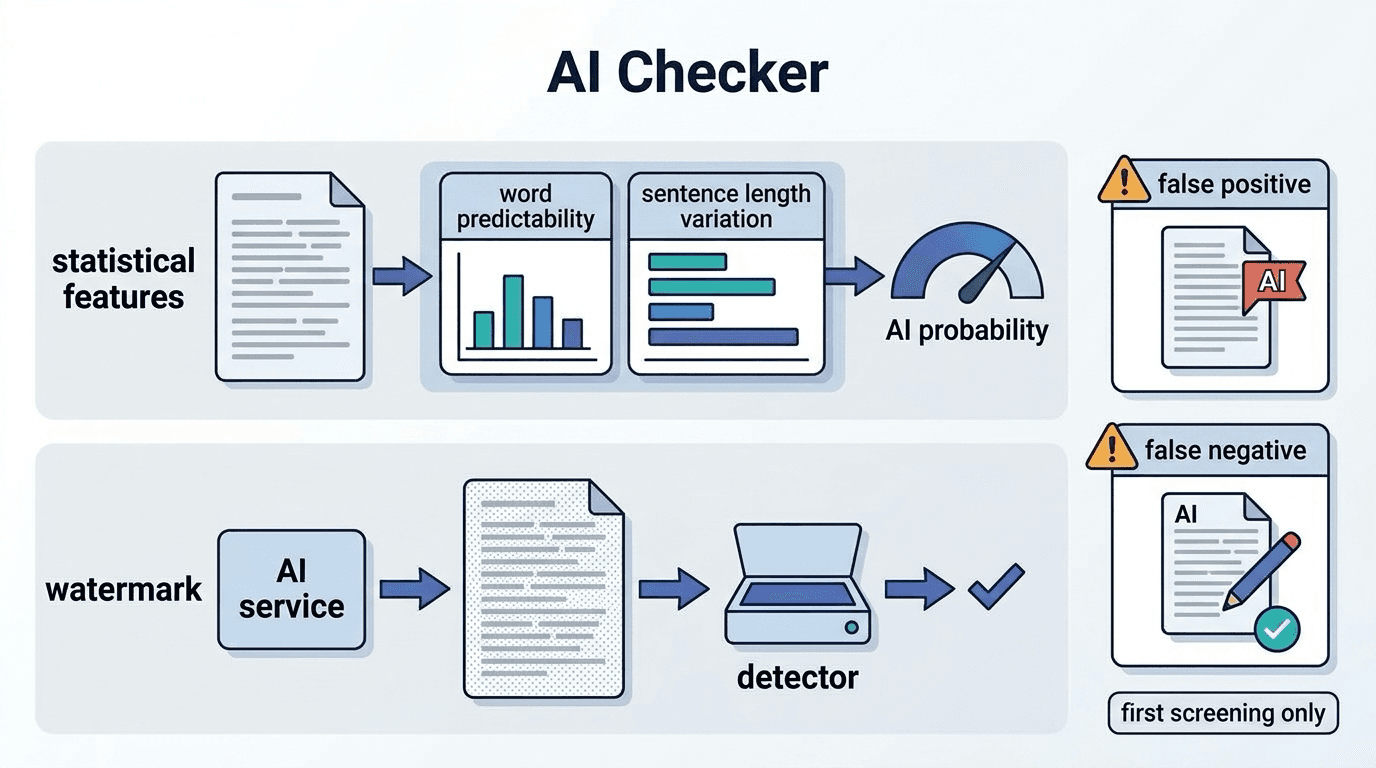
AI Checker (AI-generated text detector)
An AI checker is a tool that estimates whether a piece of writing was generated by AI, mainly from s
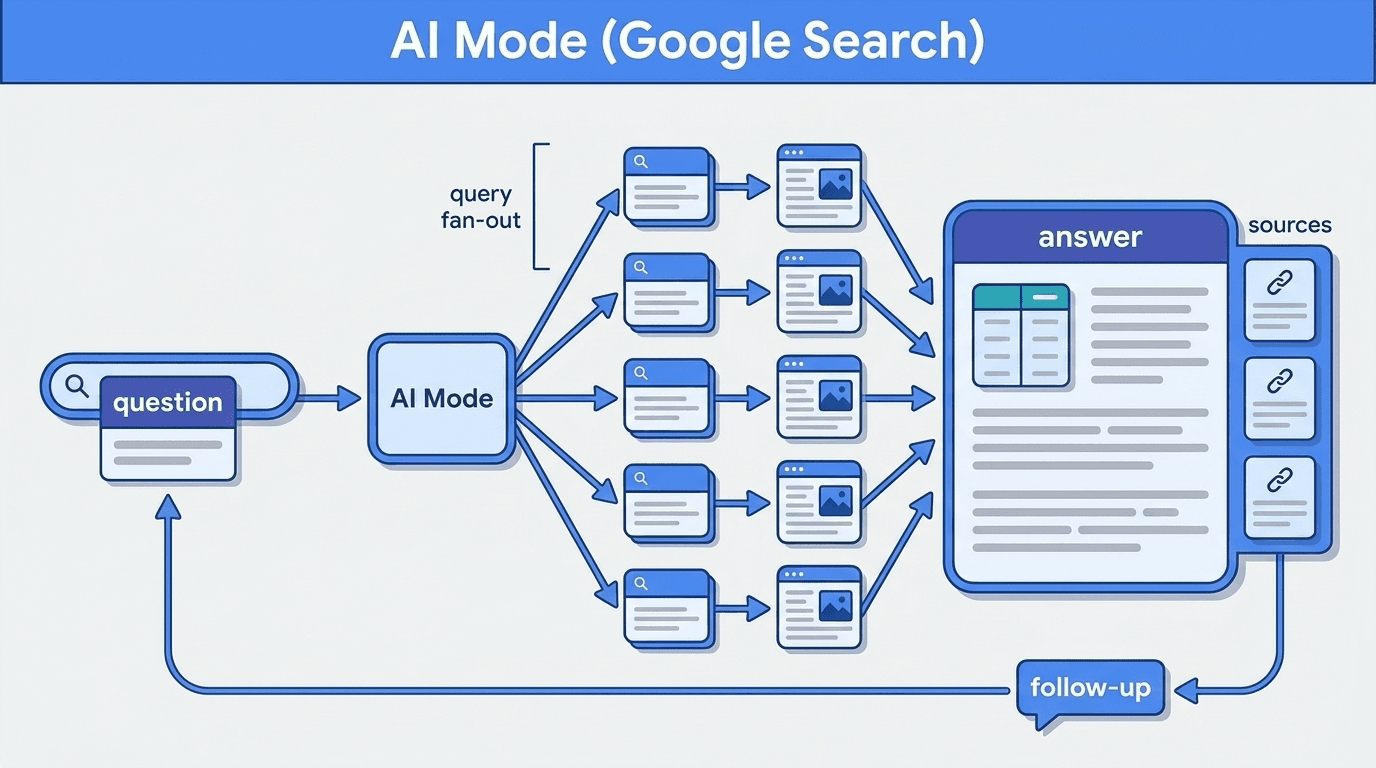
AI Mode (Google AI Mode)
AI Mode is a generative AI search mode built into Google Search that answers questions conversationa

Context Window
A context window refers to the maximum number of tokens an LLM can process at one time, indicating t
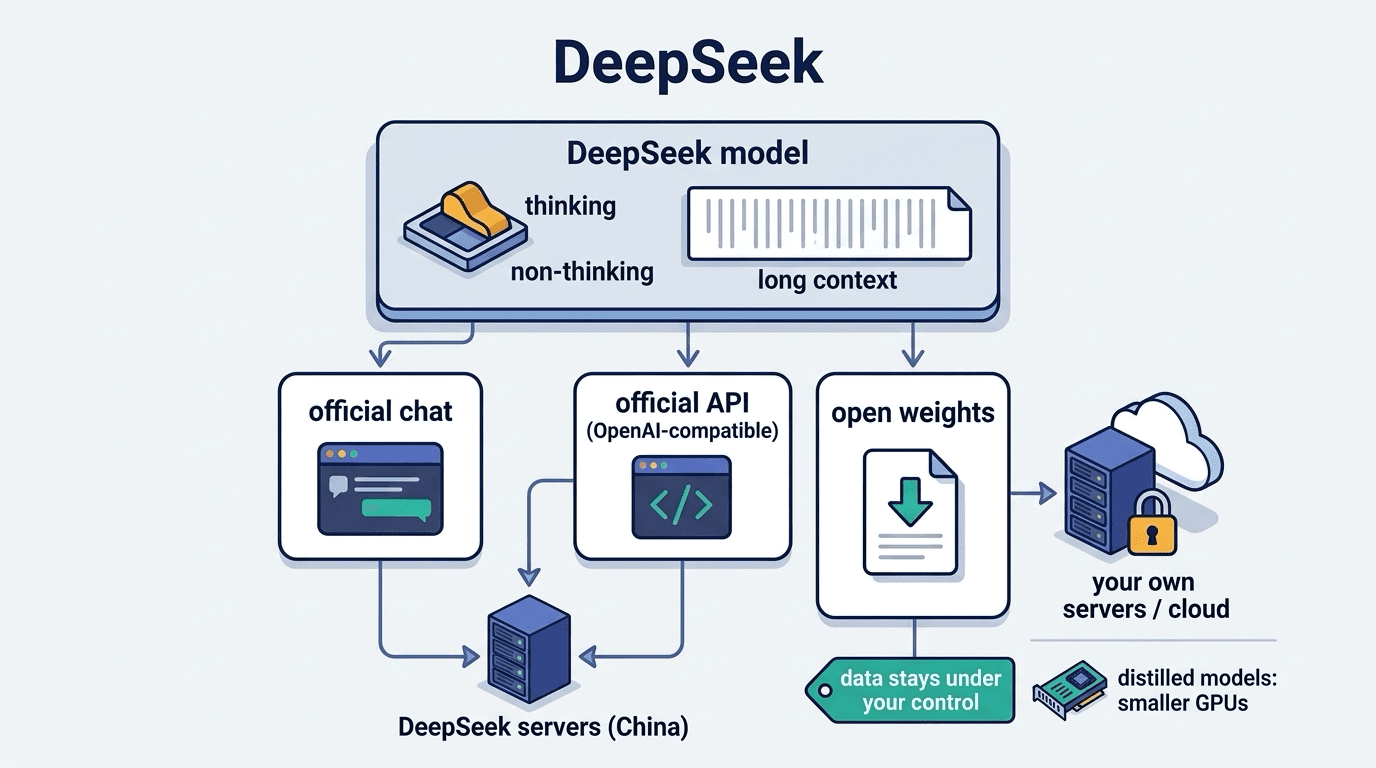
DeepSeek
DeepSeek is a family of large language models and a chat service developed by the Chinese company De