Prompt Engineering
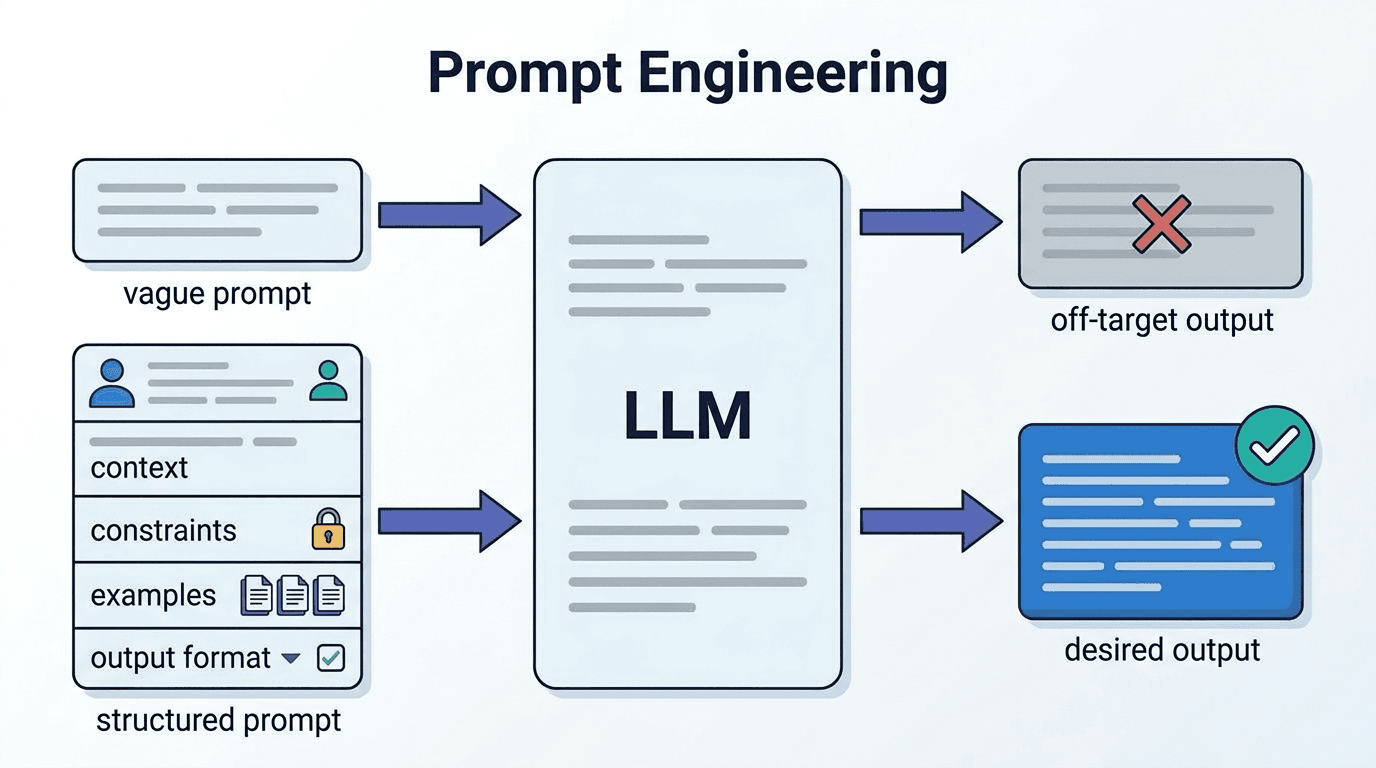
Prompt engineering is the practice of designing the structure, phrasing, and context of input text (prompts) in order to elicit desired outputs from LLMs (Large Language Models).
Why Does the Way You Write Prompts Change the Results?
LLMs operate by predicting the continuation of input text. Even for the same question, whether or not you include preconditions or output format specifications can significantly affect the accuracy and usefulness of the response. Simply specifying something like "provide three suggestions in bullet points in Japanese" yields far more practical answers than asking a question vaguely.
Representative Techniques
Zero-shot / Few-shot: Giving instructions without examples is Zero-shot; providing one to several concrete examples is Few-shot. Few-shot tends to produce more consistent results for classification tasks and format specification.
Chain-of-Thought (CoT): A technique that makes the model explicitly show its reasoning process by instructing it to "think step by step." It is known to improve accuracy on math and logic problems.
Role Prompting: Assigning a role such as "You are a senior engineer." Used to control the tone and level of expertise in the output.
Evolution into Context Engineering
Around 2025, attention shifted beyond one-off prompt design toward how to structure the information (context) passed to an AI system as a whole. This area is called context engineering, and it encompasses the injection of external knowledge via RAG, the structuring of tool definitions, and the management of conversation history. Prompt engineering is increasingly regarded as just one component within it.
That said, the fundamental principles of prompting—clear instructions, appropriate examples, and output format specification—also form the foundation of context engineering. You cannot design an entire system without first mastering the basics.
Articles covering this term
- What is Context Engineering? The New Paradigm in LLM Development and Its Evolution from Prompt EngineeringContext Engineering is a design approach for dynamically assembling optimal information for LLM apps. Covers differences from prompt engineering, context window components, and RAG/agent implementation patterns.
- What is Harness Engineering? A Design Method to Structurally Prevent AI Agent ErrorsHarness Engineering is a method to structurally prevent AI agent errors from recurring using documents, tools, and constraints. Learn concepts, components, and practical steps.
- What is Loop Engineering? The New Standard in AI Agent Design Coming After Prompt EngineeringFrom prompting to designing "loops" where AI works autonomously. We explain Loop Engineering—its meaning, evolution, components, and implementation considerations.
- What is Structured Output? A Guide to Type-Safe Response Design and Implementation for LLMsLearn how to enforce LLM outputs with JSON Schema to prevent parse failures and downtime. From fundamentals to practical type-safe design for B2B workflow automation.


Related Terms
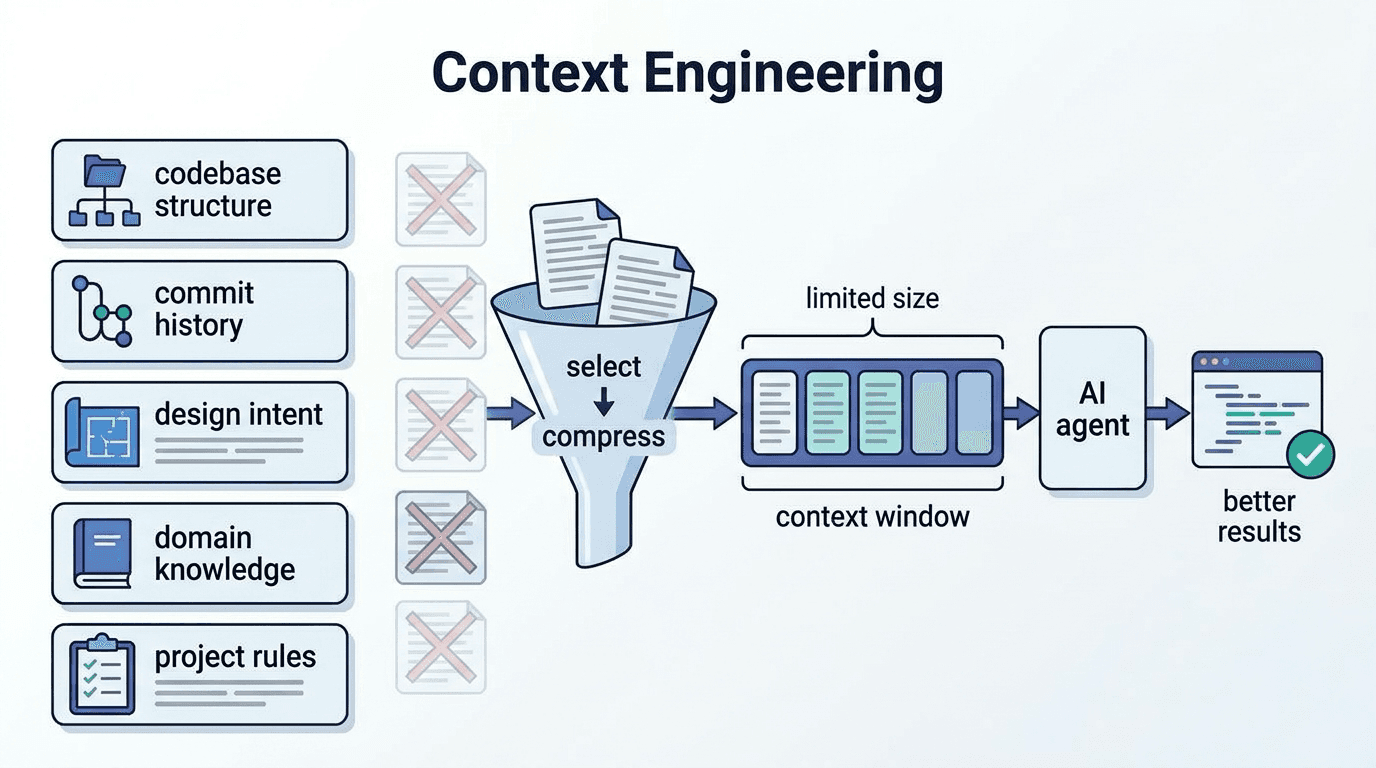
Context Engineering
Context Engineering is a technical discipline focused on systematically designing and optimizing the

System Prompt
A system prompt is an instruction given to an LLM before the start of a conversation with a user, de

AI Red Teaming (AI Red Teaming)
An evaluation method that systematically tests AI system vulnerabilities from an attacker's perspect
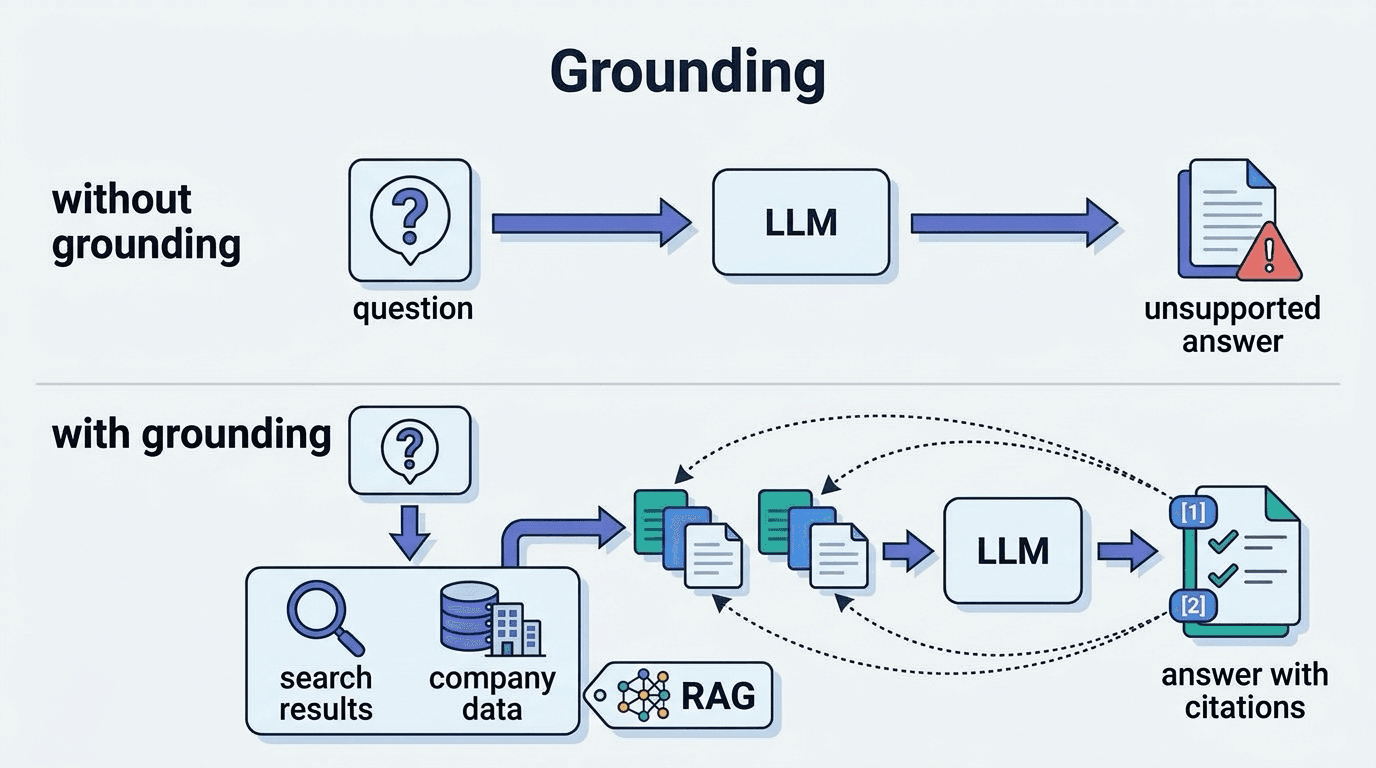
Grounding
A technique that cross-references LLM outputs with external data sources and search results to gener