Smart Factory
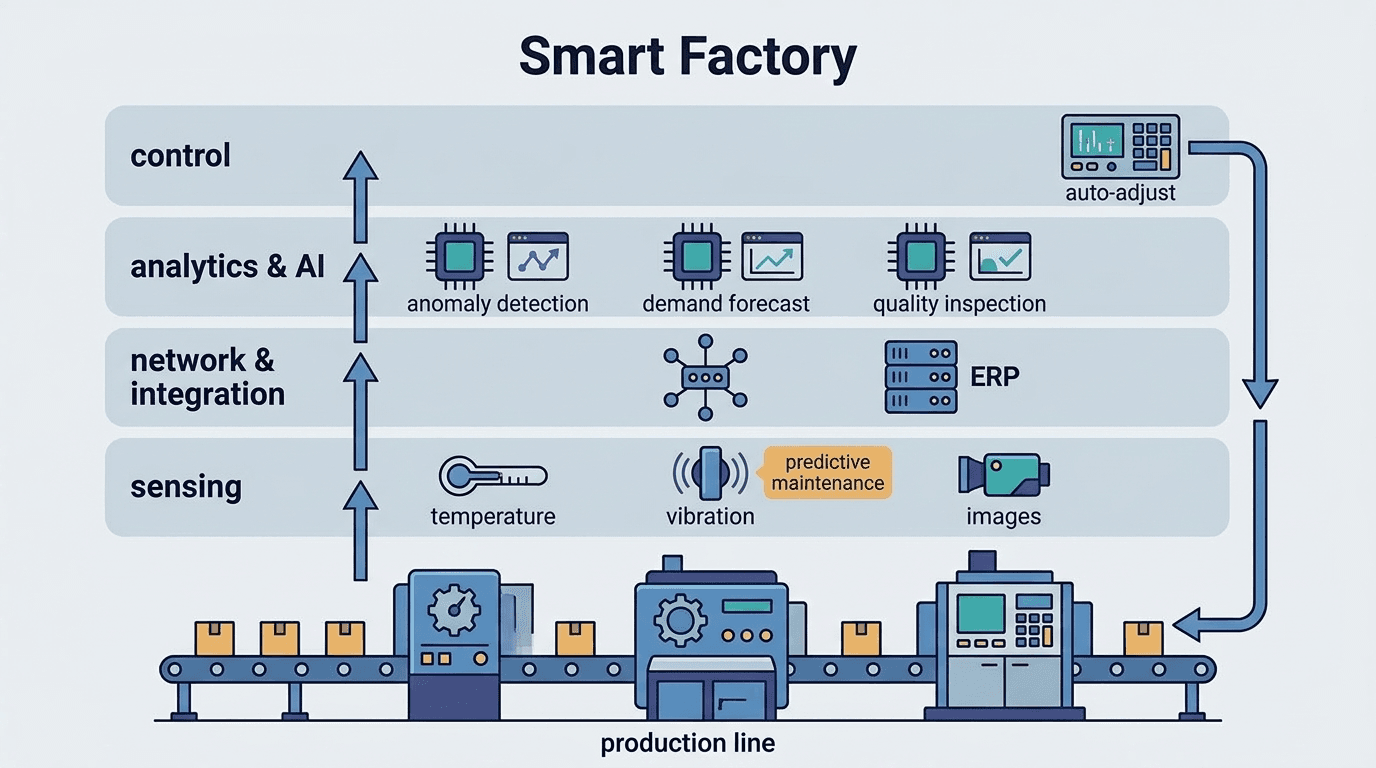
A smart factory is a next-generation factory that digitally integrates manufacturing equipment and processes using IoT and AI to achieve autonomous production optimization, quality control, and predictive maintenance.
A Smart Factory is a next-generation factory that digitally integrates manufacturing equipment and processes using IoT and AI to achieve autonomous production optimization, quality control, and predictive maintenance.
Background of the Concept
The concept of the "smart factory" in manufacturing gained worldwide attention following Industry 4.0, an industrial policy initiative led by Germany. Prior to this, factory automation was limited to "fixed automation," in which machines operated according to predefined rules. In recent years, however, the convergence of falling sensor costs, improved communications infrastructure, and the rapid advancement of AI technologies—including generative AI—has made it a realistic option to evolve entire factories into systems capable of "thinking."
Technology Components of a Smart Factory
A smart factory is not a single technology but functions through a combination of multiple technology layers. The main components are as follows:
- Sensing layer: IoT sensor arrays that collect data such as temperature, vibration, and imagery to monitor equipment status in real time
- Communication and integration layer: Transmits collected data to factory networks and the cloud, and integrates it with core systems such as ERP
- Analysis and inference layer: Applies AI and machine learning to accumulated data to perform anomaly detection, demand forecasting, and quality assessment
- Execution and control layer: Feeds analysis results back to robots and production lines to autonomously adjust processes
When these layers work together organically, the system itself can handle process changes and maintenance scheduling that were previously left to human judgment.
Real-World Applications
The benefits of smart factories are most pronounced in the areas of predictive maintenance and quality inspection. By continuously monitoring equipment vibration data and current waveforms to detect early signs of failure, unplanned line stoppages can be significantly reduced. In addition, visual inspection systems combining cameras with image recognition AI demonstrate advantages over human visual inspection in both detection accuracy and processing speed.
In the area of production planning, it becomes possible to integrate order data, inventory information, and equipment utilization rates in real time, automatically track KPIs, and dynamically reorganize optimal production schedules. Furthermore, when combined with an AI digital twin, there is a growing number of cases where the actual factory is reproduced in a virtual space to simulate layout changes and new product introductions in advance.
Considerations for Implementation
When advancing smart factory initiatives, data governance and security are just as important as technical implementation. Connecting manufacturing equipment to networks expands the attack surface for cyberattacks. Applying the principles of Zero Trust Network Access (ZTNA) to factory networks—enforcing per-device authentication and least-privilege access—is essential.
It is also necessary to clearly define the extent to which autonomous AI decision-making is permissible. For critical decisions such as quality assessment and equipment shutdown, implementing a Human-in-the-Loop (HITL) mechanism in which humans review and approve AI decisions is a practical approach to mitigating the risk of malfunction.
Furthermore, from an AI ROI perspective, rather than attempting to digitize all processes at once, a strategy of rolling out incrementally—starting with high-impact processes validated through a PoC—leads to maximizing return on investment. The key to success lies in ensuring the entire organization understands before implementation that a smart factory is not a "finished product," but rather a continuous process of evolution in which accuracy improves as data accumulates.
Articles covering this term
- What Is AI Cross-Supply Chain Integration? A Design Approach to Breaking Down Silos and Achieving ROIDiscover how to design AI integration architecture across manufacturing, procurement, and logistics data silos—and solve the data quality issues blocking ROI for 89% of companies.
- How Thai Manufacturers Can Get Started with AI-Powered Predictive Maintenance and Quality ControlLearn how Thai manufacturers implement AI for predictive maintenance & quality control—from sensor data utilization to automated visual inspection, step by step.
- Guide to AI Investment Decisions for Thai Businesses — Implementation Priorities Based on ROI Comparisons by IndustryA sector-by-sector guide for Thai B2B companies choosing AI investments. Compare manufacturing, logistics, tourism, healthcare & retail by ROI, complexity, and talent needs.
- What is Human-in-the-Loop (HITL)? The Basics of "Human Participation" Design for Establishing AI-Driven Business Process AutomationHITL design—where AI processes and humans verify—is key to sustainable automation. Covers confidence routing, 5 implementation steps & industry cases for DX leaders.


Related Terms
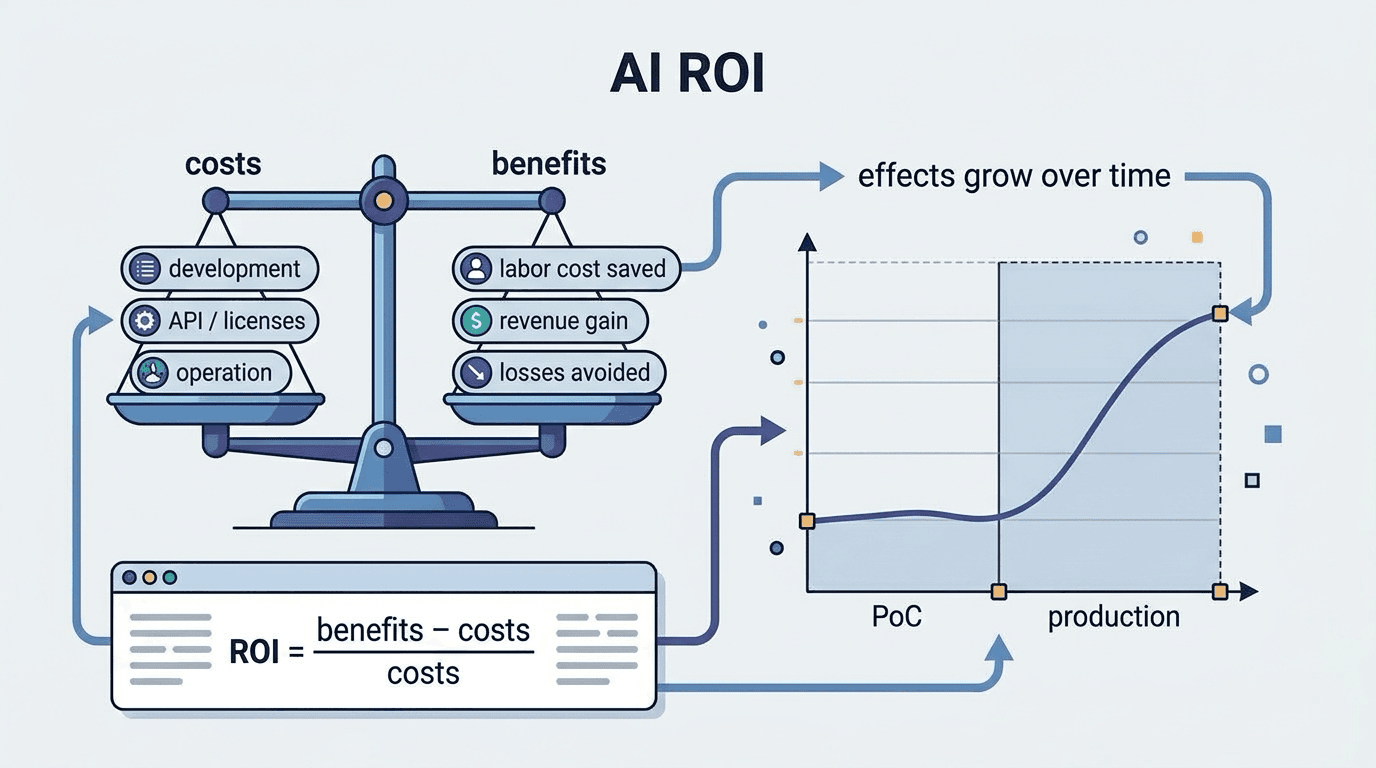
AI ROI (Return on Investment in AI)
AI ROI is a metric that quantitatively measures the effects obtained — such as operational efficienc

AI Observability
An operational practice of continuously monitoring and visualizing the inputs/outputs, latency, cost
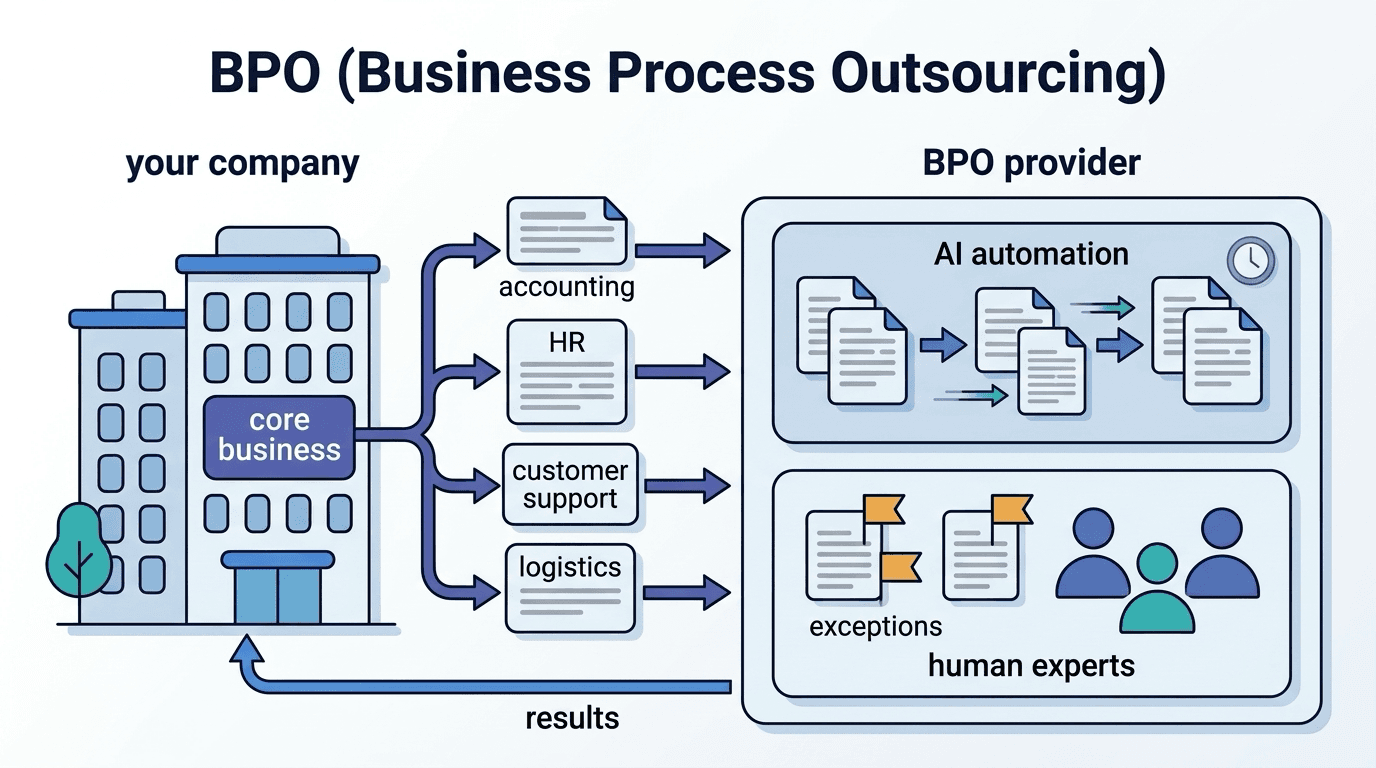
BPO (Business Process Outsourcing)
BPO refers to a form of outsourcing in which a company delegates specific business processes to an e

Demand Forecasting AI
Demand forecasting AI refers to a system that analyzes historical sales data and external factors us