How Thai Manufacturers Can Get Started with AI-Powered Predictive Maintenance and Quality Control

Lead
In Thai manufacturing facilities, unexpected equipment failures causing line stoppages and the over-reliance on individual workers for visual inspection continue to squeeze profitability. AI-powered predictive maintenance and image inspection have now entered the practical implementation stage as a means of addressing both of these challenges simultaneously. This article explains the steps that can be executed in Thai factories, from building a sensor data collection infrastructure and conducting a proof of concept (PoC) for anomaly detection models, to the phased introduction of AI image inspection. The content is focused on configurations that allow even facilities with few dedicated IT personnel to start small.
Thailand is one of Southeast Asia's leading manufacturing hubs, but it faces a triple pressure of an aging skilled workforce, rising labor costs, and intensifying global competition. This section examines the context in which AI adoption is shifting from "nice to have" to "can't compete without it," organizing the discussion from both a challenges and policy perspective.
Challenges Facing Thailand's Manufacturing Sector
Equipment aging and unexpected breakdowns represent the most serious challenge facing factories in Thailand. On lines that have been operating for more than ten years, predicting component deterioration relies on the intuition and experience of maintenance personnel, and unplanned downtime continues to drag down productivity.
A further challenge is the personalization of quality inspection. Visual inspection is subject to the skill level of individual inspectors, and with chronic labor shortages persisting across Thailand's manufacturing sector, it is not uncommon to see defect escape rates rise immediately after an inspector changeover.
Data fragmentation is another issue that cannot be overlooked. Many factories store vibration sensor logs, quality records, and maintenance histories in separate systems. Even when there is a desire to analyze the correlation between equipment condition and quality, manually reconciling the data is required—and in the majority of cases, this simply does not happen in practice.
All of these challenges stem from a structural dependence on human experience and manual work. AI is a practical means of transforming that dependency.
Promotion of EEC Policy and Industry 4.0
The Thai government is promoting the digitalization of manufacturing as a national strategy under its "Thailand 4.0" policy. At the core of this initiative is the Eastern Economic Corridor (EEC).
The EEC's 2022–2026 plan targets approximately 2.2 trillion baht in investment attraction across priority industries including digital, electronics, automotive, and BCG (Bio-Circular-Green). The initiative has demonstrated steady progress, having attracted approximately 1.92 trillion baht in foreign direct investment during the first five years since the EEC's establishment.
Within this policy framework, companies adopting AI and IoT-related technologies are offered tax incentives and infrastructure support. Under the BOI (Board of Investment of Thailand) investment promotion measures for smart factories, projects leveraging AI and IoT to improve production efficiency may qualify for benefits including corporate tax exemptions (refer to the latest BOI announcements for specific eligibility conditions).
In other words, the adoption of predictive maintenance and AI-based visual inspection represents not only an opportunity for cost optimization, but also a timely chance to leverage favorable policy tailwinds. For a broader overview of getting started with AI in Thailand, please also refer to "How Thai Businesses Can Implement AI into Their Operations."
Steps to Achieve Predictive Maintenance with AI

Predictive Maintenance is an approach in which AI detects signs of equipment deterioration or failure based on sensor data, enabling maintenance to be performed at the optimal time. Compared to reactive maintenance ("fix it after it breaks") and time-based maintenance ("replace it on a regular schedule"), it simultaneously achieves reduced downtime and optimized maintenance costs. The implementation process is explained in the following three steps.
Step 1: Set Up the Sensor Data Collection Infrastructure
The accuracy of an AI model is directly tied to the quality and quantity of data. The first step is building a foundation for stably acquiring data from the target equipment.
Criteria for Selecting Target Equipment
There is no need to attach sensors to every line. Prioritize based on the following criteria.
- Equipment with high failure frequency — Use downtime records from the past year to identify equipment with the highest number of stoppages
- Equipment where failures have a large impact — Equipment located upstream in the line or at bottleneck processes can cause a single stoppage to ripple across the entire operation
- Equipment that already has sensors installed — This avoids the cost of installing new sensors and keeps initial PoC investment low
Types of Data to Collect
| Data Type | Representative Sensors | Detection Target |
|---|---|---|
| Vibration | Accelerometer | Bearing and motor degradation |
| Temperature | Thermocouple, thermography | Signs of overheating |
| Current/Voltage | Clamp ammeter | Motor load variation patterns |
| Acoustic | Microphone (including ultrasonic range) | Degradation detection via abnormal noise |
| Pressure/Flow | Pressure transmitter | Degradation in hydraulic and pneumatic systems |
Practical Points for Data Collection
The most realistic approach to minimizing additional investment is to pull data from existing PLCs (Programmable Logic Controllers) via OPC-UA or Modbus. For older equipment whose PLCs lack data output functionality, a retrofit IoT gateway can serve as a supplement.
For storage, the recommended configuration is to first accumulate data on an edge server and then batch-transfer it to the cloud. Since network bandwidth is often limited at factories in Thailand, incorporating data compression and preprocessing on the edge side will ensure a smoother operation.
Step 2: Building an Anomaly Detection Model and PoC
Once the data collection infrastructure is stable, you can move on to building the anomaly detection model. The key here is not to aim for perfection from the start.
Model Selection Strategy
There are two broad approaches to AI models for predictive maintenance.
| Approach | Example Methods | Characteristics | Suitable Cases |
|---|---|---|---|
| Statistics-based | Moving average, Z-score, ARIMA | Easy to implement. Works with small amounts of data | Threshold anomalies in a single sensor |
| Machine learning-based | Isolation Forest, LSTM-AE, XGBoost | Capable of detecting complex patterns | Correlation anomalies across multiple sensors |
In the early stages of a PoC, it is recommended to start with statistics-based methods. Even using just the moving average and standard deviation of vibration data, there are many cases where early signs of bearing failure can be detected in advance. There is no need to rush toward "more advanced models" — the prudent approach is to establish a baseline with statistics-based methods, then gradually transition to machine learning-based methods if the accuracy proves insufficient.
PoC Design
| Item | Recommended Value |
|---|---|
| Duration | 2–3 months (1 month for data collection + 1–2 months for model building and validation) |
| Target Equipment | 1–2 units (equipment with a high failure frequency and existing historical failure records) |
| Success Criteria | Set quantitatively as "Does an alert trigger X days before a failure?" |
| Initial Investment | Approximately several hundred thousand to 2 million yen for sensors and edge devices (cloud costs can often be covered by free tiers) |
For more details on how to proceed with a PoC, please also refer to "What is PoC Development? From the Basics of Proof of Concept to Costs and Procedures."
Step 3: Deployment to Production Line and Effectiveness Measurement
Once effectiveness has been confirmed through PoC, the next step is rolling out to production lines. The key here is not to deploy across all lines at once.
How to Approach a Phased Rollout
- Pilot line (1–2 lines) — Apply the same model from the PoC to production equipment, and monitor false positive rates and miss rates in actual operation for 2–4 weeks.
- Horizontal expansion (same equipment type) — Once threshold tuning is complete in the pilot, roll out sequentially to equipment of the same model. In many cases, the model can be applied without retraining if the equipment type is identical.
- Expansion to different equipment types — If the equipment type differs, run a new cycle of data collection and model development.
KPIs for Measuring Effectiveness
Without being able to demonstrate the impact quantitatively, it will be difficult to obtain management approval and scale horizontally. Set the following KPIs in advance.
| KPI | Calculation Method | Notes |
|---|---|---|
| Unplanned downtime reduction rate | (Pre-deployment DT − Post-deployment DT) ÷ Pre-deployment DT | Calculated by comparing PoC and pilot |
| Prediction precision (Precision) | TP ÷ (TP + FP) | A rate of 70% or above is sufficiently practical in the early stages |
| Miss rate (Miss Rate) | FN ÷ (FN + TP) | Set a target of 30% or below |
| Maintenance cost change | Comparison of maintenance costs before and after deployment | Include reductions in parts inventory costs |
Predictive maintenance does not end at deployment. Since the distribution of sensor data drifts even after going live, it is essential to design an operational cycle for model retraining on a quarterly basis.
Steps to Automate Quality Control with AI Image Inspection

Another pain point on the manufacturing line is quality inspection. AI visual inspection eliminates the human dependency of manual inspection while simultaneously improving both inspection speed and accuracy. According to a Google Cloud report, there are cases where the introduction of Visual Inspection AI has improved accuracy by up to 10 times compared to conventional general-purpose machine learning approaches. Here, we explain the steps for transitioning from manual inspection to AI inspection, as well as the mechanisms for maintaining accuracy.
Steps for Transitioning from Visual Inspection to AI Inspection
When replacing visual inspection with AI image inspection, the first thing to do is classify and prioritize inspection targets.
Step 1: Inventory Your Inspection Items
Create a list of everything currently checked through visual inspection. For each inspection item — such as "scratches," "contamination," "dimensional deviation," "color unevenness," "missing parts," and "foreign matter inclusion" — organize the following:
- Defect occurrence frequency (monthly count)
- Impact of a missed defect (customer complaints, recalls, rework costs)
- Current detection rate (how reliably inspectors catch defects visually)
The golden rule is to start with items that have both high impact and inconsistent detection rates.
Step 2: Camera and Lighting Selection and Installation
The accuracy of AI image inspection depends not only on model performance, but is also heavily influenced by the imaging environment. A common on-site failure is introducing cameras while neglecting lighting conditions, leaving the AI unable to make judgments due to shadows and reflections. In fact, it is not uncommon to find factories where an already-installed camera system has been shelved because "the lighting angle was wrong and it was unusable" — imaging environment design must never be left as an afterthought.
| Inspection Target | Recommended Camera | Lighting Method |
|---|---|---|
| Surface scratches and contamination | Area scan camera | Oblique / coaxial epi-illumination |
| Dimensions and shape | Line scan camera | Backlight |
| Color unevenness and discoloration | Color camera | Diffuse illumination |
| Micro defects (μm scale) | High-resolution camera + macro lens | Dark field illumination |
Step 3: Training Data Collection and Model Development
Collect pairs of good-product and defective-product images. The key caveat here is that images of defective products are overwhelmingly scarce. For a product with a defect rate of 0.1%, only around 10 defective images will be collected for every 10,000 good-product images.
There are three main approaches to addressing this imbalance:
- Anomaly detection model — Trains on good products only and flags anything that "differs from a good product" as defective. Applicable even when defective images are scarce.
- Data Augmentation — Artificially increases the number of defective images through rotation, flipping, and noise addition.
- Incremental collection — Accumulates defective images during live operation and periodically retrains the model.
Step 4: Parallel Operation (Human + AI)
Switching all inspections to AI judgment at once carries significant risk. Start by running AI alongside human visual inspection and allow a period to compare results. During this parallel operation period (typically 2–4 weeks), identify the AI's misclassification patterns and adjust thresholds and the model accordingly.
For more on the collaborative design of humans and AI, see also "What is Human-in-the-Loop (HITL)?."
Feedback Loop for Maintaining Inspection Accuracy
AI visual inspection tends to achieve its highest accuracy immediately after deployment, with accuracy degrading over time. This occurs because both the shooting environment and the products themselves change — due to product specification revisions, raw material lot variations, aging of lighting equipment, and camera lens contamination.
To maintain accuracy, incorporate the following feedback loops.
1. Monitoring Inspection Results
Regularly cross-reference AI judgment results (OK/NG) against quality data from downstream processes and post-shipment. Two metrics in particular warrant close attention:
- False Positive Rate — the proportion of good products incorrectly judged as NG. If too high, re-inspection costs increase.
- False Negative Rate — the proportion of defective products incorrectly judged as OK. This directly leads to customer complaints and quality incidents.
Which metric takes priority depends on the product. For safety-critical components, minimizing the False Negative Rate should be the top priority; for commodity products, balance it against the False Positive Rate.
2. Periodic Retraining
Establish a monthly or quarterly retraining cycle to incorporate new defect patterns and image changes caused by environmental shifts into the model. Manage model versions with each retraining cycle, and maintain the ability to roll back if accuracy declines.
3. Lighting and Camera Maintenance
Often overlooked, reductions in lighting intensity and camera lens contamination quietly degrade image quality. Incorporate monthly cleaning and calibration of inspection equipment into maintenance procedures.
Common Barriers to Implementation on Thai Manufacturing Floors

Technical hurdles are not the only barriers to AI adoption. On Thai manufacturing floors, human issues and equipment issues become intricately intertwined. Here, we examine two patterns in which implementation projects tend to fall apart, along with countermeasures for each.
Resistance from Frontline Staff and Countermeasures
In Thai factories, it is common for frontline staff to harbor anxiety about AI adoption, fearing that their jobs may be taken away. This emotional resistance tends to stall projects more than technical challenges do.
At one Japanese-owned factory, immediately after announcing the introduction of a predictive maintenance system, a veteran maintenance technician pushed back, saying "There's no way a machine can beat my experience," and refused to cooperate with sensor installation work — this is not unique to Thailand, but underestimating the psychological barriers on the shop floor will almost certainly cause project delays.
Effective Countermeasures
- Frame it as "support," not "replacement" — Position AI not as something that negates veteran expertise, but as "another set of eyes" that handles 24/7 monitoring on their behalf. In practice, workflows where humans make the final call on AI-generated alerts are the standard.
- Involve frontline staff in the project — By incorporating shop floor knowledge into decisions such as sensor placement and alert threshold settings, you foster a sense of ownership — the feeling that this is "our tool."
- Demonstrate small wins early — Share results from the PoC where failures were actually detected in advance at shop floor meetings. A concrete example like "we caught this failure before it happened" is far more persuasive than any abstract explanation.
- Prepare training materials in Thai — Relying solely on Japanese or English materials will slow adoption on the shop floor. Involve Thai engineers to create Thai-language operation manuals and FAQs.
Integration with Existing Equipment
In Thai manufacturing facilities, it is not uncommon to find factories where aging equipment with over 20 years of operation remains in active use. Such equipment often lacks digital output terminals, making data collection—a prerequisite for AI implementation—the first major hurdle.
Addressing the Challenge with Retrofit Sensors
For digitizing legacy equipment, non-invasive sensors that require no modification to the equipment itself are effective.
| Sensor Type | Installation Method | Features |
|---|---|---|
| Vibration sensor (magnetic) | Attached to equipment housing with magnets | No wiring required, no equipment modification |
| Clamp-type current sensor | Clamped onto power cables | Can be installed without shutting down equipment |
| Non-contact temperature sensor | Fixed and aimed at target | Applicable to rotating components |
| IoT gateway | Converts PLC signals to Wi-Fi/LTE | Effective when existing PLCs are present |
Since no equipment modification is required, resistance from factory maintenance departments is easier to manage.
Building Communication Infrastructure
The network environment within a factory is another common challenge. In Thailand's industrial estates in particular, Wi-Fi inside factory buildings tends to be unstable. For sensor data collection, industrial IoT communication standards such as LoRaWAN and LTE-M may offer greater reliability than Wi-Fi. Since communication stability directly affects data quality, the validation of communication methods should be included during the PoC phase.
A Phased Integration Approach
Integration with existing Manufacturing Execution Systems (MES) or ERP systems is unnecessary in the early stages. The recommended approach is to first visualize sensor data through a standalone dashboard, and only consider MES integration after the benefits have been confirmed. Aiming for full integration from the outset risks stalling the entire project, as requirements definition alone can take more than six months.
Frequently Asked Questions (FAQ)

Q1: How much does it cost to implement AI predictive maintenance?
In the PoC phase, you can start for roughly several hundred thousand to 2 million yen by combining retrofit sensors, an edge server, and cloud usage. Full line deployment scales with the number of assets, but it is important to estimate the return on investment in comparison with the cost-reduction effect of eliminating unplanned downtime. If existing equipment already has a PLC, the need for additional sensors is minimized, bringing initial investment down even further.
Q2: Can we implement this without in-house AI specialists?
Yes. Statistics-based anomaly detection — such as moving averages and Z-scores — can be implemented without expertise in machine learning. A basic level of Python skills is sufficient. When more advanced models become necessary, another option is to collaborate with an external AI consulting partner. For support with AI adoption in Thailand, please refer to "AI Consulting Bangkok & Thailand Implementation Guide."
Q3: Are there any implications under personal data protection regulations such as PDPA?
The sensor data handled in predictive maintenance — vibration, temperature, current, and so on — is equipment data and in most cases does not constitute personal information. However, if AI visual inspection captures workers' hands in frame, or if cameras are used to analyze workers' movement patterns, the PDPA (Thailand Personal Data Protection Act) may apply. For compliance checks prior to implementation, "Checklist for Balancing PDPA Compliance and AI Utilization in Thailand" is a useful reference.
Summary

Let's recap the key points for achieving predictive maintenance and quality control with AI in Thailand's manufacturing sector.
Predictive maintenance can be implemented even in facilities with limited dedicated IT staff by following a step-by-step approach: building a sensor data collection infrastructure → conducting a PoC using statistics-based anomaly detection models → validating on a pilot line → rolling out horizontally. Similarly, the key to success with AI visual inspection is to start by taking inventory of inspection items and designing appropriate camera and lighting setups, then proceed with gradual automation after a period of parallel operation alongside human inspectors.
The critical point is not to try to build a perfect system from the outset. Start small—with a single piece of equipment or a single inspection item—demonstrate results, and then expand the scope. Leveraging the EEC policy and BOI investment incentives can also help lower the barrier of implementation costs.
Begin by taking inventory of your factory's downtime records and quality inspection workflows, then select one piece of equipment or one process where you expect the greatest impact. Our company offers AI implementation consulting for manufacturers in Thailand. For details on everything from PoC design to ongoing support, visit our "AI Consulting Thailand/Bangkok Implementation Guide."
Author & Supervisor

Yusuke Ishihara
Started programming at age 13 with MSX. After graduating from Musashi University, worked on large-scale system development including airline core systems and Japan's first Windows server hosting/VPS infrastructure. Co-founded Site Engine Inc. in 2008. Founded Unimon Inc. in 2010 and Enison Inc. in 2025, leading development of business systems, NLP, and platform solutions. Currently focuses on product development and AI/DX initiatives leveraging generative AI and large language models (LLMs).
Recommended Articles


Terms related to this article
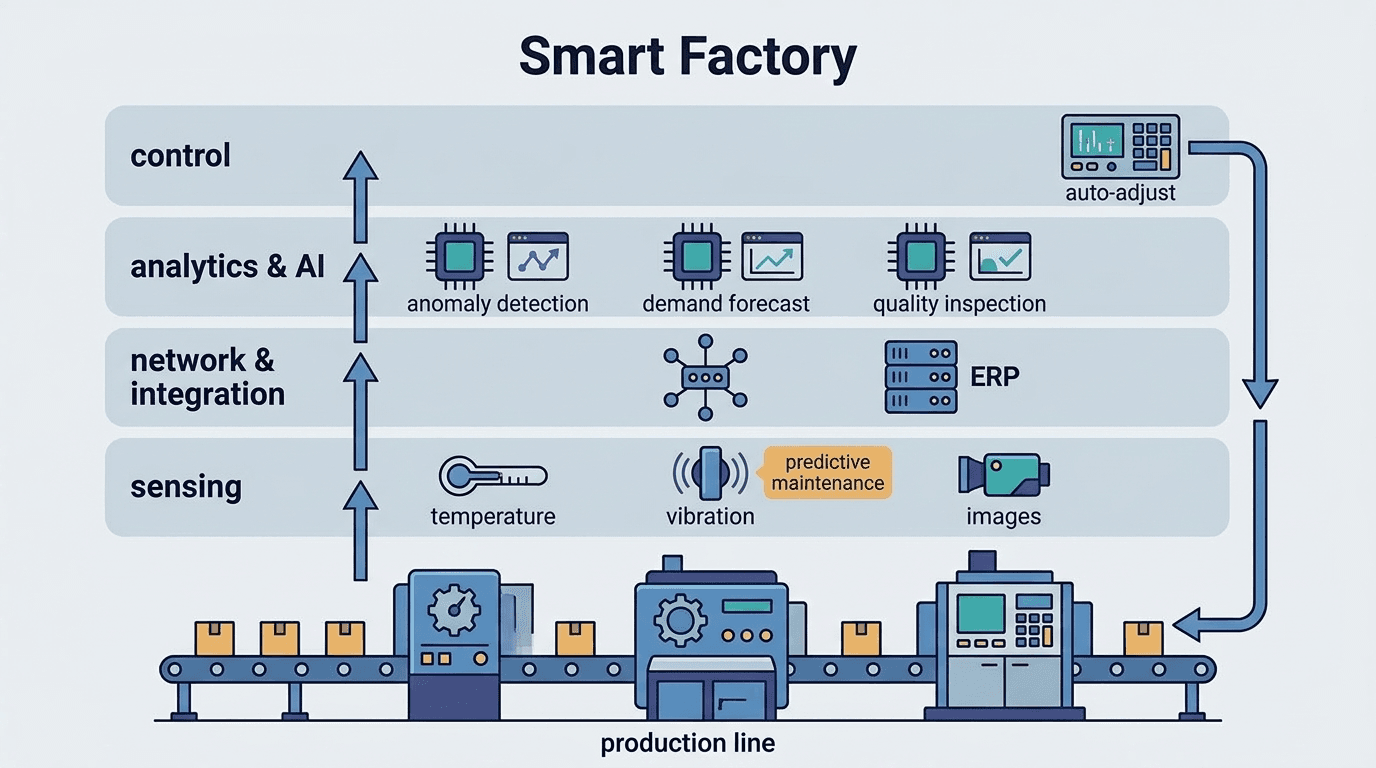
Smart Factory
A smart factory is a next-generation factory that digitally integrates manufacturing equipment and p
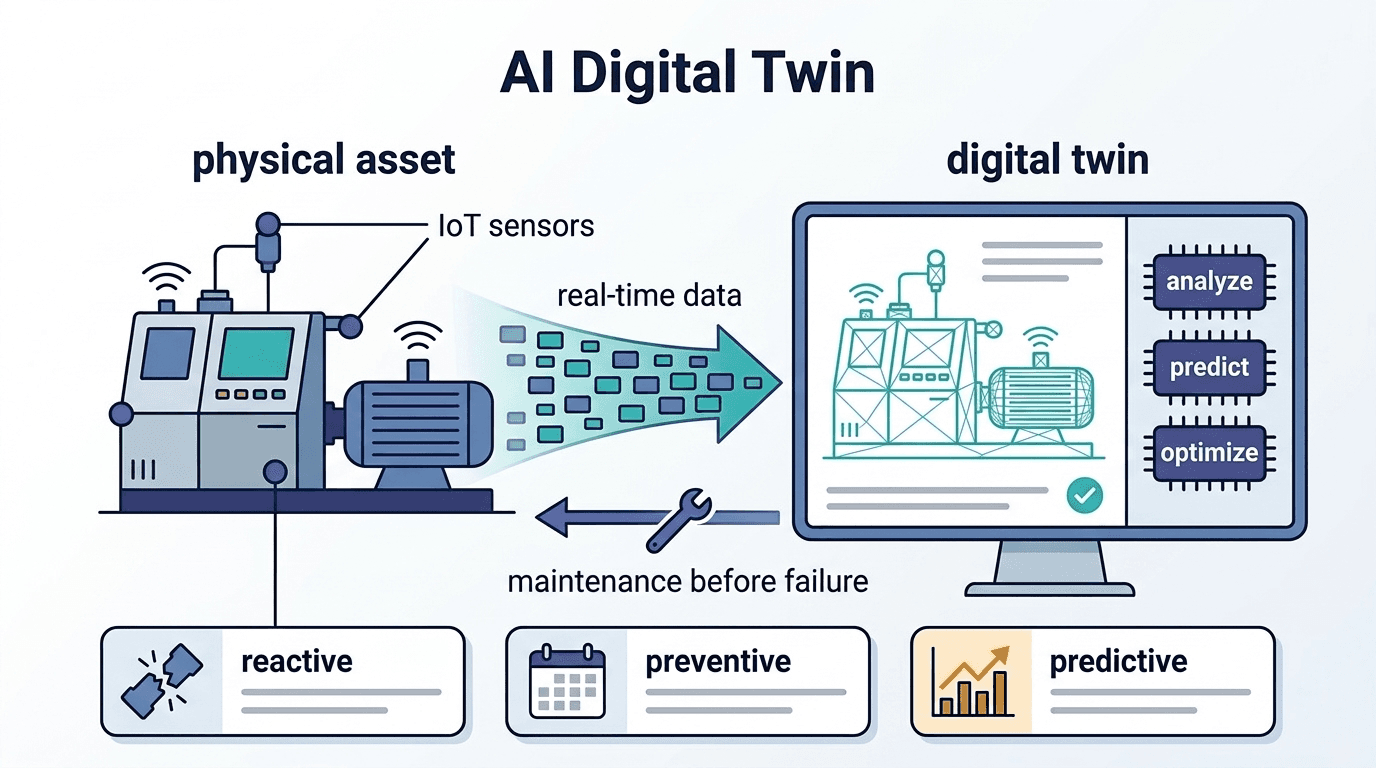
AI Digital Twin
A system that integrates AI into digital replicas of physical assets or processes to perform real-ti
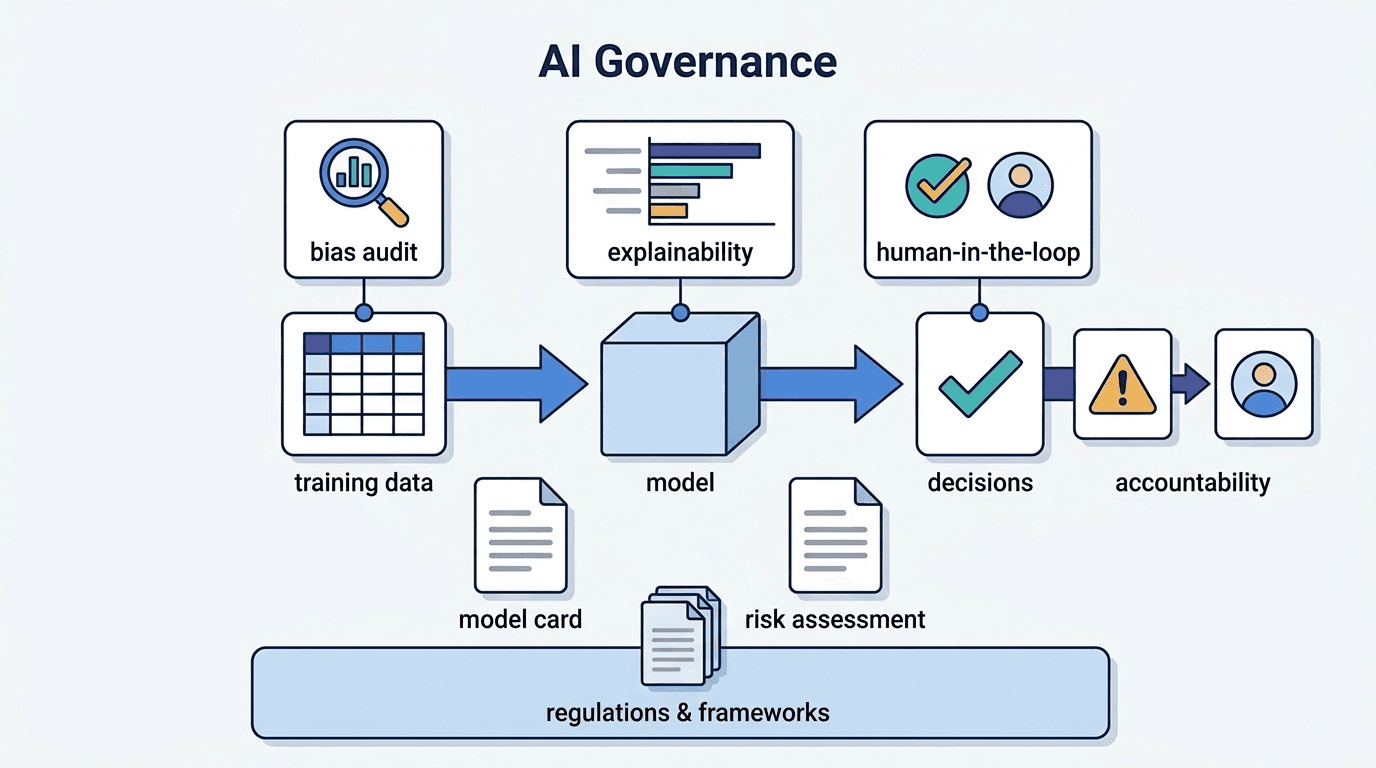
AI Governance
AI governance refers to the organizational policies, processes, and oversight mechanisms that ensure