Multimodal AI (Multimodal AI)
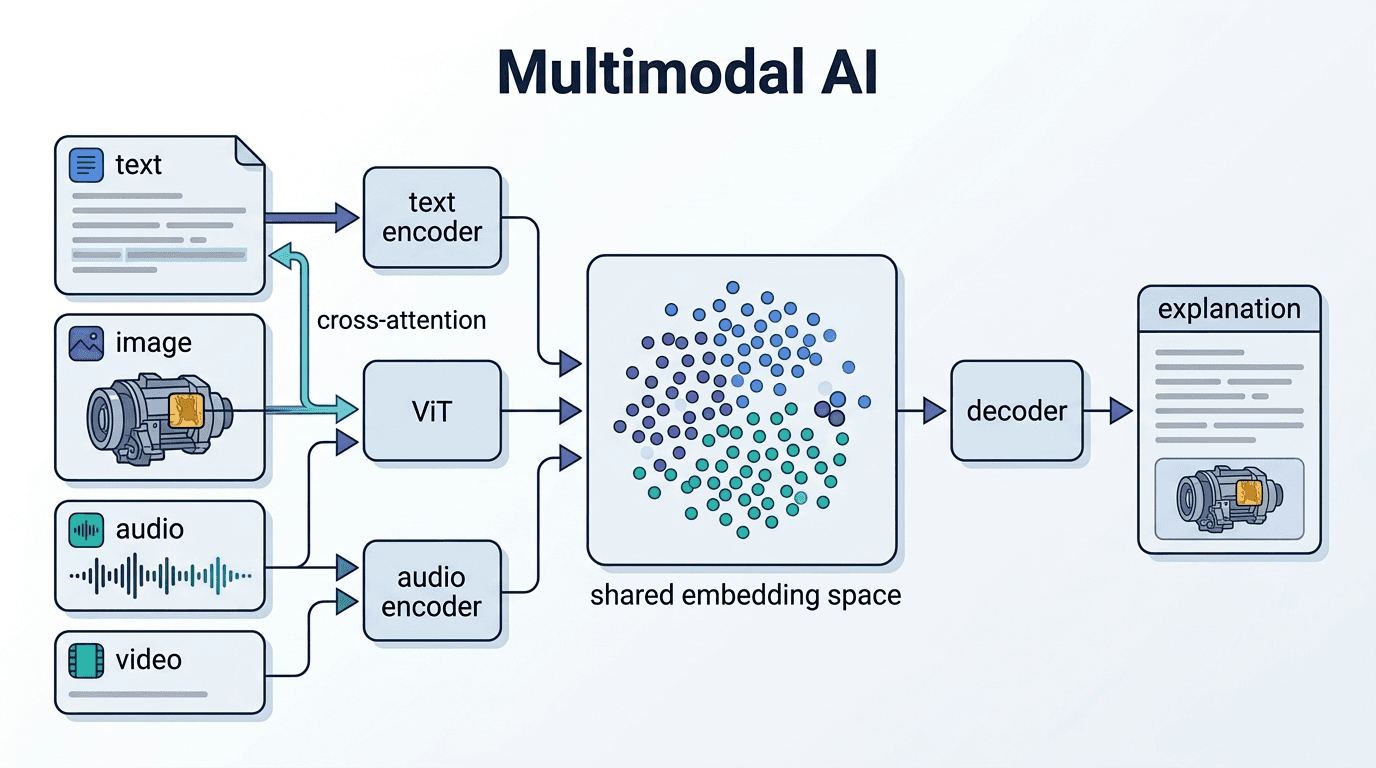
Multimodal AI refers to an AI system capable of integrating, processing, understanding, and generating multiple different data formats, such as text, images, audio, and video.
Multimodal AI refers to an AI system capable of integrating, processing, understanding, and generating multiple different data formats such as text, images, audio, and video.
While conventional LLMs (Large Language Models) handle only text, Multimodal AI attempts to model the complex cognitive processes humans perform in daily life—"seeing, hearing, reading, and understanding." This direction has rapidly attracted attention in recent years as a foundational technology enabling AI to engage more deeply with real-world tasks.
Why Is "Multimodal" Necessary?
Real-world information does not exist in a single format. In medical diagnosis, images and clinical text coexist; on the manufacturing floor, video and sensor data coexist; in customer support, voice and written information coexist. Models capable of processing only text face fundamental limitations in capturing such complex, composite contexts.
The challenge Multimodal AI seeks to address is the integration of meaning across modalities (data formats). For example, a query such as "Please describe the defect in the part shown in this photo" simultaneously requires image understanding and text generation. This type of processing is deeply intertwined with the evolution of Generative AI, and has reached a practical level alongside the scaling of Foundation Models.
Technical Mechanisms
At the core of Multimodal AI is a mechanism that converts data from different modalities into a shared representation space (an embedding space).
- Separate and integrated encoders: Modality-optimized encoders are used for each data type—such as Vision Transformer (ViT) for images and Transformer-based text encoders for text (with preprocessing such as BPE Tokenizers (Byte-Pair Encoding Tokenizers) used for tokenization)
- Cross-attention mechanism: By cross-referencing features from different modalities, the model learns relationships such as "this region in the image corresponds to this part of the text"
- Unified decoder: Generates outputs such as text or images from the integrated representations
The concept of the Context Window has also been extended to the multimodal domain, and recent models can now directly handle images, video, and audio files as context. Major models such as Gemini, GPT, and Claude have all been advancing multimodal support, and in combination with Function Calling, increasingly complex tasks have become executable.
Key Use Cases
The application domains of Multimodal AI are broad and span across industries.
- Healthcare: Analysis of X-ray and MRI images and automatic generation of diagnostic support text
- Manufacturing and quality control: Anomaly detection from camera footage and application to predictive maintenance
- Retail and e-commerce: Automatic generation of product descriptions from product images, visual search (searching for products using images)
- Content creation: Generation of Synthetic Data combining audio, video, and text
- Smart factories: Anomaly diagnosis integrating sensor data, video, and text logs
Integration with Edge AI is also advancing, and cases of real-time multimodal inference running on devices equipped with cameras and microphones are increasing.
Considerations for Deployment and Operation
When deploying Multimodal AI in practice, several challenges must be recognized. First, the quality and volume of training data vary significantly across modalities. While text data exists in abundance, high-quality annotated image and audio data is costly to collect.
Additionally, the risk of Hallucination remains present in multimodal systems. Cases have been reported where models generate text that misinterprets image content, or report "seeing" visual features that do not exist. Leveraging Grounding techniques and designing human verification processes through HITL (Human-in-the-Loop) are key to ensuring reliability.
Furthermore, misuse risks including Deepfakes cannot be ignored. As multimodal generation capabilities improve, the creation of disinformation becomes easier, making countermeasures from an AI governance perspective essential.
Multimodal AI is a technology that plays a central role in the evolution of AI from "a tool that processes text" to "a system that understands the real world," and its potential will continue to expand through integration with Agentic AI and AI agents.
Articles covering this term
- What is AI-Native UI? The Design Philosophy of Generative AI Dynamically Creating ScreensExplore AI-native UI: where forms and menus are replaced by AI-generated interfaces. Learn core concepts, design patterns, and real-world business applications.
- How Thailand's Food & Restaurant Industry Can Start Using AI for Demand Forecasting, Shift Optimization, and Food Waste ReductionDiscover how Thai restaurant owners can use AI to forecast customer demand, optimize staff scheduling, reduce food waste, and streamline orders. Real-world steps & case studies.
- What is C2PA? The Digital Authentication System That Verifies the Authenticity of AI-Generated ContentExplore how C2PA (Content Credentials) verifies content provenance and detects tampering in the deepfake era, including implementation and EU AI Act compliance.
- What is Edge AI? How On-Device LLMs Work and How to Choose One for BusinessLearn the basics of edge AI & on-device LLMs, and how to design workflows requiring low latency, data privacy, or unstable connectivity—where cloud LLMs fall short.


Related Terms
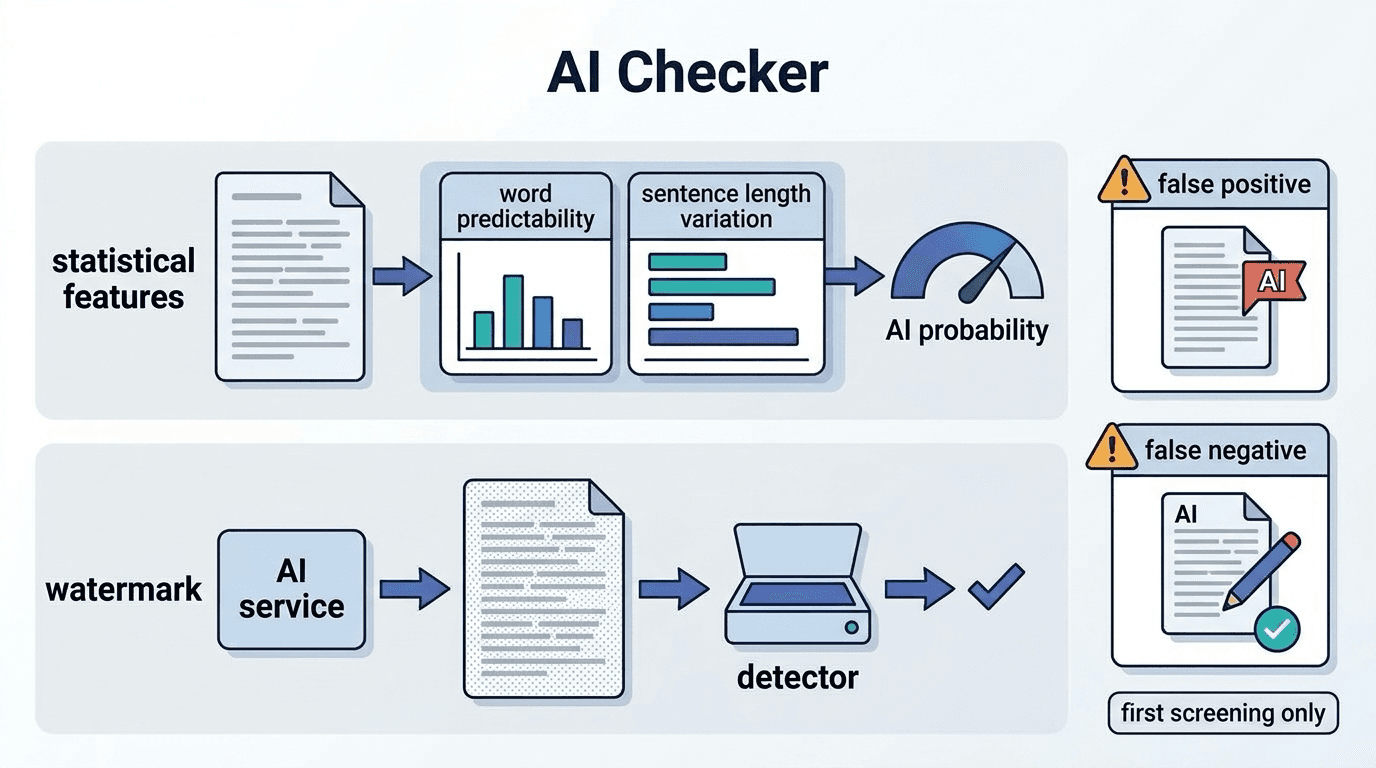
AI Checker (AI-generated text detector)
An AI checker is a tool that estimates whether a piece of writing was generated by AI, mainly from s
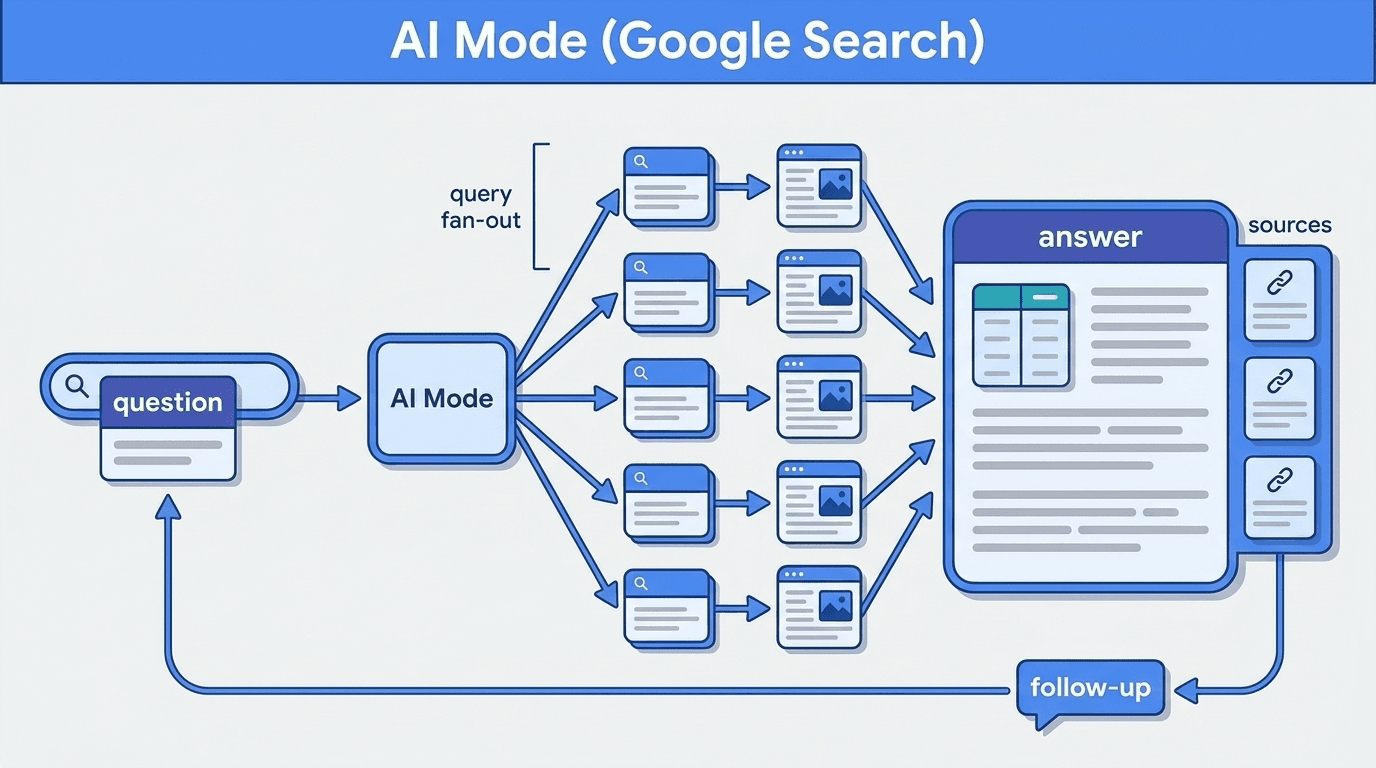
AI Mode (Google AI Mode)
AI Mode is a generative AI search mode built into Google Search that answers questions conversationa

Context Window
A context window refers to the maximum number of tokens an LLM can process at one time, indicating t
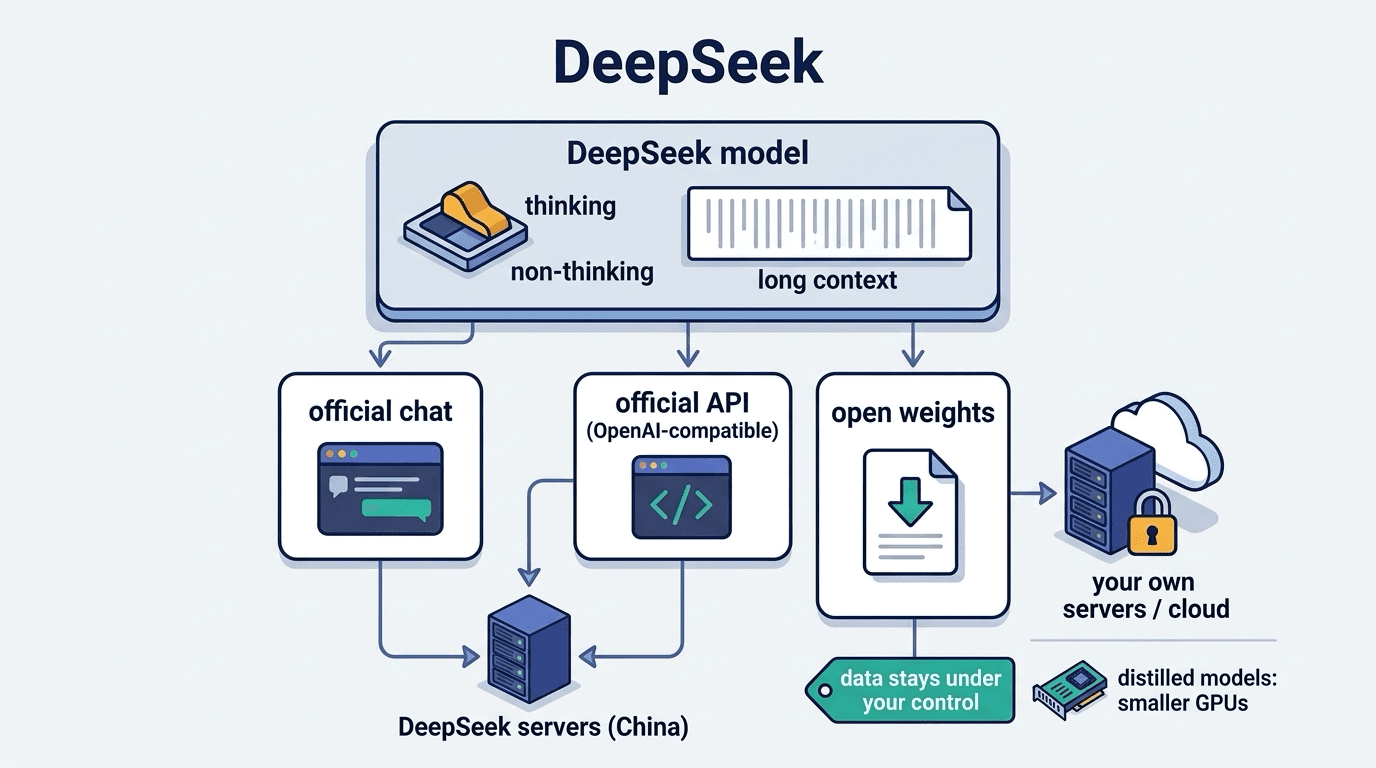
DeepSeek
DeepSeek is a family of large language models and a chat service developed by the Chinese company De