GPU (Graphics Processing Unit)
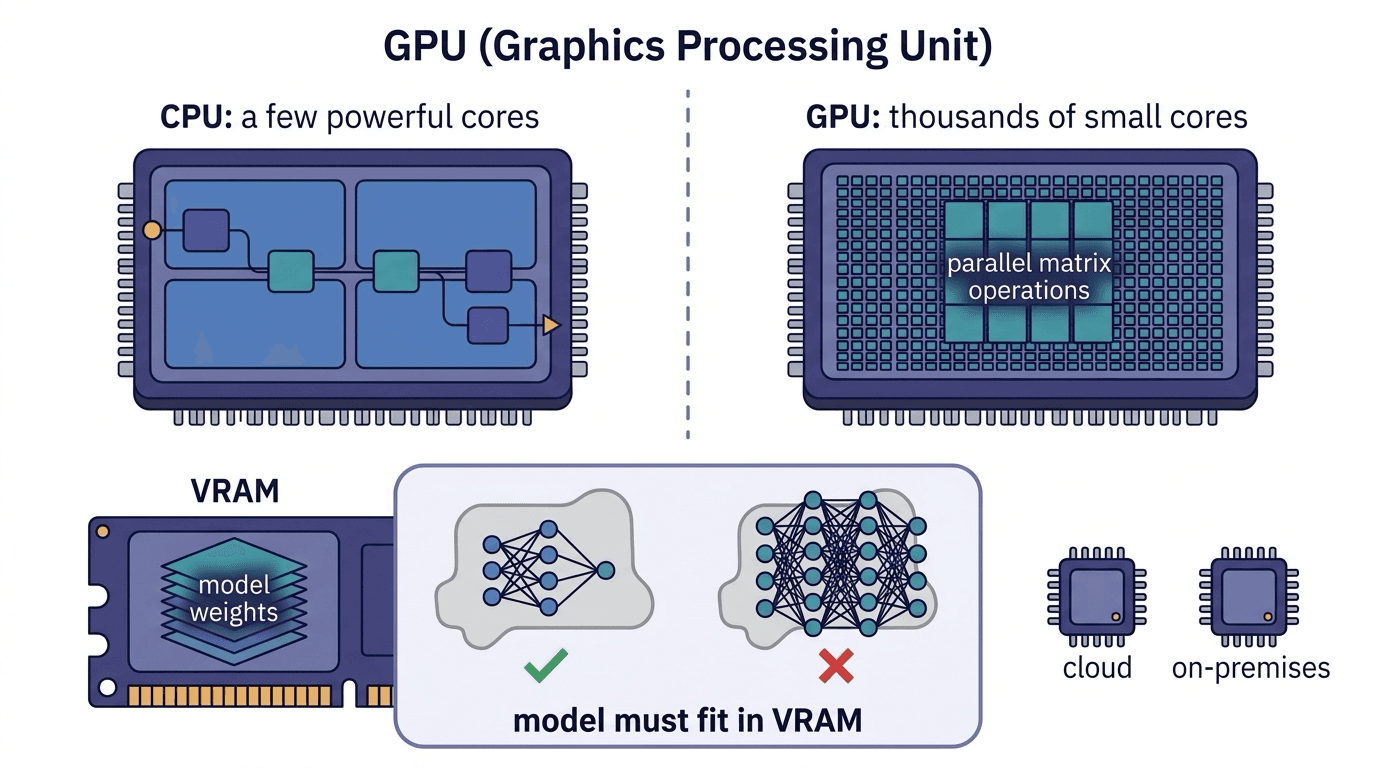
A GPU (Graphics Processing Unit) is a semiconductor chip that processes large volumes of parallel computations at high speed. Originally designed for rendering graphics, its parallel computing capabilities are well-suited for AI training and inference, making it an indispensable hardware component for LLM training and fine-tuning.
Why GPU Instead of CPU
CPUs are optimized for complex sequential processing and typically have only a few dozen cores. GPUs, on the other hand, can execute simple operations simultaneously across thousands to tens of thousands of cores. Neural network training is fundamentally a repetition of matrix operations, and this processing pattern aligns well with the parallel architecture of GPUs.
For example, when training a 70B parameter Dense Model, gradient calculations for each parameter must be performed in parallel. Computations that would take months on a CPU with sequential processing can be completed in days to weeks on a GPU cluster.
The Constraint of VRAM
When discussing GPUs in the context of AI, VRAM (Video RAM) is just as important as computational performance. All model weights and activations must be loaded into VRAM, and VRAM capacity effectively determines the upper limit on model size.
A single NVIDIA A100 (80GB) can accommodate roughly 40B parameters (in FP16). Running a 70B Dense Model requires at least 2 cards, and training one requires 8 or more. The reason LoRA and QLoRA attract so much attention is that they can dramatically reduce VRAM consumption.
Cloud vs. On-Premises
GPUs are expensive, with a single NVIDIA H100 costing several million yen. For this reason, many companies use cloud GPUs (AWS, GCP, Azure) on demand. On the other hand, when running large volumes of inference continuously, on-premises setups can be more cost-efficient, making this a critical decision in the operation of local LLMs.
Articles covering this term
- Local LLM / SLM Deployment Comparison — AI Utilization Without Cloud API DependencyCompare open-weight models like GPT OSS, Phi-4, and Llama 4 Scout against cloud APIs on GPU requirements, task accuracy, and TCO. A local AI deployment guide for data sovereignty and cost optimization.
- Tensor Parallelism vs. Pipeline Parallelism vs. Layer Splitting: Comparing 3 Methods for Running LLMs on Multi-GPU SystemsCompare 3 ways to run LLMs on multi-GPU: tensor parallel (TP), pipeline parallel (PP), and layer splitting—communication, PCIe vs NVLink fit, speed, throughput, and vLLM vs Ollama choices.
- What is SLM Distillation? How to Create Small Specialized Models from Large LLMsLearn how SLM distillation uses large LLMs as teachers to build cost-effective, task-specific private models—covering the mechanism and implementation steps.
- PEFT Explained: LoRA, QLoRA and Adapters for Low-Cost TuningPEFT explained for decision-makers: how LoRA, QLoRA and adapters cut AI model customization costs, common mistakes, industry use cases and investment insights.


Related Terms
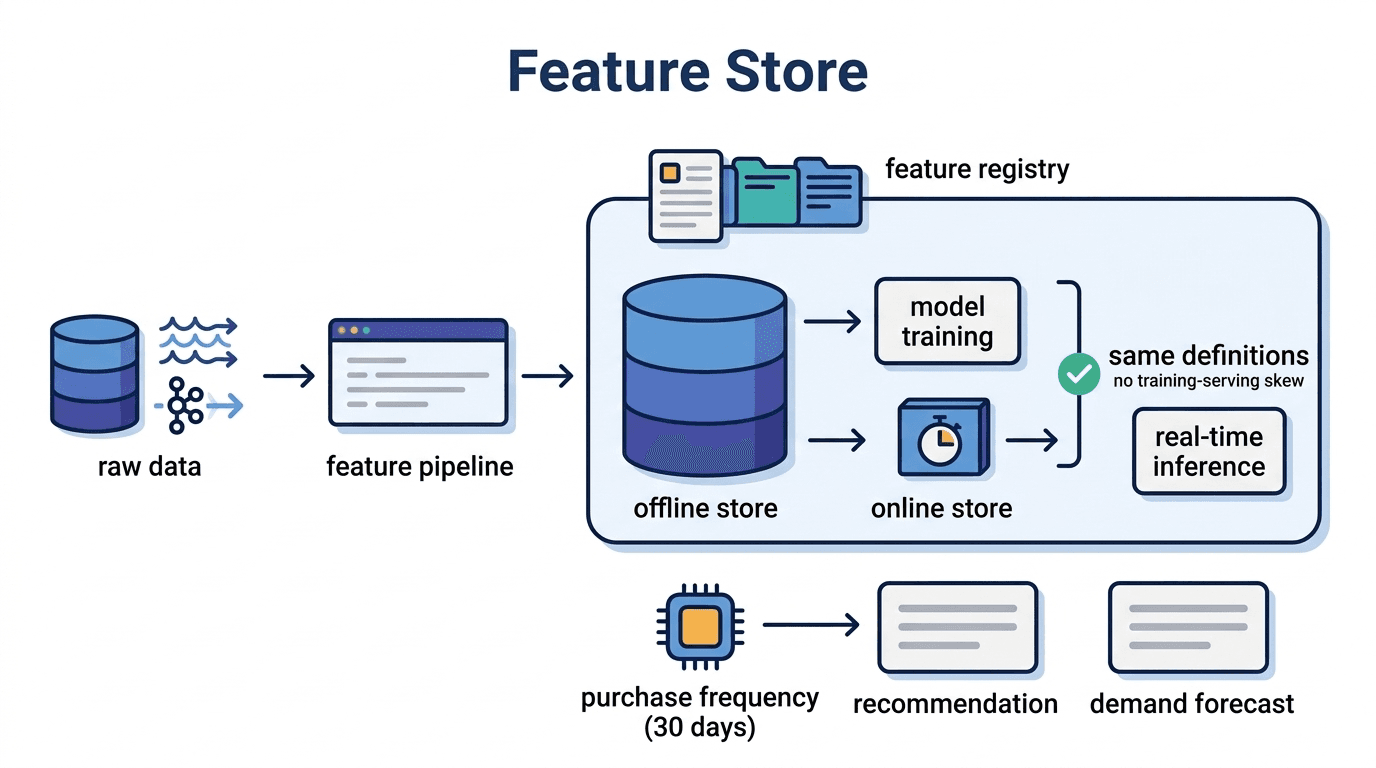
Feature Store
A feature store is a data infrastructure for centrally managing and reusing features used in machine
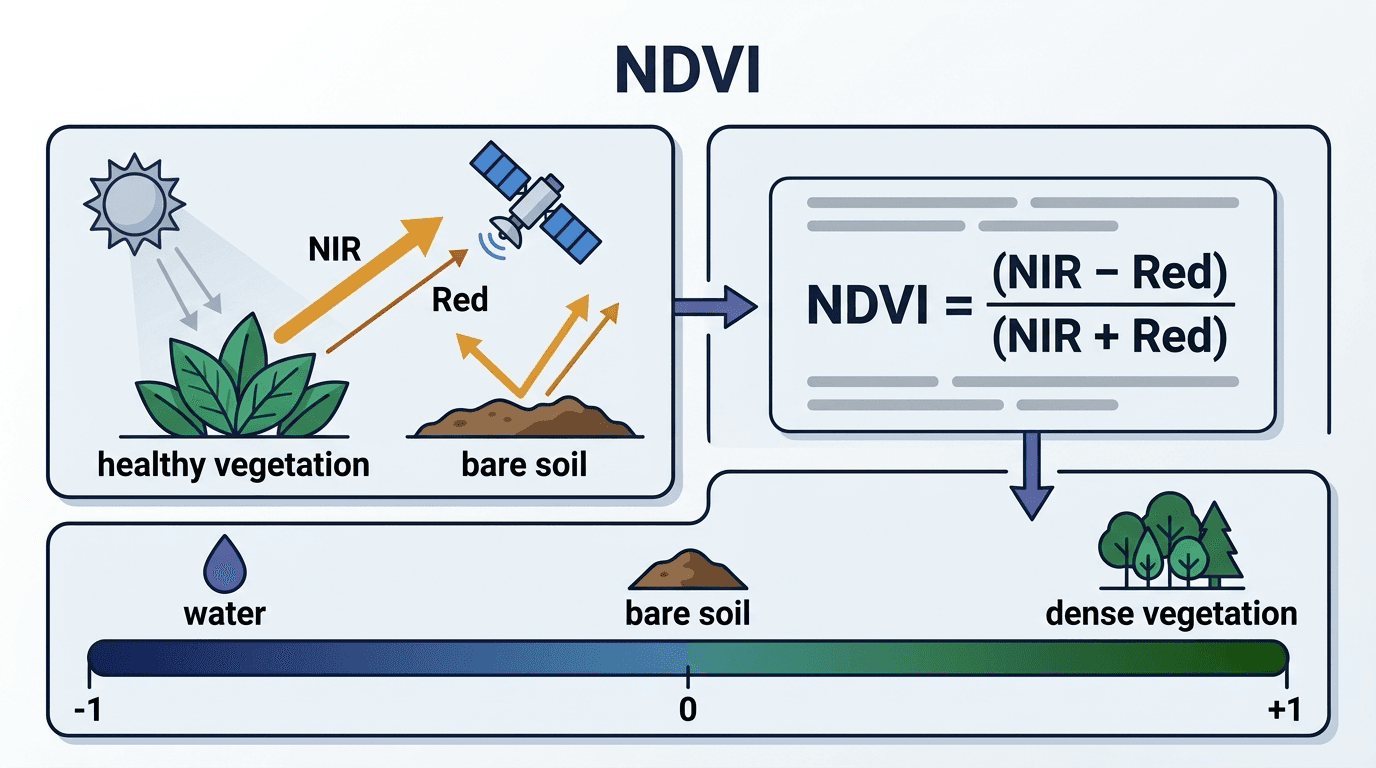
NDVI
NDVI (Normalized Difference Vegetation Index) is an index derived by normalizing the reflectance dif
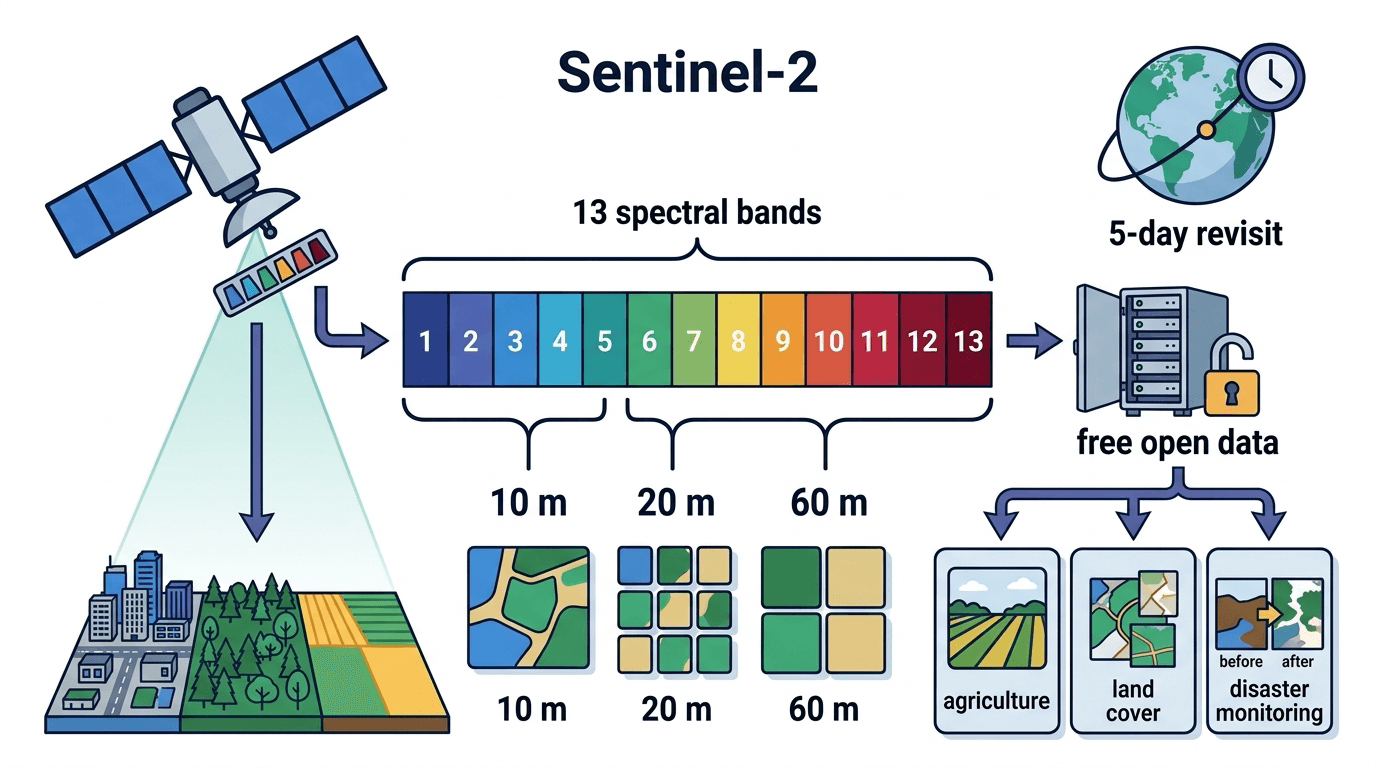
Sentinel-2
Sentinel-2 is an Earth observation satellite of the Copernicus program led by ESA (European Space Ag

Firecracker
Firecracker is an open-source virtual machine monitor (VMM) developed by AWS that boots lightweight