Remote Sensing

Remote Sensing is a general term for technologies that measure the reflection and emission of electromagnetic waves from satellites, aircraft, drones, and other sensor-equipped platforms without direct contact with the target, in order to acquire and analyze the conditions of the Earth's surface and atmosphere.
The word "remote sensing" means "distant measurement." It is a broad term referring to the technology used to understand the conditions of the Earth's surface, atmosphere, and oceans by recording the reflection and emission of electromagnetic waves (light, radio waves, and heat) without making direct contact with the target.
Active and Passive Types
Sensors can be broadly classified into two types based on their operating principles.
Active sensing is a method in which the sensor itself emits radio waves or light and receives the reflected signals. SAR (Synthetic Aperture Radar) and LiDAR fall into this category, and they have the advantage of being able to observe through nighttime conditions and clouds.
Passive sensing is a method that records light reflected off the Earth's surface from an external energy source such as sunlight, with optical cameras and multispectral sensors being representative examples. Sentinel-2 is classified as this passive type. While it has the drawback of being unable to see the ground surface when clouds are present, it enables intuitive visualization close to color imagery and allows for easy calculation of vegetation indices such as NDVI.
Expanding Applications
The range of applications is broad, spanning vegetation monitoring in agriculture and forestry, detection of urban expansion and land cover change, assessment of damage from river flooding and wildfires, and infrastructure inspection (detection of subsidence in roads and power lines). When combined with GIS (Geographic Information Systems), it becomes possible to perform overlay analysis with administrative boundaries and cadastral information, directly supporting decision-making in the field. Now that satellite data is available free of charge and in an open format, the environment for getting started without specialized equipment is fully in place.
Related Terms
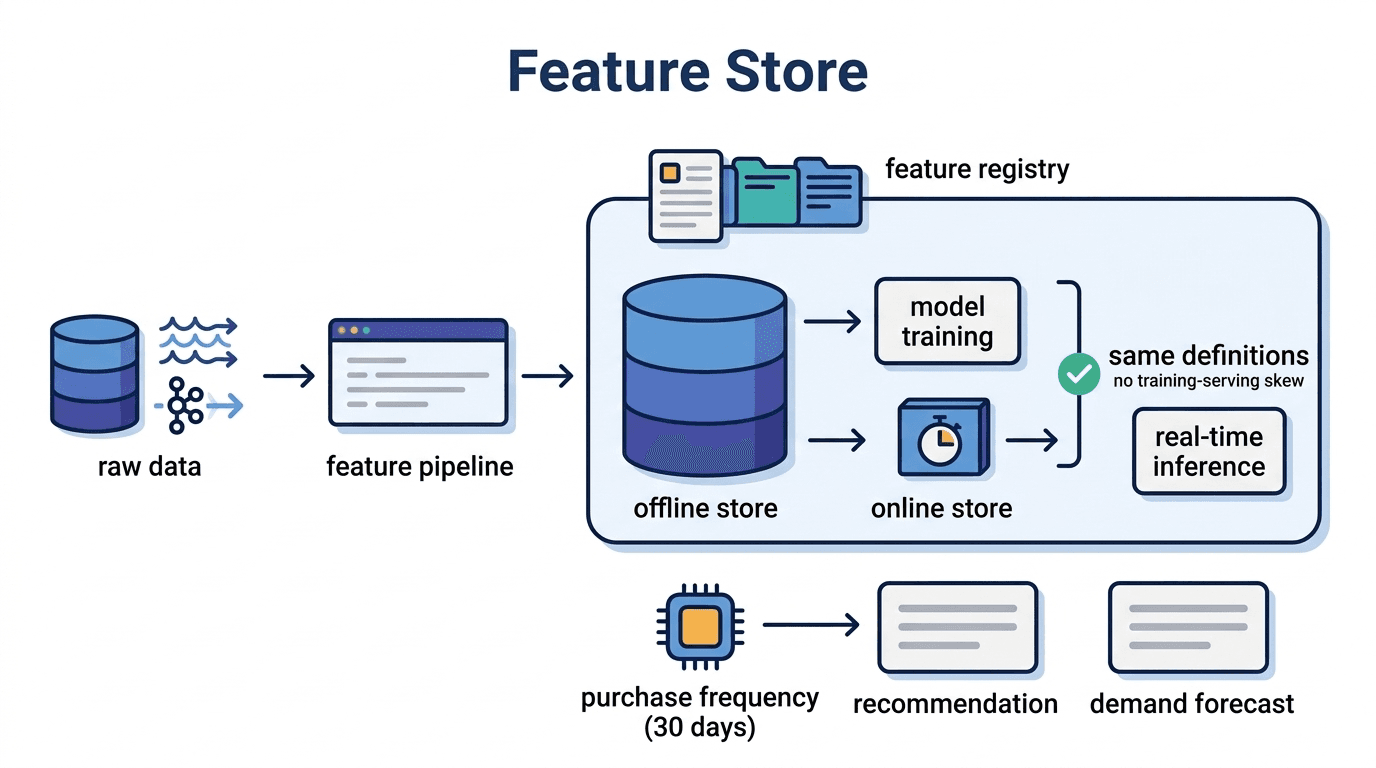
Feature Store
A feature store is a data infrastructure for centrally managing and reusing features used in machine
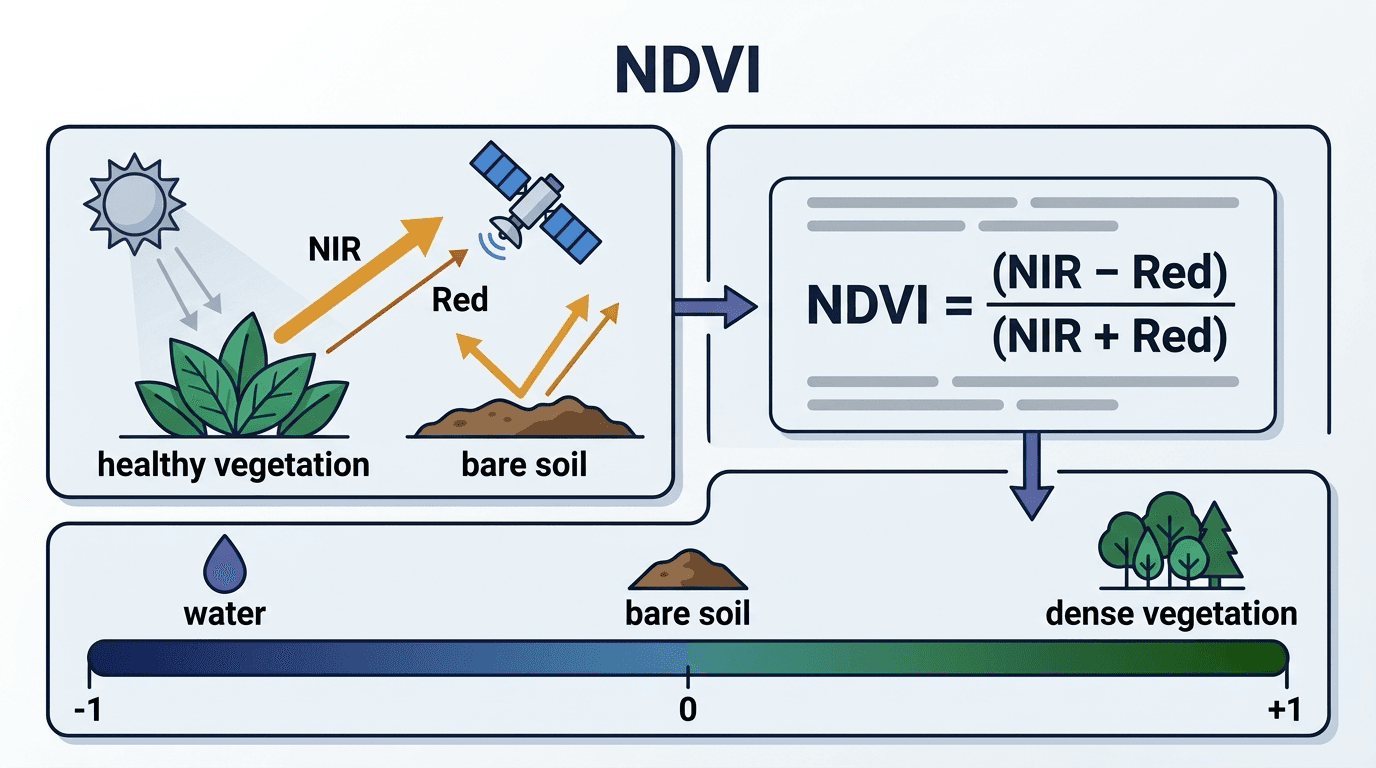
NDVI
NDVI (Normalized Difference Vegetation Index) is an index derived by normalizing the reflectance dif
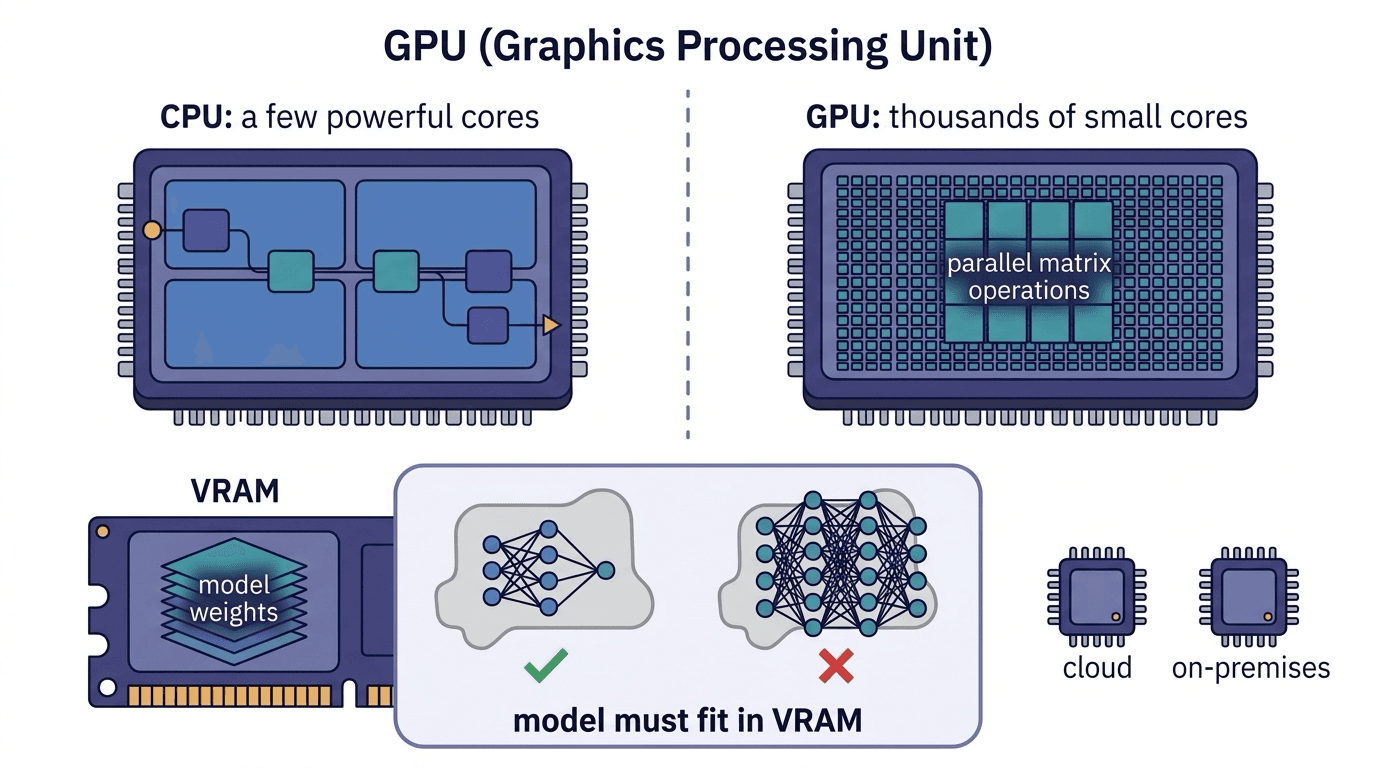
GPU (Graphics Processing Unit)
A GPU (Graphics Processing Unit) is a semiconductor chip that processes large volumes of parallel co
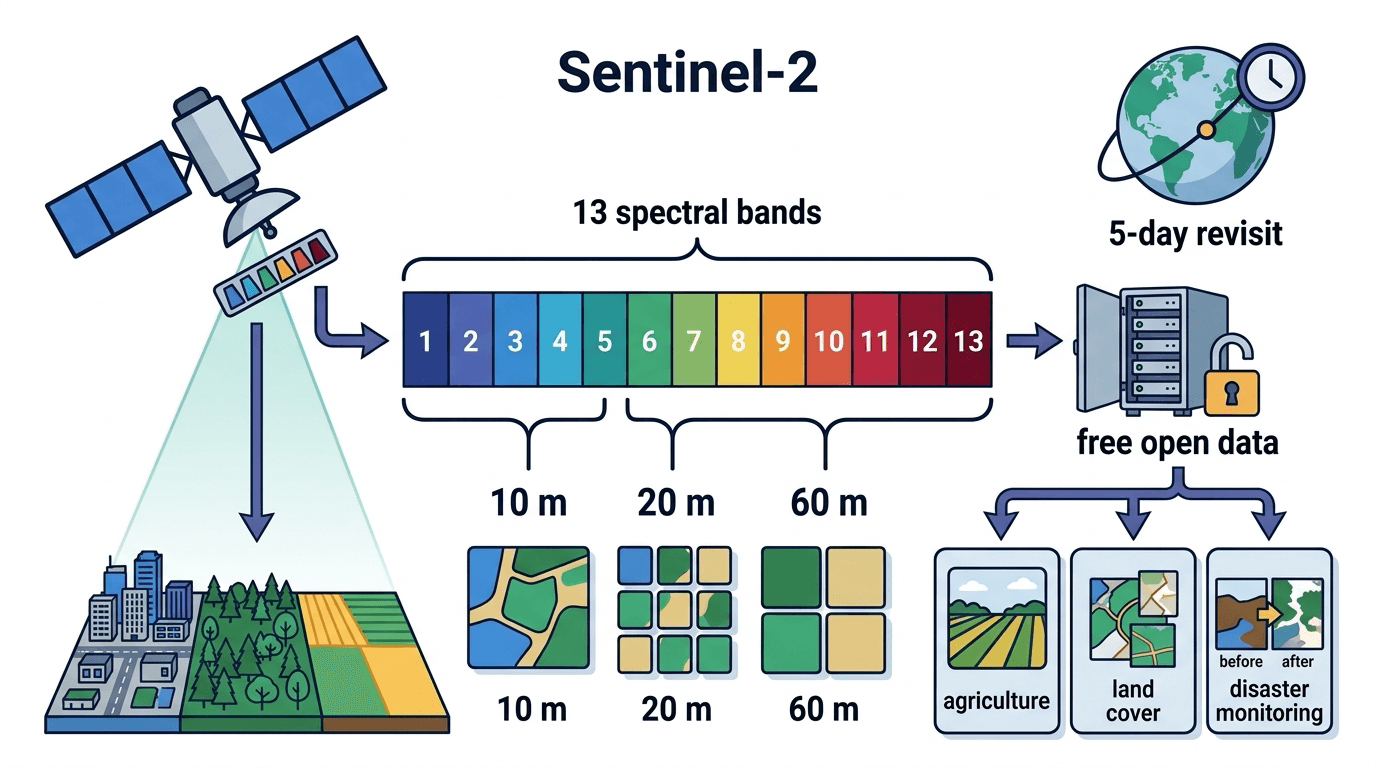
Sentinel-2
Sentinel-2 is an Earth observation satellite of the Copernicus program led by ESA (European Space Ag