PMF (Product-Market Fit)
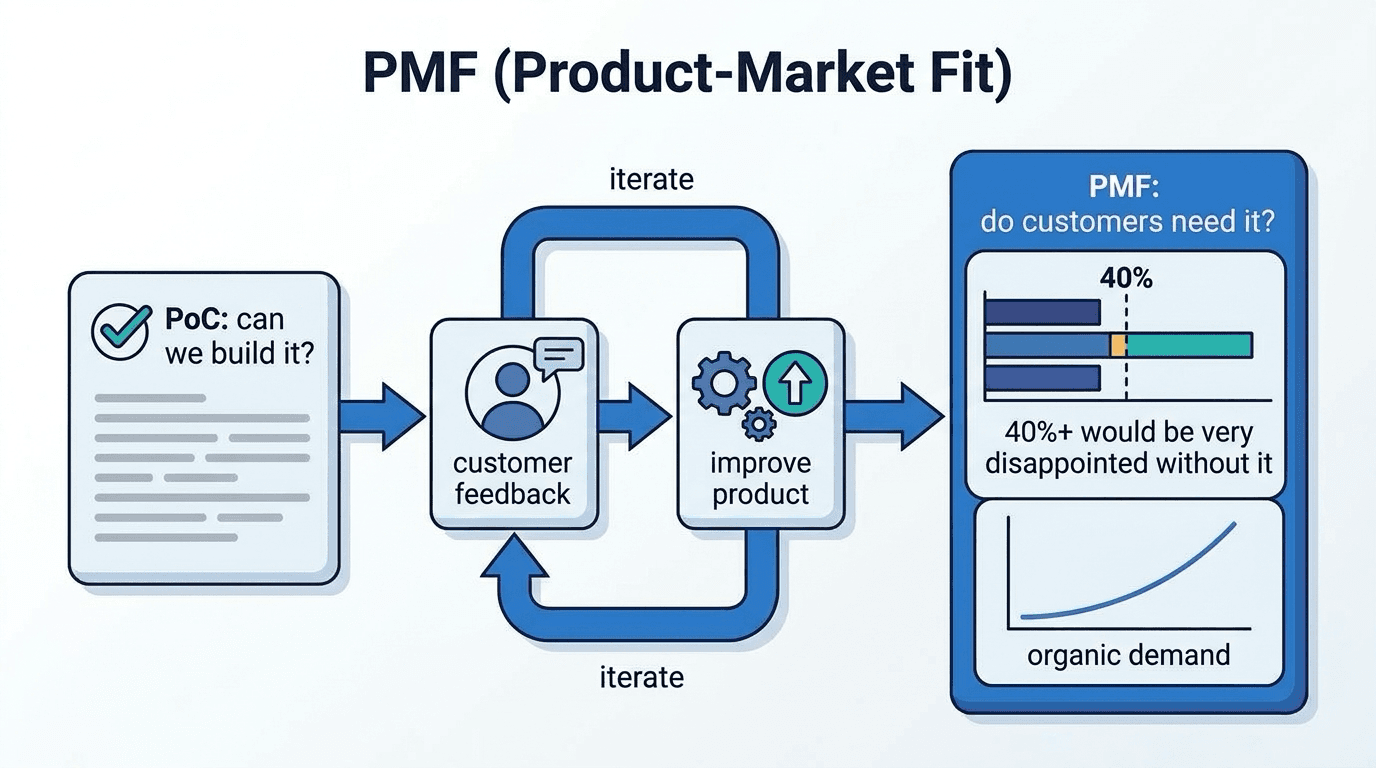
PMF (Product-Market Fit) refers to a state in which a product accurately solves customer problems in a specific market, and sustainable demand is occurring organically.
PoC Proved We "Can Build It." What Comes Next?
Even when a PoC (Proof of Concept) confirms technical feasibility, that doesn't mean a viable business follows. There is a deep gap between "can build" and "can sell." PMF refers to the state where that gap has been crossed — where customers actively seek out the product, continue using it, and recommend it to others.
Marc Andreessen described this feeling as "customers pulling the product out of your hands." Support requests pile up faster than you can handle them; inquiries come in without any sales effort. When signs like these start to appear, it's evidence that you're approaching PMF.
How to Measure Achievement
The Sean Ellis Test is widely used as a quantitative metric. If more than 40% of users answer "very disappointed" to the question "How would you feel if you could no longer use this product tomorrow?", it is considered a benchmark for having achieved PMF.
In B2B SaaS, this can also be verified from other angles:
- Monthly churn rate is stable at 3% or below
- NPS (Net Promoter Score) is 40 or higher
- Organic traffic is growing at a pace of 10% or more per month
However, judging by numbers alone is premature — the benchmarks vary significantly depending on the industry and the nature of the product.
The Path Is Never a Straight Line
There is a textbook progression of PoC → Prototype → MVP → PMF, but in reality, this cycle repeats many times over. Finding that your initially assumed target customer was actually wrong, or that the priority of the problem to be solved was off — these are more the norm than the exception. Y Combinator's Paul Graham has stated flatly that "the only thing a pre-PMF startup should be doing is talking to users." Trial and error, including pivots, is the very essence of the PMF search.
Articles covering this term

Related Terms
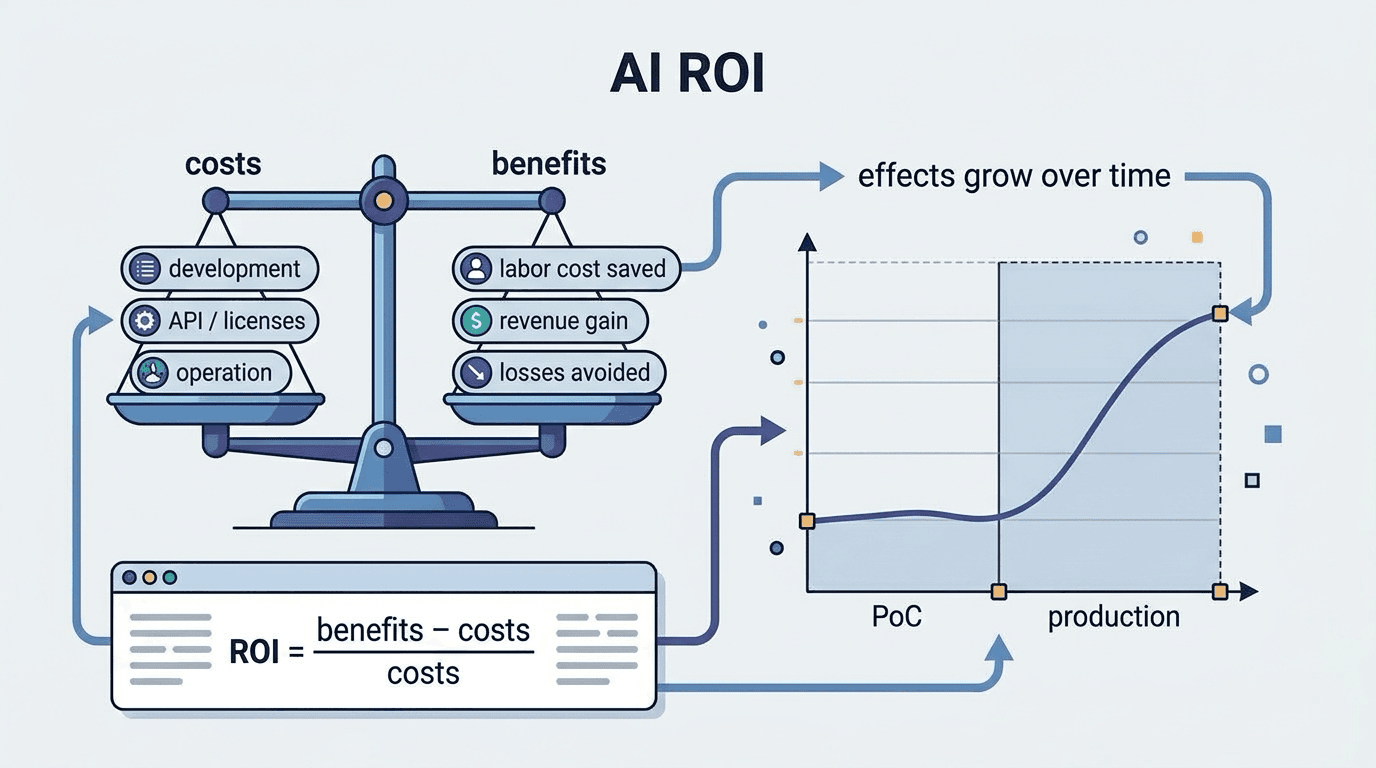
AI ROI (Return on Investment in AI)
AI ROI is a metric that quantitatively measures the effects obtained — such as operational efficienc

AI Observability
An operational practice of continuously monitoring and visualizing the inputs/outputs, latency, cost
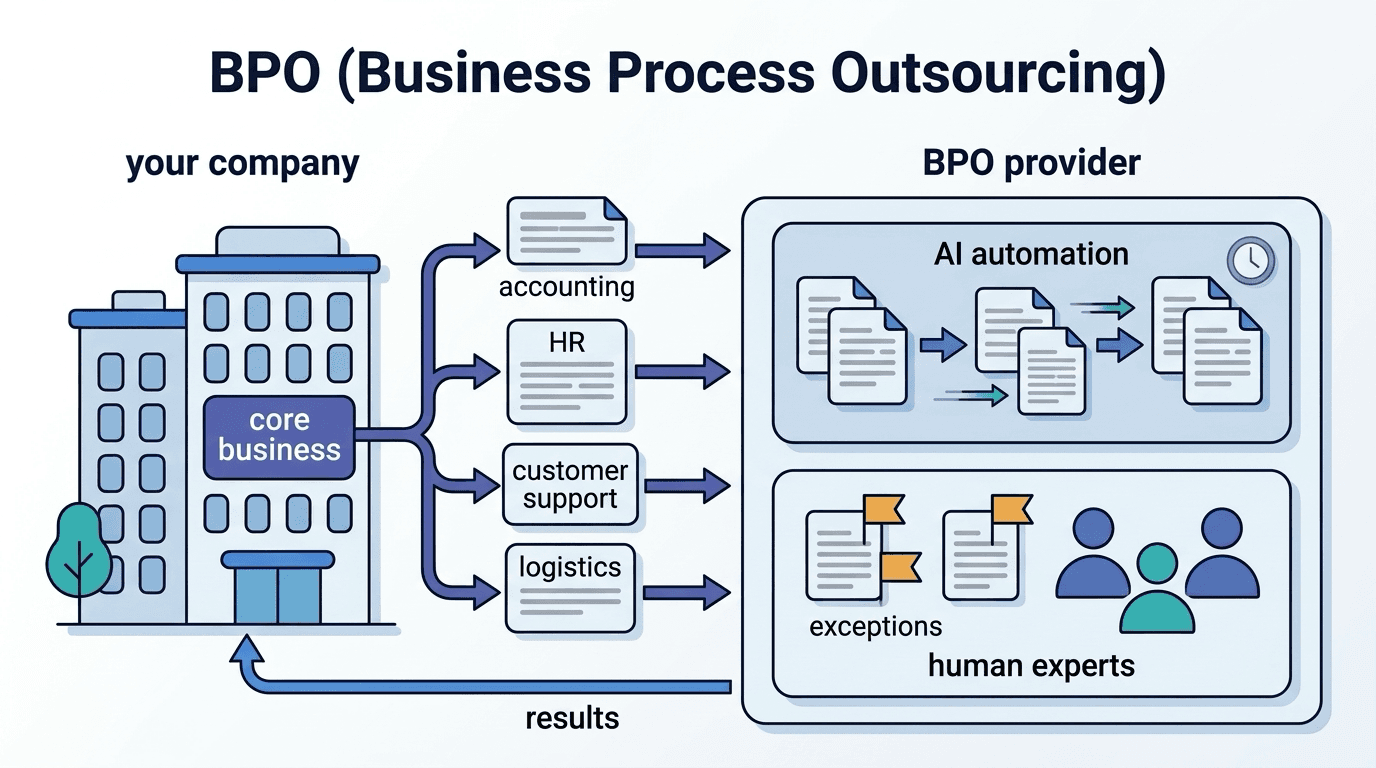
BPO (Business Process Outsourcing)
BPO refers to a form of outsourcing in which a company delegates specific business processes to an e

Demand Forecasting AI
Demand forecasting AI refers to a system that analyzes historical sales data and external factors us