NotebookLM (now Gemini Notebook)
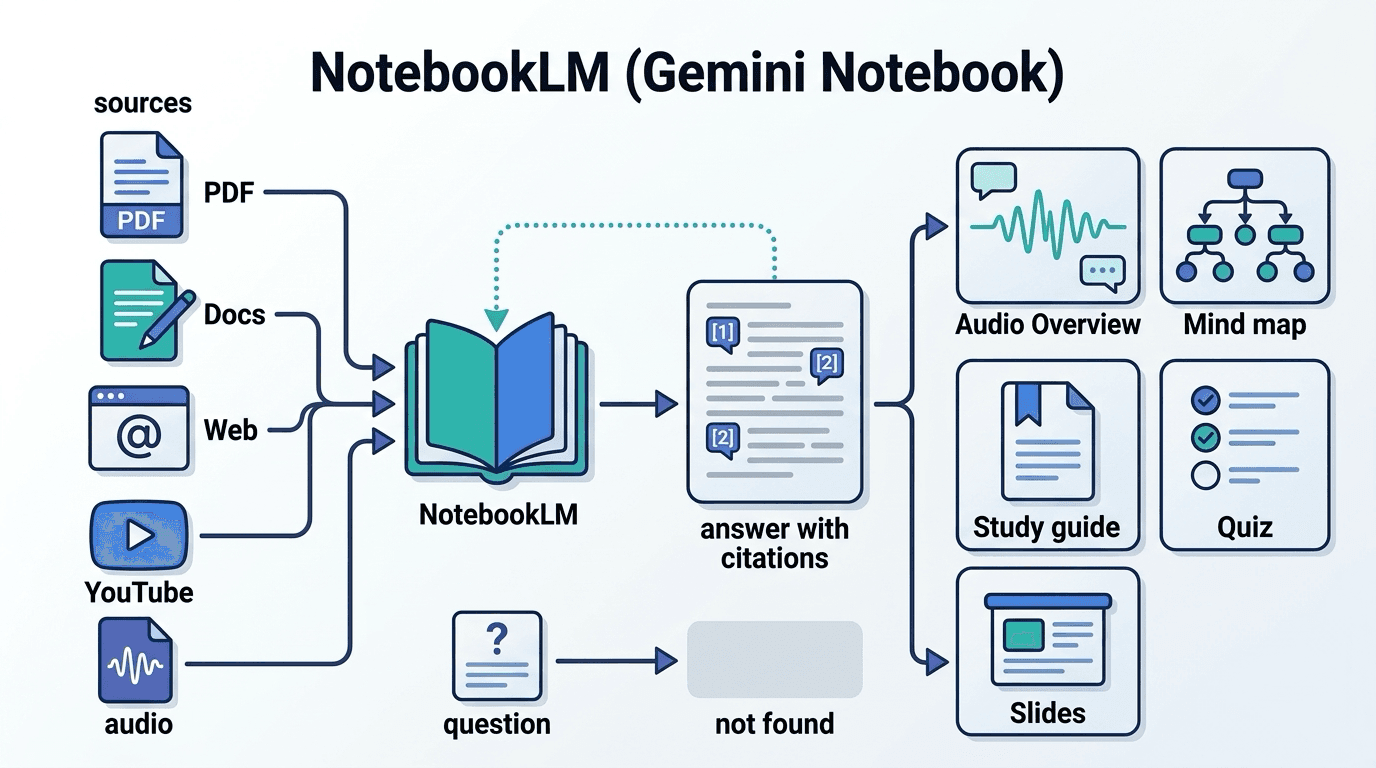
NotebookLM is Google's notebook-style AI that summarizes, answers questions and creates audio explanations grounded only in the documents you add. It has since been renamed Gemini Notebook.
NotebookLM is Google's notebook-style AI: you add your own documents, and it summarizes them, answers questions and creates audio explanations based only on those sources. Google has renamed NotebookLM to "Gemini Notebook." It is the same product with a new name and some new integrations; this page uses the old name because many people still search for it.
How it differs from a general chat AI
A general chat AI answers from what it learned in training. NotebookLM answers only from what is in the sources you added and shows numbered citations pointing to the original passages. Ask about something that is not in the sources and it says it cannot find it, which makes hallucination much less likely. This is grounding in practice, and it also means the quality of the answers depends on the quality of the sources.
Sources and outputs
Sources can be PDFs, Google Docs and Slides, web pages, YouTube videos, audio files and pasted text. From them you can create:
- Summaries and Q&A with citations
- Audio Overviews, in which two voices discuss the material, and slide-style Video Overviews
- Mind maps, study guides, FAQs, quizzes, slide decks, infographics and data tables
Alongside the rename, Google announced code execution inside notebooks for data analysis and syncing notebooks with the Gemini app.
Pricing
The core features are free. Paid tiers come with Google's paid AI plans (such as Google AI Pro) and Google Workspace plans, raising limits on sources per notebook, daily questions and how many audio or video overviews you can generate. Limits and plan names change, so check the official site.
Cautions for business use
Data-handling terms differ between personal and Workspace accounts. Use confidential documents only through your organization's account, within what your administrator has enabled. Each notebook has a source limit and access control is coarse, so for company-wide document search, building an internal RAG system is the better fit. Summaries still involve the AI's interpretation even with citations, so check contracts and figures against the original.
It pays off quickly for preparing before training sessions or meetings. Our article on using AI for corporate training and knowledge transfer shows how. We build company-wide document search and internal AI through our AI & DX services.
Articles covering this term
- What is Edge AI? How On-Device LLMs Work and How to Choose One for BusinessLearn the basics of edge AI & on-device LLMs, and how to design workflows requiring low latency, data privacy, or unstable connectivity—where cloud LLMs fall short.
- What is AI Grounding? An Implementation Guide to Fact Verification and Improving LLM Answer Accuracy with Web SearchAI grounding anchors LLM responses to authoritative sources. Learn how RAG and web search reduce hallucinations, plus implementation steps for enterprise deployment.
- How to Streamline In-House Training and Knowledge Transfer with AIDiscover how to use AI for employee training, onboarding & knowledge transfer. Learn steps to systemize FAQ, manuals & knowledge sharing to eliminate training silos.


Related Terms

RRF
RRF (Reciprocal Rank Fusion) is a scoring method that integrates ranking results returned by multipl
Agentic RAG
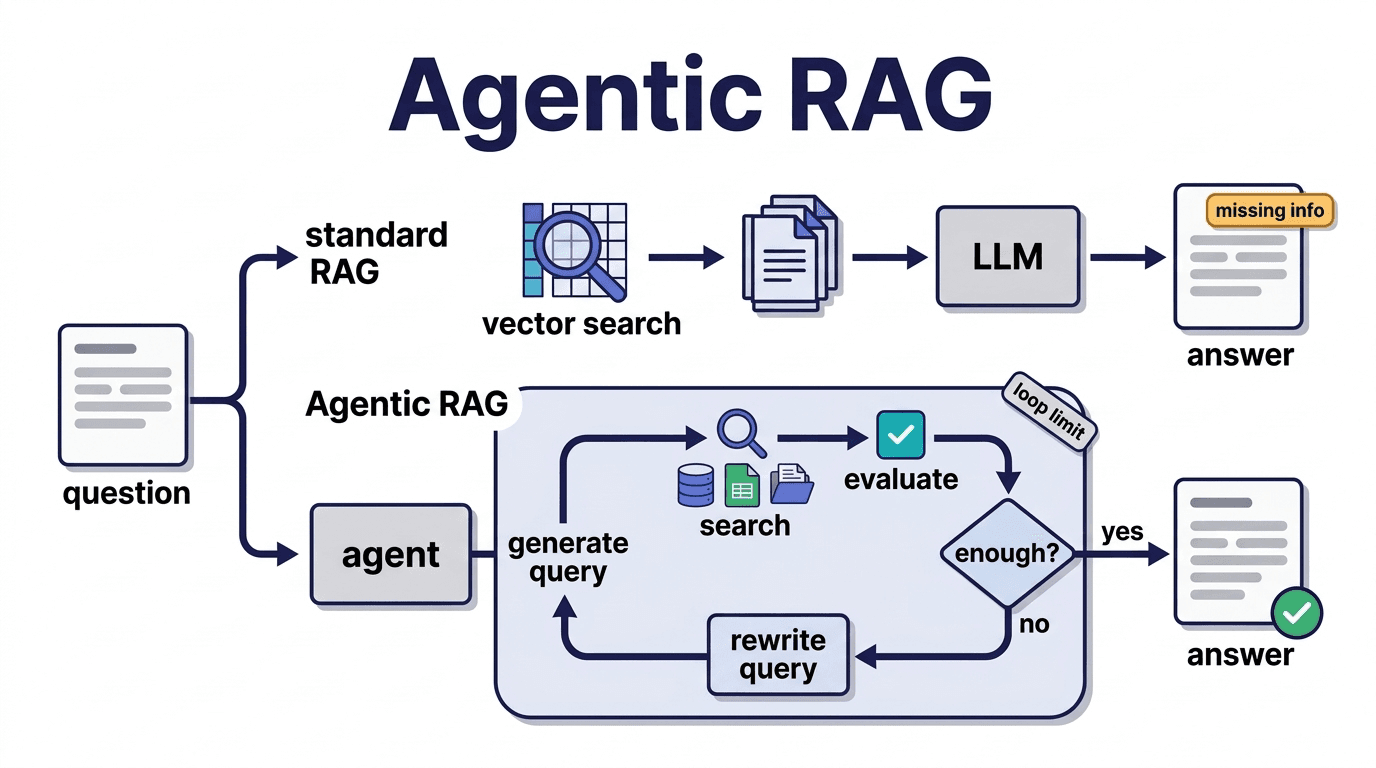
Agentic RAG is an architecture in which an LLM autonomously and iteratively generates search queries
Embedding
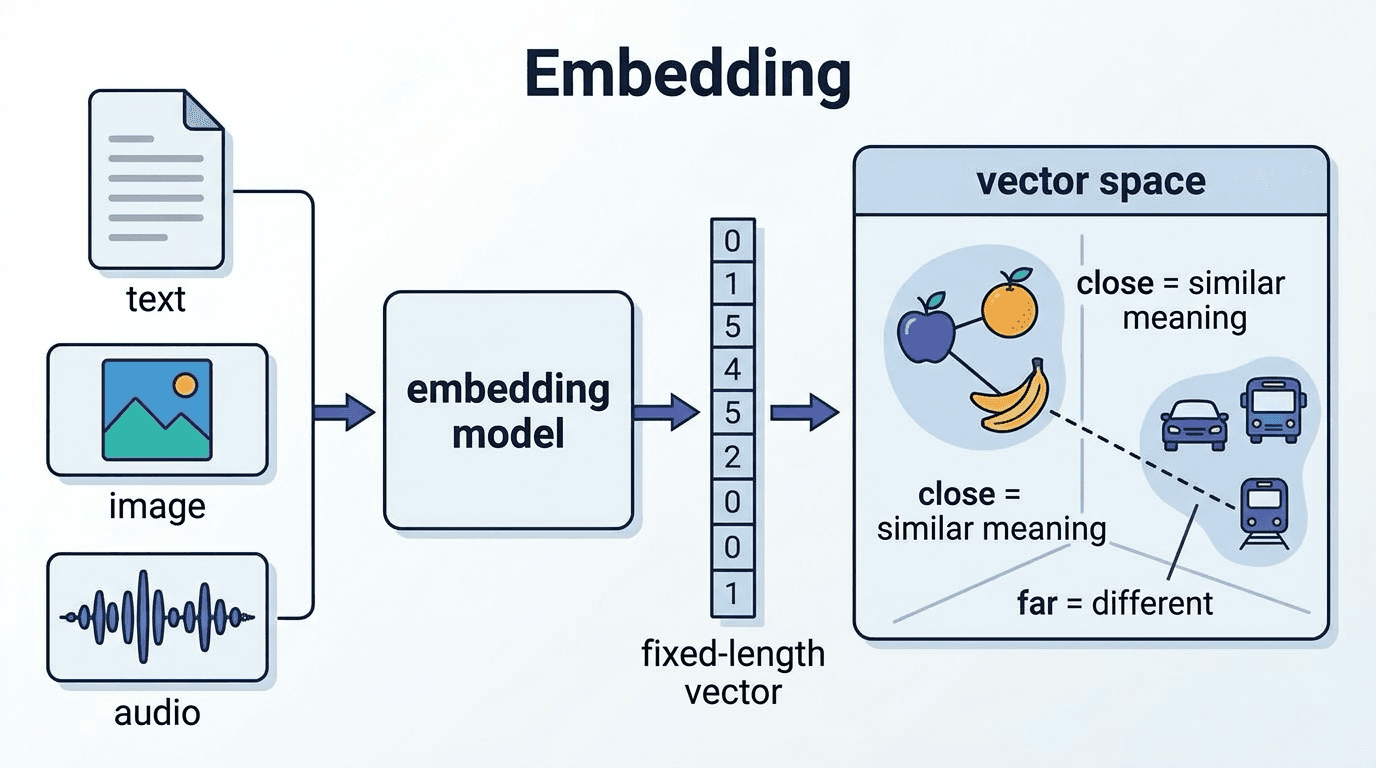
Embedding is a technique that transforms unstructured data such as text, images, and audio into fixe

GraphRAG
A next-generation RAG architecture that combines knowledge graphs and vector search, leveraging rela