How Thailand's Food & Restaurant Industry Can Start Using AI for Demand Forecasting, Shift Optimization, and Food Waste Reduction

Lead
Thai restaurant AI refers to a system that uses machine learning to analyze POS, reservation, and inventory data, automating demand forecasting, shift optimization, and ingredient ordering.
This article is intended for owners and store managers of Thai restaurants and restaurant chains considering AI adoption. It explains, in a step-by-step format, how to select and implement Demand Forecasting AI and shift optimization tools to address on-site challenges such as labor shortages, food loss, and intensifying delivery competition—and in what order to implement them for maximum impact.
By the end of this article, you will have a practical understanding of the entire process, from preparing for data collection to conducting a PoC (Proof of Concept) and rolling out the solution to frontline staff.
Conclusion: The Thai food and restaurant industry faces a triple challenge of labor shortages, food loss, and delivery competition, and AI adoption is attracting attention as a promising means of improving business performance.
The H3 sections below provide a detailed explanation of the reality of each challenge and why AI can help address them.
Labor Shortages and Rising Labor Costs Are Squeezing Store Operations
In Thailand's food service industry, as the minimum wage continues to rise, appropriate staffing in line with fluctuations in customer traffic has become increasingly difficult year by year. Particularly in Bangkok and tourist destinations around peak seasons and public holidays, there are reported cases of missed business opportunities due to an inability to handle sudden surges in customers.
The first measure most establishments take is to "hire more staff." In practice, however, improving shift accuracy tends to be more effective than simply increasing headcount for achieving both cost reduction and customer satisfaction simultaneously.
The main problems caused by labor shortages and rising labor costs are as follows:
- Ad hoc shift scheduling: Relying on the intuition of experienced managers means that accuracy drops immediately when the person in charge changes.
- Repeated over- and under-staffing: Labor costs are wasted during slow periods, while service quality deteriorates during busy periods.
- Rising recruitment and training costs: In Thailand's food service industry, where turnover rates are high, recruitment and training costs continuously erode profit margins.
AI-powered shift optimization can predict the required number of staff by time slot based on POS data and reservation information, and automatically suggest appropriate staffing arrangements. This makes it easier to reduce the burden on managers while maintaining a balance between labor costs and customer service quality.
The Thai government is also promoting AI talent development under the Thailand National AI Strategy and Action Plan (2022–2027), with the number of AI training participants reaching 83,721 as of 2023.
Food Loss and Demand Fluctuations Are Eroding Profit Margins
Data indicates that organic (food) waste accounts for approximately 49% of all municipal solid waste generated across Thailand. For restaurants, food loss is an "invisible loss" that cascades beyond disposal costs to affect procurement costs, utility costs, and labor costs alike.
The main situations in which demand fluctuations directly impact profit margins are as follows:
- Misjudging weekends and public holidays: Customer numbers surge or drop sharply around consecutive holidays, leading to mismatched preparation quantities and large-scale waste.
- Seasonal fluctuations between the rainy and dry seasons: Thailand's unique climate causes irregular changes in customer traffic, disrupting inventory turnover.
- Impact of events and festivals: Demand spikes during celebrations such as Songkran and Chinese New Year, while the following week tends to be a slow period.
The impact of food loss varies depending on the scale of the operation. For single-store operations, disposal losses directly reduce the owner's take-home income, whereas for chain operations, accumulated ordering discrepancies across individual stores tend to deteriorate the group's overall cash flow. In either case, improvement is difficult without enhancing the accuracy of demand forecasting.
By leveraging Demand Forecasting AI, it is possible to estimate the number of customers for the following day or week by combining historical POS data, weather information, and calendar data, and to automatically adjust order quantities and preparation volumes. This is expected to help curb both over-purchasing and stockouts.
According to FAO research, food waste at the retail, household, and food service stages amounts to approximately 17% of annual supply.
Digital Pressure from Delivery Competition and Multilingual Customer Service
With delivery platforms such as GrabFood and Foodpanda now deeply embedded in the market, handling online orders has become a de facto requirement for brick-and-mortar restaurants in Bangkok and other major Thai cities. Many owners may feel that keeping up with delivery orders is causing in-store customer service to suffer.
The pressure of digitalization extends beyond the diversification of order channels alone. As the number of foreign tourists and expatriates in Thailand continues to grow, there is an increasing need to handle menu explanations and inquiries in multiple languages, including English, Chinese, and Japanese. Managing all of this simultaneously with human staff has its limits.
The main challenges that have become apparent on the ground are as follows:
- Fragmented order channels: Orders from delivery apps, proprietary e-commerce platforms, and in-store cannot be managed centrally, making it easy for missed responses and duplicate data entry to occur.
- Cost of multilingual support: Recruiting and training staff capable of handling foreign languages requires significant time and cost.
- Burden of review management: Responding to customer reviews scattered across multiple platforms tends to become dependent on specific individuals.
To address these challenges, AI chatbots and order intake and automated FAQ responses leveraging multilingual NLP (Natural Language Processing) are attracting attention as effective solutions. By integrating order channels via API and having AI automatically sort and route them, it becomes possible to create an environment where staff can focus on cooking and in-store customer service.
How Do AI-Powered Demand Forecasting and Shift Optimization Work?

If you find yourself wondering "How many customers will come this weekend?" every time you decide how much prep work to do, AI demand forecasting is essentially a system where POS data and reservation history take that decision off your hands.
By feeding multiple data sources into a machine learning model—including historical sales data, day-of-week and holiday patterns, weather forecasts, and even event information from social media—the accuracy of customer traffic predictions improves. Based on those predicted values, a linked system automatically calculates the required prep quantities and number of staff shifts.
The key point is that the benefits are cut in half when "forecasting → prep → shifts" are managed as three separate tools. Even if customer traffic predictions are highly accurate, if shift scheduling remains a manual process, you inevitably end up falling back on veteran intuition. By connecting the flow of data into a single pipeline, it becomes possible to run operations that reflect subtle fluctuations that human experience alone cannot capture—such as busy seasons at nearby offices or changes in average spend per customer on rainy days.
Forecasting Customer Traffic Using POS, Reservation, Weather, and Event Data
When implementing demand forecasting AI, it is easy to assume at first that "historical sales data alone is sufficient." In practice, however, combining external data such as weather, holidays, and nearby events tends to significantly improve prediction accuracy.
Customer traffic forecasting models are built by integrating primarily the following data sources:
- POS data: Sales history broken down by time slot and menu item. It is advisable to have at least one year's worth of data (to cover seasonal variation)
- Reservation data: Number of reservations and time slot information from table reservation systems or LINE Official Account
- Weather data: Temperature, precipitation, and humidity. In cities like Bangkok, customer traffic on rainy days tends to differ from that on clear days
- Event and holiday data: Thai public holidays (Songkran, Loy Krathong, etc.) and information on nearby exhibitions and concerts
By arranging these in time series and training a machine learning model (such as gradient boosting-based models or LSTM), it becomes possible to output "hourly customer counts for the next day or week" as numerical values.
What matters most for improving prediction accuracy is the granularity and freshness of the data. Accumulating POS data at 15-minute to 1-hour intervals rather than weekly aggregates makes the separation between lunch and dinner peaks more distinct, improving model training efficiency.
As a first step, it is recommended to build a simple model using data from the past several months to one year as a PoC (Proof of Concept) and validate it against actual customer counts.
Automatically Optimizing Shifts and Prep Quantities Based on Demand Forecasts
Once demand forecasting results are available, the next question is straightforward: "How do you translate those numbers into on-the-ground operations?" Keeping predicted values as mere reference information is not enough—only by linking them to automatic adjustments in shifts and prep quantities does actual cost reduction become achievable.
The basic workflow for shift optimization is as follows:
- Break down predicted customer counts by time slot and calculate the required number of staff
- Automatically generate draft shift schedules taking into account each staff member's contract type, skills, and requested days off
- Dynamically revise shifts in response to updated forecasts the day before and on the day itself
Prep quantity optimization operates on the same logic. By multiplying predicted customer counts by historical order ratios per menu item, the system can automatically calculate target prep quantities for each ingredient. For weekends with extended peak hours, prep is set on the generous side; for weekday lunch-only service, it is trimmed to the minimum necessary—all determined automatically by the system.
An important guiding principle is to vary the scope of automation according to the level of forecast accuracy. For stable days and time slots with low forecast error, the process can be delegated all the way to automatic ordering; however, for days when public holidays or special events coincide, it is advisable to retain a Human-in-the-Loop (HITL) design in which a manager performs a final review.
The following 3 points are key to embedding automatic optimization into regular practice.
How Multimodal AI Integrates Sales, Inventory, and Reviews for Decision-Making
"The numbers are all there—so why do decisions always end up inconsistent?"—In workplaces where multiple data sources are managed across separate tools, this question arises on a daily basis. Multimodal AI addresses this challenge directly by processing data in different formats—text, numerical values, images, and audio—within a single model and outputting integrated judgments.
In restaurant applications, primarily the following three data streams are integrated:
- Sales data: Time-slot and menu-level sales performance retrieved from POS
- Inventory data: Remaining ingredient quantities and consumption rates obtained from IoT sensors and purchasing records
- Review data: Customer review text and rating scores from Google Maps, Wongnai, and similar platforms
Looking at these individually makes it impossible to resolve contradictions such as "sales are strong but food waste is high." Multimodal AI combines sentiment analysis of reviews with inventory consumption patterns to generate compound insights such as "demand for a specific menu item is high, but the quantity being prepared is excessive."
The actual processing flow is as follows:
- Aggregate POS, inventory, and review data in real time into an integration layer
- AI detects gaps between sales trends and remaining inventory levels, and calculates over- or under-ordering quantities
- Adjust prep priorities for popular menu items based on frequently occurring keywords in customer reviews
What Should You Prepare Before Implementation?

Conclusion: The success or failure of AI implementation depends on the quality of on-site data and staff receptiveness.
Preparing in advance across three areas—equipment and infrastructure, data quality, and on-site operations—is the key to a smooth launch. Each H3 section explains the specific preparation items in order.
Required POS and IoT Equipment, Communication Infrastructure, and Estimated Costs
One aspect that tends to be overlooked during the preparation stage for AI implementation is the setup of equipment and communication infrastructure. There is a tendency to prioritize software selection, but in practice, demand forecasting AI cannot function properly without a solid hardware foundation in place.
Basic Equipment Configuration Requirements
- POS Terminal: At least one cloud-connected tablet-style POS (e.g., Loyverse, Square, etc.). Choose a model capable of transmitting order and sales data in real time.
- IoT Sensors: Motion sensors or camera-based counters to measure customer foot traffic. Temperature management sensors for refrigerators and freezers are also effective for reducing food ingredient waste.
- Tablets / Handheld Terminals: For order coordination between the floor and kitchen. Existing smartphones may be repurposed in some cases.
Communication Infrastructure Requirements
It is advisable to use a stable Wi-Fi environment (recommended: Wi-Fi 5 or higher) in combination with a backup mobile connection (4G/LTE SIM). Since cloud-based AI services involve frequent data transmission, an unstable connection will degrade forecasting accuracy.
Estimated Costs (Reference Values)
There is a tendency to try to acquire a full set of high-end dedicated equipment from the start, but in practice, combining an existing Android tablet with a low-cost POS app tends to make it easier to keep initial costs down while moving forward with testing.
Types of Data to Collect and Minimum Data Quality Standards
The accuracy of demand forecasting AI is heavily influenced by the quality and volume of data fed into it. Start by organizing the types of data to be collected, then confirm the minimum quality standards that must be met.
Types of Data to Collect
- POS Sales Data: Date and time, menu items, customer count, and average spend per customer. Time-slot granularity (in 15–30 minute intervals) is preferable.
- Reservation and Cancellation Data: Number of reservations by channel (phone, app, LINE) and last-minute cancellation rates.
- Inventory and Waste Records: Daily records of the quantity purchased, used, and discarded for each ingredient.
- External Data: Weather conditions (rainfall, temperature), public holiday and consecutive holiday calendars, and information on nearby events.
- Delivery Data: Number of orders, delivery times, and cancellation rates by platform.
Minimum Data Quality Standards
Building a demand forecasting model generally requires at least 12–24 months of continuous historical data. However, if the available data period is less than 12 months, consider supplementing it with data from similar external establishments or synthetic data. If 24 or more months of data are available, it becomes realistic to build a model that accounts for seasonal fluctuations.
In terms of quality, it is important to meet the following standards.
AI Literacy for Frontline Staff and Operations Design
"If the staff can't actually use this system, the whole thing is pointless" — this is precisely the first wall that floor managers run into.
Even after AI tools are introduced, it is not uncommon for staff who are unfamiliar with the operation to revert to their previous manual workflows. Alongside technical preparation, it is essential to design the human and operational side of things as well.
Minimum Steps for Improving AI Literacy
- Role-Based Training: The knowledge required differs between store managers, shift leaders, and kitchen staff. Teach store managers how to read forecast results, and teach kitchen staff how to check ingredient ordering alerts — each separately.
- Start with Small Wins: Begin by limiting the scope to simply "checking the next day's customer visit forecast every morning," and build the habit of reviewing the gap between AI predictions and actual results together.
- Verify the Thai-Language Interface: Always confirm before implementation that staff can operate the system in their native language.
Key Points in Operations Design
- HITL (Human-in-the-Loop) Design: Set up the system so that staff give final approval to AI-generated ordering suggestions. Rushing toward full automation creates the risk that no one notices when anomalous values appear.
- Clarify Ownership: Use a flowchart to explicitly define "who checks the forecast data and who presses the order button."
- Establish Weekly Reviews: Share changes in forecast accuracy and waste volume with the team once a week to drive a continuous improvement cycle.
How to Build a Demand Forecasting AI Step by Step

POS data is already being accumulated in many establishments, yet it is not uncommon for it to be used only for monthly sales reviews. Building a demand forecasting AI begins with unearthing that dormant data.
Concretely, the process involves incrementally developing a model that combines POS, reservation, and external data. First, organize the data; next, build a forecasting model; and finally, set up automatic integration with ordering and shift scheduling — this three-step process is broken down below in a form that is easy to replicate on the ground.
Step 1: Collecting POS and Reservation Data Along with External Data (Weather and Holidays)
At first, it is tempting to think that "collecting as much data as possible will improve accuracy," but in practice, narrowing down the types of data collected and ensuring consistent quality has a more direct impact on improving forecast accuracy. In Step 1, we prepare the minimum dataset required for a Demand Forecasting AI.
Main Data Sources to Collect
- POS Data: Sales volume and revenue by time slot and menu item. Secure at least 12 months of historical data at a minimum.
- Reservation Data: Number of guests, time slots, and cancellation rates from online reservation systems and phone reservations.
- Weather Data: Daily precipitation and temperature data obtained via the Thai Meteorological Department API or a commercial weather API.
- Holiday and Event Data: Thailand's official public holiday calendar (Songkran, Loy Krathong, etc.) and information on local events in the vicinity of the establishment.
Practical Points for Data Collection
- Confirm whether the POS system supports CSV export, and configure a schedule for automatic daily output.
- Reservation data and POS data should be unified into the same date-time format (e.g., YYYY-MM-DD HH:MM) before merging.
- Weather and holiday data should be retrieved automatically from external APIs and linked to store data using a date key.
It is important to correct any missing values or inconsistent notation at this stage. If missing values are introduced during fine-tuning in later steps, the model will be unable to correctly learn demand spikes around public holidays.
Step 2: Fine-Tuning a Customer Traffic Model Using Historical Records
Once the collected data is in place, the next step is fine-tuning to improve the accuracy of the customer traffic model. However, the appropriate approach differs depending on whether you have a large or small amount of data. If you have 12 or more months of POS data, full-scale fine-tuning—where additional training is performed on the existing base model using store-specific time-series data—is effective. On the other hand, if the store is newly opened and you only have less than six months of data, it is more practical to first build a model at a PoC (proof of concept) scale, supplementing with publicly available datasets from similar business types or synthetic data.
The specific steps are as follows:
- Feature engineering: Prepare day of the week, time of day, holiday flags, weather, and nearby events as categorical variables
- Split validation: Reserve the most recent few months as a validation set and train only on past data (to prevent data leakage)
- Error review: Identify dates with large discrepancies between predicted and actual values (e.g., Songkran holidays or peak days during the rainy season) and add them as features
- Iterative improvement: Retrain the model weekly or monthly to keep up with seasonal fluctuations
After fine-tuning, it is advisable to set up a mechanism that allows on-site managers to review prediction results on screen and manually adjust for qualitative information such as "a festival is expected to bring more customers on this day." Rather than relying solely on AI predictions, designing a flow in which humans perform a final review from a HITL (Human-in-the-Loop) perspective leads to improved reliability in actual operations.
Step 3: Connecting Forecasts to Ordering, Prep, and Shifts for Automation
"We have the forecasts, but how do we actually translate that data into real orders and shift schedules?"—this is where many frontline staff get stuck.
Once the demand forecasting model is up and running, the next step is to automatically integrate the predicted values into business workflows. The three main integration targets are as follows:
- Ingredient ordering: Based on the predicted customer count for the next day or week, the system automatically calculates upper and lower order quantities and sends purchase orders to suppliers via email or API
- Prep quantity instructions: Push notifications with "today's prep guidelines" are sent to kitchen staff via tablets or kitchen display systems
- Automated shift generation: Shift proposals are generated to match predicted peak hours, with a HITL (Human-in-the-Loop) flow in which the store manager simply approves to finalize
For implementation, direct integration is possible if the POS system or inventory management tool exposes an API. If no API is available, building a data pipeline using a no-code/low-code tool such as n8n is a practical alternative.
To improve automation accuracy, it is important to design an MLOps cycle that records the difference between predicted and actual values daily and feeds it back into the model from the very beginning. Tagging and accumulating the reasons for days when predictions were off (holidays, rain, nearby events, etc.) directly contributes to improved accuracy going forward.
There is no need to aim for full automation from the start.
How to Implement Food Loss Reduction and Order Automation Step by Step

Conclusion: By starting with the visualization of inventory and waste data, then implementing automated ordering via image recognition and voice AI, and finally pursuing continuous improvement through MLOps, you can simultaneously reduce food loss and improve operational efficiency.
The details of each step are explained in the H3 sections below.
Step 1: Recording Inventory and Waste Data to Visualize Food Loss
At operations just beginning to tackle food loss reduction, the initial tendency is to think that "visually counting waste is sufficient." In practice, however, without recording the timing and cause of waste by item, it is impossible to identify which processes concentrate the most loss. Only by visualizing the data does the priority order for improvement become clear.
Types of data to record
- Daily records of purchase quantity, usage quantity, and waste quantity by item
- Categorized reasons for waste (cooking errors, expiration, over-prepping, etc.)
- Time of day, day of the week, and presence of events when waste occurred
By cross-referencing this data with POS data and order history, patterns such as "seafood waste is concentrated on weekend evenings" begin to emerge.
Minimum viable tools and operations
For small-scale restaurants, it is practical to start with spreadsheets or low-cost inventory management apps. Once recording becomes routine, transitioning to a cloud-based inventory and waste management tool and visualizing the data on a dashboard is the next step. In Thailand, consideration for the PDPA (Personal Data Protection Act) is necessary, but since waste data itself does not contain personal information, the barrier to adoption is relatively low.
Benefits gained from visualization
- Items and time slots with high waste can be identified at a glance
- Directly informs revisions to order quantities and adjustments to prep schedules
- Can also be used as input data for demand forecasting AI
Thailand's Food Waste Management Roadmap (2023–2030) also positions data-driven waste reduction as a key priority measure. Recording and visualization are the essential first steps that serve as the prerequisite for leveraging AI.
Step 2: Streamlining Order Entry and Delivery Processing with Image Recognition and Voice AI
Order input errors and delays directly undermine the customer experience during peak hours. Combining image recognition and voice AI can significantly mitigate this challenge.
Key applications of image recognition AI
- Kitchen cameras photograph completed dishes to detect missed items or plating errors in real time
- Self-order terminals equipped with cameras recognize empty plates on the table and prompt customers to place additional orders
- During delivery packaging, the number and type of items are automatically verified to prevent incorrect shipments
Key applications of voice AI
- Multilingual NLP (natural language processing) supporting Thai, English, and Chinese accepts voice orders and automatically inputs them into the POS
- Voice from drive-through or phone orders is transcribed, reducing the effort required for order confirmation
Decision criteria for different cases
For small restaurants with few seats and a simple menu, starting with voice AI alone is more cost-effective. On the other hand, for restaurants with a high delivery ratio operating across multiple platforms simultaneously, a configuration combining image recognition for packaging checks and voice AI is effective for reducing the risk of incorrect shipments.
Application to delivery processing
It is also possible to implement a system in which AI automatically receives and prioritizes orders coming in from delivery platforms such as Grab Food and LINE MAN, and links them to the kitchen's cooking queue. This eliminates the need for staff to manually check multiple terminals and reduces the risk of missed orders during peak hours.
Step 3: Continuously Improving Ordering and Inventory with Alert Notifications and MLOps
"Noticing only after stock runs out," "reviewing order quantities only after waste occurs" — breaking this reactive operational cycle is what a combined alert notification and MLOps continuous improvement framework is designed to do.
The core of the framework rests on two pillars: threshold alerts and regular model retraining.
Alert Notification Design Examples
- Automatic LINE or SMS notification when inventory falls below a set threshold (e.g., a 2-day supply)
- Escalation to the responsible staff member when the prediction error rate exceeds a certain level
- Automatic report generation when waste loss shows an increasing trend compared to the previous week
Alerts should not simply be "send a notification and done." For maximum effectiveness, they should be designed to deliver actionable guidance (recommended order quantities and alternative menu options) alongside the notification, enabling staff to immediately make decisions on order adjustments or menu changes.
Continuous Accuracy Improvement Through MLOps
A Demand Forecasting AI is not finished once it has been built. An operational framework that continuously updates the model in response to changes in seasons, holidays, and trends is essential.
What Are Common Pitfalls and How Can They Be Avoided?

Conclusion: Understanding the failure patterns that frequently occur on the ground after AI adoption — and building countermeasures in advance — is what determines success or failure.
The two most common failures seen in AI adoption at Thai restaurants are: a decline in prediction accuracy due to insufficient data and seasonal fluctuations, and a disconnect with frontline staff that results in a system no one uses. The causes and avoidance strategies for each are explained below.
Forecast Instability and Accuracy Drops Due to Insufficient Data and Seasonal Variation
It is not uncommon for restaurants that have just implemented a Demand Forecasting AI to report that "it's less accurate than expected." Before implementation, there is a tendency to assume that "once you feed in the data, the AI will automatically produce accurate results" — but in reality, what determines accuracy is not the volume of data, but its quality and the time span it covers.
One common failure is having a training data period that is too short. With only three months of historical data, the model goes live having never "seen" the peak periods that occur once a year, such as Songkran, Loi Krathong, and the New Year holidays. The significant difference in customer visit patterns between Thailand's rainy season (May–October) and dry season is also easily overlooked; simply failing to include a seasonal flag as a feature can cause predictions to drift systematically. Furthermore, if data from temporary closure days or major event days is fed into training as-is, the model may memorize those "anomalies" as normal patterns.
The fundamental countermeasure is to first build the model only after accumulating at least one year (ideally two or more years) of POS data. In addition, combining external information such as holidays, weather, day of the week, and nearby events as features improves the model's ability to track seasonal fluctuations. Outliers such as temporary closure days should either be excluded or managed with a separate flag to cleanse the data, and it is advisable to have a mechanism in place for continuous retraining while monitoring prediction errors on a weekly and monthly basis.
During the stage when sufficient data has not yet been accumulated, it is practical to treat the AI's output as a "reference value" and combine it with the experience of veteran staff. Gradually expanding the scope of automation once accuracy has stabilized makes it easier to embed the system in daily operations while maintaining the trust of frontline staff.
Disconnect from the Floor: Patterns Where Staff Stop Using the System
"The system was completed, but no one on the floor is actually using it" — this is the most frequently reported failure pattern in restaurant AI adoption.
There are two main reasons why staff do not use the system: the complexity of its operation, and the psychological resistance stemming from the fear that "it might take away our jobs." Neither issue can be easily resolved after implementation unless it is addressed at the system design stage.
Imagine a concrete scenario of this disconnect. If the text is too small to operate on a tablet during peak hours, staff will immediately revert to paper notes. If the rationale behind shift suggestions is not displayed on screen, managers cannot trust those numbers and will end up overriding them with their own intuition. A UI that mixes Thai and English will confuse part-time staff, and the moment they feel that the added approval workflows make things more cumbersome than before, the system becomes perceived as "extra work."
These problems tend to be difficult to fix once they are noticed after the system is already in use. So how can they be prevented?
For restaurants with ten or more frontline staff, it is effective to select two or three pilot users before implementation, have them trial the system within actual workflows for two weeks, and collect their feedback. For small, individually owned restaurants with fewer staff, it is better for the owner to become proficient in operating the system before rolling it out to the whole team, as this reduces confusion. While the approach varies by scale, what remains consistent is not skipping the step of "feeding frontline feedback back into the design."
Author & Supervisor

Yusuke Ishihara
Started programming at age 13 with MSX. After graduating from Musashi University, worked on large-scale system development including airline core systems and Japan's first Windows server hosting/VPS infrastructure. Co-founded Site Engine Inc. in 2008. Founded Unimon Inc. in 2010 and Enison Inc. in 2025, leading development of business systems, NLP, and platform solutions. Currently focuses on product development and AI/DX initiatives leveraging generative AI and large language models (LLMs).
Recommended Articles


Terms related to this article
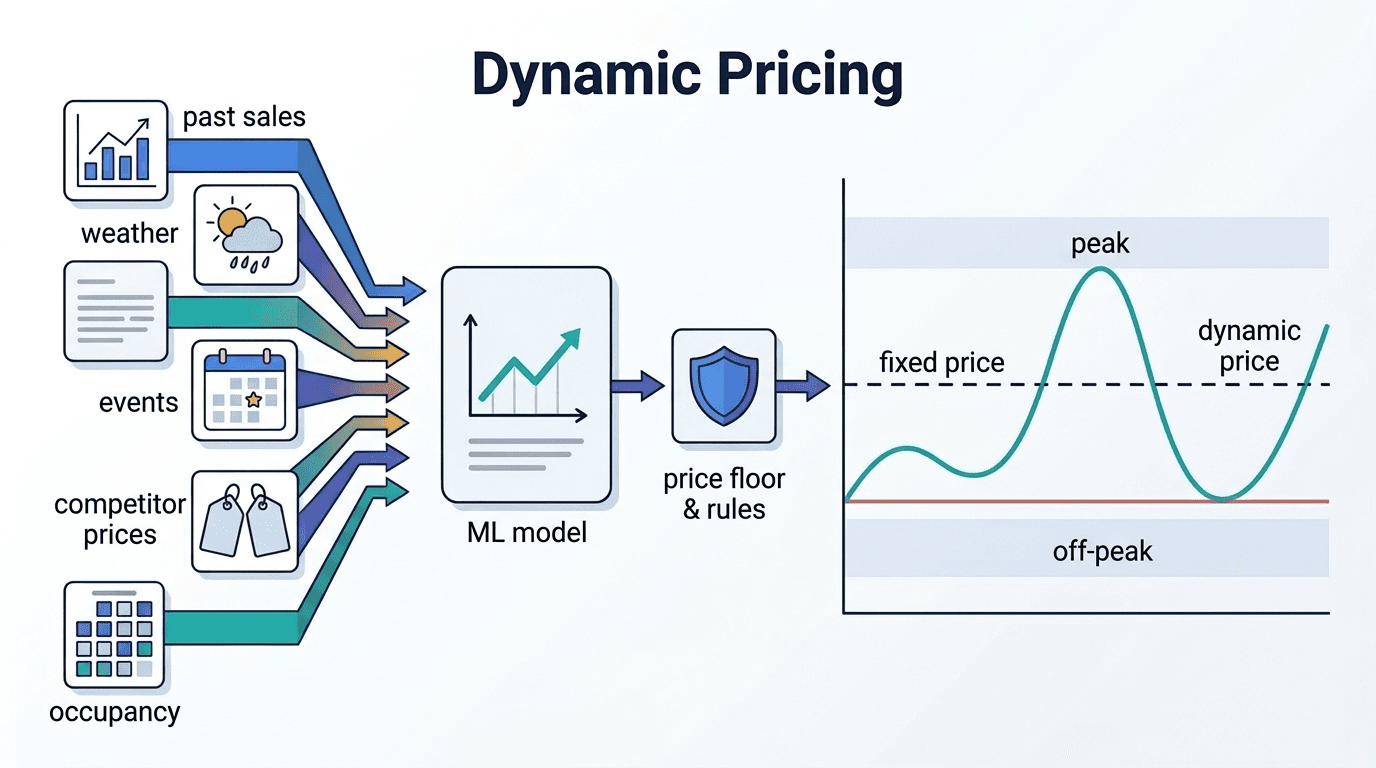
Dynamic Pricing
Dynamic pricing is a pricing strategy that adjusts the prices of goods and services in real time bas

Predictive Maintenance
Predictive maintenance is a method that uses AI to analyze sensor data and operation logs, predictin
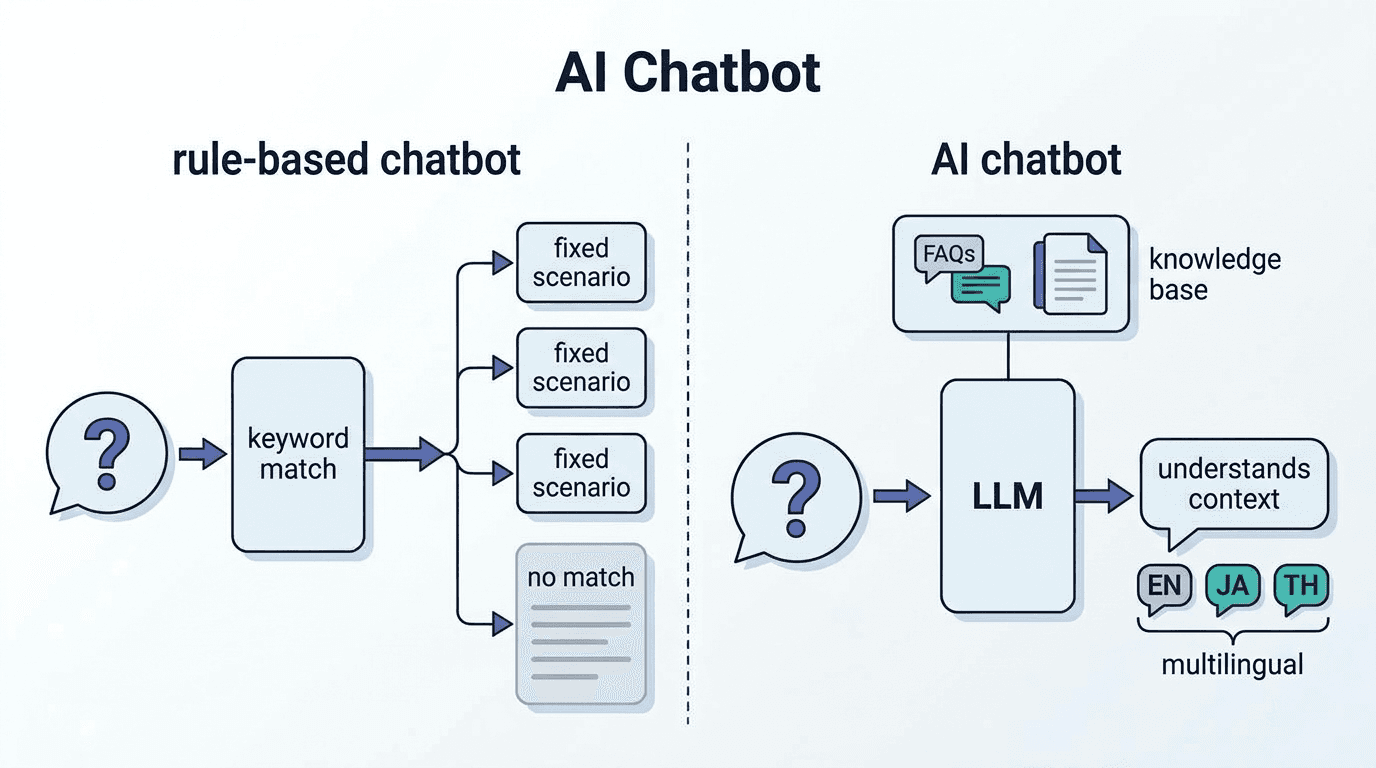
AI Chatbot
An AI chatbot is software that leverages natural language processing (NLP) and LLMs to automatically