How Thailand's Logistics Industry Can Start Using AI for Delivery Optimization, Warehouse Automation, and Demand Forecasting — A Practical 3PL Guide for the EEC Era

Lead
Thailand's logistics industry is being compelled to redesign its delivery and warehouse operations against the backdrop of infrastructure development in the EEC (Eastern Economic Corridor) and the strengthening of rail and port connectivity linking Thailand, Laos, and China. Severe traffic congestion in the Bangkok metropolitan area, rising fuel and labor costs, and the burden of electricity costs in temperature-controlled warehouses are all factors that make it easier to justify the return on investment in vehicle dispatch optimization, warehouse digitalization, and demand forecasting. Meanwhile, BOI incentives and PDPA compliance are important considerations, but their applicability and legal interpretation must be verified on a case-by-case basis.
This article is primarily intended for executives, site managers, and DX officers at logistics companies operating 3PL businesses in Thailand. It provides a practical overview of realistic approaches to AI-powered delivery optimization, warehouse automation, and demand forecasting—organized by use case, covering roadmaps from PoC to production deployment, strategies for avoiding common pitfalls, and key points on BOI and PDPA. The goal is for readers to finish the article equipped to determine the right first step for AI adoption suited to their own company's challenges.
In Thailand's logistics industry, pressure for structural reorganization is intensifying, driven by EEC infrastructure development and the strengthening of rail connectivity linking Thailand, Laos, and China. At the same time, structural constraints cannot be ignored: traffic congestion in the Bangkok metropolitan area squeezing fuel and labor costs, rising electricity costs in temperature-controlled warehouses, and Thailand's broad dependence on foreign workers. Inefficiencies that existing TMS/WMS systems alone struggle to absorb are accumulating, and interest in AI applications across delivery, warehousing, and demand forecasting is growing. This chapter organizes that background from three perspectives: market environment, labor, and systems.
Logistics Volume Growth Driven by EEC and the China-Thailand Railway
Thailand's Eastern Economic Corridor (EEC) is a national project covering three provinces: Chachoengsao, Chonburi, and Rayong. The EEC Authority (EECO) has identified the following as flagship logistics-related projects: the three-airport high-speed rail link (Don Mueang–Suvarnabhumi–U-Tapao), Laem Chabang Port Phase 3, Map Ta Phut Port Phase 3, and U-Tapao Airport and Aerotropolis. The priority clusters include "Aviation and Logistics," creating a structure in which aviation, port, and inland logistics are being strengthened simultaneously.
Of the plans broadly referred to as the "China–Thailand Railway," the project for which official progress has been publicly confirmed at this time is the Bangkok–Nong Khai high-speed railway. According to Thai government announcements, as of January 25, 2026, Phase 1 construction progress stands at approximately 51.74%, and Phase 2 was approved in February 2025. The development with the most direct impact on freight logistics is the new Nong Khai–Vientiane rail bridge, which the Thai government's public communications describe as being advanced to support the growth of rail freight between Thailand, Laos, and China. In other words, for those working in the field, the impact is more accurately understood not as the "China–Thailand Railway" in isolation, but as the broader strengthening of rail and port connectivity linking Thailand, Laos, and China.
The changes this restructuring brings to logistics companies can broadly be summarized as follows:
- Redistribution of freight volumes: Road freight is projected to grow at roughly 2–3% per year on average, while pressure to shift toward rail and ports is expected to intensify.
- Increased route complexity: Multi-node delivery combining ports, industrial estates, and urban areas is increasing, with more cases where manual dispatch planning cannot keep up.
- Higher on-time delivery requirements: Shippers positioned downstream in global supply chains are placing growing demands for shorter lead times and improved accuracy.
Rather than an unprecedented surge in logistics volume, the picture that is consistent with currently available public information is one of "intensifying pressure for logistics restructuring" and "growing demands for delivery and warehouse efficiency." The next section examines the labor and cost structure of Thailand's 3PL market as it faces this changing environment.
Thailand's 3PL Market and Labor/Cost Structure
As of August 2025, more than 4.03 million foreign workers are employed in Thailand, the majority of whom are from neighboring countries (Myanmar, Cambodia, Laos, etc.). While this represents a considerably high level of dependence at the national level, no official breakdown limited to the logistics sector has been published; this article therefore confines itself to noting that Thailand as a whole has a high dependence on foreign workers, and that warehouse and delivery operations are susceptible to this influence. With demand from shippers in automotive, electronic components, food, and e-commerce converging, outsourcing demand for 3PL (third-party logistics) is reported to be on an expanding trend.
What can be said about the labor situation
- The composition of workers at logistics sites tends to mirror the broader national trend of dependence on foreign labor.
- There is a pronounced gap between peak and off-peak demand, and workforce adjustment is frequently raised by site managers as an operational challenge.
- Thai, English, and languages from neighboring countries coexist on the floor, making instruction accuracy prone to becoming person-dependent. (Since national-level official figures could not be confirmed, this point should be read as arising from on-site interviews.)
The reality of the cost structure
- The heavy weighting of fuel and labor costs in road freight is a point repeatedly highlighted in industry reports from financial institutions.
- Bangkok's traffic congestion is reported in the TomTom Traffic Index 2025 as an average congestion level of 67.9%, an average travel time of 22 minutes and 59 seconds per 10 km, and an annual time loss of 115 hours during rush hour—factors that drag down the efficiency of last-mile delivery.
- Refrigerated and frozen (temperature-controlled) warehouses, while supported by demand from food and pharmaceutical sectors, face a structural squeeze on profit margins from rising labor and electricity costs.
Under these constraints, the limits of labor-dependent operations tend to become apparent. Route selection based on experience and intuition is prone to inefficiency because it cannot reflect real-time traffic information, and attempting to manually absorb demand fluctuations from seasonal events (Songkran, Loy Krathong, etc.) often results in either overstaffing or understaffing. The motivation for leveraging AI lies not simply in cost reduction, but in shifting structural uncertainty toward "predictable variables." The next section examines how far existing TMS/WMS systems can cope, and where they begin to reach their limits.
Limitations of Existing TMS/WMS and Expectations for AI
Many 3PL companies in Thailand have already implemented TMS (Transportation Management Systems) and WMS (Warehouse Management Systems). However, the field repeatedly hears complaints such as "we got it in, but we can't keep up with updating the rule settings" and "it can't handle sudden traffic congestion or order fluctuations."
The main limitations of existing systems fall into three categories:
- Rigidity of rule-based logic: Conventional TMS dispatches vehicles according to pre-configured rules, making it difficult to respond immediately to sudden traffic congestion in Bangkok or surges in freight from EEC industrial estates.
- Data silos: TMS, WMS, and ERP (Enterprise Resource Planning) systems often operate independently without real-time integration. When inventory, delivery, and order information becomes siloed, the prerequisite conditions for demand forecasting AI to function cannot be met.
- Person-dependent exception handling: Exceptions such as delays, returns, and temperature excursions are handled manually by designated staff, making the process prone to over-reliance on individuals and human error.
The growing expectations for AI stem from the potential to resolve these issues in a data-driven manner. Specifically, the following benefits are anticipated:
- Real-time recalculation of delivery routes to reduce fuel costs and delivery time
- Reduction of stockouts and excess inventory through demand forecasting that combines historical shipment data with external factors
- Reduction of manual data entry in customs processing through document OCR using Multimodal AI
However, AI does not "replace" existing systems—it only delivers value when integrated with TMS/WMS. The next section takes a closer look at which use cases should be tackled first.
What Are the Effective AI Use Cases in Thai Logistics Operations?

In Thailand's logistics sector, the areas where AI can deliver real value tend to narrow down to three: vehicle dispatch and route optimization, warehouse operation efficiency and demand forecasting, and cold chain management and customs document processing. Because the nature of the challenges differs in each area, the return on investment varies depending on where you start. The H3 sections below explain the specific application methods and key considerations for each use case in turn.
Dispatch and Route Optimization (Last Mile)
In the Bangkok metropolitan area and the EEC industrial zones of Chonburi, traffic congestion and multi-stop delivery are deeply intertwined, and drivers often rely on experience alone to determine optimal routes. This inefficiency drives up fuel costs and overtime expenses.
AI-powered dispatch and route optimization is a use case that can directly address these structural challenges.
Key problems AI can solve
- Incorporating traffic prediction: Reflecting time-of-day, day-of-week, and rainy-season road conditions into the model to make it easier to meet delivery time windows
- Multi-stop combinatorial optimization: Simultaneously calculating dozens to hundreds of delivery destinations, increasing vehicle load rates while reducing total distance traveled
- Dynamic re-dispatching: Recalculating routes in real time when new orders or cancellations arise during delivery
Practical points for implementation
- Data integration between GPS trackers and the TMS is a prerequisite. Standardize the extraction format from existing systems beforehand.
- Address data mixing Thai and English requires normalization. Using multilingual NLP-based address parsing tends to improve accuracy.
- At the PoC stage, limit scope to a specific area and vehicle type, and measure results over approximately two weeks.
Distinction from the next section
Picking efficiency inside the warehouse and demand forecasting are covered in the next section. Route optimization focuses exclusively on outbound logistics — from the warehouse exit to the delivery destination.
Last-mile AI optimization is one of the use cases where AI ROI is easiest to visualize, as it simultaneously impacts three metrics: fuel cost reduction, delivery lead time reduction, and improved customer satisfaction.
Warehouse Picking and Demand Forecasting
Among all warehouse operations, picking consumes the most cost and time. The distance workers travel between shelves can reach several kilometers per shift. AI-powered picking optimization analyzes order data in real time and dynamically reorganizes work instructions so that items can be collected via the shortest possible route.
Main approaches to AI picking optimization
- Zone batch picking: Bundling multiple orders and completing them within a zone to reduce travel distance
- Slotting optimization: Recommending that high-frequency SKUs be repositioned closer to the picking path
- Computer vision integration: Combining cameras with multimodal AI to automatically detect mispicks and damaged goods
Demand forecasting AI is an area where significant benefits are expected in suppressing both excess inventory and stockouts. In Thailand's retail and e-commerce market, demand tends to concentrate during sale periods and public holidays (Songkran, Loy Krathong, etc.). Training models on these seasonal patterns in combination with ERP, TMS, and POS data is expected to improve order quantity accuracy.
Conditions for demand forecasting AI to function effectively
- Two to three years of historical shipment, return, and stockout data must be in order
- Design of a feature store capable of incorporating external variables such as promotional information and weather data
- Development of APIs to automatically feed forecast results into the WMS and ordering systems
However, using model-generated forecast values directly for ordering should be avoided in the early stages. Establishing a HITL (Human-in-the-Loop) mechanism — where buyers and warehouse managers review and approve forecast values before action is taken — makes it possible to handle forecast errors that resemble hallucinations.
Cold Chain Monitoring and Customs Document OCR
In Thailand's logistics industry, cold chain management and customs document processing are areas that demand particularly high accuracy and speed. By leveraging AI, monitoring and verification tasks that were previously dependent on individual expertise can be substantially automated.
Applying AI to cold chain monitoring
In the transportation of fresh food, pharmaceuticals, and electronic components, deviations in temperature and humidity directly lead to quality loss. Combining IoT sensors with AI can deliver the following benefits:
- Processing real-time temperature data with edge AI to issue immediate alerts upon threshold deviations
- Detecting anomalies in refrigeration equipment in a predictive maintenance manner based on past deviation patterns
- Automatically linking mobile notifications to drivers with an administrator dashboard
Thailand's cold chain market sees strong demand in agricultural product exports and food distribution across the Bangkok metropolitan area, and adoption is also growing in food processing clusters within the EEC. By leveraging multimodal AI, it becomes possible to perform anomaly detection that integrates sensor data with image data (in-cargo camera footage).
Automating customs document OCR
International transport spanning Thailand, Laos, and Cambodia generates a wide variety of documents, including invoices, packing lists, and certificates of origin. Because the language and format differ from document to document, manual verification is prone to errors.
Using an OCR engine with integrated multilingual NLP enables:
- Batch reading of documents mixing Thai, Chinese, and English
- Automatic extraction of HS codes and amounts, and transcription into the ERP
- Reduction of rejection rates through automatic detection of incomplete entries
The next section explains how to approach the data preparation that underpins these AI applications.
What Should Be Prepared Before Implementation?

Before deploying AI in logistics operations, preparing both the "data" and "business process design" dimensions is what determines success or failure. No matter how sophisticated the model, accuracy cannot be achieved if the input data is fragmented. Furthermore, running a PoC (Proof of Concept) with vague KPIs makes it impossible to measure results, and investment decisions tend to stall.
The following H3 sections provide detailed explanations of how to extract data from TMS, WMS, and ERP (Enterprise Resource Planning) systems, as well as the specific steps for organizing business workflows.
Data Preparation (Extraction from TMS/WMS/ERP)
AI-driven delivery optimization and demand forecasting cannot function without high-quality data. Start by taking stock of where usable data actually exists.
Many 3PL companies in Thailand operate TMS, WMS, and ERP systems from separate vendors. When these systems are not integrated, delivery records, inventory history, and order data remain siloed, making it impossible to build the unified datasets required to train AI models.
Data sources and fields to verify first
- TMS (Transportation Management): Delivery routes, actual travel times, driver IDs, fuel consumption, delay reason codes
- WMS (Warehouse Management): Inbound/outbound timestamps, locations, SKU-level picking times, return reasons
- ERP (Core Business System): Order date and time, delivery deadlines, customer master data, historical sales including seasonality
Common data quality issues
- Shipper codes and address fields mixing Thai, English, and Chinese
- Duplicate records from manual entry and inconsistent date formats (e.g., Buddhist Era and Gregorian calendar mixed together)
- WMS used alongside paper ledgers, resulting in high rates of missing digital data
To address these issues, start by using a data profiling tool to visualize missing value rates, duplication rates, and type inconsistencies on a field-by-field basis. Then build an ETL pipeline to consolidate TMS, WMS, and ERP data into a centralized feature store, putting it in a form that AI models can readily reference.
As a general benchmark, having two to three years of historical delivery and inventory data in place tends to be sufficient to begin initial training of route optimization and demand forecasting AI models. Data preparation is unglamorous work, but it is the single most critical step in determining whether a PoC succeeds.
Defining Operational Workflows and KPIs
Once the data is in order, the next step is to clearly define in writing what you intend to improve with AI and how you will measure it. Skipping this step means you will be unable to answer the question "So what actually got better?" once the PoC is over.
Start by visualizing the business flow
Begin by using techniques such as process mining to visualize the current workflow and identify bottlenecks. Typical findings include the following:
- Dispatchers spend two to three hours per day manually reworking delivery routes
- Data entry errors during inbound inspection are propagating downstream as inventory discrepancies
- Manual transcription of customs documents is causing delays in overnight batch processing
Visualizing the flow narrows down the points where AI should intervene and helps prevent scope creep.
Design KPIs as "Before/After" pairs
KPIs should not be vague aspirations; define them as pairs of current values and target values. The following are examples of the kinds of settings commonly used in practice:
| Business Area | Metric | Current State (Example) | Target |
|---|---|---|---|
| Dispatch optimization | Delivery cost per shipment | Baseline value | 10–15% reduction |
| Warehouse picking | Picking error rate | Baseline value | 50% reduction |
| Demand forecasting | Stockout rate | Baseline value | 30% improvement |
Set specific figures only after measuring your own baseline values. For any target values that lack an official benchmark, reach agreement among all stakeholders before the PoC begins.
Assign KPI owners
Beyond simply defining KPIs, assign a responsible owner for measurement and reporting—a KPI owner—in both the operational department and the IT department. Proceeding without designated owners creates the risk that data collection will stall during the production rollout phase.
In the next phase, the PoC, the KPIs defined here will serve as the evaluation criteria.
How to Progress from PoC to Production?

AI adoption is most effective when it follows a "try → learn → expand" progression, allowing you to build on results while minimizing disruption to operations. The two-week PoC scope design and three-phase roadmap presented in this section represent a recommended approach (one practical example) rather than established fact, and should be read with the understanding that timelines and phases will need to be adjusted based on the scale, team structure, and constraints of each project.
Scope Design for a 2-Week PoC
The cardinal rule for a PoC is "start small, learn fast." The following is presented as one example of a recommended approach: a design that limits scope to a single business problem so that a go/no-go decision can be reached within the short timeframe of two weeks. The duration and target scope should be adjusted to match your organization's data readiness and team capacity.
Criteria for selecting PoC scope
- Data already exists (delivery history and inbound/outbound logs from TMS/WMS)
- KPIs can be quantified (delivery delay rate, picking error rate, etc.)
- One to two operational staff members can be assigned
For example, a realistic option would be to target last-mile delivery in the Bangkok metropolitan area, use three to six months of historical delivery data, and compare the distances and travel times of routes proposed by an AI route optimization tool against actual routes driven.
Two-week timeline (indicative)
- Days 1–3: Data extraction and cleansing, confirmation of KPI baseline values
- Days 4–7: Build pilot environment for AI tool, run inference on sample data
- Days 8–11: Trial operation with a small number of field drivers, collect feedback
- Days 12–14: KPI comparison and report preparation, Go/No-Go decision
To ensure a clear judgment at the end of the PoC on whether the solution merits production rollout, agree on pass/fail criteria in advance. Without pre-agreed quantitative thresholds—such as a minimum delivery cost reduction rate or improvement in the number of delays—evaluations tend to become ambiguous.
PDPA compliance must also be considered at the PoC stage. When handling data that includes customer addresses or personally identifiable information, apply anonymization or masking before loading it into the test environment. This PoC period should be treated as groundwork in preparation for the production rollout in the next phase.
Three-Phase Roadmap to Production
Once the PoC has demonstrated promising results, the next step is a phased production rollout. Attempting to deploy all functionality at once tends to combine operational disruption with cost overruns. The three-phase structure below is one example of a recommended approach, and should be read with the understanding that timelines and granularity will be adjusted based on the complexity of the project.
Phase 1: Pilot Deployment (indicative: 1–3 months)
- Limit scope to a single site, route, or category
- Focus KPIs on one to two metrics such as delivery delay rate and picking error rate
- Involve operational staff and maintain a Human-in-the-Loop (HITL) structure in which humans approve AI outputs ※ HITL is one example of a recommended operating pattern
- Validate data integration with TMS/WMS and identify inconsistencies in ERP field names and character encoding issues
Phase 2: Horizontal Expansion and Accuracy Improvement (indicative: 3–6 months)
- Extend the pilot-validated model to multiple sites and routes
- As actual data accumulates for demand forecasting AI, build out the feature store and establish a regular model retraining cycle (introducing AI observability is one example of a recommended operating pattern)
- If considering a BOI incentive application, prepare documentation on capital investment amounts and hiring plans at this stage (eligibility depends on project type and investment conditions)
Phase 3: Steady-State Operations and Continuous Improvement (indicative: 6 months onward)
- Establish an MLOps pipeline and advance automation of the data collection → training → deployment cycle (MLOps is one example of a recommended operating pattern)
- For PDPA compliance, document retention policies for personally identifiable information such as driver location data and customer addresses
- Calculate the return on AI investment on a quarterly basis and establish a regular reporting cycle to senior management
By building a Go/No-Go decision point into the end of each phase, you create a clear basis for moving forward without wasting investment.
Common Pitfalls and How to Avoid Them

There are common patterns in AI implementation projects that stall midway. In Thai logistics operations in particular, three recurring obstacles tend to appear: fragmented data, inadequate multilingual support, and resistance from on-site staff.
The following H3 sections address two primary challenges—data silos and multilingual OCR accuracy, and operational adoption among drivers and on-site staff—and provide concrete strategies for avoiding each.
Data Silos and Multilingual OCR Accuracy
Many of the stumbling blocks in AI adoption for Thai logistics stem from data being siloed within individual departments. It is not uncommon for TMS, WMS, and ERP systems to be built by separate vendors with no standardized APIs. Delivery records sit in the TMS, inventory data in the WMS, and billing information in the ERP—each isolated with no integration—making it easy to end up in a situation where no unified dataset exists for AI models to train on.
Common symptoms of data silos
- Delivery record CSVs exist only on individual employees' local PCs
- Product master data is managed under different coding schemes across warehouses
- Paper delivery notes are not scanned and have not been digitized
The next serious issue is multilingual OCR accuracy. In Thai logistics operations, documents mixing Thai, English, Chinese, and sometimes Burmese are handled on a daily basis. Applying a general-purpose OCR engine as-is frequently causes misrecognition of Thai-specific vowel symbols and tone marks, creating a risk that product names and quantities on customs documents and waybills become garbled.
Practical measures for improving multilingual OCR accuracy
- For forms mixing Thai and English, select a model with multilingual NLP support
- Collect a minimum of several hundred sample documents from actual on-site paperwork for fine-tuning
- After OCR, cross-check numerical values and codes against existing master data using grounding checks
Attempting to resolve data silos with a company-wide rollout all at once tends to cause projects to collapse. A phased approach—starting with one site and one business workflow, building a data pipeline, verifying accuracy and operational costs, and then expanding horizontally—is the more realistic path.
Driver Retention and On-Site Operational Adoption
Even when an AI system succeeds technically, failure to achieve adoption on the ground is not uncommon. In Thai logistics operations as well, pushback from drivers and warehouse staff is a recurring point raised in on-site interviews and industry articles as a factor that impedes operational adoption.
Common patterns of adoption failure (read as field-sourced observations)
- Smartphone app UIs that lack Thai language support, causing staff to avoid using them
- AI-suggested routes being ignored because they "differ from experience-based intuition"
- Resistance from unions and individuals due to the misconception that changing KPIs will affect commission-based pay
The root cause of these problems often lies in insufficient on-site engagement prior to implementation. When systems are rolled out in a top-down manner, cases have been reported where drivers leave the app switched off while driving, creating a vicious cycle in which data quality itself deteriorates.
On-site measures for improving adoption (one example of a recommended approach)
- Thorough Thai-language UI: Select an app with multilingual support and provide voice guidance in Thai as well
- HITL (Human-in-the-Loop) design: Retain a mechanism that allows drivers to approve or modify AI-suggested routes, reducing the sense that control is being "taken away"
- Incentive redesign: It has been reported that establishing a bonus scheme that returns the benefits of fuel savings and time reductions to drivers tends to increase their cooperative attitude
- Super-user development: Train on-site leaders early and have them take responsibility for cascading knowledge to their colleagues
It is important to advance change management in parallel with technical development. Involving driver representatives from the PoC stage and running a cycle of reflecting their feedback into the system is said to reduce the drop-off rate after go-live. When selecting a partner in the next step, the ability to provide change management support should be added as an evaluation criterion.
How to Select an Implementation Partner (BOI and PDPA Compliance)

When implementing an AI logistics system in Thailand, partner selection is a critical decision that can determine success or failure. Narrowing down candidates using the following perspectives tends to reduce rework during the operational phase.
Key points for assessing technical compatibility
- Does the partner have a track record of integration with TMS, WMS, and ERP systems?
- Do they have implementation experience with multilingual support covering Thai, Chinese, and English?
- Can they propose a hybrid configuration combining edge AI and cloud?
Handling BOI incentives The Thailand Board of Investment (BOI) listed "distribution centers with smart system" in its 2025 guidelines, explicitly identifying investment in AI, machine learning, big data, and data analytics as eligible under efficiency-related measures. However, not all AI logistics projects automatically qualify for incentives. Eligibility varies depending on the project type and investment conditions—including eligible activities, investment amounts, system requirements, and requirements for using data centers within Thailand—so it is important to assess whether a partner has experience supporting BOI applications and whether they are willing to verify eligibility with the official authorities on a project-by-project basis.
Handling PDPA compliance Thailand's PDPA defines personal data as information that can directly or indirectly identify an individual. Accordingly, driver location data and behavioral logs, as well as warehouse staff work logs, where individuals can be identified, may constitute personal data under the PDPA. The following points should be verified when selecting a partner:
- Are policies for the collection, storage, deletion, and third-party provision of personal data documented?
- Is the pipeline designed to prevent identifiable personal information from being mixed into AI model training data?
- Can the partner propose an architecture that addresses restrictions on cross-border data transfers (adequate level of protection or applicable exceptions)?
Knowledge transfer structure Always confirm that a knowledge transfer plan is included in the contract so that your organization can improve the model independently after implementation. Whether AI literacy training is provided for on-site staff should also be added as an evaluation criterion.
Cases have been reported where selecting a partner based solely on short-term cost leads to additional costs ballooning during the operational phase. It is important to compare initial costs, maintenance costs, and license costs on a Total Cost of Ownership (TCO) basis.
Conclusion
The use of AI in Thailand's logistics industry is gaining momentum across three areas—vehicle dispatch optimization, warehouse digitalization, and demand forecasting—driven by infrastructure development in the EEC and growing pressure to restructure logistics networks amid strengthened rail and port connectivity linking Thailand, Laos, and China.
The key practical points organized in this article are as follows. Note that PoC period settings, phase divisions, HITL, AI observability, and MLOps represent recommended approaches (examples of practical options) rather than established facts; please interpret them with the understanding that the optimal solution will vary depending on the scale and constraints of each project.
- Get your data in order first: AI cannot operate stably without integrating and auditing TMS/WMS/ERP systems
- Keep PoCs time-boxed for hypothesis validation: This article presented a two-week PoC as one example, but the premise is to adjust based on the business and organizational context
- Phased go-live: The three-phase approach of PoC → limited operations → full go-live is one example; the granularity of phase divisions should be designed to fit the project
- Confirm PDPA and BOI requirements early: Whether data qualifies as personal data under the PDPA, and whether BOI incentives apply, must be verified on a project-by-project basis
Rather than treating AI as a "magic box," building a system that drivers and warehouse staff can continue to use on the ground is what maximizes the return on AI investment. Start by identifying the single biggest bottleneck in your own operations, and begin with a small PoC.
Author & Supervisor

Yusuke Ishihara
Started programming at age 13 with MSX. After graduating from Musashi University, worked on large-scale system development including airline core systems and Japan's first Windows server hosting/VPS infrastructure. Co-founded Site Engine Inc. in 2008. Founded Unimon Inc. in 2010 and Enison Inc. in 2025, leading development of business systems, NLP, and platform solutions. Currently focuses on product development and AI/DX initiatives leveraging generative AI and large language models (LLMs).
Recommended Articles


Terms related to this article

Demand Forecasting AI
Demand forecasting AI refers to a system that analyzes historical sales data and external factors us
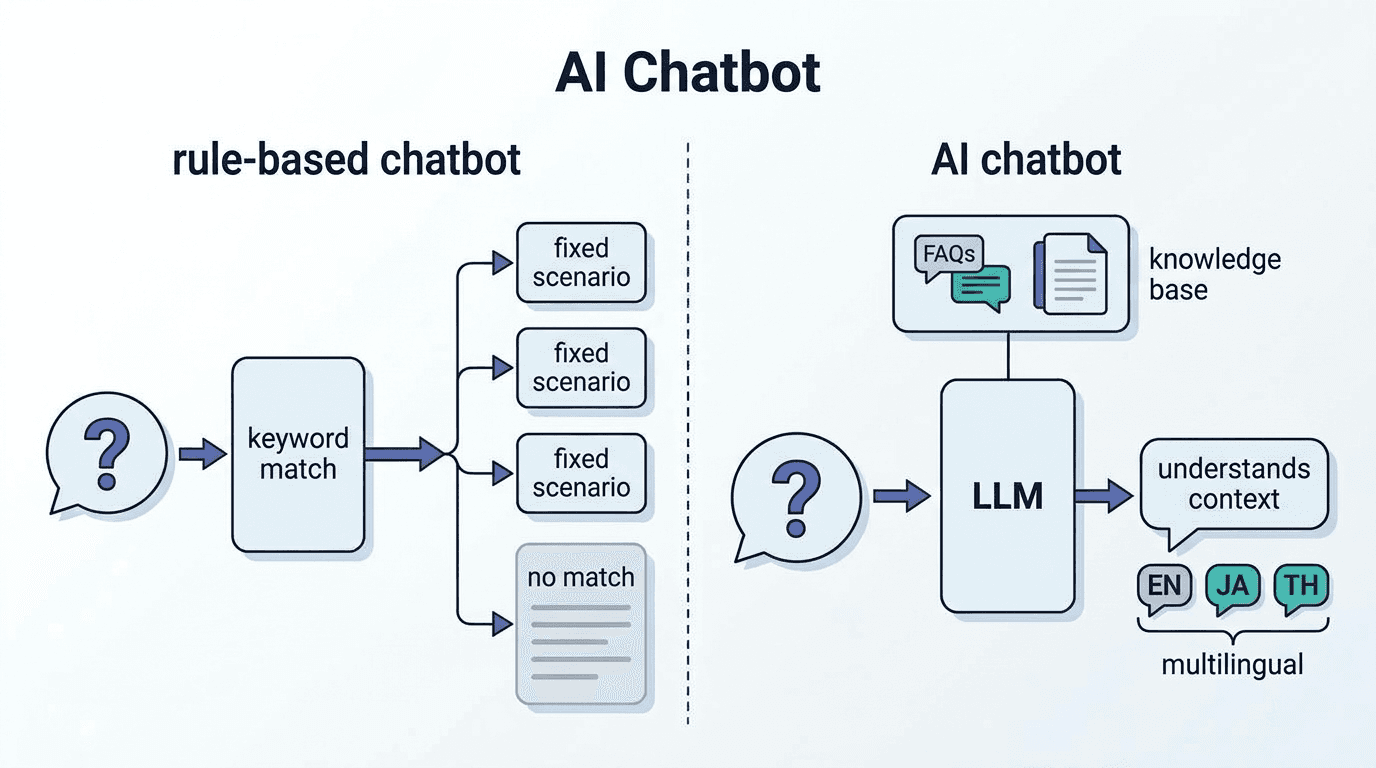
AI Chatbot
An AI chatbot is software that leverages natural language processing (NLP) and LLMs to automatically
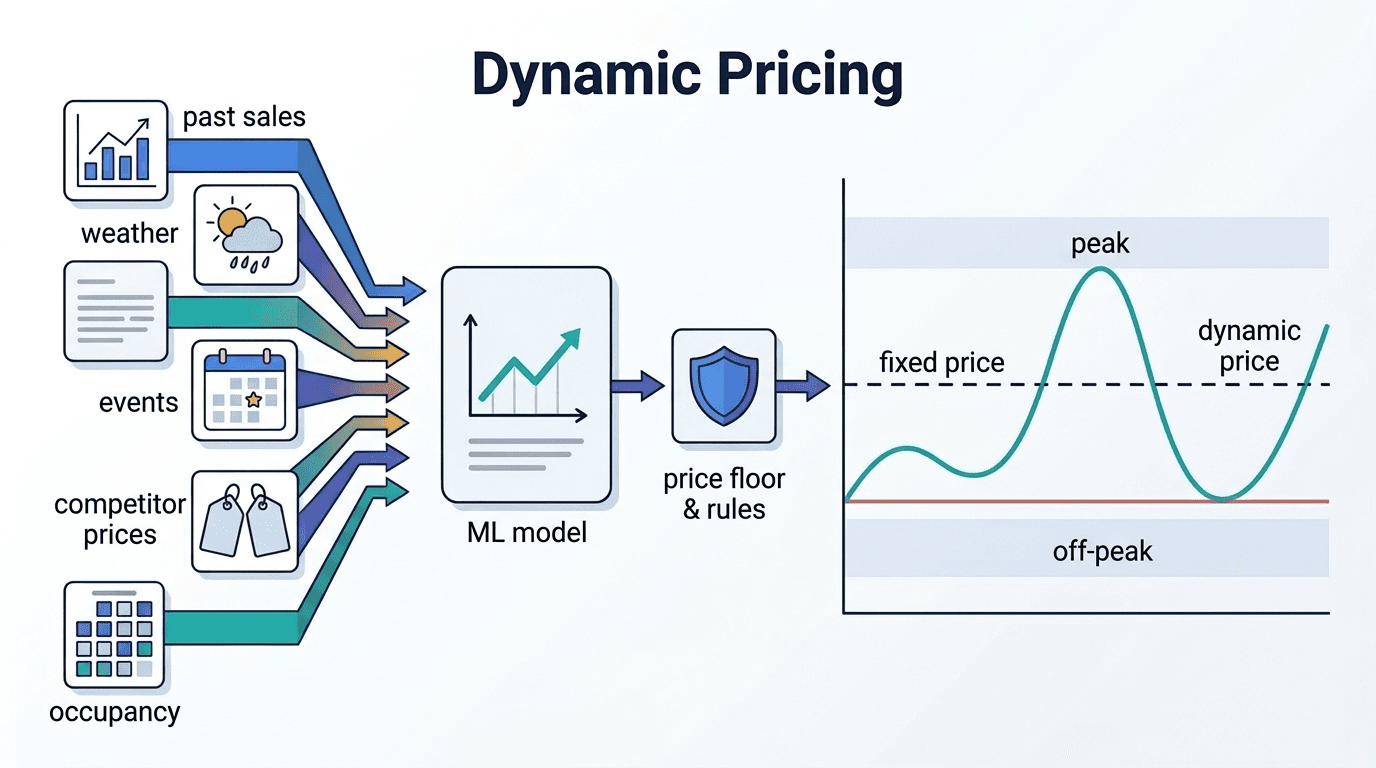
Dynamic Pricing
Dynamic pricing is a pricing strategy that adjusts the prices of goods and services in real time bas