Guide to AI Investment Decisions for Thai Businesses — Implementation Priorities Based on ROI Comparisons by Industry

Lead
AI investment decision-making for Thai companies is the process of determining which operational areas to allocate limited budgets to, taking into account the ROI structures and implementation difficulty that vary by industry—including manufacturing, logistics, tourism, and healthcare. This article is aimed at senior management and DX promotion officers at Japanese-affiliated and local companies operating in Thailand. It compares major industries across three axes—"ROI impact," "implementation difficulty," and "human resource and data requirements"—and identifies high-priority investment areas along with recommended approaches. By the end of the article, readers will have an evaluation framework detailed enough to repurpose as a comparison table for internal approval processes.
Conclusion: In the Thai market, digital maturity, data readiness, and the regulatory environment differ significantly by industry, meaning that evaluating the same AI solution uniformly across sectors will not yield reproducible investment returns.
Thailand's manufacturing sector, centered on the EEC (Eastern Economic Corridor), has seen steady progress in IoT adoption, and the foundational infrastructure for time-series data obtained from PLCs and sensors is gradually taking shape. In contrast, in the hotel and tourism sector, PMS (Property Management System) adoption rates remain low among mid-sized and smaller operators, and cases where data is simply not available in a format that AI can process are conspicuous.
Walking through an EEC industrial estate on the outskirts of Bangkok, it is not uncommon to see an automotive parts factory and a food processing factory standing side by side on the same street. The former may have equipment logging PLC data at one-second intervals, while the latter still aggregates daily production reports by hand in Excel—a contrast that is far from rare. The reality that "Thai manufacturing" cannot be treated as a monolithic category is a difference one can feel viscerally after just a single day on the ground.
Furthermore, revenue structures differ by industry. In manufacturing, a 1% improvement in defect rates translates directly and immediately into profit, whereas in tourism, the impact is more about "smoothing out revenue fluctuations," such as optimizing spend-per-guest during off-peak periods. Unless the evaluation criteria for investment decisions are adjusted on an industry-by-industry basis, the rationale for internal approval proposals will be weak.
The domestic regulatory environment cannot be ignored either. Thailand's PDPA (Personal Data Protection Act) demands careful design in industries that handle customer data—such as healthcare, finance, and retail—meaning that implementation and operational costs for the same AI solution can run higher than expected. The range of industries eligible to leverage BOI (Board of Investment) R&D incentives is also limited (see AI Investment Strategy Leveraging Thailand BOI Incentives).
For all these reasons, AI investment decision-making must begin not with "which technology to use," but with "which industry and which business process to start with."
Three Comparison Axes for AI Investment Decisions

Conclusion: Evaluating AI investment decisions in the Thai market across three axes—"ROI impact," "implementation difficulty," and "human resource and data requirements"—enables fair, cross-industry comparison.
The three axes are each independent, yet in practice they influence one another. Areas with high ROI tend to be highly competitive and also tend to have more stringent data requirements. Conversely, areas with low implementation difficulty tend to yield more limited results. The following sections examine the definition and evaluation method for each axis in turn.
Magnitude of ROI Impact
ROI impact refers to the degree to which the KPIs affected by AI adoption influence profitability. In predictive maintenance for manufacturing, the link runs from "reduction in equipment downtime → reduction in opportunity loss"; in logistics, from "route and dispatch optimization → reduction in fuel and labor costs." The clearer the connection between a KPI and the P&L, the easier it is to evaluate.
The starting point for evaluation is converting current KPIs into monetary terms. For example, estimate how much can be saved annually by reducing the defect rate by 0.5 percentage points, or how much can be freed up by cutting excess staffing during peak periods by 10%. If an estimate cannot be made for a given area, it will be difficult to verify the effect of introducing AI there.
One important caveat: ROI encompasses both "direct effects" and "indirect effects." The former can be measured on the P&L; the latter involves qualitative indicators such as customer satisfaction and brand value. In the early stages of decision-making, basing judgments solely on direct effects—and treating indirect effects as secondary benefits—reduces ambiguity (for details on KPI design, see How to Measure Results After Implementing an AI Agent).
Industry-specific ROI impact is presented in the comparison table later in this article.
Implementation Difficulty and Lead Time
Implementation difficulty is assessed in terms of the "time × effort × probability of failure" involved in moving from PoC to full production deployment. In the Thai market, the following three factors in particular tend to drive up difficulty:
- Integration with existing systems: Legacy systems such as ERPs, PMSs, and WMSs are scattered across organizations, and cases where APIs are not properly established are common.
- Multilingual support: In addition to Thai, one or more of English, Chinese, or Japanese is typically required at customer touchpoints.
- Resistance to operational change: ICT literacy varies widely among frontline staff, and if the UI is complex, adoption tends to stall.
As a rough guide, PoC timelines run one to two months for straightforward classification and extraction tasks, and three to six months for projects involving inference models or RAG. When lead times exceed six months, the initiative tends to fall out of sync with management decision-making cycles and lose priority. It is practical to scope the work so that "some visible result within six months" is achievable.
The most direct way to shorten lead times is to begin by selecting processes that are currently performed manually on a repetitive basis and for which the decision criteria are explicitly documented. Starting with ambiguous areas tends to consume months on requirements definition alone.
Talent and Data Requirements
Human resources and data requirements refer to the organizational structure needed to keep AI running continuously in production. What is often overlooked in the Thai market is that the talent required to make a PoC work and the talent required to sustain ongoing operations are two different things.
During the PoC phase, specialized personnel such as data scientists and MLOps engineers are needed. Once in production, however, a continuous "Human-in-the-Loop" structure is required, in which frontline operators label data and review outputs (see: What is Human-in-the-Loop (HITL)?).
Data requirements vary significantly in difficulty depending on the industry. Industries with well-structured data—such as sensor data from manufacturing floors or POS data—are better positioned to adopt AI. Conversely, industries centered on unstructured data such as meeting minutes, emails, and PDFs must first address document digitization and OCR infrastructure, which can result in a preprocessing period of six months or more before AI implementation can even begin.
The decision of whether to run a PoC through an outsourced vendor or build it in-house also falls under this dimension. Segmenting by use case—keeping high-frequency, ongoing operations in-house while outsourcing one-off screening tasks—tends to produce a more stable cost structure.
AI Investment ROI Comparison Table by Major Industry

Conclusion: In the Thai B2B market, predictive maintenance in manufacturing and route optimization in logistics are the two leading areas where AI investment ROI is both easiest to achieve and best supported by available data.
The following table organizes AI use cases that Japanese and local companies operating in Thailand can relatively readily pursue, across eight industries. Scores represent relative assessments based on "typical projects" and will vary depending on individual companies' data readiness and scale.
| Industry | Representative Use Case | ROI Impact | Implementation Difficulty | Human Resources & Data Requirements | Overall Priority |
|---|---|---|---|---|---|
| Manufacturing | Predictive maintenance / visual inspection | ★★★★★ | ★★★ | ★★★ | A |
| Logistics / 3PL | Route optimization / demand forecasting | ★★★★ | ★★ | ★★★★ | A |
| Hotel / Tourism | Dynamic pricing | ★★★★ | ★★★ | ★★★ | A |
| Retail / EC | Chatbots / inventory optimization | ★★★ | ★★ | ★★★ | B |
| Healthcare | Multilingual patient intake / automated record-keeping | ★★★ | ★★★★ | ★★ | B |
| Real Estate | Property matching / inquiry automation | ★★ | ★★ | ★★★ | B |
| Finance / Insurance | Credit screening / fraud detection | ★★★★ | ★★★★★ | ★★ | C |
| Construction | Construction management / safety management | ★★★ | ★★★★ | ★★ | C |
★ ratings are relative assessments, not numerical scores (5★ = most favorable). Overall priority is ranked A > B > C based on the balance between ROI and difficulty.
The concentration of A ratings in manufacturing, logistics, and hospitality reflects the fact that KPI-to-P&L linkage is clear in these sectors, and that data—sensor readings, delivery slips, and accommodation bookings—is already structured. Finance and construction, by contrast, offer substantial ROI potential but face high barriers around regulatory compliance (finance) and safety liability (construction), making the transition from PoC to production time-consuming.
Industries rated B tend to have high PoC success rates, but the impact is often confined to a single use case. Scaling company-wide through a hub-and-spoke model requires the accumulation of multiple PoCs.
How to Approach High-Priority Industries

Conclusion: Each of the three A-rated industries has an established "go-to use case to tackle first." For the fastest path forward, carve out a PoC from the typical example for each industry.
The following sections cover the three industries—manufacturing, logistics, and hotel/tourism—outlining the use cases to prioritize first and the expansion patterns that follow.
Manufacturing: Starting with Predictive Maintenance and Quality Control
In manufacturing, the first decision is a choice between two options: "predictive maintenance" or "visual inspection." Factories in the EEC—automotive, electronics, and food processing—already have PLCs and sensors in operation, making it relatively easy to obtain the time-series data that AI requires.
Walking the floor of METALEX, the trade show held annually in Bangkok, one notices that booths displaying "Predictive Maintenance" signage have been increasing year by year. However, no matter how polished a vendor's demo may be, whether data can actually be extracted from a company's own aging equipment is an entirely separate question. The first week of a PoC is often spent on reality checks: whether sensors can be retrofitted, and how many days of PLC logs are retained.
Predictive maintenance uses sensor data on vibration, temperature, and current to "detect signs of equipment failure days to weeks in advance." Starting with core equipment that has long downtime when it fails—such as presses, injection molding machines, and compressors—tends to yield the clearest results. Visual inspection, on the other hand, involves replacing manual inspection lines with image-based AI, and ROI is easiest to demonstrate in processes where labor shortages are most acute.
Detailed implementation steps are covered in How Thai Manufacturers Can Get Started with AI for Predictive Maintenance and Quality Control.
One important caveat: predictive maintenance is an approach designed to "stop equipment before it breaks," and if false alarms (over-detection) are frequent, the shop floor will lose trust in the system. It is recommended to align with management on target values for precision and recall during the PoC phase before moving to production. For industries eligible for BOI R&D incentives, it may also be possible to offset some of the costs incurred during the PoC phase.
Logistics: Fleet Optimization and Demand Forecasting
In logistics and 3PL, "route optimization" and "demand forecasting" are the proven starting points. Thailand's transportation environment is highly variable—traffic congestion, flooding, and road closures are common—and manual route planning has inherent limitations in achieving true optimization. AI-driven route optimization can simultaneously reduce fuel costs, overtime pay, and delay penalties, making ROI relatively straightforward to demonstrate.
Demand forecasting delivers significant value in warehouse operations serving wholesale and retail customers. By forecasting weekly and monthly shipment volumes one to four weeks out, companies can reduce both excess inventory and stockouts. As exports from the EEC to China and other ASEAN markets continue to grow, the scale benefits of demand forecasting are expanding accordingly.
For implementation patterns, please refer to How Thai Logistics Companies Can Get Started with AI for Delivery Optimization, Warehouse Automation, and Demand Forecasting.
There are two key considerations to keep in mind. First, route optimization will not be adopted on the ground if it simply outputs an "optimal solution." The success or failure of the system hinges on UI design that incorporates drivers' tacit knowledge—such as specific customers' delivery time windows and roads that are habitually congested. Second, in demand forecasting, suppressing the magnitude of errors when the model is wrong is operationally more valuable than achieving a good average-case accuracy. The choice of evaluation metric matters—for example, adopting quantile forecasting rather than MAPE.
Hotels and Tourism: Dynamic Pricing
The hotel and tourism industry tends to see strong return on investment from combining "dynamic pricing" with "multilingual chatbots." This is because Thailand experiences significant seasonal swings in inbound demand throughout the year, creating substantial leverage for rate optimization.
Along Sukhumvit, mid-range hotels have increasingly begun installing tablet-based AI reception terminals beside their front desks. While switching between English, Chinese, and Japanese runs smoothly, responses can still stall when conversations shift to locally specific topics—such as "the in-house Wi-Fi is slow" or "where can I exchange currency nearby?" This scene is emblematic of a broader reality: RAG design incorporating property-specific information is needed to cover the gaps that general-purpose LLMs cannot reach.
Dynamic pricing is an approach that dynamically adjusts room rates based on historical booking data, competitor pricing, event calendars, weather, and other factors. It is a well-known use case for achieving sustained improvement in RevPAR (Revenue Per Available Room) (see How Thailand's Hotel and Travel Industry Can Start AI-Driven Dynamic Pricing for implementation details).
Multilingual chatbots cover everything from pre-stay inquiries to on-site guidance on the day of arrival. Cases have been reported where supporting just four languages—Thai, English, Chinese, and Japanese—significantly reduces call center load.
For AI investment in the hotel sector, integration with a PMS is a prerequisite. Older PMS systems may only support CSV exports, in which case the cost estimate must include additional development for an API gateway. It is also worth noting that without building in profit-maximization logic that accounts for OTA commission rates (Booking.com, Agoda, etc.), apparent improvements in RevPAR may not translate into actual profit gains.
Thailand-Specific Constraints and Opportunities

Conclusion: AI investment in Thailand is strongly influenced by the PDPA (Personal Data Protection Act) and the BOI (Board of Investment). Designing with a clear understanding of these constraints—and leveraging them as opportunities—represents a key differentiator from other markets.
The following sections outline three topics that are essential to understand when investing in AI in Thailand.
PDPA and Data Sovereignty Constraints
Thailand's PDPA is a personal data protection law modeled on the EU GDPR, and compliance must be built in from the early design stage in the healthcare, financial, retail, and HR sectors. When sending customer data to AI models, key issues include obtaining consent, prohibiting use beyond the stated purpose, and restrictions on cross-border data transfers.
Using a cloud-based LLM as-is raises concerns about personal data being transmitted to regions in the United States or Europe. Countermeasures include: (1) masking PII (Personally Identifiable Information) before sending it to the API, (2) processing sensitive information using a local LLM, and (3) leveraging BYOK (Bring Your Own Key) to keep data encryption under the company's own control (see A Compliance Checklist for Balancing PDPA Compliance and AI Adoption in Thailand for implementation details).
Data sovereignty constraints are a cost-increasing factor in the short term, but can become a differentiator over the long term. Being able to present an "PDPA-compliant AI solution" to clients positions a company favorably when pursuing contracts with large enterprises and public-sector organizations that have high compliance sensitivity.
Leveraging BOI Incentives
The BOI (Board of Investment) offers incentives to promote investment in Thailand, including corporate tax exemptions, customs duty waivers, and preferential work visas for foreign specialists, with AI and digital sectors among those covered. AI-related projects fall under the "Software & Digital Services" category, and businesses certified as eligible may receive multi-year corporate tax exemptions.
AI investments most likely to qualify for incentives are those that meet conditions such as: (1) proprietary software or service development, (2) cloud-based research and development, and (3) projects involving the hiring of AI specialists. Conversely, simply deploying off-the-shelf commercial AI tools is unlikely to qualify.
Detailed requirements are explained in AI Investment Strategy Leveraging BOI Incentives in Thailand. In practice, the most realistic approach is to keep a BOI application in mind during the PoC stage and then utilize the incentives during the production phase. Since BOI applications involve a review period of several months to half a year, scheduling must be planned in reverse from the outset.
The Reality of Multilingual and Human Resource Availability
While the supply of ICT talent in Thailand's AI labor market is growing, professionals with hands-on AI/MLOps experience remain scarce. Industry reports indicate that data scientist job postings in Bangkok continue to rise, and salary levels are trending upward as well.
Multilingual capability is a differentiating factor for AI solutions. LLM support for the Thai language itself has advanced considerably, with major models delivering practical accuracy, though specialized corpora for industry-specific terminology—such as in healthcare, legal, and construction—remain limited. Designing systems to reference internal documents via RAG has become the standard approach for ensuring quality.
The balance between outsourcing and in-house development should be determined by operational continuity. AI for day-to-day or weekly operations—such as chatbot management and demand forecasting model retraining—is better suited to in-house development, while one-off PoCs and validation projects are more cost-efficient when handled by external vendors. For Japanese companies, a "follow-the-sun" model that leverages the time difference between a data science team at the Japan headquarters and a local office is also a viable option.
Frequently Asked Questions (FAQ)

Q1: What is an appropriate budget for starting AI investment in Thailand?
For the PoC stage, 1–5 million baht (approximately 4–20 million yen) is the commonly cited range (reference values at the time of writing; figures vary significantly by use case and vendor). A prudent approach is to focus on a single business function at first and assess whether a six-month return-on-investment scenario is achievable. A "phased budget" model—where the budget is scaled up two to three times upon moving to the production phase—tends to be well received by Japanese companies.
Q2: What are the key factors to prioritize when selecting an AI vendor?
They can be distilled into four points: (1) knowledge of PDPA compliance, (2) bilingual support in Thai and English, (3) the presence of locally based engineers, and (4) alignment of past case studies with your industry. Vendors that check all four boxes are limited. Global majors lead on technical capability, while mid-tier local firms and Japanese-affiliated vendors compete on responsiveness and local adaptability. Which has the advantage depends on the nature of the project, so deciding internally at the requirements-definition stage whether to prioritize "technical depth" or "operational density" will help keep things on track (AI Consulting Thailand Bangkok | Implementation Guide).
Q3: What are the most common patterns of failed AI investment?
Three patterns come up frequently:
- The PoC ends as a "technology validation" exercise and never gets embedded into actual operations.
- No changes are made to on-site operations, and within three months of go-live nobody is using the system.
- Data quality issues surface in downstream processes, causing costs to balloon to double the original estimate.
The countermeasures are surprisingly straightforward: at the start of the PoC, explicitly document which department will own production operations; agree on KPIs with senior management in advance; and resolve data preparation within the first month. Writing these three points into the internal approval document will head off more than half of the common failure patterns.
Summary: Three Steps for Investment Decision-Making

When making AI investment decisions in Thailand, organizing decision-making across three layers—industry, business function, and KPI—before selecting technology reduces the likelihood of failure. The key points of this article are summarized in three steps.
- Determine industry-specific priorities: Industries rated A—manufacturing, logistics, and hotel/tourism—make it easier to carve out an initial PoC. Even if your own industry receives a B or C rating, there is the option of starting with adjacent use cases from A-rated industries.
- Evaluate individual projects on three axes: Create an evaluation matrix for internal approval purposes using ROI impact, implementation difficulty, and talent/data requirements, and compare multiple projects side by side.
- Turn Thailand-specific constraints into opportunities: PDPA compliance and BOI incentives are constraints in the short term, but when incorporated into your design they can function as differentiating factors.
The goal of AI investment is not to "implement" something—it is to "move the business's KPIs." It is hoped that the comparative framework in this article will serve as useful input for deciding where to concentrate limited management resources.
For those looking to design an AI investment roadmap in the Thai market, please also refer to our industry-specific guides (Manufacturing · Logistics · Hotel & Tourism).
Author & Supervisor

Yusuke Ishihara
Started programming at age 13 with MSX. After graduating from Musashi University, worked on large-scale system development including airline core systems and Japan's first Windows server hosting/VPS infrastructure. Co-founded Site Engine Inc. in 2008. Founded Unimon Inc. in 2010 and Enison Inc. in 2025, leading development of business systems, NLP, and platform solutions. Currently focuses on product development and AI/DX initiatives leveraging generative AI and large language models (LLMs).
Recommended Articles


Terms related to this article
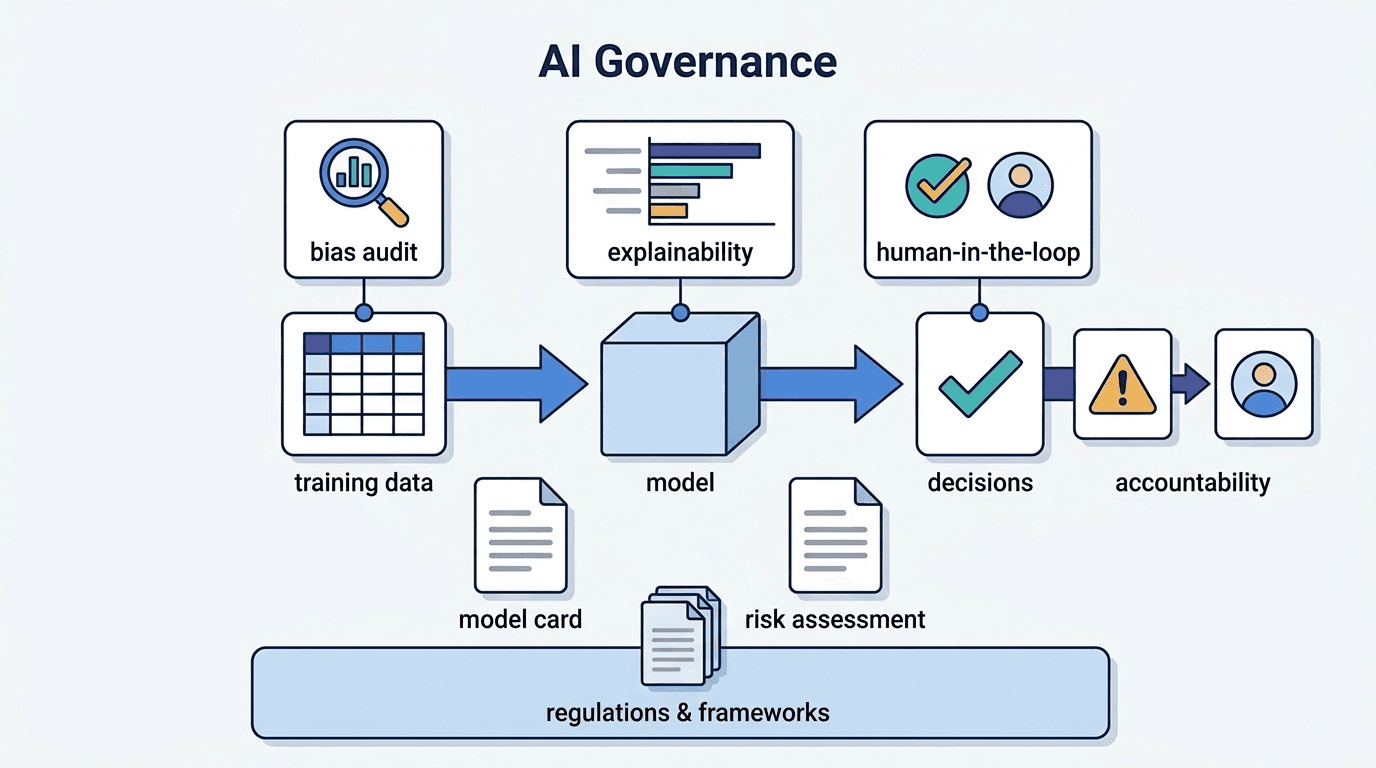
AI Governance
AI governance refers to the organizational policies, processes, and oversight mechanisms that ensure
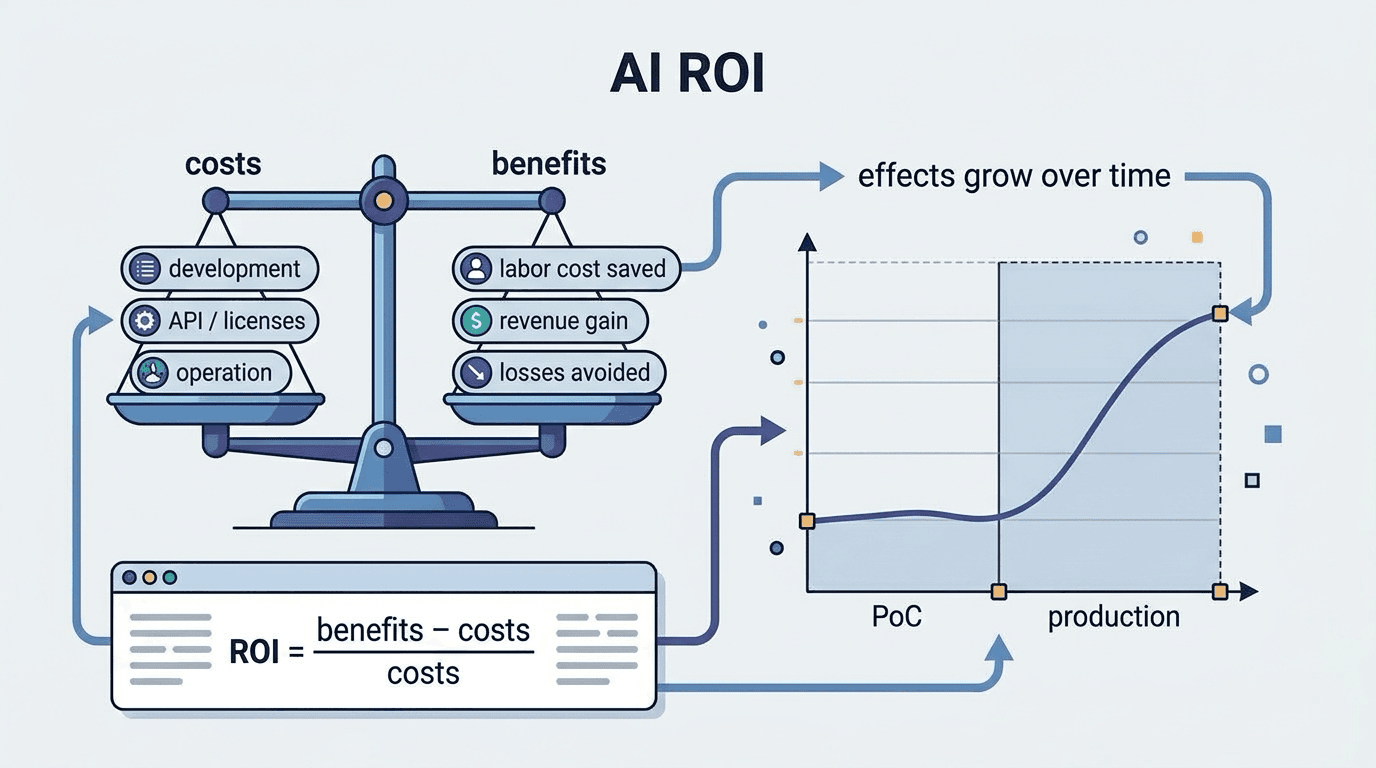
AI ROI (Return on Investment in AI)
AI ROI is a metric that quantitatively measures the effects obtained — such as operational efficienc
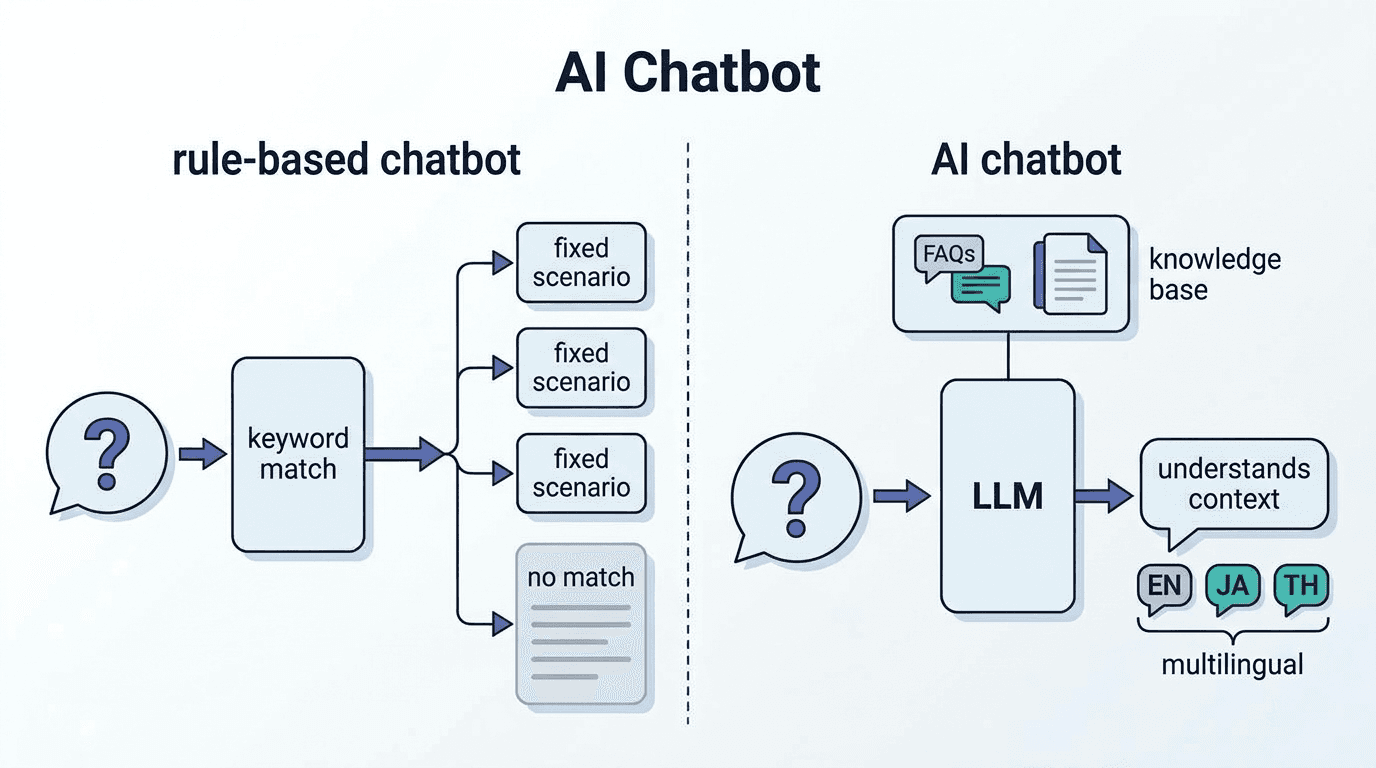
AI Chatbot
An AI chatbot is software that leverages natural language processing (NLP) and LLMs to automatically