AI Checker (AI-generated text detector)
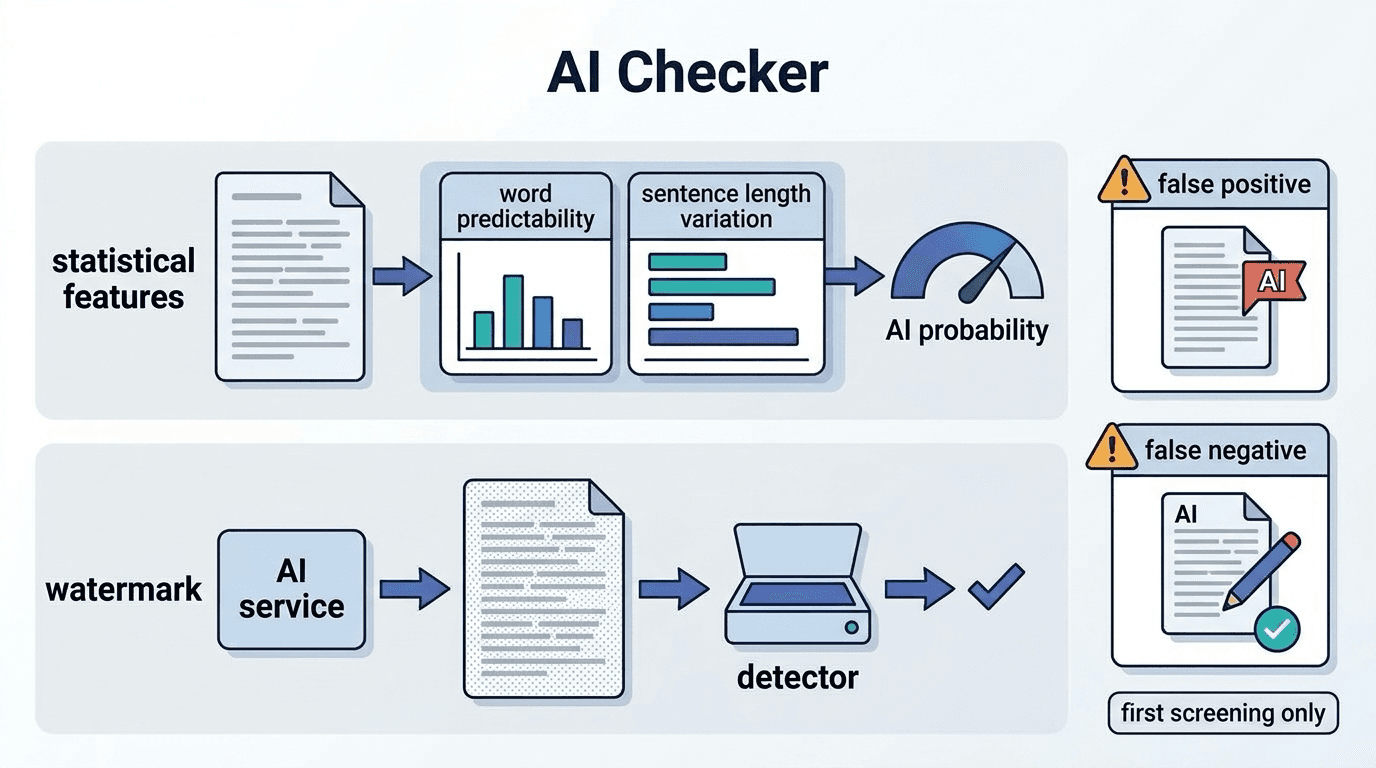
An AI checker is a tool that estimates whether a piece of writing was generated by AI, mainly from statistical features of the text. Its results can be wrong, so they should never be the only evidence.
"AI checker" (or AI detector) is the umbrella term for tools that estimate whether a text was written by generative AI. Schools use them to screen assignments, publishers to check manuscripts, and employers to review application documents.
How detection works
There are two main approaches. The first looks at statistical features of the text itself, such as how predictable the word choices are and how much sentence length varies (human writing tends to vary more), and reports a probability that the text "looks like AI." GPTZero, Copyleaks, Originality.ai and Turnitin's tools for education belong to this group.
The second approach has the AI provider embed an invisible digital watermark in the output at generation time and detect it later. Google's SynthID is an example. It only works on output from services that applied the watermark.
Where detection goes wrong
| Type of error | Typical cases |
|---|---|
| Human text flagged as AI (false positive) | Writing by non-native English speakers; formulaic reports or academic prose |
| AI text passed as human (false negative) | AI drafts rewritten by a person; text run through a paraphrasing tool |
Accuracy figures published by vendors come from their own evaluations, and independent tests have reported lower numbers. At least one generative AI developer withdrew its own detector because it was not accurate enough. Treating a detector score as proof of misconduct risks accusing innocent people.
Using detectors in an organization
Use detection only as a first-pass screen and combine it with other evidence, such as the writing history or a conversation with the author. Check the terms of service to see whether submitted text is stored or used for training.
For companies, it usually works better to define where AI may be used and which parts people remain accountable for than to ban AI writing outright. An approved tool list and usage rules also support AI governance and reduce shadow AI. We help organizations set AI usage rules and run training through our AI & DX services.
Articles covering this term
- What Is Shadow AI Auditing? How to Detect and Manage Unauthorized AI Tools Used Within Your OrganizationDetect shadow AI (ChatGPT, Gemini) used without approval, and learn the audit process covering risk assessment, policy development, and PDPA compliance.
- Closing the "Invisible Attack Vector" in AI Chat — An Implementation Guide to Preventing Prompt Injection via DBIndirect prompt injection via DB in multi-tenant AI chat: identify 4 attack vectors, detect & sanitize 24 patterns across 3 categories, validated with 71 test cases. A practical implementation guide.
- What is AI Governance? A Practical Guide from EU AI Act Compliance to Internal Policy DevelopmentLearn AI governance essentials: EU AI Act overview, risk classification, internal guidelines, and audit frameworks—key insights for practitioners navigating full-scale AI adoption.
- What Is an AI Data Readiness Audit? How to Assess Your Internal Data Before Implementing Agentic AIMost AI agent failures stem from data, not models. Learn how to run a data readiness audit—evaluating quality, accessibility, and structure of internal data.


Related Terms
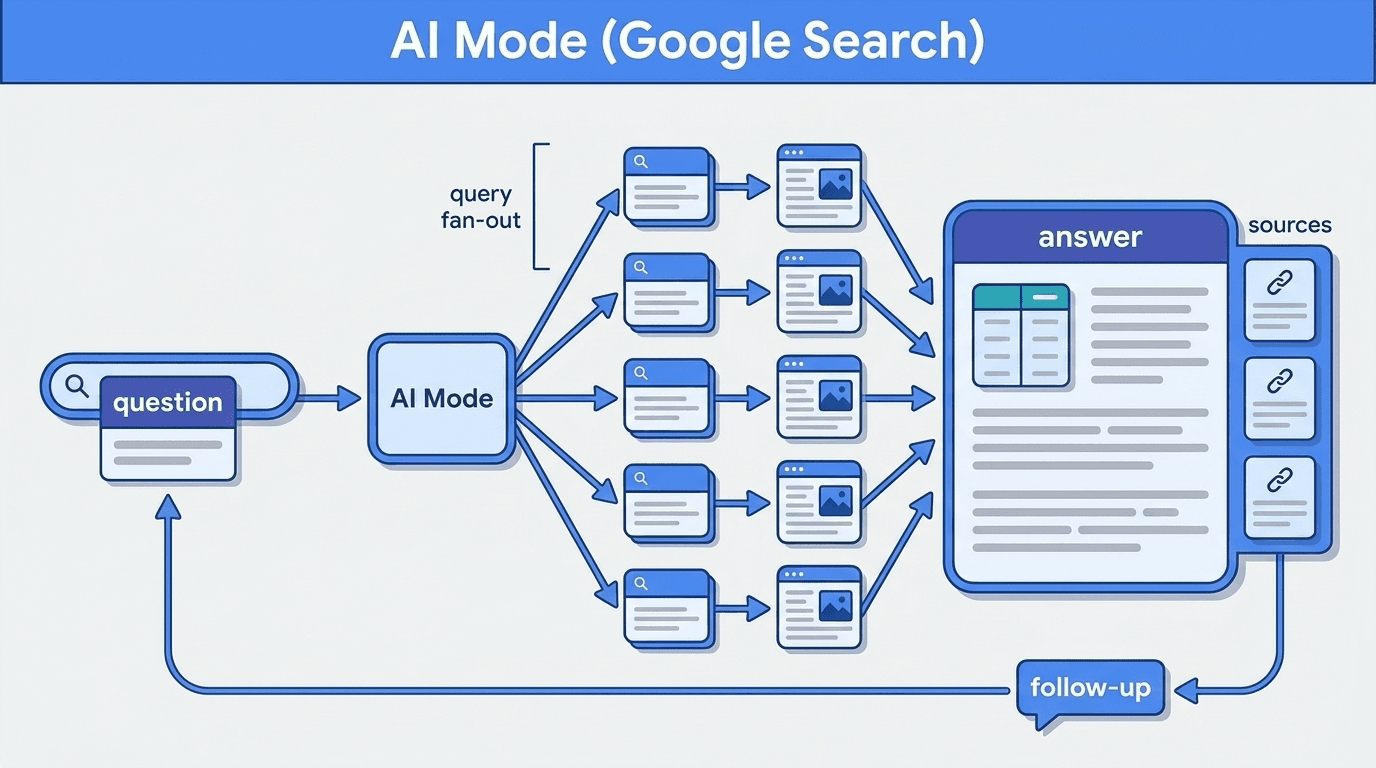
AI Mode (Google AI Mode)
AI Mode is a generative AI search mode built into Google Search that answers questions conversationa

Context Window
A context window refers to the maximum number of tokens an LLM can process at one time, indicating t
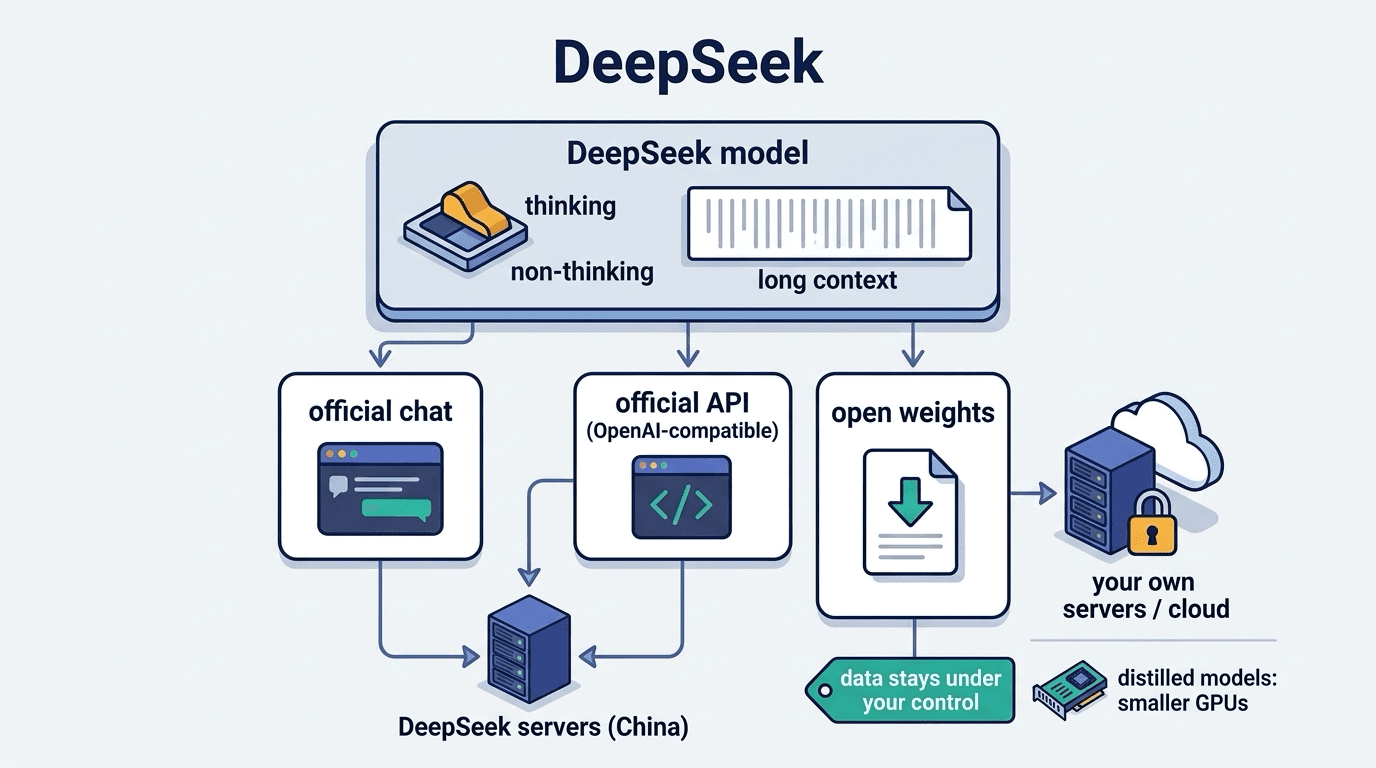
DeepSeek
DeepSeek is a family of large language models and a chat service developed by the Chinese company De
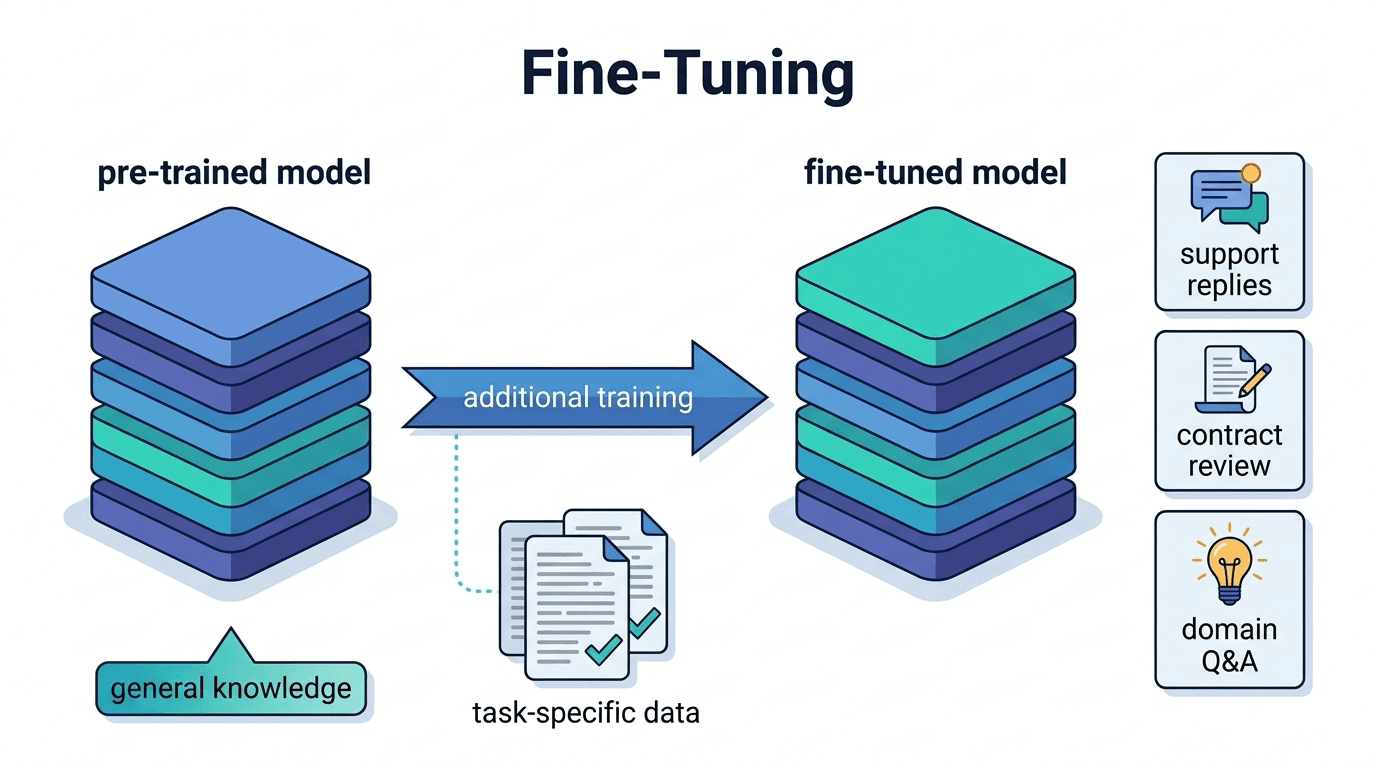
Fine-tuning
Fine-tuning refers to the process of providing additional training data to a pre-trained machine lea