What is AI Governance? A Practical Guide from EU AI Act Compliance to Internal Policy Development

AI Governance is the organizational framework for ensuring risk management, transparency, and accountability throughout the development, deployment, and decision-making processes of AI systems.
Now that AI systems are deeply involved in business decision-making, the absence of governance directly leads to legal risk and loss of trust. The EU AI Act, which has already been fully enforced, includes extraterritorial application and is not irrelevant to companies operating in Thailand and Southeast Asia. This article explains the fundamental concepts of AI governance, practical compliance with the EU AI Act, and the concrete steps for establishing internal rules. The goal is for practitioners who are unsure of "where to even begin" to be ready to start building their organization's governance framework by the time they finish reading.
Disclaimer: This article is intended for informational purposes only and does not constitute legal advice. Please consult a qualified attorney for specific legal matters.
What is AI Governance? Differences from Traditional IT Governance

AI governance is an organizational framework for managing risks and ensuring fairness, transparency, and accountability in the development, deployment, and operation of AI systems. While traditional IT governance frameworks such as COBIT and ITIL focus on infrastructure and service management, AI governance is fundamentally distinct in that it includes the model's decision-making process itself as a subject of oversight.
Comparison with IT Governance
| Perspective | IT Governance | AI Governance |
|---|---|---|
| Managed Objects | Infrastructure, networks, applications | Models, training data, inference results |
| Nature of Risk | Availability, confidentiality, integrity | Bias, hallucination, inexplicability |
| Rate of Change | Planned release cycles | Behavior changes unpredictably with model updates |
| Accountability | Developers and operators are clearly defined | Distributed among data providers, model developers, and users |
| Regulatory Framework | ISO 27001, SOC 2 | EU AI Act, NIST AI RMF, ISO 42001 |
Attempting to manage AI as an extension of IT governance risks overlooking a fundamental difference: the probabilistic nature of model outputs. Server uptime can be defined as 99.9%, but the "correctness" of an AI model is context-dependent — the same input can yield different outputs.
Why AI Governance is Needed Now
The business use of generative AI is expanding rapidly, and the need for governance has shifted from a theoretical to a practical concern. In our AI consulting work in Thailand, we are increasingly hearing cases such as "employees were inputting customer data into ChatGPT" and "AI-generated contracts were sent out without noticing errors."
The risks of absent governance can be broadly categorized into three areas:
- Legal risk: Fines of up to €35 million for violations of the EU AI Act, and violations of personal data protection laws
- Reputational risk: Loss of trust if biased AI decisions become public
- Operational risk: Cascading business failures resulting from decisions based on incorrect AI judgments
Overview of the EU AI Act and the Impact of Its Extraterritorial Application

The EU AI Act (Artificial Intelligence Act) is the world's first comprehensive AI regulatory law and, like the GDPR, has extraterritorial application. Companies that provide AI services to users within the EU are subject to regulation regardless of where their headquarters are located.
Risk-Based 4-Category Classification
The core of the EU AI Act lies in classifying AI systems into four risk levels and imposing different obligations on each.
1. Prohibited (Unacceptable Risk) Social credit scoring, real-time remote biometric identification (with exceptions for law enforcement), emotion recognition (in workplaces and educational institutions), and subliminal techniques that manipulate vulnerable groups. Penalties for violations can reach up to €35 million or 7% of global annual turnover.
2. High Risk Recruitment and HR evaluation, credit scoring, educational admissions decisions, safety management of critical infrastructure, law enforcement, immigration control, and more. Conformity assessments, CE marking, and registration in the EU database are required.
3. Limited Risk Chatbots, deepfake generation, and similar applications. Transparency obligations apply (i.e., disclosure that the system is AI).
4. Minimal Risk Spam filters, gaming AI, and the like. No special obligations.
In my conversations with companies across Southeast Asia, the most common source of confusion is determining which category their own AI systems fall under. For example, an internal recruitment screening tool would be classified as "High Risk," whereas an internal chatbot would remain in the "Limited Risk" category. It is easy to overlook the fact that even within the same umbrella of "AI tools," the level of regulation differs depending on the use case.
Implementation Schedule and Compliance Deadlines
The EU AI Act is being enforced in phases, with different application timelines depending on the type of AI system covered.
| Target | Content |
|---|---|
| Prohibited AI | Prohibition provisions such as social credit scoring |
| General-Purpose AI (GPAI) | Obligation for providers to disclose technical documentation and copyright policies |
| High-Risk AI (Annex III) | Conformity assessment, CE marking, and EU database registration |
| Annex I product-embedded AI | Integrated obligations with product safety regulations |
Providers of general-purpose AI models (GPT, Claude, Gemini, etc.) are required to prepare technical documentation, disclose copyright policies, and publish summaries of training data. Companies that use these models are also subject to obligations, including disclosure requirements that AI is being used (for limited risk or above), as well as a duty to cooperate with conformity assessments for high-risk applications.
Impact on Thai and Southeast Asian Companies
"We're not based in the EU, so it doesn't apply to us" — this is a misconception. Extra-territorial application occurs in the following cases:
- When providing AI-powered services to customers within the EU
- When using data from EU-based users for AI training or inference
- When the output of an AI system is utilized within the EU
If a Thai export company uses an AI-based quality inspection system for EU buyers, that system may fall under the scope of the EU AI Act. Among our own clients, we are seeing a growing number of cases where companies operating e-commerce platforms for European markets come to us with questions about disclosure obligations for AI recommendations.
Furthermore, the Thai government is also considering its own AI regulations. Thailand's MDES (Ministry of Digital Economy and Society) has published AI governance guidelines, and legislative development referencing the EU AI Act is underway. By proactively working toward EU AI Act compliance now, companies will also be well-positioned to smoothly adapt to future domestic regulations in Thailand.
Comparing Major AI Governance Frameworks

The EU AI Act is not the only guideline for AI governance. It is necessary to understand multiple frameworks and select the one that best suits your organization's situation.
Framework Comparison Table
| Framework | Issuer | Nature | Key Features |
|---|---|---|---|
| EU AI Act | EU | Legally binding | Risk-based classification, fines applicable |
| NIST AI RMF | U.S. NIST | Voluntary guidelines | Four functions: Map, Measure, Manage, Govern |
| ISO/IEC 42001 | ISO | Certification standard | International standard for AI management systems |
| Singapore IMDA AI Governance | Singapore Government | Guidelines | Highly practical for the ASEAN region |
| Thailand AI Ethics Guideline | Thailand MDES | Guidelines | Targeted at Thai domestic companies, centered on ethical principles |
For small and medium-sized enterprises, pursuing ISO 42001 certification from the outset is not cost-effective. A more rational approach is to first organize internal processes based on the NIST AI RMF, then address EU AI Act high-risk requirements as needed.
How to Choose the Right Framework for Your Company
There are three criteria for selection:
- Geographic scope of business: If you are involved in the EU market, compliance with the EU AI Act is essential. If your focus is on ASEAN, Singapore's framework serves as a useful reference.
- Level of AI usage: If you are simply using a general-purpose AI API, confirming transparency obligations is sufficient. If you are developing or fine-tuning your own models, systematic management through the NIST AI RMF is effective.
- Customer and business partner requirements: In B2B dealings with large enterprises, ISO 42001 certification is beginning to emerge as a condition of business transactions.
In practice, frameworks are something to be "combined" rather than "chosen." A realistic roadmap would be to use the EU AI Act's risk classification as a foundation, apply the NIST AI RMF's management processes, and then formalize everything with ISO 42001 in the future.
Steps to Build an Internal AI Governance Framework

Understanding frameworks alone is not enough. To make governance actually function within an organization, it is necessary to establish three elements: policy, process, and people. The following outlines a step-by-step approach.
Step 1: Inventory of AI Usage
The first step is to understand which AI tools are being used internally, by whom, and for what purpose. "Shadow AI" (AI usage that the IT department is unaware of) has become a problem in many companies.
Inventory Checklist:
- Create a list of AI tools and services in use for each department
- Identify the types of data entered into each tool (personal information, confidential information, general information)
- Assess the degree to which AI outputs influence final decisions (reference, assistance, automation)
- Confirm whether data is being sent to external APIs (OpenAI, Claude, Gemini, etc.)
- Confirm the existence of proprietary in-house models and the source of their training data
In the case of one manufacturing client, an inventory revealed that 42 AI tools were in use across 17 departments, of which 28 were unknown to the IT department. There was even a case where an image inspection AI independently introduced by the quality control department was being used for products destined for the EU — a situation in which, without an inventory, it was impossible to even begin risk classification under the EU AI Act.
Step 2: Risk Assessment and Policy Development
Based on the inventory results, assess the risk level of each AI use case and formulate an internal AI policy.
Items to include in the AI policy:
| Category | Specific Items |
|---|---|
| Scope of Use | Permitted AI tools, prohibited use cases (e.g., fully automated hiring decisions) |
| Data Handling | Classification criteria for data that may be input into AI, anonymization requirements for personal information |
| Quality Control | Standards for human review of AI outputs, frequency of accuracy monitoring |
| Transparency | Standards and methods for disclosing AI use to customers and business partners |
| Accountability | Decision-makers for AI-related matters, escalation flow in the event of an incident |
| Training | AI literacy training for all employees, specialized training by department |
The policy does not need to be perfect from the start. A practical approach is to first clarify what must not be done, then refine the details incrementally. An initial version that is concise enough to fit on 2–3 A4 pages is sufficient.
Step 3: Establishing a Governance Organization
A responsible organizational structure is essential for making policies effective. Below are three models based on company size.
Small companies (~50 employees): The existing IT manager concurrently handles AI governance. AI usage is reviewed on a monthly basis.
Mid-sized companies (50–500 employees): An AI governance committee is established, composed of representatives from IT, legal, and business units, with policies reviewed quarterly.
Large companies (500+ employees): A dedicated AI Governance Officer (Chief AI Officer) is appointed. An AI ethics committee is established, and a pre-approval process is applied to the introduction or modification of high-risk AI.
The most critical aspect of organizational design is ensuring that AI governance does not become the sole responsibility of the IT department. The impact of AI spans multiple functions, including business decisions, legal, HR, and marketing. Without executive-level sponsorship, governance risks becoming a mere formality.
Step 4: Monitoring and Continuous Improvement
A governance framework is not something you build once and forget. AI models degrade in accuracy over time (model drift), and the regulatory environment continues to evolve.
Elements of Continuous Monitoring:
- Model performance: Regular measurement of accuracy and fairness metrics. Trigger alerts when values fall below defined thresholds
- Data quality: Monitor distribution shifts between training data and production data
- Incident logging: Record AI-related failures and complaints, and conduct root cause analysis
- Regulatory trends: Track updates to EU AI Act enforcement guidance and emerging regulations across jurisdictions
- Internal compliance status: Conduct periodic audits of policy adherence, and share and remediate violation cases
For quarterly governance reviews, the following KPIs are recommended for tracking:
- Number of AI incidents (compared to the previous quarter)
- Policy compliance rate (based on audit results)
- AI usage disclosure rate (degree to which transparency obligations are met)
- Employee training completion rate
Common Mistakes and Precautions

Based on practical experience, this article organizes the common pitfalls companies tend to fall into when implementing AI governance.
Failure 1: Excessive Regulation Halts AI Adoption
It is not uncommon for overly strict governance to discourage frontline staff from using AI. At one client, a three-stage approval process was introduced for AI tool adoption, resulting in an average approval time of 45 days—ultimately leading a department head to abandon AI adoption altogether, concluding that "Excel is good enough."
The purpose of governance is not to prohibit AI, but to promote its use while managing risk. A "risk-based" approach is key: low-risk AI use cases (such as translation, summarization, and code completion) should be available without prior approval, while review processes are applied only to high-risk applications.
Failure 2: Creating Policies Without Operationalizing Them
A common pattern: an impressive AI policy document is created, but it never gets communicated internally and nobody reads it. The effectiveness of a policy depends on education and systematization.
- Don't assume everyone will read the policy in full. Instead, create "quick guides" for each department that extract only the relevant sections.
- Embed policy checklist items into the AI tool usage request form, designing the application process itself to function as governance.
- Regularly share violation cases (anonymized) so that people understand "why this rule exists" through concrete examples.
Failure 3: Disconnect Between the Technical Team and Legal/Management
AI governance sits at the intersection of technology and legal affairs. When pursued by the technical team alone, legal risks tend to be overlooked; when driven solely by legal, the resulting rules often prove technically unrealistic.
An effective solution is the role of an "AI governance translator" — someone who understands both technology and legal affairs and can communicate in the language of each. Where a dedicated individual is difficult to appoint, another approach is to form an AI governance task force by pairing one representative from the technical side with one from the legal side.
When we carry out AI governance support projects, we always ensure that representatives from three departments — IT, Legal, and Corporate Planning — are present at the initial workshop. The gap in understanding between departments is larger than one might expect; it is common to find a disconnect between senior management's concern that "AI is making decisions on its own" and the technical team's perception that "everything is controlled by rule-based logic."
Practical AI Governance Checklist for Real-World Use

Here is a checklist of items to verify when deploying and operating AI systems. It integrates the EU AI Act's high-risk requirements with NIST AI RMF best practices.
Pre-Installation Check
- Have you confirmed the intended use of the AI system and its risk classification under the EU AI Act?
- Have you assessed the provenance, licensing, and bias risks of the training data?
- Have you identified the people affected by AI decisions (stakeholders)?
- Have you designed human oversight mechanisms (Human-in-the-Loop / Human-on-the-Loop)?
- Have you determined how to disclose that AI is being used (chatbots, generated content, etc.)?
- Have you confirmed whether a Data Protection Impact Assessment (DPIA) is required?
- Have you reviewed the vendor's AI governance policy and data handling practices?
Operational Check
- Are model accuracy and fairness metrics being measured on a regular basis?
- Are AI-related incidents and complaints being recorded and analyzed?
- Are changes in input data quality and distribution being monitored?
- Is the human review process for AI outputs functioning properly?
- Are changes in the regulatory environment (e.g., updates to EU AI Act enforcement guidance) being tracked?
- Is AI literacy training for employees being conducted on a regular basis?
- Are the contractual terms of third-party AI tools being reviewed periodically?
This checklist is not exhaustive and needs to be customized according to your organization's industry, size, and degree of AI usage. What matters more than the existence of the checklist itself is embedding within the organization the habit of reviewing it on a regular basis.
FAQ

Answering frequently asked questions about AI governance.
Q1: Is AI Governance Necessary for Small and Medium-Sized Enterprises?
It is necessary. However, the approach differs. Companies with fewer than 50 employees do not need to obtain ISO 42001 certification. At a minimum, simply formalizing two rules—"criteria for data that must not be entered into AI" and "a verification process for when AI output is used in final decision-making"—can significantly reduce risk. The EU AI Act also provides simplified compliance measures for small and medium-sized enterprises (regulatory sandboxes, guidance documents).
Q2: When using generative AI (ChatGPT, Claude, etc.) internally within your organization, where should you start?
First, establish usage guidelines. Specifically:
- Definition of prohibited input data: Personal information, confidential customer information, and undisclosed business information are prohibited from being entered
- Output verification requirements: Documents, code, and analysis results generated by AI must be reviewed by the responsible party before use
- Designation of approved tools: Only tools approved by the IT department may be used. Use of personal accounts for business purposes is prohibited
- Log retention: Records must be kept of AI interactions that are significant to business operations
A practical starting point is to consolidate these into a single A4 page and roll them out company-wide.
Q3: What are the penalties for violating the EU AI Act?
Three tiers of fines are established depending on the type of violation:
- Use of prohibited AI: Up to €35 million or 7% of global annual turnover, whichever is higher
- Non-compliance with obligations for high-risk AI: Up to €15 million or 3% of global annual turnover
- Violation of information provision obligations: Up to €7.5 million or 1% of global annual turnover
Proportionally lower caps apply to SMEs and startups. However, fines are not the only risk. Exclusion from the EU market, loss of trust from business partners, and reputational damage from media coverage may have an even greater impact on business operations.
Summary & Next Steps

AI governance is not "just for large corporations" — it is a foundational requirement for every organization that uses AI in its operations. With the EU AI Act now fully in force, the legal risks of operating without governance have become unambiguously clear.
3 actions you can start today:
- Inventory: Identify all AI tools and services currently in use across your organization
- Minimal policy: Document "what data must not be entered into AI" and "the process for reviewing AI outputs"
- Assign an owner: Designate one person responsible for driving AI governance (a concurrent role is acceptable)
Taking these three steps alone allows most organizations to take their first meaningful stride toward AI governance. There is no need to build a perfect framework from the outset. Starting small and expanding in response to incidents and regulatory changes is the most effective approach when resources are limited.
We support companies in Thailand and Southeast Asia in building AI governance frameworks. From inventory and policy development to organizational design, if you are interested in developing a roadmap tailored to your specific situation, please feel free to reach out.
Author & Supervisor

Yusuke Ishihara
Started programming at age 13 with MSX. After graduating from Musashi University, worked on large-scale system development including airline core systems and Japan's first Windows server hosting/VPS infrastructure. Co-founded Site Engine Inc. in 2008. Founded Unimon Inc. in 2010 and Enison Inc. in 2025, leading development of business systems, NLP, and platform solutions. Currently focuses on product development and AI/DX initiatives leveraging generative AI and large language models (LLMs).
Recommended Articles


Terms related to this article
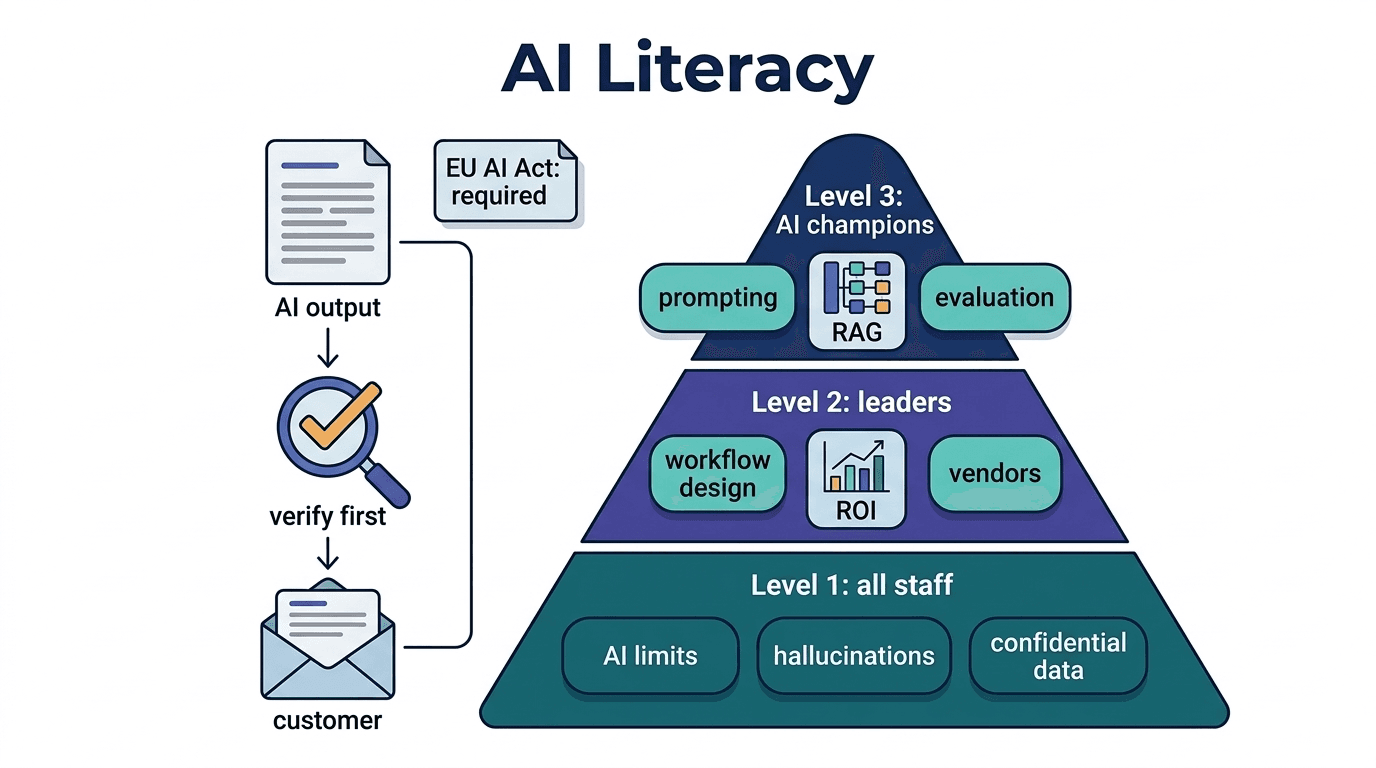
AI Literacy (AI Literacy)
Knowledge and skills to understand the basic concepts, limitations, and risks of AI, and to appropri

AI TRiSM (AI Trust, Risk, and Security Management)
AI TRiSM is a collective term for frameworks that systematically ensure the trustworthiness, risk ma
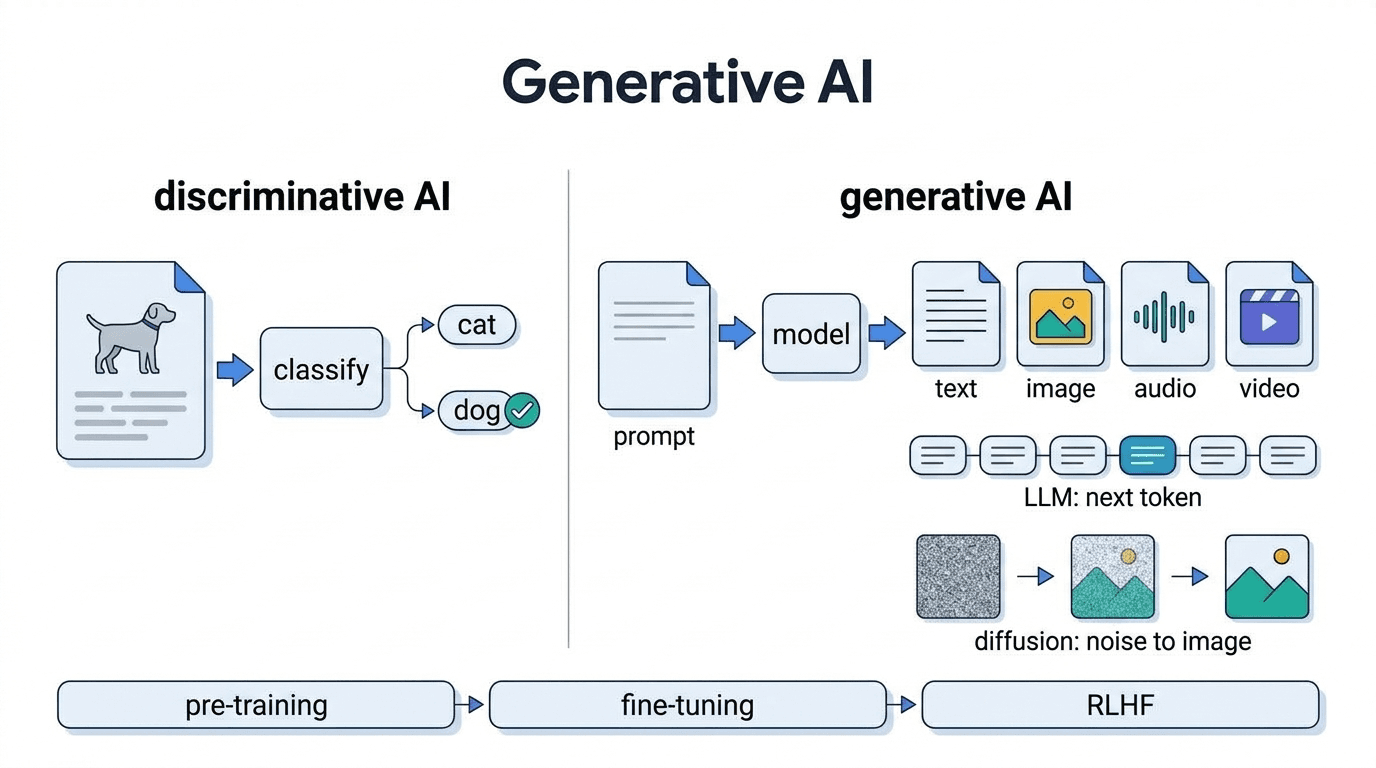
Generative AI (Generative AI)
Generative AI is a collective term for AI models capable of autonomously generating content such as