How Thai SMEs Can Reduce Marketing Costs with Generative AI

Lead
Generative AI marketing is an approach that leverages generative AI tools such as ChatGPT and Canva AI to produce text, image, and video marketing content at low cost and high speed. In Thailand, businesses are required to manage multiple channels including LINE Official Account, TikTok, and Shopee, making it a daily struggle for SME marketing staff to "keep up with updates" and "manage rising outsourcing costs."
This article explains how Thai SMEs can select generative AI tools they can start using today, along with specific production workflows for text, images, and video. It is a practical guide for business owners and marketing staff who want to maintain their SNS and EC update frequency while keeping production costs down.
The biggest reason Thai SMEs should incorporate generative AI into their marketing is that it allows them to achieve both "quantity" and "quality" of content even on a limited budget. Rising outsourcing costs combined with the diversification of channels have created a situation that traditional production workflows can no longer adequately handle.
Production Cost Challenges and AI-Driven Solutions
When Thai SMEs outsource their marketing content, working with freelancers or small production companies typically costs 300–3,000 baht per social media post and 1,000–10,000 baht per product for product photography (these are reference ranges that vary significantly depending on quality and turnaround time). Assuming updates are posted three times per week across five channels—LINE Official Account, Facebook, TikTok, Instagram, and Shopee/Lazada—monthly outsourcing costs for text and images alone can easily reach tens of thousands of baht.
For SMEs in their early stages with unstable revenue, these fixed costs place a heavy burden on operations. Yet reducing posting frequency creates a dilemma: less content means reduced algorithmic exposure, which in turn weakens customer acquisition.
Generative AI offers a practical solution to this structural challenge. Text generation tools can produce multiple variations of a single product description in just minutes. Image generation tools make it possible to swap product backgrounds or create banners without any photography. While not zero-cost, monthly subscription fees for major tools typically run around 300–700 baht per tool, and using several tools in combination often stays within a total of 1,000–3,000 baht—a structure that can significantly reduce traditional outsourcing expenses.
The key is not to "fully automate with AI," but rather to establish a division-of-labor model in which "AI handles the drafting process, with humans performing the final review and adjustments." With this approach as the foundation, it becomes realistic to multiply production speed several times over while maintaining quality.
Characteristics of Thailand's Social Media and E-Commerce Market
Thailand's digital marketing landscape differs significantly from that of Japan and the West. The most defining characteristic is LINE's overwhelming penetration rate. Out of Thailand's population of approximately 70 million, LINE's active users exceed 50 million (per LINE's official figures). As a BtoC communication channel, it occupies a position that is virtually "infrastructure."
What struck the author while walking through Chatuchak Market in Bangkok was that the majority of street stalls were displaying QR codes for their LINE Official Accounts. Price negotiations and stock inquiries are handled entirely through LINE——for Thai SMEs, LINE is not a channel that is "nice to have," but one without which "you simply cannot do business."
Another defining characteristic is the rapid growth of short-form video platforms. TikTok Shop has been aggressively expanding its e-commerce capabilities across Southeast Asia, and in Thailand, the funnel of "watch a video and buy on the spot" is becoming firmly established. Including Instagram Reels and Facebook Reels, demand for short-form video content in the 15–60 second range is surging.
On the e-commerce front, Shopee and Lazada are the two dominant platforms. Since product image quality affects conversion rates on both platforms, the ability to produce high-quality product images at scale on a limited budget is directly tied to the competitiveness of SMEs.
In short, Thai SMEs are simultaneously required to manage three distinct formats: LINE (text + images), TikTok/Reels (video), and Shopee/Lazada (product images + descriptions). Leveraging generative AI is a rational choice for small teams looking to meet these multi-channel, multi-format demands.
Steps for Creating Written Content with Generative AI

For generative AI use in written content creation, two factors determine outcomes: tool selection and prompt design. The starting point is choosing a tool that delivers Thai language quality at a practical level, and establishing prompt templates that align with your brand.
Selection of AI Tools with Thai Language Support
When generating Thai-language marketing content, the most important factor in tool selection is Thai output quality. The key is not just grammatical correctness, but whether the tool can use natural colloquial expressions and appropriately switch between different levels of politeness.
Here is an overview of the main tools' characteristics.
| Tool | Thai Quality | Estimated Monthly Cost | Features |
|---|---|---|---|
| ChatGPT (GPT) | High | Free to approx. 700 THB | Highly versatile, handles both long and short text. Can switch between colloquial and polite registers depending on the prompt |
| Claude | High | Free to approx. 700 THB | Strong at understanding instructions. Tends to adhere well to brand guidelines when provided |
| Gemini | High | Free to approx. 700 THB | Strong integration with the Google ecosystem. Highly compatible for Google Workspace users |
| LINE AI (built-in LINE) | Moderate | Included in LINE Official Account costs | Simple response generation within LINE. Customizability is limited |
Key Selection Criteria:
- Start with the free plan: ChatGPT, Claude, and Gemini all offer free plans, so the most reliable approach is to generate around 10 Thai-language social media posts with each and compare the quality
- Have a Thai native speaker review the output: Always have a native speaker check AI-generated text. Even if the grammar is correct, "unnatural Thai" can undermine customer trust
- When to upgrade to a paid plan: Once you frequently hit the usage limits of the free plan, it is a sign that a monthly subscription offers a worthwhile return on investment
Please note that the monthly fees listed above are reference values at the time of writing, and the pricing structures of each tool change frequently. Always check the official website for the latest pricing plans before adopting any tool.
Product Description, Blog & Social Media Post Generation Workflow
Once you've chosen your tools, the next step is to build a reproducible workflow. Quality tends to vary when relying on ad-hoc, person-dependent prompting, which is why templatization is essential.
Step 1: Prepare Prompt Templates
Prepare templates for each content type that include the following elements:
- Role: You are an SNS marketer targeting SMEs in Thailand
- Tone: Friendly / Formal / Humorous (select to match the brand)
- Format: LINE message / Facebook post / Product description
- Constraints: Character limit / Use of emoji / Type of CTA
- Product information: Product name, features, price range, target audience
For LINE messages, for example, set specific constraints such as "within 150 characters, friendly tone, with emoji, CTA is a shop link."
Step 2: Generate Variations
From a single set of product information, batch-generate 3–5 copy variations per channel.
- For LINE messages: Short text + emoji + link
- For Facebook posts: Slightly longer text + narrative + image caption
- For Shopee product descriptions: Spec-focused + bullet points + search keywords included
- For TikTok descriptions: Hashtag-centric + short text
Step 3: Human Review and Adjustment
Avoid publishing AI-generated copy as-is. Review it against the following checkpoints:
- Fact-checking: Are factual details such as price, stock availability, and specs correct?
- Tone: Does it feel natural as the brand's voice?
- Natural Thai: Are there any literal translations or unnatural levels of honorific language?
- Platform guidelines: Does it violate any prohibited expressions (e.g., exaggerated claims, comparative advertising)?
Once this workflow is established, the time spent writing copy per product can be reduced from the conventional several tens of minutes down to around 10 minutes. The ideal approach is to redirect the time saved toward tasks that only humans can do, such as photography and customer support.
Steps for Creating Image and Video Content with AI

Generative AI for images and video has the potential to transform SME cost structures even more dramatically than text generation. In particular, product image background replacement and short-form video production are areas where processes that previously required outsourcing can now be brought in-house.
Product Image Background Generation and Variation Creation
When selling products on EC sites or social media, the quality of product images directly impacts sales. Many EC platforms recommend white backgrounds for product images, and white backgrounds are standard in listing guidelines due to their visibility and clean appearance. While many SMEs commission professional photographers for product shoots, AI image tools offer a practical alternative for SMEs that lack the budget to have all their products professionally photographed.
Key Tools and Use Cases:
| Tool | Use Case | Estimated Monthly Cost |
|---|---|---|
| Canva (with AI features) | Background removal + background generation + banner creation | Free – approx. 400 THB |
| Adobe Firefly | Background generation + image expansion + style conversion | Approx. 800 THB+ |
| remove.bg | Background removal (dedicated) | Free – pay-as-you-go |
| Fotoroom | Specialized background replacement for EC product images | Free – approx. 500 THB |
※ Prices listed above are reference values at the time of writing. Check each official website for the latest pricing.
Practical Workflow:
- Photograph your product with a smartphone: Shoot in natural light against as simple a background as possible. A perfect composition is not required, but it is important that the product itself is in focus.
- Remove the background: Use Canva or remove.bg to cut out just the product. Recent AI can handle even hair and transparent materials with high precision.
- Generate or swap the background: Replace the background depending on the intended use — white backgrounds (for EC), lifestyle backgrounds (for social media), seasonal event backgrounds (for campaigns), and so on.
- Produce variations at scale: Automatically generate size and layout variations for each channel from a single product image. Using Canva's Magic Resize feature, you can create a square (Instagram), portrait (Stories), and landscape (Facebook cover) all at once.
When the author put together this workflow for an apparel SME in Bangkok, there was initial concern that "images made with AI might look cheap." For everyday goods and fashion accessories, AI-generated backgrounds tend to hold up well in many cases. On the other hand, for luxury products where brand aesthetic is a priority, it is worth using AI and professional photography selectively depending on the situation.
Production of Short Videos for TikTok and Reels
Short-form video is often perceived as having a high production barrier, but with the evolution of generative AI tools, an environment is emerging where videos can be automatically generated from just text and images.
Tool Selection:
| Tool | Features | Estimated Monthly Cost |
|---|---|---|
| CapCut (TikTok integration) | Abundant templates, text-to-video, auto-captions | Free ~ approx. 300 THB |
| Canva Video | Design templates + AI video generation | Included in Canva Pro |
| Lumen5 | Blog post-to-video conversion | Approx. 1,500 THB~ |
| InVideo AI | Text prompt-to-video generation | Approx. 800 THB~ |
※ The prices listed above are reference values at the time of writing. Check each official website for the latest pricing.
CapCut is the most realistic option for SMEs. There are three reasons: its seamless integration with TikTok, its sufficiently robust features even on the free plan, and its templates that are frequently updated to align with Thai market trends.
Steps for Creating Short-Form Videos Using CapCut:
- Prepare your materials: 3–5 product images + product feature text + background music (selected from CapCut's built-in library)
- Choose a template: Select a template suited to your objective, such as "Product Showcase," "Before After," or "Feature Highlight"
- Add text and Thai subtitles: Generate Thai-language captions using the AI auto-caption feature, and edit as needed
- Include a CTA: Insert an action prompt at the end of the video, such as "Add us on LINE here" or "Search on Shopee"
- Export in multiple sizes: TikTok (9:16), Instagram Reels (9:16), Facebook Feed (1:1 or 4:5)
Once you get the hang of it, producing a single video takes around 15–30 minutes. Maintaining a posting pace of 2–3 videos per week tends to stabilize account visibility within TikTok's algorithm.
However, there is one caveat. While AI templates are convenient, continuing to use the same template will cause followers to lose interest. The key to longevity is deliberately incorporating a "human touch" — for example, changing templates every two weeks, or alternating between self-recorded footage and AI-generated content.
Key Considerations for Avoiding Failures in Generative AI Marketing

Implementing generative AI is not a cure-all, and improper operation carries risks of brand damage and compliance violations. The following section explains two key points that require particular attention in the Thai market.
How to Maintain Consistent Brand Tone
The biggest weakness of generative AI, if left unchecked, is that your brand's "voice" will drift. Even when using the same ChatGPT, different prompts will produce text with a different tone each time. When multiple people are involved, consistency is even harder to maintain.
Systems for Maintaining a Unified Brand Tone:
- Create a brand voice guide: Consolidate the following elements onto a single page and include it in every prompt
- Brand personality (e.g., "like a trustworthy friend," "expert but approachable")
- Expressions to use / expressions to avoid
- Thai honorific level (whether to use ครับ/ค่ะ, acceptable range of slang)
- Rules for using emoji and emoticons
-
Embed the guide in your prompt template: Configure the brand voice guide in your system prompt or custom instructions so it is applied automatically without having to be entered manually each time
-
Assign a single dedicated reviewer: Establish a workflow of AI generation → reviewed by Person A → published, creating a unified "final filter." This alone will significantly reduce tonal inconsistency
-
Monthly tone check: Randomly pull 10 posts from the past month and verify tonal consistency. If there is drift, adjust the prompt template accordingly
A common issue seen in SMEs that start using AI without guidelines is cross-channel inconsistency — "Facebook is too formal while LINE is too casual." Some degree of tone adjustment per channel is necessary, but the core "personality" of the brand should remain consistent throughout.
Legal Risks of Copyright and AI-Generated Content
When commercially using AI-generated content in Thailand, there are important points to be aware of from a copyright law perspective.
Current Legal Situation:
Thailand's Copyright Act (พ.ร.บ.ลิขสิทธิ์ พ.ศ. 2537) assumes that the creator of a copyrighted work is a "natural person," and there are currently no clear precedents or legislative amendments addressing the attribution of copyright for content autonomously generated by AI. This is a situation common to many countries, including Japan and the United States.
Practical Risks and Countermeasures:
- Training data contamination from third-party copyrighted works: Image generation AI may produce images resembling existing trademarks, logos, or characters included in its training data. Before publishing generated images, visually verify that they do not closely resemble existing brand logos or well-known characters.
- Disclosure of AI generation: While there is currently no legal obligation under Thai law, it is recommended from a consumer protection standpoint to include a note stating "AI-generated images used" when using AI-generated images in advertisements. In particular, for advertisements featuring human images, it is advisable from a risk management perspective to clearly indicate that the individuals depicted do not exist.
- Checking tool terms of service: Verify that commercial use is permitted under the terms of service for each AI tool. Some tools restrict commercial use under their free plans.
| Tool | Commercial Use (Free Plan) | Commercial Use (Paid Plan) |
|---|---|---|
| ChatGPT | Check terms of service | Permitted |
| Canva (AI features) | Some restrictions apply | Permitted |
| CapCut | May be limited to personal use | Check terms of service |
As the latest terms of service are subject to change, always check the official website for the most current terms before adopting any tool.
Until the legal framework matures, the most practical way to minimize risk is to maintain a workflow in which "humans provide instructions, and humans review, edit, and publish the output."
Frequently Asked Questions (FAQ)

Q: How much does it cost to implement generative AI tools?
The major tools (ChatGPT, Canva, CapCut) all offer free plans, allowing you to get started with zero upfront cost. Even when upgrading to a paid plan, prices typically range from around 500 to 3,000 baht per month. Compared to outsourcing content across multiple channels (which can cost tens of thousands of baht per month), the cost-effectiveness is high. However, pricing structures are subject to change, so be sure to check the official websites for the latest information.
Q: Can AI-generated Thai text be used as-is?
Using it without review is not recommended. While ChatGPT and Claude offer high accuracy in Thai grammar and vocabulary, human review is essential for adjusting brand-specific expressions, slang, and the appropriate level of politeness for your target audience. A practical approach is to let "AI handle 80% of the work, with humans refining the remaining 20%."
Q: Is it acceptable to post AI-generated images on Shopee or Lazada?
Shopee and Lazada's listing policies require that product images accurately represent the product. Replacing the background with AI is generally acceptable, but images where the product's color, shape, or size differs from the actual item may violate the terms of service. The safe operating standard is: "AI for the background, real photography for the product itself."
Summary

For Thai SMEs, generative AI has entered a phase where it should be viewed not as a "high-level technology investment" but as an "everyday operations efficiency tool."
Let's recap the key points covered in this article.
- Cost: Tool expenses of a few hundred to a few thousand baht per month can significantly reduce traditional outsourcing costs
- Copy: Build out prompt templates and systematize the generation of channel-specific variations
- Images: Smartphone photography combined with AI background generation enables mass production of product images without relying on studio shoots
- Video: Using templates in CapCut and similar tools, a single short video can be produced in 15 to 30 minutes
- Risk management: Establish measures for maintaining consistent brand tone and addressing the legal risks of AI-generated content from the moment of implementation
The first step can be a small one. A practical approach is to start by trying generative AI on just one channel — LINE broadcast messages, for example — get a feel for the balance between quality and efficiency, and then gradually expand into images and video.
Author & Supervisor

Yusuke Ishihara
Started programming at age 13 with MSX. After graduating from Musashi University, worked on large-scale system development including airline core systems and Japan's first Windows server hosting/VPS infrastructure. Co-founded Site Engine Inc. in 2008. Founded Unimon Inc. in 2010 and Enison Inc. in 2025, leading development of business systems, NLP, and platform solutions. Currently focuses on product development and AI/DX initiatives leveraging generative AI and large language models (LLMs).
Recommended Articles


Terms related to this article
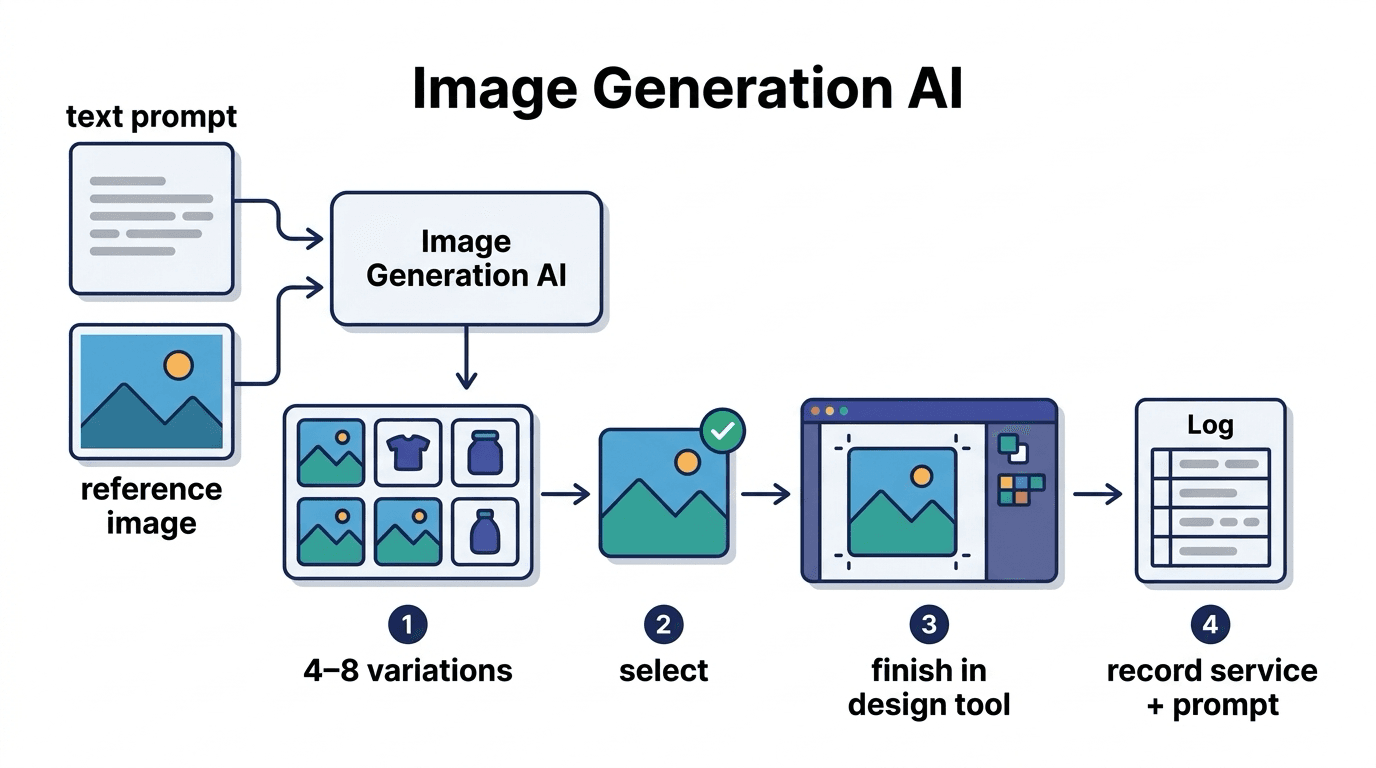
Image Generation AI
Image generation AI refers to generative AI that creates new images from text instructions or refere
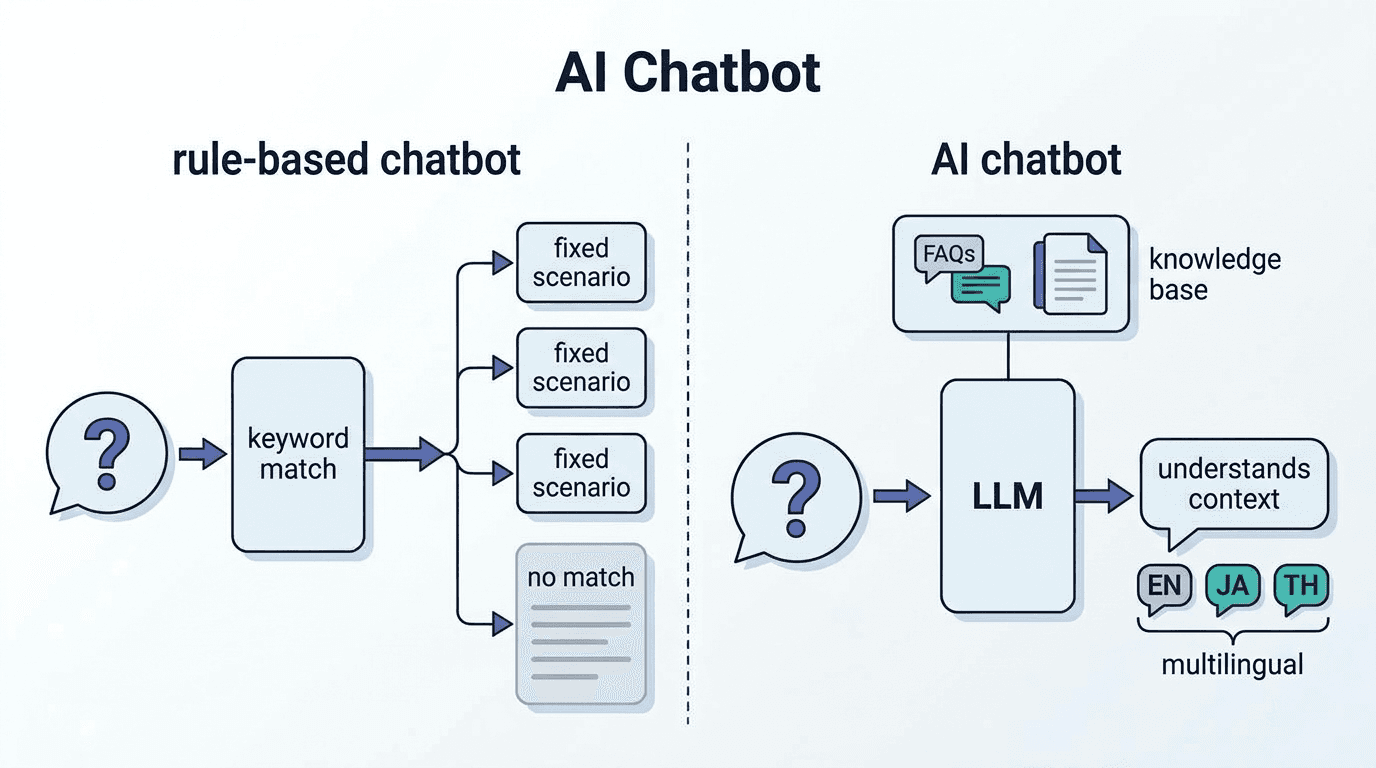
AI Chatbot
An AI chatbot is software that leverages natural language processing (NLP) and LLMs to automatically
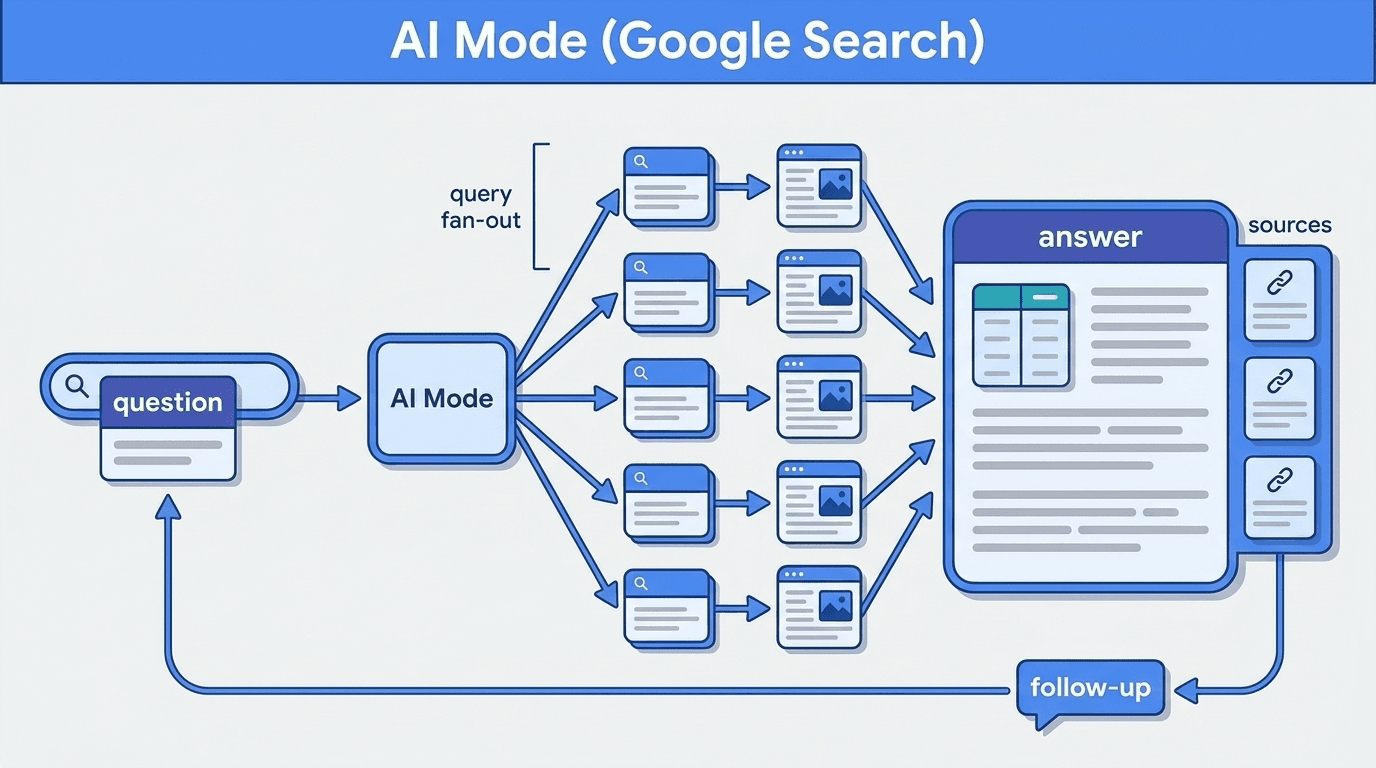
AI Mode (Google AI Mode)
AI Mode is a generative AI search mode built into Google Search that answers questions conversationa