How Thai E-Commerce Stores Can Automate Customer Support with AI Chatbots

Lead
An EC chatbot is a system that leverages AI to automate product inquiries, order tracking, and return handling for online shops. In Thailand's EC market, adoption is spreading as a means of reducing the rapidly growing customer support workload while boosting sales.
Thailand's EC market boasts one of the highest growth rates in Southeast Asia, with online shopping rapidly expanding centered on Shopee, Lazada, and TikTok Shop. However, as transaction volumes increase, customer support inquiries are surging in tandem. "Is this item in stock?" "When will my order arrive?" "I ordered the wrong size"——these routine inquiries are putting pressure on limited staff.
This article explains, in three steps, the concrete procedures for Thai EC shops to introduce AI chatbots and automate customer support——from organizing product FAQs to integrating order tracking and return processing.
Thai EC operators find themselves in a situation where human responses cannot keep up with the rapid surge in inquiries, and platform-standard auto-replies alone are insufficient to maintain customer satisfaction. AI chatbots solve this problem.
Let us examine the two structural challenges facing Thailand's EC market.
Surge in Inquiries and the Limits of Human Support
Thailand's EC market has an exceptionally high proportion of social commerce (sales via social media). Many shops accept orders through Facebook pages, Instagram direct messages, and LINE official accounts, and manually replying across all of these channels has reached a physical limit.
During sale periods (11.11, 12.12, pre-Songkran campaigns, etc.), inquiry volumes can swell to several times their normal level. When staff are unable to keep up and responses are delayed during these periods, more customers abandon their purchases, causing shops to miss out on sales opportunities.
"Is this item still in stock?" "How much is the shipping fee?" "How many days will delivery take?"——the majority of such questions are information already stated on product pages and shipping policy pages. Yet customers find it faster to ask via chat than to search for the information themselves. This "it's quicker to just ask" culture is unique to Southeast Asian EC and serves as a strong motivation for chatbot adoption.
Why Auto-Responses on Shopee and Lazada Are Not Enough
Shopee and Lazada come equipped with platform-standard auto-reply features, but their limitations are clear.
Limitations of platform auto-replies:
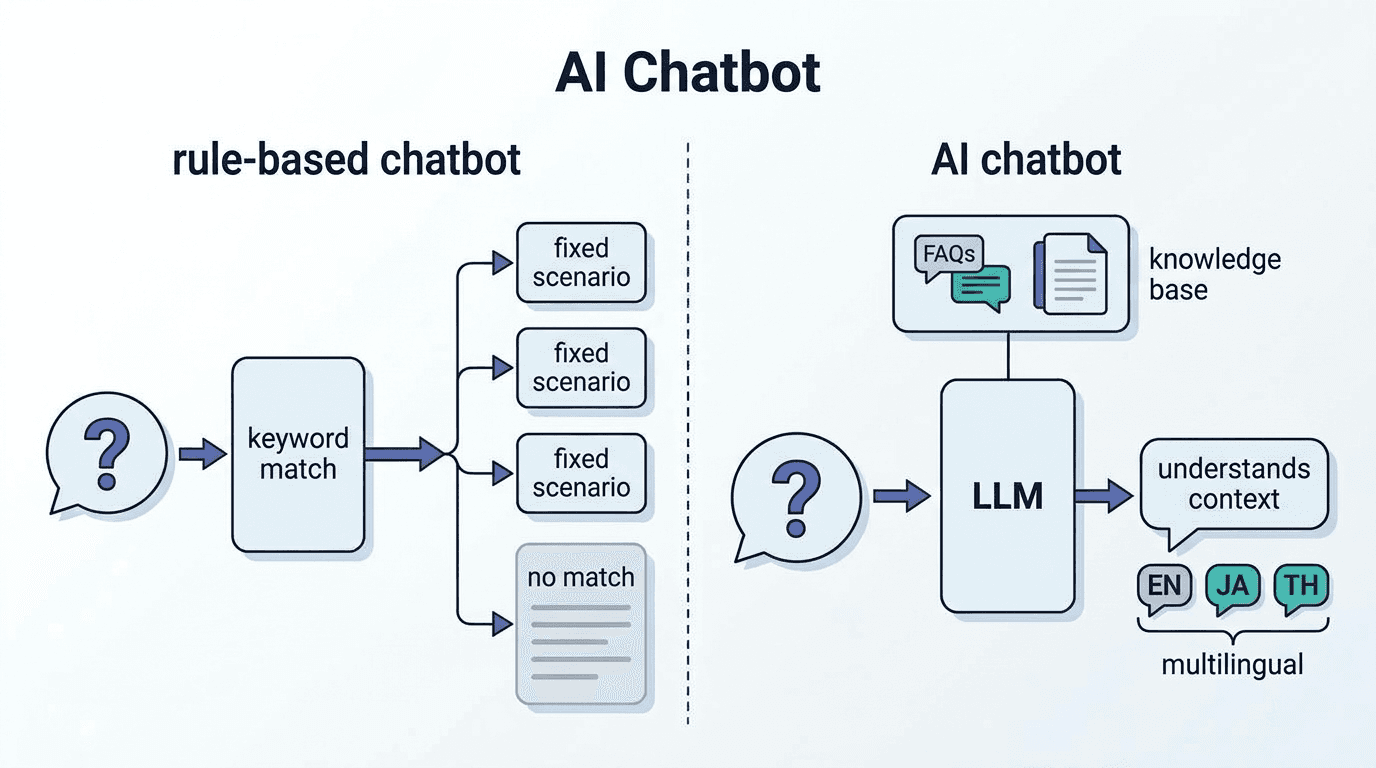
- Template-only responses — They simply return a fixed response based on keyword matching and do not understand context. The best they can do in response to "Do you have this in black, size M?" is to reply with "Thank you for your inquiry. Please contact the shop regarding stock availability."
- Fragmented across platforms — Separate auto-replies must be configured for Shopee, Lazada, LINE, and Facebook individually, making unified customer service impossible.
- No integration with purchase data — They cannot provide responses that reference a customer's past order history. They cannot handle requests such as "I'd like to order the same item I bought last time."
LLM-based AI chatbots go beyond these limitations, handling customer interactions through natural conversation and delivering accurate responses by integrating with product catalogs and order databases.
Steps to Implement an AI Chatbot for E-Commerce

EC chatbot implementation proceeds in three steps: organizing product FAQs → building the chatbot → integrating order tracking and returns. The key is to incorporate EC-specific inventory fluctuations and multi-channel support into the design from the outset.
The following sections explain how to approach each step.
Step 1: Organizing Product FAQs and Return Policies
Analyze the most common inquiries in EC customer support and define the scope of questions the chatbot will handle.
FAQ categories to organize:
- Product information — Size, materials, color, usage, and compatibility. Frequently asked questions vary by product category — for apparel, questions like "Is this M size the same as a Japanese M?"; for electronics, "Can this adapter be used with Japanese outlets?"
- Stock and restocking — "Is this color in stock?" "When will it be restocked?" Real-time inventory lookup is ideal, but in the early stages it is acceptable to use a buffer response such as "Please check the shop for the latest stock availability."
- Shipping — Shipping fees, delivery times, how to check tracking numbers, and delivery areas. Major carriers within Thailand include Kerry Express, Flash Express, and Thailand Post.
- Returns and exchanges — Return conditions, deadlines, procedures, and refund methods. Return policies should be clearly defined in advance so the chatbot can provide accurate guidance.
- Payment — Supported payment methods (credit card, bank transfer, PromptPay, cash on delivery) and whether installment payments are available.
Key point: The nature of EC inquiries differs significantly between "pre-purchase" and "post-purchase." Pre-purchase inquiries involve gathering information to inform a buying decision, while post-purchase inquiries focus on problem resolution. Organizing your FAQ with this distinction in mind will improve the quality of the chatbot's responses.
Step 2: Building a Chatbot Integrated with Your Product Catalog
By integrating with a product catalog, the chatbot can retrieve accurate information from the product database to answer questions such as "Tell me about [specific aspect] of this product."
Key points for implementation:
- RAG-based product catalog — Store product names, descriptions, specifications, prices, and stock quantities in a vector database. When a customer asks "Do you have a waterproof backpack for under 5,000 baht?", the system can search for matching products and make suggestions.
- Multi-channel support — Handle inquiries from multiple channels — LINE, Facebook Messenger, Shopee Chat, Instagram DM, and others — in a unified manner. The backend is shared, while only the frontend channel differs.
- Thai language nuance handling — The Thai EC market is primarily Thai-language. Proper tone configuration is essential, including correct use of polite particles "ครับ/ค่ะ" and an understanding of Thai slang and abbreviations (e.g., "สนใจมั้ยคะ" = "Are you interested?").
Advantages of an LLM-based approach:
An LLM can understand the intent behind a customer's question and search the product catalog accordingly. The ability to make cross-category suggestions in response to vague requests — such as "Any recommendations for a birthday gift for my girlfriend? Budget is around 3,000 baht" — is a distinctive strength of LLMs.
Step 3: Integrating with Order Tracking and Return Processing Systems
"When will my order arrive?" is the most common post-purchase inquiry in EC. By integrating with carrier tracking APIs, the chatbot can respond with status updates instantly.
Systems to integrate:
- Shipping tracking API — Integrate with tracking APIs from Kerry Express, Flash Express, Thailand Post, and others to return delivery status simply by entering an order number. In addition to statuses such as "Shipped," "In Transit," and "Delivered," display the estimated arrival date.
- Order Management System (OMS) — Accept order modifications such as address changes and cancellations. However, cancellations should be limited to orders that have not yet shipped; post-shipment cancellations should be escalated to a staff member.
- Returns processing — Complete the entire returns flow within the chatbot: guiding customers through return conditions → generating a return form → issuing a shipping label → tracking refund status.
A phased integration approach is practical. Start with shipping tracking only, then add returns handling, and finally order modifications. Shipping tracking APIs are relatively straightforward to implement and deliver the greatest reduction in customer inquiries.
AI-Driven Patterns to Boost Sales

AI chatbots can not only reduce customer support costs, but also directly drive sales through cross-selling based on purchase history and cart abandonment recovery.
Once support efficiency has stabilized, turn your attention to revenue contribution.
Cross-Sell and Upsell Recommendations Based on Purchase History
If the chatbot can access a customer's purchase history, it can naturally incorporate cross-sell and upsell suggestions into the conversation.
Usage patterns:
- Related product suggestions — Recommend items that complement a customer's purchase within the conversation — for example, suggesting a compatible screen protector to a customer who bought a smartphone case.
- Repeat purchase prompts — For customers who have purchased consumables (cosmetics, supplements, pet food, etc.), send a reminder after a set period from their last purchase: "It might be time to restock soon."
- Upselling — Suggest higher-capacity or higher-spec variants based on the customer's purchasing patterns. However, careful tone design is essential to avoid coming across as pushy.
In-chat suggestions achieve dramatically higher open and response rates than email newsletters. Since LINE message open rates are several times higher than those of email, recommendations delivered via chatbot can be expected to contribute directly to sales.
Automated Follow-Up for Cart Abandonment Recovery
"Cart abandonment" — where customers add items to their cart but don't complete a purchase — is the single greatest opportunity loss for EC businesses. Automating cart abandonment recovery with a chatbot can recoup this loss.
Recovery Flow:
- Cart Abandonment Detection — Triggered when a purchase is not completed within a set period (e.g., 1 hour) after items are added to the cart.
- Reminder Message — Naturally reach out via LINE or chat with a message such as: "You still have items in your cart. Do you have any questions about the products you were looking at?"
- Removing Purchase Barriers — If a customer responds with concerns like "the shipping fee is too high" or "I'm not sure if the size will fit," resolve their hesitation by offering information about free shipping campaigns or providing a size guide.
- Limited-Time Offer — After 24 hours have passed since cart abandonment, present a time-limited discount coupon (rule design that accounts for profit margins is required).
In Thailand's EC market, cart abandonment rates tend to be generally high. Even recovering a portion of these abandoned carts should be more than enough to offset the cost of implementing a chatbot. However, if reminders are sent too frequently, customers may find them intrusive — so it is advisable to limit reminders to a maximum of 2 per item.
Common Mistakes During Implementation and How to Avoid Them

The greatest risks for EC chatbots are inconsistencies in inventory and pricing information, and the improper automated handling of refund disputes.
Design your system to prevent failure patterns unique to EC operations.
Real-Time Sync of Inventory and Pricing Information
Inventory and pricing are the most frequently changing data in EC operations. Sale price validity periods, per-SKU stock counts, and remaining quantities of limited items — if a chatbot responds with outdated versions of any of these, it will lead to post-order issues such as "the item was out of stock" or "the price shown was different."
Synchronization Design:
- Inventory — Integrate with the product management system via API to sync stock counts in real time (or at 15-minute intervals). Popular and sale items in particular experience rapid inventory fluctuations, making batch synchronization insufficient.
- Pricing — Accurately reflect the start and end of sale periods. A chatbot quoting a sale price after the sale has ended is a direct cause of refund disputes.
- Shipping Delays — When deliveries are delayed due to weather or logistics issues, immediately reflect the delay information in the chatbot's shipping timeframe responses.
Escalation Design for Complaints and Refund Handling
Because refund processing involves money, allowing a chatbot to handle it entirely on its own creates a breeding ground for disputes.
Escalation Design:
| Situation | Response |
|---|---|
| Initial product defect | Request photo submission; automatically issue a return label if conditions are met |
| "My item hasn't arrived" | Check delivery status via tracking number; if in transit, provide estimated arrival. If loss is suspected, transfer to staff |
| Refund request | Guide the customer through the return procedure via chatbot. The actual refund processing is confirmed and executed by staff |
| Malicious complaints / suspected fraud | Transfer to staff immediately. Do not process automatically |
| Emotionally distressed customer | Transfer to staff if a standard apology is insufficient |
Exercise caution when automating refund processing. A system in which a chatbot automatically approves refunds carries a risk of fraudulent abuse. The safe approach is a "semi-automated" model: automate the guidance through return procedures and document generation, while leaving refund approval to staff.
Frequently Asked Questions (FAQ)

Q1: Can Shopee or Lazada shop chat be used alongside an AI chatbot?
Yes. A common approach is to operate an AI chatbot on a LINE Official Account or your own website separately from the platform's standard chat. Third-party tools that can integrate with the Shopee/Lazada chat API also exist.
Q2: Is Thai-language support alone sufficient?
For a domestic market, a Thai-language focus is fine. However, if you are engaged in cross-border EC (selling overseas) or if foreign residents are among your customers, consider adding English support as well.
Q3: Can small shops implement this too?
Using the chatbot features of a LINE Official Account (such as LINE Bot Designer), you can build basic automated responses without any programming. A practical approach is to start with FAQ responses and inventory check automation, then expand to order tracking integration once the business has grown.
Conclusion

Key points for Thai EC shops looking to automate customer support with AI chatbots.
- Separate FAQs for pre-purchase and post-purchase — Pre-purchase is about "providing information," post-purchase is about "resolving issues." Designing responses with this distinction in mind is what makes or breaks customer satisfaction.
- Unify multi-channel communications — Handle multiple channels such as LINE, Facebook, and Shopee Chat through a single backend to maintain consistent customer service quality.
- Start with delivery tracking — "When will it arrive?" is the most common inquiry. Integrating with a delivery tracking API delivers the highest implementation impact and is relatively straightforward technically.
- Drive revenue with cart abandonment recovery — Once support efficiency is stable, aim for direct revenue contribution through cart abandonment recovery and cross-sell suggestions.
- Keep refund processing semi-automated — Automate guidance on return procedures, but have staff handle refund approvals. Full automation carries the risk of fraudulent abuse.
For a broader overview of AI-driven business automation, see "How Thai Businesses Can Adopt AI into Their Operations."
Author & Supervisor

Yusuke Ishihara
Started programming at age 13 with MSX. After graduating from Musashi University, worked on large-scale system development including airline core systems and Japan's first Windows server hosting/VPS infrastructure. Co-founded Site Engine Inc. in 2008. Founded Unimon Inc. in 2010 and Enison Inc. in 2025, leading development of business systems, NLP, and platform solutions. Currently focuses on product development and AI/DX initiatives leveraging generative AI and large language models (LLMs).
Recommended Articles


Terms related to this article
AI Chatbot
An AI chatbot is software that leverages natural language processing (NLP) and LLMs to automatically
Dynamic Pricing
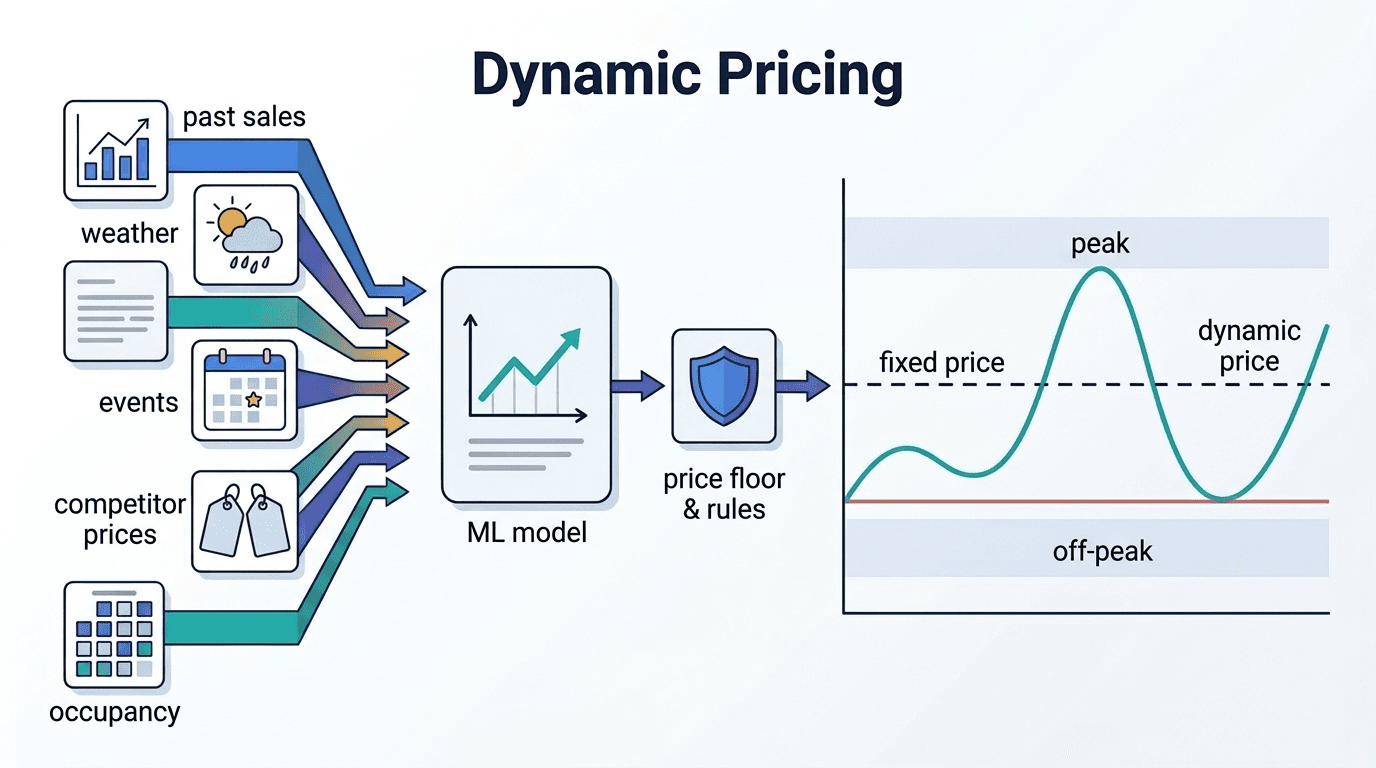
Dynamic pricing is a pricing strategy that adjusts the prices of goods and services in real time bas
Multilingual NLP (Multilingual Natural Language Processing)
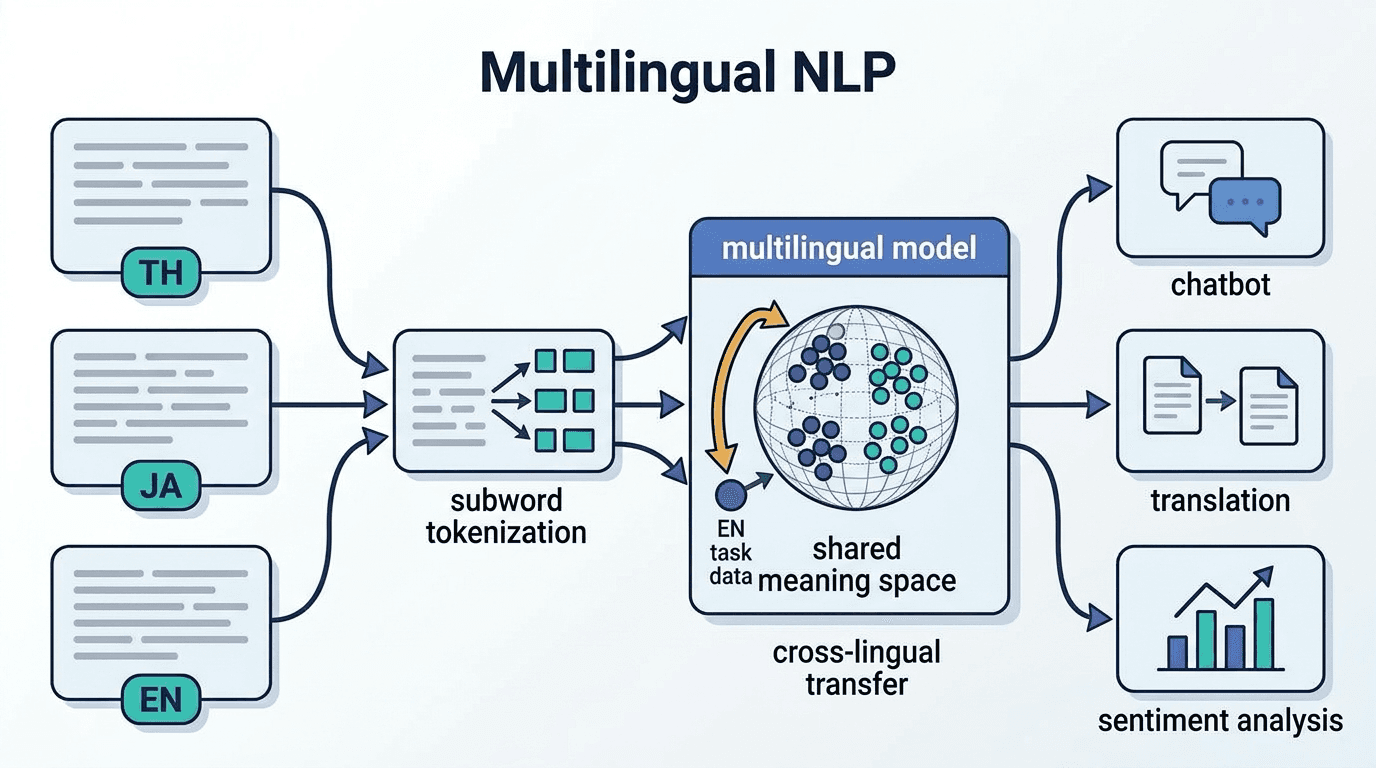
Multilingual NLP is a natural language processing technology capable of analyzing and generating tex