How AI Streamlines HR and Recruitment for Thai Companies — From Applicant Response to Turnover Prediction

Introduction
In HR and recruitment operations in Thailand, many companies face a persistent dilemma: even when applications pour in, response capacity fails to keep pace and the selection process drags on, while employees who leave just a few months after joining cause recruitment costs to pile up. Increasing headcount raises the burden of labor administration, while narrowing the applicant pool means losing in the recruitment race. One way to resolve this bind is to have generative AI take over routine tasks. Recurring work such as applicant correspondence and labor-related inquiries can be handed to AI, while final decisions—hiring outcomes and evaluations—remain with people. Keeping this line intact, this article examines, from a practical standpoint, how far AI can be entrusted with tasks ranging from applicant screening to turnover prediction, along with implementation steps that take PDPA considerations into account.
Anyone in charge of an HR department in Thailand will encounter a situation where either recruitment or retention is constantly becoming a problem. The intensification of recruitment competition and high turnover rates are two sides of the same coin, and addressing only one of them will not lead to sustained improvement. In addition, the language gap between Japanese managers and Thai employees tends to create friction during evaluation interviews and labor consultations, and many companies still handle administrative work such as applicant management and attendance/payroll processing largely by hand.
These are not isolated minor inconveniences but exist as structural issues intertwined with one another. A vicious cycle tends to occur: the language gap prevents evaluations from being properly communicated, which increases turnover; increased turnover raises the burden of recruitment work; and that burden further strains manual administrative processing. Introducing new tools while leaving this chain of causes unaddressed will only mean getting stuck before AI even comes into play.
Skilled Talent Shortages and Manufacturing Workforce Adjustments — A Polarizing Labor Market
In Thailand's labor market, where manufacturing and retail/service industries are concentrated, competition for talent among companies in the same industry has become the norm. It is not uncommon for a company to post a job opening only to have the candidate poached by another company shortly after, or to have an accepted offer declined right before the start date. This tendency is especially pronounced in on-site roles such as factory line workers and warehouse staff, where even slight differences in pay or work location can prompt job changes, and there are reports of recruiters unable to secure candidates while vacancies persist. HR personnel in industrial parks near Bangkok often mention that workers will move to a neighboring factory that raises its hourly wage by just a few baht.
Behind the high turnover rate lies the fluidity of the labor market, particularly among younger workers, who tend to move quickly whenever better conditions become available. In addition, at companies with a high rate of early departures after hiring, onboarding and initial follow-up support tend to be insufficient, partly because HR staff cannot devote enough time to retention support. Even if a company increases the number of job platforms it uses to secure more applicants, if those hires quit within a few weeks of joining, the entire recruitment cost is wasted, and the cycle of filling vacancies begins again. This vicious cycle can be said to be the greatest structural problem facing HR operations in Thailand.
Recruitment activities to fill vacancies never stop, and staff are constantly occupied with routine tasks such as document screening and interview scheduling. As a result, there is no time left to focus on what should really matter: improving the candidate experience and catching early signs of potential turnover. The language gap discussed in the next section is another factor that further adds to this burden.
The Language Gap Between Japanese Managers and Thai Employees
In many workplaces, communication of work instructions and evaluation criteria between Japanese managers and Thai employees relies heavily on translation software. Such communication, in which fine nuances get dropped, tends to resemble a game of telephone, where the content gradually shifts and distorts along the way.
When explanations of attendance rules or evaluation systems are conveyed only verbally or through brief notes in Thai, employees' understanding of them can vary widely. As a result, there are reported cases where a rule that management believed had been "explained" was not followed, triggering dissatisfaction and turnover. Evaluation systems in particular are highly sensitive to subtle differences in wording, and simply running a Japanese-language evaluation criteria document through machine translation often results in operation without properly conveying the weighting between factors that add points and those that deduct them.
An AI chatbot leveraging multilingual NLP (natural language processing) is effective in addressing this challenge. Because it can provide consistent answers in Thai, English, and Japanese to questions about work rules and employee benefits, it helps prevent the problem of explanations varying from manager to manager. Some companies that have adopted such systems report that answers to the same question, which used to differ subtly depending on who responded, have now been unified.
For important communications related to evaluation interviews or disciplinary matters, HR staff should review AI-generated translation output before conveying it, rather than using it as-is. Distinguishing between routine inquiry handling and communications that require human involvement is an essential perspective to maintain.
Manual-Dependent Applicant Management and HR Administrative Work
At companies where recruiters continue to manage applicants using Excel or email, checking progress for each applicant and cross-referencing documents by hand makes missed responses and delayed communication more likely to occur. The more job platforms a company uses concurrently—three, four, or more—the more the format differs by application channel, and the work of consolidating this information alone consumes a significant amount of staff time. It is not unusual to hear that, during peak application periods, this cross-referencing work alone can take up half a day.
The same structure exists on the labor administration side. Inquiries about attendance records, leave requests, and payroll arise in a certain volume every day, and since many companies have HR staff respond individually via email or LINE, the same questions tend to be answered repeatedly. Thailand's Labour Protection Act stipulates annual paid leave and working hours, and the 2025 amendment—which extends maternity leave from 98 to 120 days—is another factor adding to staff workload as they keep up with regulatory changes.
Such routine confirmation and response tasks are prone to becoming dependent on specific individuals, creating a risk that handovers will stall when the responsible staff member takes leave or resigns. Applicant correspondence and labor-related inquiries share a common feature: much of the work is repetitive and does not require judgment. This common feature is precisely the starting point for the AI applications discussed in the next chapter.
The Big Picture — HR Tasks That Can Be Automated or Supported by AI

When organizing AI utilization in HR operations, it settles into three areas: recruitment, labor management, and retention. However, these three do not carry equal weight. In practice, the area where investment yields the most effective returns is applicant response in recruitment, and the benefits of automation grow larger for companies with higher application volumes. Labor management centers on improving the efficiency of inquiry response, and if existing FAQ preparation has progressed to some extent, the additional cost here can be kept low. Turnover prediction in the retention area still has room for development in terms of accuracy, and it is realistic to position it as a supplementary indicator. Where to start depends on a company's recruitment volume and the severity of its turnover issues, but a practical approach is to begin by reducing the burden of routine tasks and then expand to other areas while observing the effects.
Recruitment — Job Posting Creation, Applicant Screening, and Interview Scheduling
In recruitment operations, three processes are particularly effective when using generative AI: job posting creation, applicant screening, and interview scheduling. For job posting creation, simply entering the job description and required qualifications allows drafts to be generated quickly in both Thai and English, letting staff focus on refining the wording. Especially for job postings with many technical terms, such as those in manufacturing or IT positions, checking the nuances of the Thai translation one by one is required work, but revising based on an AI-generated draft saves overwhelmingly more time than translating from scratch.
In applicant screening, AI performs an initial assessment of how well a resume matches the job description, reducing the workload of document screening. Automatically narrowing down candidates based solely on scores such as educational background or years of experience may seem efficient at first glance, but in practice, having humans re-examine applicants with high job suitability despite low scores tends to improve efficiency without sacrificing recruitment quality. In Thailand's recruitment market, there are many cases where practical experience and flexibility are difficult to gauge from documents alone, and on-site experience not listed under qualifications, or the ability to handle multiple languages, often directly indicates job suitability. For this reason, it is practical to position AI's initial assessment not as a mechanism for filtering out candidates, but as "assistance for surfacing applicants who should be prioritized for review." Some companies have reported a reduction in recruitment mismatches by establishing a rule that document screening staff must visually confirm applicants with borderline scores rather than simply accepting the AI's score at face value.
In interview scheduling, an AI chatbot handles schedule coordination for both candidates and interviewers, reducing the burden of language and time-zone adjustments that often arise at Japanese companies. However, exchanges directly tied to an applicant's decision-making, such as pass/fail notifications or condition negotiations, should safely remain under final human confirmation.
Labor Administration — Handling Inquiries on Attendance, Leave, and Payroll
Among inquiries to HR staff, routine confirmation matters regarding attendance, leave, and salary are the most common. Questions such as remaining paid leave days, the reference date for salary calculation, and how to apply for lateness or absence tend to be similar in content each time, making them well-suited for initial response by an AI chatbot.
Under Thailand's Labor Protection Act, a minimum of 6 days of annual paid leave is stipulated after one year of continuous employment. Regarding maternity leave as well, the Labor Protection Act (No. 9) B.E. 2568, effective December 7, 2025, extends it from 98 days to 120 days, and a provision has been added requiring employers to pay wages for up to 60 days of maternity leave. Immediately after such institutional changes, employee inquiries tend to temporarily concentrate, and keeping the AI chatbot updated with the latest internal regulations can reduce the burden on HR staff of repeatedly giving the same explanations.
A point requiring particular caution in operation is that this involves handling personal data such as salary amounts and remaining leave days. The scope of answer generation must be limited to each employee's own information, and the system must be designed so that other employees' data is never mixed in. It is practical to keep AI responses limited to initial guidance only, and to hand off matters requiring judgment—such as payroll calculation errors or exceptional leave requests—to HR staff. Integration with attendance and payroll systems is worth considering as a next step to improve response accuracy.
Retention — Engagement Analysis and Attrition Prediction
In retention support, efforts to analyze attendance data, survey responses, and 1-on-1 records with AI to detect early signs of turnover are spreading. Combining factors such as irregularities in clock-in/clock-out times, sudden changes in paid leave usage rates, and negative response trends in internal surveys tends to make it possible to visualize employee groups whose turnover risk is rising.
The value of turnover prediction AI lies not in definitively scoring individuals, but in grasping trends at the team or department level so that HR staff can narrow down who should be prioritized for interviews. If a department is found where turnover is concentrated among employees in their first to third year, this can lead to measures such as increasing the frequency of onboarding interviews for that group. Conversely, in cases where turnover risk rises among employees with five or more years of tenure, the underlying cause is often not compensation but stagnation in roles or unclear career paths, and what should be asked in interviews changes entirely. If a uniform response is applied based on scores alone, such differences between groups will be overlooked.
Because engagement analysis handles employees' work data and psychological responses, consideration for PDPA is a prerequisite. Operations must be conducted after explaining the purpose and scope of use to employees and establishing consent and notification procedures.
Since predictive models are based on past data, they struggle to keep pace with new institutional changes or sudden shifts in the business environment. It is essential to regularly review the model's accuracy and have HR confirm whether there is any discrepancy with the reality on the ground.
Prerequisites to Confirm Before Implementation

The first thing encountered when introducing HR AI is the matter of "lines that must be protected," which comes before convenience. Handling of applicant and employee data falls under PDPA regulations, and unless the scope of human responsibility is made clear regarding how much of the hiring and evaluation decisions to entrust to AI, drawing that line later becomes difficult. Once these two points are addressed, considering the introduction steps themselves is not particularly difficult.
PDPA — Handling of Applicant and Employee Data
Applicants' resumes and interview records, as well as employees' attendance and payroll data, fall under the personal data defined by Thailand's Personal Data Protection Act (PDPA). This law was promulgated in 2019 and came into full effect in June 2022. When introducing HR AI, it is a fundamental principle to clearly state in advance the purpose of collecting candidate data and to avoid using it for purposes other than those specified.
For example, when using AI for resume screening, applicants must be notified in advance that AI will conduct an initial evaluation, along with the data retention period and scope of use. The same applies when analyzing employees' attendance and evaluation data for purposes such as attrition prediction—diverting data to uses not anticipated by the individual should be avoided.
When using cloud-based AI services, data may be processed on servers overseas. Since the PDPA requires confirmation that the destination has an adequate level of protection for cross-border transfers of personal data, it is necessary to check the data storage regions and the management systems of subcontractors used by the AI vendor before implementation.
It is also practically important to clarify within the company who is responsible for data protection. For those who want to systematically check the compatibility of PDPA compliance and AI utilization, A Compliance Checklist for Balancing Thailand's PDPA Compliance with AI Utilization may be a useful reference.
Never Let AI Alone Decide Hiring or Evaluation Outcomes — Human Judgment Has the Final Say
Hiring decisions and personnel evaluations are highly irreversible judgments that directly affect the lives of applicants and employees. AI-based document screening and attrition prediction are merely supporting materials for preliminary judgment, and it is desirable to maintain a system in which humans are responsible for the final decisions on hiring and evaluation.
From an HITL (Human-in-the-Loop) perspective, it is practical to have the system handle initial filtering of applicant responses "In the Loop," while interview evaluations and pass/fail decisions are handled "On the Loop," with humans confirming and deciding each time. If AI-generated scores or rankings are used as-is to determine hiring outcomes, there is a risk of reproducing biased judgments based on attributes such as educational background, gender, or age.
In practice, it is appropriate to present AI evaluation results to HR personnel along with the reasoning behind the judgment ("why this conclusion was reached"), allowing the personnel in charge to make the final decision after factoring in interview content and on-site information. Particularly for decisions with significant impact on employees, such as termination, demotion, or downgrading of evaluations, it is preferable not to simply accept AI's suggestions at face value, but to go through a review process involving multiple people. From the standpoint of labor law regulations on dismissal and the PDPA, retaining human accountability in the decision-making process helps avoid future disputes.
Three Steps for Thai Companies to Implement HR AI

The introduction of HR AI is more likely to take root when approached in stages: starting with the selection of target tasks, then moving on to automating applicant responses, and gradually expanding to internal inquiries. Rather than expanding to all operations at once, proceeding through these three steps while measuring effectiveness allows for steady accumulation of results while minimizing the burden on the ground.
Step 1: Narrow the Scope to High-Volume Routine Tasks
The first step in introducing HR AI is taking inventory of operations. The starting point is to select tasks that are "high in frequency and low in discretionary judgment" from among a wide range of operations spanning recruitment, labor management, and retention support.
Common targets in practice include initial screening of application documents, responding to inquiries about attendance and leave, and compiling attendance data before payroll calculation. These tasks occur monthly or weekly and tend to involve processing based on rules and regulations rather than the discretion of the person in charge. Conversely, tasks requiring weighty judgment based on individual circumstances—such as final interview evaluations or disciplinary decisions—are safer to exclude from the scope in the initial stage.
When selecting target tasks, it becomes easier to make decisions by organizing them along the axes of workload and degree of standardization. For example, inquiries from applicants such as "When will the selection results be announced?" occur frequently and the responses tend to be easily patterned, making them high priority. On the other hand, tasks requiring consideration of employees' emotions and circumstances—such as resignation interviews or evaluation feedback—are not suitable for delegation to AI.
Starting small, measuring effectiveness, and gradually expanding the scope of target tasks is an approach that leads to smooth implementation even in Thailand's HR settings.
Step 2: Automate Applicant Response and Document Screening
In the first stage of applicant response, an AI chatbot handles application intake, schedule coordination, and answers to frequently asked questions, freeing up HR personnel to focus their time on the interviews themselves. A practical benefit is that even during recruitment periods when applications are concentrated, initial responses can be provided around the clock.
In document screening, multilingual NLP is used to compare the content of resumes and cover letters against job requirements, extracting candidates who meet the conditions for essential skills and years of experience. What is important here is the operational rule that AI's role is to "assist in narrowing down candidates," not to determine pass/fail itself.
For example, in recruitment for store staff or factory line positions with a high volume of applicants, rather than automatically excluding applicants who do not meet the criteria, limiting the AI's role to presenting high-priority candidates to HR personnel helps reduce the risk of oversight. Conversely, for management or specialist positions, it is more appropriate to reduce the weight of AI's preliminary evaluation and center the decision on the interviewer's judgment.
In the early stages of implementation, designing the system so that personnel can verify the basis for scores, and revisiting the criteria when cases arise where the reason for exclusion cannot be explained, will also contribute to bias mitigation going forward.
Step 3: Expand to Internal Inquiry Handling and Measure Results
Once responses to applicants have become established, the next step is to expand the scope to internal inquiries from existing employees. Questions that regularly reach HR staff—such as attendance, remaining leave balances, payroll calculation rules, and confirmation of leave systems based on labor protection laws—tend to follow set patterns, making them well-suited for initial handling by an AI chatbot.
Many staff members likely recognize the situation of "answering the same questions for hours every month." Inquiries about conditions for granting paid leave or eligibility for maternity leave occur frequently, yet their content remains consistent based on established systems. This makes it practical for AI to handle initial responses, escalating only complex cases involving individual circumstances to HR personnel.
After implementation, effectiveness should be measured using metrics rather than intuition. By tracking monthly indicators such as the reduction rate in inquiry volume, the resolution rate at first response, the escalation rate to staff, and changes in employee satisfaction, you can determine whether AI utilization is genuinely reducing workload. If the impact is unclear, there may be room to review the comprehensiveness of anticipated questions and the accuracy of responses in both Thai and English. Before expanding the scope, starting small with measurement and making the next investment decision based on data is the shortest path to establishing successful adoption.
How to Operationalize Attrition Prediction and Engagement Analysis

Turnover prediction AI is a means of detecting employees at high risk of resignation in advance, but its accuracy has limitations, and outcomes vary depending on how it is operated. This section organizes what data to use and how to apply prediction results in practice.
Use Prediction Results as a "Trigger for Conversations," Not "Surveillance"
The score from turnover prediction AI is similar to a health checkup result. The point is not that a high number is inherently a problem, but that it serves as a trigger for reviewing lifestyle habits. For employees judged to be at high risk of leaving, usage patterns such as a supervisor abruptly lowering their evaluation or listing them as transfer candidates in an administrative department should be avoided.
In practice, there are cases where prediction results end up being treated as tools for performance evaluation or surveillance. If employees become aware that such scores exist, it could lead to distrust stemming from a sense of being monitored. This is a typical counterproductive effect that further worsens engagement.
In practical terms, an appropriate approach is for the supervisor to first arrange a one-on-one meeting with employees flagged as high risk. Using this as an entry point for dialogue—such as asking "How has your workload been recently?" or "Do you have any concerns about your career?"—is a reasonable approach.
If the meeting reveals that workload or interpersonal relationships are the cause, this can lead to concrete measures such as reassignment or workload adjustment. Prediction is merely a tool to accelerate awareness, and keeping final judgment and response as a domain handled by humans is a requirement for the sound operation of turnover prediction AI.
Thailand's Growing "AI Unemployment" and HR's Role — Designing Workforce Reduction and Reallocation Together

Common Pitfalls and How to Avoid Them

In HR AI implementation, operations that neglect accuracy and fairness can lead to unexpected trouble. Bias in AI screening and insufficient handling of resumes with mixed Thai and English are pitfalls that are particularly easy to overlook. Let's look concretely at common failure patterns and how to avoid them.
Leaving AI Screening Bias Unaddressed
When applicant screening is entrusted to AI, a problem tends to arise in which tendencies contained in past hiring data are directly reflected in the evaluation criteria. For example, if there is a history of preferentially hiring candidates from specific universities, or of a particular gender or age group, the AI learns this tendency as a "desirable pattern." Cases have been reported where this leads to applicants with similar attributes being rated highly, while candidates with different backgrounds—even those with strong qualifications—are rated lower.
In the Thai labor market, where talent with diverse educational backgrounds and experience tends to gather, such bias not only lowers the quality of hiring but can also lead to a decline in trust among applicants.
As a countermeasure, the basic approach is to first exclude attributes not directly related to job suitability—such as gender, age, and region of origin—from the screening evaluation criteria. In addition, it is effective to have HR staff periodically sample and review the evaluation results produced by AI, checking whether pass/fail tendencies are skewed toward particular attributes.
As long as a system is maintained in which humans retain responsibility for the final hiring decision, AI evaluations can be treated purely as reference information for initial screening. If the basis for a judgment cannot be explained, the evaluation criteria itself needs to be reviewed.
Low Accuracy with Resumes Mixing Thai and English
Resumes submitted by Thai applicants often contain a mix of Thai and English within the same document. It is not uncommon for educational background and qualification names to be written in English, while motivation statements and self-promotion sections are written in Thai. This format tends to cause misrecognition of item boundaries in AI chatbots and general-purpose document analysis tools that assume a single language, leading to reduced screening accuracy.
At first glance, it may seem that forcing applicants to use a unified English-only format would solve this problem. In practice, however, allowing submissions in Thai as-is and analyzing them with a model that supports multilingual NLP (multilingual natural language processing) tends to yield better accuracy. This is because forcing a specific format increases the burden on applicants and risks reducing the number of applications itself.
An effective countermeasure is to insert a process before resume parsing that performs language identification at the item level for Thai and English, extracting structured data such as work history and qualifications. Since the design of the BPE Tokenizer (Byte-Pair Encoding Tokenizer) affects segmentation accuracy when languages are mixed, selecting a Thai-language-capable model with a proven track record is also an important consideration.
Frequently Asked Questions (FAQ)

Q1. Can AI in HR be implemented even at small and medium-sized Japanese companies? Yes, it is possible. An increasing number of companies are starting with an MVP (Minimum Viable Product) limited to routine tasks, such as automated replies to applicants or responses to attendance and leave inquiries. Large-scale system investment is not required, and some companies combine no-code/low-code development tools such as n8n with existing chat tools.
Q2. Does AI-based applicant screening raise issues under PDPA? Screening itself is not prohibited, but it is premised on clearly disclosing the purpose of collecting and using personal data to applicants and obtaining their consent. "Black box" operations where the basis for decisions cannot be explained should be avoided, and a system in which humans review the AI's evaluation results before making hiring decisions is required. For details, see A Compliance Checklist for Balancing Thailand's PDPA Compliance with AI Utilization.
Q3. How reliable is AI-based turnover prediction? Turnover prediction indicates tendencies based on attendance data and interview records, and it does not definitively determine an individual's departure. A practical approach is to use it as a trigger for humans to check the situation—for example, by first arranging an interview opportunity with a supervisor for employees with high prediction scores.
Q4. Can a Thai-language AI chatbot be operated solely by Japanese administrators? Operation is possible, but combining it with a system where Thai staff regularly review the Thai-language responses improves accuracy and reliability. Even with tools that leverage multilingual NLP (multilingual natural language processing), labor-related terminology and company-specific terms need to be registered in advance.
Q5. How should the effectiveness of implementation be measured? Many companies use metrics such as the reduction in time to first response for applicants, the reduction in HR staff workload for document screening, and changes in turnover rate. When measuring AI ROI (AI Return on Investment), a practical approach is to record workload and turnover rates before implementation and compare them with changes observed several months after implementation.
Conclusion — Using AI to Run HR with Limited Staff and Recruitment Budgets

For AI utilization in Thailand's HR and recruitment operations, it is practical to start with routine tasks that require significant effort, such as applicant response and attendance/leave inquiries. Automating document screening and internal inquiries frees up HR staff time, which can then be devoted to candidate interviews and conversations with employees at high risk of leaving—directly addressing the structural challenges of recruitment competition and high turnover rates.
Operating turnover prediction and engagement analysis not as a mechanism for monitoring employees but as a tool for identifying opportunities for conversation directly contributes to improving retention rates. It is also essential to maintain a system in which humans retain final decision-making authority over hiring and evaluation, and to thoroughly manage data in accordance with PDPA.
When concretely considering how to balance PDPA compliance with AI utilization, refer also to A Compliance Checklist for Balancing Thailand's PDPA Compliance with AI Utilization. Starting on a small scale, measuring results, and gradually expanding the scope of target operations is the realistic shortcut to building a system where people don't quit.
Author & Supervisor

Yusuke Ishihara
Started programming at age 13 with MSX. After graduating from Musashi University, worked on large-scale system development including airline core systems and Japan's first Windows server hosting/VPS infrastructure. Co-founded Site Engine Inc. in 2008. Founded Unimon Inc. in 2010 and Enison Inc. in 2025, leading development of business systems, NLP, and platform solutions. Currently focuses on product development and AI/DX initiatives leveraging generative AI and large language models (LLMs).
Recommended Articles


Terms related to this article
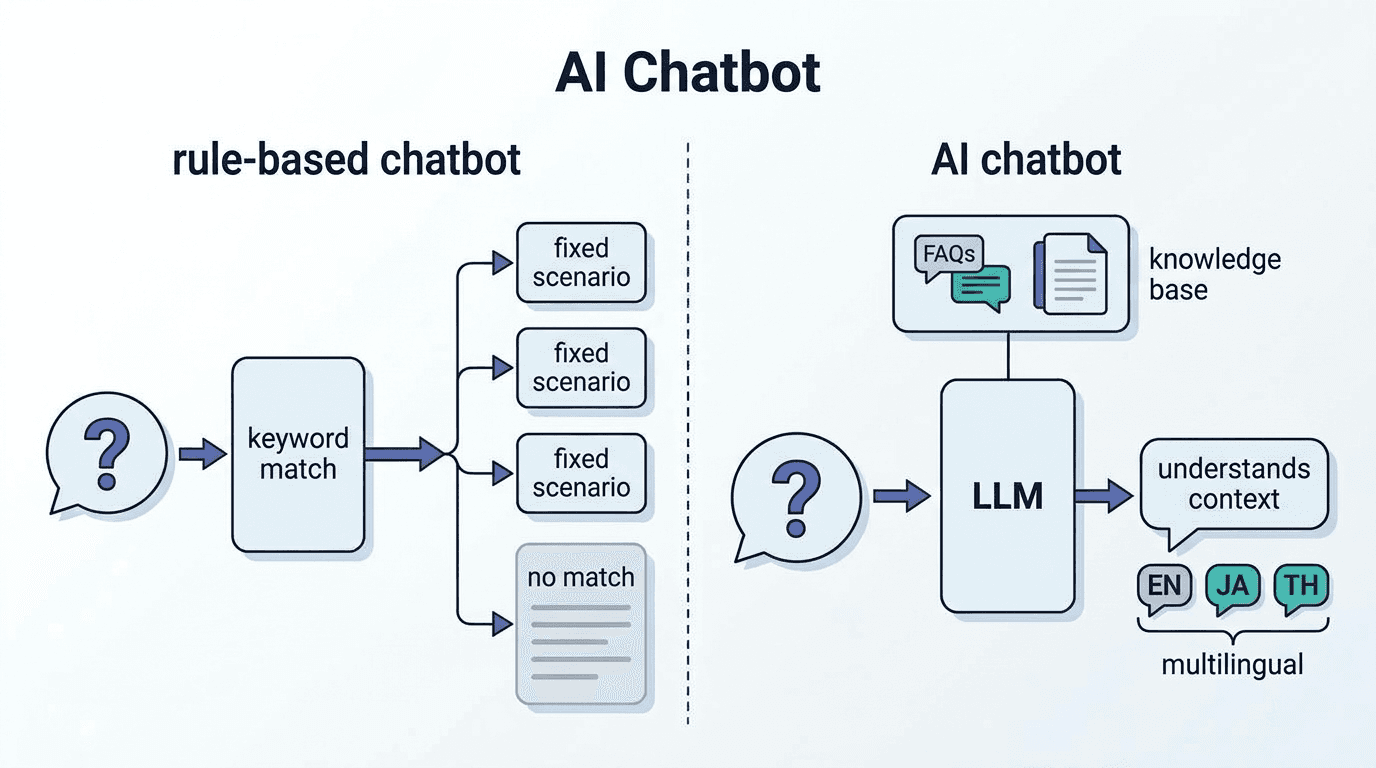
AI Chatbot
An AI chatbot is software that leverages natural language processing (NLP) and LLMs to automatically
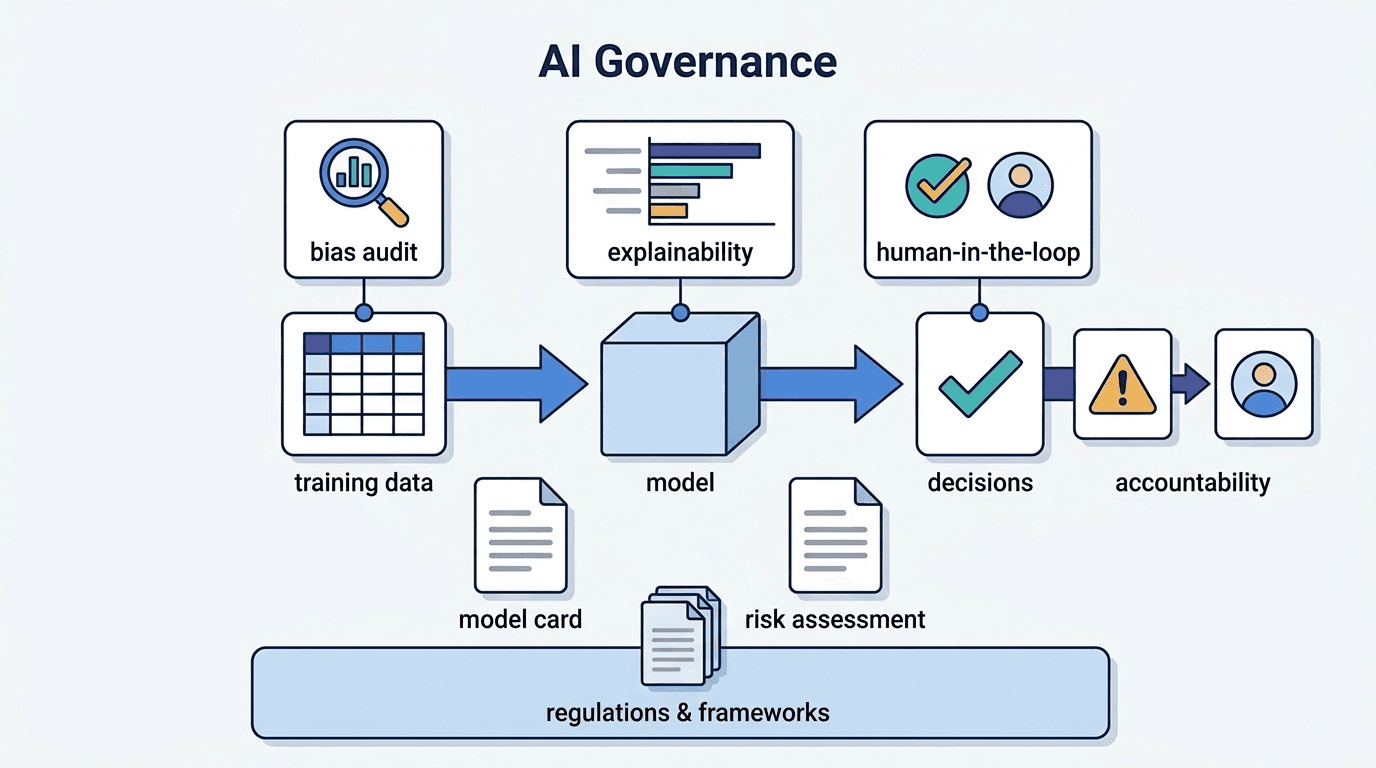
AI Governance
AI governance refers to the organizational policies, processes, and oversight mechanisms that ensure
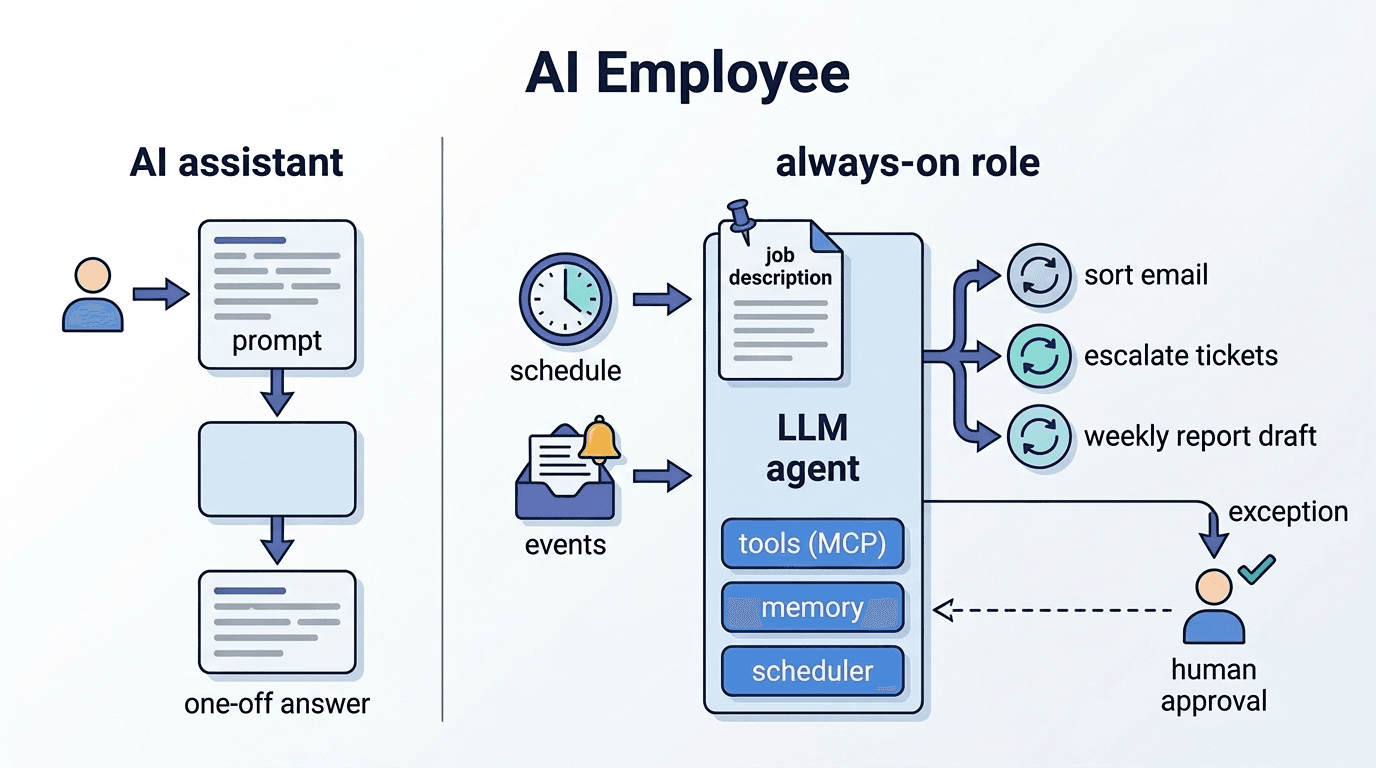
AI Employee (AI Employee)
An autonomous AI agent that takes on a specific business role and continuously performs tasks in the