AI Skill Gap in Offshore Development Teams: Skill Acquisition Roadmap and Training Framework
Introduction
The AI technology gap in offshore development teams refers to a state in which differences arise between the head office team and the offshore team in the speed of learning and implementing generative AI and automation technologies. According to an OECD survey, corporate AI adoption rates rose from around 7% in 2021 to approximately 20% in 2025, and behind this figure lies a site-by-site disparity in which "the head office has mastered the technology, but the offshore side has not even begun adoption." There are many cases where only certain departments within an organization can keep pace with rapid change, resulting in uneven productivity across the entire project.
This article is intended for technical leads, development managers, and technical training coordinators who manage offshore development. By combining a phased skill acquisition roadmap, regular knowledge sharing, and implementation-based training, we present a concrete path to narrowing the technology gap within six months.
The technology gap arises along three axes: "learning speed," "information access," and "the degree to which quality standards are shared." It is not uncommon for the head office to be piloting new frameworks or AI tools while the information has not yet reached the offshore side, or, even if it has, there is no opportunity to put it into practice. Rather than the delay in information transmission itself, whether or not there is an opportunity to try out the information once it has been conveyed is the watershed that determines the difference in capability.
Below, we will look in turn at how these delays arise, the structural causes behind them, and ultimately how they affect quality.
Delays in Learning Technology Trends Compared to the Headquarters Team
When the head office team can absorb new technologies directly from internal conferences and official documentation, catch-up is fast; when the offshore team must wait for translated versions or shared documentation to be prepared, delays of several weeks to several months tend to occur. According to an OECD survey, corporate AI adoption rates rose from about 7% to 20% between 2021 and 2025, and this rapid pace of adoption is shortening the technology obsolescence cycle. When there is a difference in this speed between the head office and the offshore side, a gap tends to become fixed even for the same technical topic, such as "the head office is already in the implementation phase while the offshore side is still in the research phase."
Behind this delay lies a gap in both the channels for obtaining information and the opportunities for practice. While the head office uses official releases and blogs from English-speaking regions as primary sources, if the offshore side must wait for secondary translations or internal sharing, a time lag arises before information reaches them; and while the head office can freely test in a PoC environment, if the offshore side is bound by production operation constraints and approval processes, opportunities for practice themselves become scarce. Unless both the speed at which information arrives and the existence of an environment in which that information can be tested are aligned, the gap will not narrow.
It should be noted that once such delays occur, they extend beyond mere lag in knowledge and spread into differences in implementation quality. If the time lag in information arrival is left unaddressed, it will also propagate as a cause of the next skill gap.
Main Causes of the Skill Gap
Behind the emergence of skill gaps, three intertwined factors are at work: disconnection in information access, insufficient opportunities for practice, and the absence of evaluation criteria. Among these, the disconnection in information access is particularly deep-rooted. While the head office team can naturally absorb insights from primary English-language information and internal Slack discussions, the offshore team faces a time lag before reaching the same information due to language barriers and delays in information sharing. As the DigComp 3.0 framework shows, digital-related competencies must be built up in stages from the basics to advanced applications, and the longer the period during which information fails to arrive, the more the difference in proficiency tends to widen. Simply inserting translation does not solve the problem; the very design of who can access what information and when must be reconsidered.
The lack of practical opportunities cannot be overlooked either. Even after learning new technology, knowledge does not take root without a chance to try it out on an actual project. Among training coordinators, the concern that "materials were prepared, but they aren't used in the field" is often shared. When knowledge gained through classroom learning is not converted into implementation experience before the next technology trend arrives, the backlog snowballs.
Regarding the absence of evaluation criteria, it is sufficient to note that in teams lacking a common yardstick for measuring progress, who understands which technology and to what extent is not made visible, which makes it easy to misjudge training priorities.
These three factors are not independent but influence one another. If information does not arrive, it becomes difficult to design opportunities for practice; without practice, it becomes difficult to establish evaluation criteria. For this reason, addressing the gap through any single measure alone is considered difficult.
Impact of the Technology Gap on Development Quality
What impact does leaving the technology gap unaddressed have on development quality?
The most conspicuous effect is an increase in the number of round trips in code review. When the offshore team remains stuck with outdated implementation patterns or only basic knowledge of prompt engineering, the reviewer ends up not only pointing out technical issues but also having to explain the underlying concepts, moving the review further away from its original purpose of confirming quality. It is not uncommon for a single fix that should normally take only one or two rounds to balloon into four or five rounds once conceptual explanations are inserted.
In implementations using AI agents or RAG (Retrieval-Augmented Generation), insufficient understanding of the design philosophy can undermine the consistency of the entire architecture. If chunk size is designed without accounting for context window constraints, retrieval accuracy becomes unstable, making rework in later stages more likely to occur.
The technology gap also affects the speed of incident response. For generative-AI-specific issues such as hallucination and system prompt leakage, the time to resolution varies greatly depending on whether the team is aware of the latest countermeasure patterns. Teams with limited knowledge tend to take longer to identify the cause, which tends to have a magnified impact on the release schedule. These quality-related delays can be steadily reduced through the phased acquisition roadmap described next.
Designing an AI Skill Acquisition Roadmap for Offshore Teams

The technical gap often lies between "being able to implement something somehow" and "being able to explain why it is implemented that way," and a roadmap that defines milestones in stages is effective for closing this gap.
By dividing the process into three stages—Foundation, Application, and Advanced—and clearly defining the concepts and implementation patterns to be mastered at each stage, offshore teams can grasp their current position and their next goal. When training proceeds without such stage divisions, differences in understanding among members are not made visible, and as a result, there are many noticeable cases where teams fail to break free from implementation that merely waits for instructions. Below, we will look concretely at the content of each stage.
Foundation Stage: Basic AI Concepts and Implementation Patterns (Comparison Table)
For members with programming experience, it is appropriate to start from the basic concepts of LLMs, while for members with little to no experience using AI, it is appropriate to prioritize operational proficiency such as prompt design first. At the Foundation stage, learning efficiency improves more by prioritizing technologies that will be directly used in the Application stage, rather than covering a wide range of concepts shallowly and broadly.
| Comparison Target | Evaluation Axis | Judgment Point |
|---|---|---|
| Basic Understanding of LLMs | Depth of conceptual understanding | Can they explain how token processing and the context window mechanism work? |
| Prompt Engineering | Degree of transferability to practice | Can they improve instruction text for existing tasks themselves? |
| RAG (Retrieval-Augmented Generation) | Distinction of mechanisms | Can they understand the roles of vector databases and embeddings separately? |
| Fine-tuning and PEFT | Judgment on application scenarios | Can they judge in which scenarios to use lightweight methods such as LoRA? |
| AI Coding Agent Operation | Degree of tool practice | Can they complete simple tasks using tools such as Claude Code? |
If the first two items are neglected, there are many cases where, in the subsequent learning of RAG and fine-tuning, members fail to grasp "why it works that way" and end up merely imitating the procedures. The remaining three items are sufficient to cover supplementarily.
Evaluation at the Foundation stage should emphasize reproducibility rather than the quantity of knowledge. If a different person in charge cannot reproduce the same procedure, the level of abstraction of the training materials may be too high. The state of mastery of implementation patterns,
Application Stage: Introducing Project-Specific AI Technologies
Members who have mastered the concepts at the Foundation stage move on, at the Application stage, to the process of connecting AI technology to the project-specific codebase and domain knowledge. The core of this stage is shifting the perspective from general-purpose generative AI operation to application toward the challenges actually faced by the real product.
A typical example is an implementation in which existing system specifications and past incident-response history are incorporated as search targets for RAG (Retrieval-Augmented Generation), enabling the AI agent to generate answers that reflect internal knowledge. When trying coding support specialized for the framework used in a project, a safe approach is to first introduce a tool such as Claude Code into small-scale refactoring work, checking the behavior with the existing test suite while gradually expanding the scope of application.
How to proceed differs depending on the nature of the project. In projects with a lot of legacy code, it is a prerequisite to first establish a system that combines E2E tests and unit tests to verify the quality of AI-generated code. In projects centered on new development, it is easier to try methods such as vibe coding, which proceeds interactively from specifications to implementation, and the comparison perspectives introduced in AI Coding Agent Practical Guide can serve as a reference for adoption decisions. Beyond the axis of legacy versus new development, where to start also varies depending on the amount of technical debt in the team and the frequency of incident response.
The purpose of the Application stage is not proficiency with individual tools, but rather cultivating the judgment to safely make use of AI within the constraints of one's own company's projects.
Advanced Stage: Implementing and Optimizing Cutting-Edge Trend Technologies
Which technical domain to entrust next to members who have completed the Application stage should be decided after reviewing the evaluation results of the Application stage, rather than preparing the same menu for everyone in advance.
At the Advanced stage, the goal is to reach a state in which members can judge the feasibility of implementing technologies that have only recently been released, such as multi-agent systems and inference-time scaling. Whereas the Foundation and Application stages involved mastering existing patterns, the Advanced stage differs in that it tests the ability to apply knowledge to areas with few precedents. Since this stage deals with technologies for which training materials are not yet well established, whether one can make design decisions on one's own in the absence of a clear correct answer becomes the dividing line at this stage.
Specifically, members are made to verify, within the constraints of a real project, things such as the design of tool integration using MCP (Model Context Protocol), optimization of task division among multiple agents, and chunk size adjustment according to context window constraints. The goal of this stage is not simply trying out new technology, but going as far as optimization that takes into account operational conditions such as GPU resources and latency budgets. For example, in a multi-agent configuration, while increasing the number of agents improves accuracy, latency and cost also increase proportionally, so failures such as building an excessively elaborate configuration relative to the requirements tend to occur easily. For members who remain uncertain about design decisions for multi-agent configurations, incorporating What Is Multi-Agent AI? From Design Patterns to Implementation and Operational Know-How as training material can systematically supplement the criteria for selecting design patterns.
It is practical to limit the target audience for the Advanced stage not to everyone, but to members who have demonstrated a certain level of implementation speed and quality at the Application stage. Using implementation-related metrics as judgment criteria—such as whether Application-stage tasks were completed within the deadline, and whether the number of revisions requested in reviews stays below a certain threshold—helps make selection more consistent. If mastery of the latest technology is demanded of everyone without narrowing down the target audience, the learning load becomes dispersed, and there is a tendency for understanding of every technology to end up half-baked. Connecting the knowledge gained by a small elite group who implemented ahead of others into a flow where it is shared with other members at subsequent knowledge-sharing sessions achieves a balance between narrowing the gap and controlling education costs.
How to Build an Effective Training System

Simply handing over a roadmap causes many engineers to stop learning after a few weeks. It is hasty to assume that showing online videos alone will advance mastery; in reality, training only begins to function once three elements—a combination of synchronous and asynchronous formats, an implementation-based learning program, and mentorship—mesh together properly.
That said, how to allocate these three elements differs depending on the circumstances of each team. At locations with large time differences, even beefing up synchronous sessions does not raise participation rates, whereas in teams with many inexperienced members, implementation-based learning ends up spinning its wheels unless the weight given to mentorship is increased. If a uniform design is applied while ignoring working hours and differences in experience, even a well-intentioned training system tends to become a mere formality. Next, we will look at specific operational methods for each of these three elements.
Combining Synchronous and Asynchronous Training
For sites with a large time difference, an asynchronous approach should form the core, while for sites closer to the headquarters' time zone, a synchronous approach should form the core — determining the allocation based on the overlap in working hours is the practical starting point.
Synchronous training is well suited to live Q&A sessions and implementation checks through pair programming. Particularly for themes such as AI agent task design or context engineering, where understanding deepens through repeated trial and correction, synchronous exchanges tend to accelerate comprehension. On the other hand, if synchronous sessions are made a mandatory weekly requirement, sites with large time differences may end up normalizing late-night attendance, which can lead to turnover and declining motivation to learn.
Asynchronous training should be centered on recorded lectures, review comments on completed code, and documented knowledge transfer. For mastering basic concepts or repeatedly reviewing existing training content, the asynchronous format tends to make it easier to equalize the burden across sites.
As a practical guideline, an allocation of 70% asynchronous and 30% synchronous at the foundational stage, with an increasing proportion of synchronous sessions from the applied stage onward, tends to work well for teams with significant differences in experience. Consolidating synchronous time into one or two technical information-sharing sessions per month, while addressing day-to-day questions through an asynchronous Q&A channel, helps keep the cost of coordinating time differences between sites manageable.
Designing Implementation-Based Learning Programs
An implementation-based learning program is centered on a structure where, immediately after learning a concept through lecture-style instruction, the same theme is reproduced in actual code. Training that ends with lecture alone tends to move on to the next topic before knowledge has taken root, which often results in the extra effort of having to re-explain the content a few weeks later.
Specifically, during the week when AI agent task design is covered, members should actually build a small-scale task graph, submit a pull request, and have gaps in understanding identified through review. For themes such as RAG (Retrieval-Augmented Generation) or embeddings, which involve chunk size design and adjustments to search accuracy, an effective exercise is to use a small internal document set as a sample case and have members compare differences in search results while varying the chunk size. Keeping the interval between lecture and exercise within one week allows the transition to implementation to happen while the material is still fresh in memory.
Rather than evaluating solely on "whether working code was submitted," having members explain the rationale behind their design decisions in brief review comments allows for measuring genuine understanding rather than mere imitation. If the goal is to align more closely with project-specific implementation patterns, it can also be effective to turn part of the actual production codebase into training material and assign modifications that follow the existing design philosophy as an exercise. When dealing with the design of multi-agent systems, using What Is Multi-Agent AI? From Design Patterns to Implementation and Operational Know-How as supplementary material can make it easier to bridge concepts and implementation.
Mentorship and Technical Support Structure
When a gap in understanding is discovered during implementation-based learning, what happens if there is no one available on the spot to resolve it?
Members who move on to the next task while still holding an unresolved question tend to repeat the same question at every review point, which in turn increases the burden on reviewers as well. This is similar to a bucket with a small hole in the bottom: no matter how much water — that is, training — is poured in, results will keep slowly leaking out unless the hole is plugged.
Mentorship is the role that plugs this hole. In offshore teams, a structure in which one experienced person from the headquarters side continuously takes charge of a few mentees tends to work well; fixing the assignment eliminates the need to re-explain the background of a question every time. Technical support, as a point of contact that responds promptly to blockers in daily work, is manageable when combined with chat-based question handling and roughly one 1-on-1 session per week.
The appropriate weighting varies depending on conditions. When there are many members at the foundational stage, prioritizing the frequency of 1-on-1s is the guiding principle; when the team is mostly at the applied or advanced stage, placing more emphasis on asynchronous chat support is the better approach.
Since an excessive burden on the mentor can interfere with their core duties, explicitly building the mentor's own working hours into the training plan is the basis for sustaining the structure over the long term.
Mechanisms for Knowledge Sharing and Keeping Up with Technology Trends

Guiding principle: whether individual learning outcomes can be converted into an organizational asset.
Even questions resolved through mentorship will cause colleagues to stumble again at the same wall if no record is kept. This section covers a mechanism that combines regular information-sharing sessions with an internal knowledge base, connecting individual insights to the team's overall ability to keep up with technical trends.
Running Regular Technical Information Sharing Sessions
When the time difference between sites is small, prioritizing depth of discussion through synchronous sessions works well; when it is large, centering the approach on recorded sharing and asynchronous comments allows operations to proceed without sacrificing either participation rate or comprehension.
For the agenda of sharing sessions, a format in which participants take turns presenting findings from evaluating new models or frameworks tends to work well. Not fixing the presenter and instead assigning small evaluation topics even to members at the foundational stage makes it easier to move away from passive, listen-only participation. One example of such an operation is having one person investigate the API changes of a recently released LLM and share a brief summary of the impact on existing code.
A biweekly rather than weekly frequency tends to be more sustainable, and securing flexibility in the agenda — such as switching to a review of the previous session's Q&A on weeks when there is little to discuss — is key to making the practice stick. Setting aside a slot each time for the offshore side to propose agenda items prevents information flow from being one-directional and headquarters-led, and allows technical issues actually being faced on the ground to be shared early. Establishing a practice of transcribing points raised in the sharing session into the internal knowledge base described next, on the same day, turns verbal exchanges into a recorded, referenceable asset.
Building and Managing an Internal Knowledge Base
The insights gained at technical information sharing sessions cannot be leveraged going forward unless they are left in a searchable form rather than ending with the presentation itself. The most fragile point when building a knowledge base is operating it as something "everyone writes together" without clearly designating who is responsible for updates. As a result, updates stall, and pages with outdated information increase within a few months.
It is practical to divide the granularity of structuring according to the scope of application. Keeping project-specific implementation know-how in per-project folders, while consolidating general-purpose verification results and technology trend summaries into cross-cutting categories, makes it easier for members searching later to find what they need without confusion. For verification content presented at technical information sharing sessions, reusability improves when the key points and reproduction steps are rewritten concisely before being registered, rather than simply pasting the presentation materials as-is.
On the management side, it is realistic to separate categories with high update frequency from those with low update frequency and vary the inventory review cycle accordingly. For fast-changing areas such as generative AI and LLMs, checking for information obsolescence on a monthly basis is advisable, whereas for slow-changing areas such as development standards and coding conventions, a quarterly review may be sufficient. Assigning inventory review duties to members at the foundational stage helps deepen their understanding, since it involves not just reading but also organizing the information. The concepts behind knowledge base design and operation are discussed in detail in How to Streamline In-House Training and Knowledge Transfer with AI.
FAQ: Avoiding Failure in AI Training for Offshore Teams

From the three perspectives of learning format, follow-up structure, and progress evaluation, this section summarizes the points where AI training for offshore teams tends to stumble. Points that are easy to get confused about at the roadmap and training structure design stage are examined here in a brief Q&A format.
What Is the Most Effective Learning Format for AI Training in Offshore Teams
Decision criterion: Whether the format can be switched depending on the learning phase.
While the focus is on concept acquisition, as in the foundational stage, asynchronous materials and on-demand videos are well-suited. At offshore locations with time differences, relying solely on synchronous training aligned with the headquarters' working hours makes it easy for members who cannot participate to stumble on foundational understanding.
On the other hand, from the application stage onward, implementation-based learning centered on code review proves effective. An approach in which AI agents and generative AI are tried out on actual project code, with questions resolved through review, tends to result in faster retention than training based solely on classroom-style instruction.
If distinguishing by condition, it is practical to check comprehension with asynchronous materials and quizzes when introducing new concepts, and to switch to weekly synchronous review sessions during the practical application phase. Applying this two-stage structure to each technical element covered in the foundational-stage comparison table makes it easier to decide on the learning format. A system combining asynchronous materials with implementation review, such as the one introduced in How to Streamline In-House Training and Knowledge Transfer with AI, is a format that remains manageable even in offshore setups with significant time differences and skill gaps between locations.
What Should the Headquarters Team Do to Prevent Delays in Learning Technology Trends
When new technical information gathers only at domestic locations, the cause is information blockage on the headquarters side; when the sharing flow is in place but the offshore side cannot make sense of it, the cause is a lack of context. In the former case, the distribution mechanism needs to be reviewed, while in the latter case, more training materials and supplementary explanations need to be added — this distinction is necessary.
The first thing the headquarters team can do is build a mechanism to simultaneously distribute technical trend information obtained in-house as primary-source information, without inserting translation or paraphrasing. A time lag in which the results of new frameworks or AI agents that headquarters engineers tried out first are shared only weeks after being turned into documentation becomes a factor that entrenches the gap.
In addition, a structure in which headquarters-side engineers regularly participate in the offshore team's technical information sharing sessions and pick up on questions early through Q&A is also indispensable. This is because one-way information dissemination alone makes it impossible to grasp where the offshore side is stumbling in their understanding.
Another important point is designing things so that headquarters is not fixed in the role of the "teaching side." By creating opportunities for the offshore team to share back implementation patterns and bug-fix insights they have verified with headquarters, bidirectional knowledge transfer emerges, making it easier for the resolution of the technical gap to function as an improvement in technical capability across the whole organization rather than as one-way instruction.
How to Measure and Evaluate Progress in Skill Acquisition
Since relying solely on knowledge test scores to measure progress tends to create a gap with actual practice, it is important to combine this with implementation-based evaluation criteria. Specifically, the evaluation criteria are divided into three stages: at the foundational stage, quizzes checking conceptual understanding and Q&A during design reviews; at the application stage, the results of code reviews of implementations using AI agents and RAG on actual projects; and at the advanced stage, the content of PoC proposals using new technologies and implementation speed.
For evaluation frequency, switching from weekly at the foundational stage to biweekly or monthly from the application stage onward makes it easier to balance the burden on learners with evaluation costs. Both headquarters-side mentors and local tech leads should be involved as evaluators, and recording not only technical aspects but also autonomy — whether the person could work independently without asking the headquarters team questions — makes it easier to spot gaps between mere technical understanding and practical application ability.
It is desirable not to link evaluation results directly to individual performance assessments, but instead to use them as material for judging whether each stage of the roadmap has been passed. This is because directly linking them to performance assessments tends to encourage behavior that avoids reporting trial-and-error or failures during the learning process, which lowers the quality of knowledge sharing. Accumulating evaluation data in the internal knowledge base and reflecting it in the next roadmap revision functions as a mechanism for continuous skill acquisition.
Author & Supervisor

Yusuke Ishihara
Started programming at age 13 with MSX. After graduating from Musashi University, worked on large-scale system development including airline core systems and Japan's first Windows server hosting/VPS infrastructure. Co-founded Site Engine Inc. in 2008. Founded Unimon Inc. in 2010 and Enison Inc. in 2025, leading development of business systems, NLP, and platform solutions. Currently focuses on product development and AI/DX initiatives leveraging generative AI and large language models (LLMs).
Recommended Articles


Terms related to this article
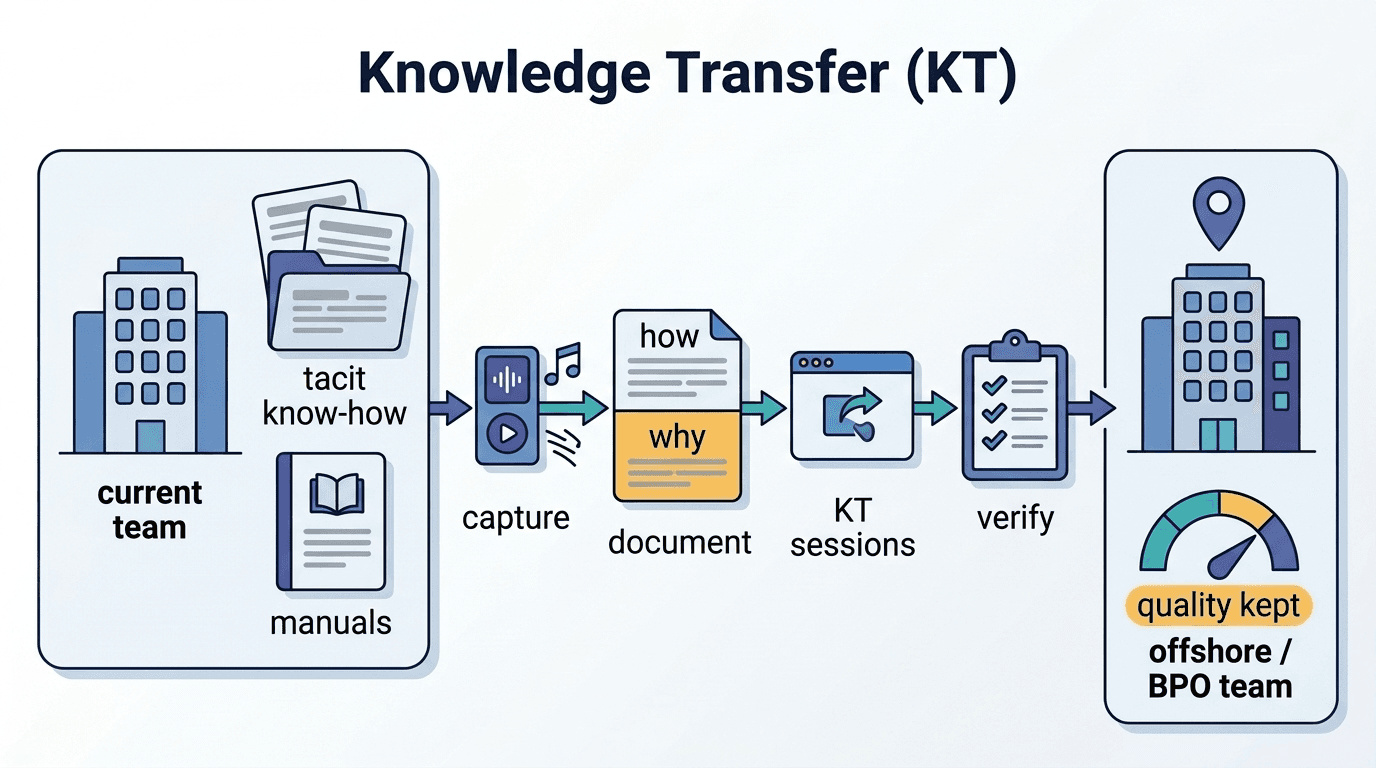
Knowledge Transfer
Knowledge transfer refers to the process of systematically transferring business knowledge, know-how
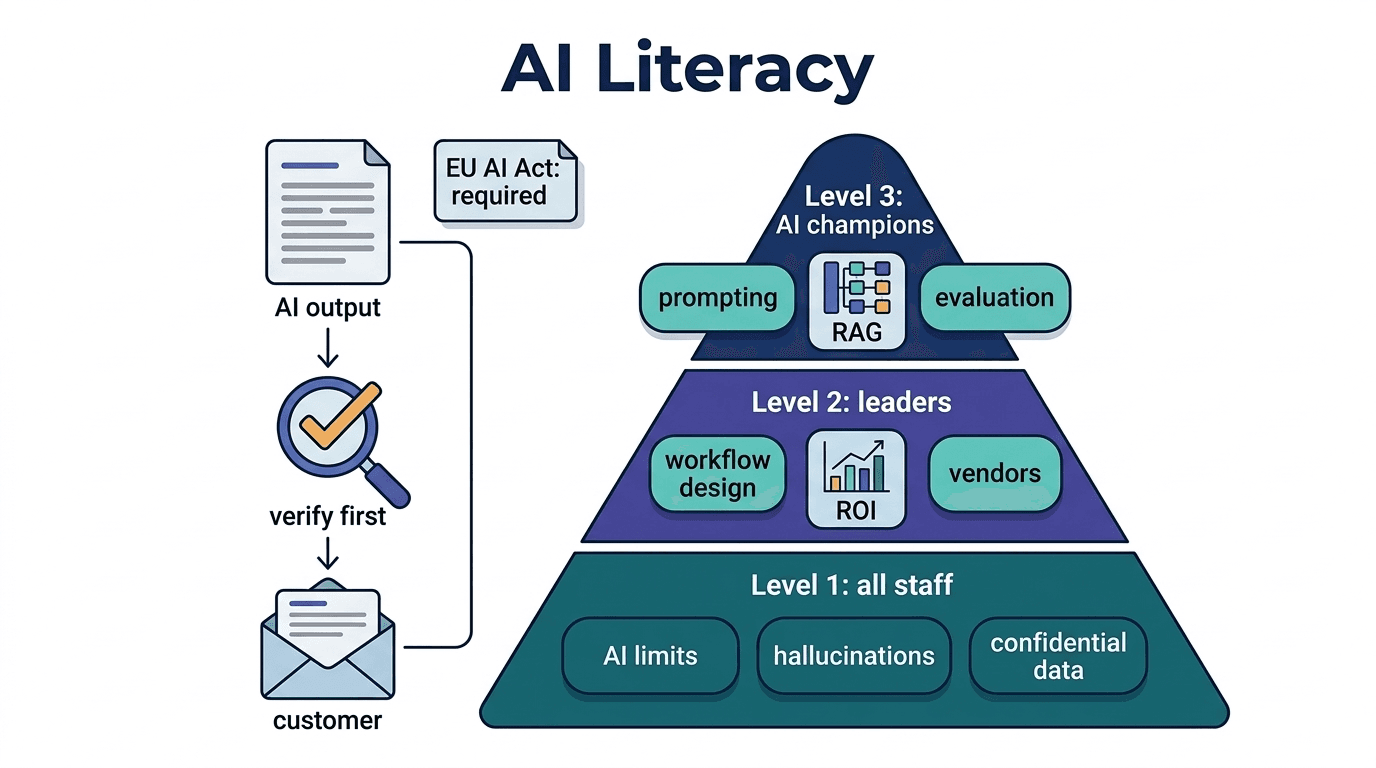
AI Literacy (AI Literacy)
Knowledge and skills to understand the basic concepts, limitations, and risks of AI, and to appropri
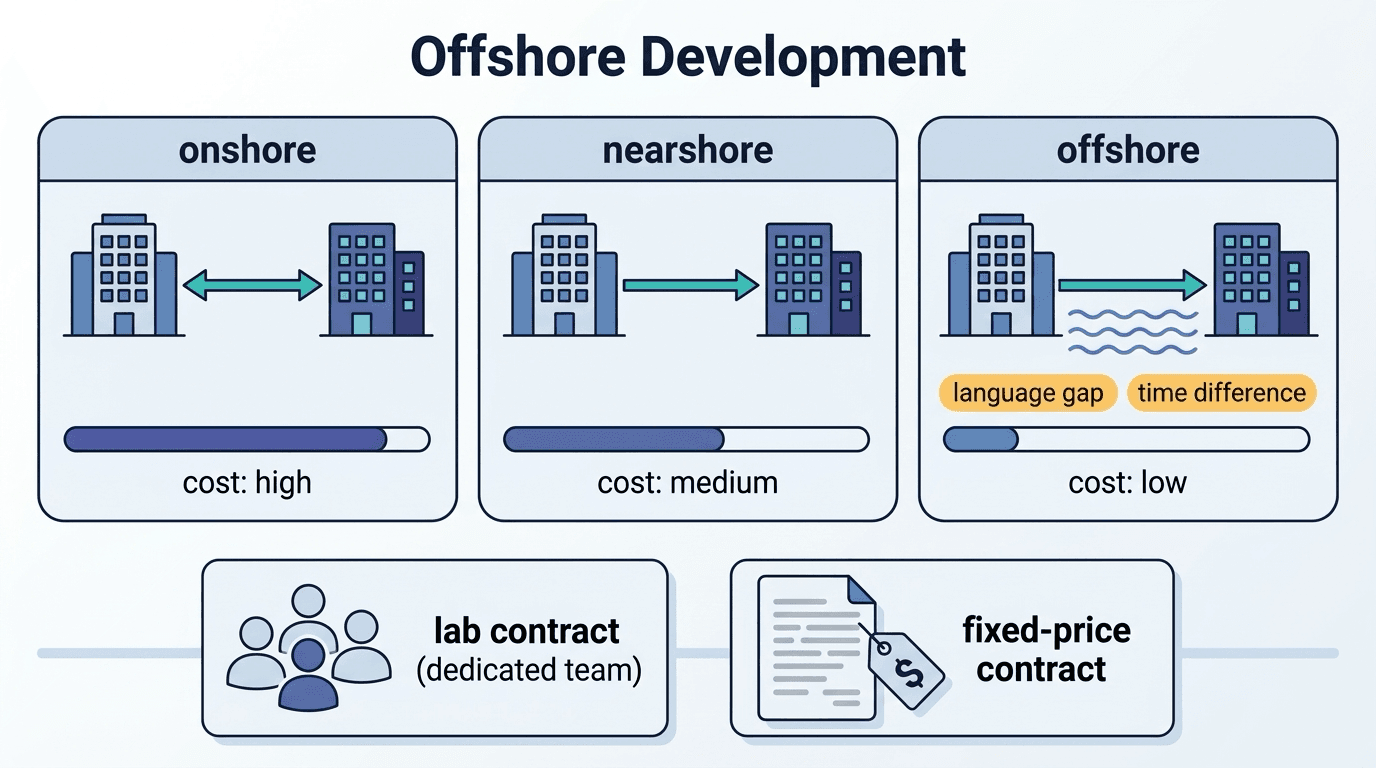
Offshore Development
Offshore development is the practice of contracting software and system development to companies or