What is Harness AI? How It Integrates AI into DevOps and Step-by-Step Implementation Guide

Harness AI is the collective term for the AI agents that Harness, a company providing a DevOps platform, has integrated into CI/CD pipeline construction, operation, and release management. It provides a framework for delegating repetitive tasks in the software delivery process to AI—such as operating pipelines using natural language, automatically analyzing the root causes of deployment failures from logs, and auto-generating release notes.
This article is written for development leaders, SREs, and IT department personnel who feel challenged by the operational burden of CI/CD. By the time you finish reading, the goal is for you to have a clear picture of what components Harness AI consists of, which workflows it addresses, and what you need to verify in order to decide whether to adopt it in your organization.
To state the conclusion upfront: the effectiveness of adopting Harness AI is determined not by the number of features, but by how specifically you can narrow down "what you want to automate." The following sections walk through an explanation of its components, pre-adoption checkpoints, how to run a PoC, and finally the HITL (Human-in-the-Loop) design that is indispensable for production operations.
Note that "Harness AI" as discussed in this article refers to a product name from Harness, a company providing a DevOps platform. "Harness Engineering," which refers to a design methodology for structurally preventing AI agent errors, is a separate concept and is explained in What is Harness Engineering? A Design Methodology for Structurally Preventing AI Agent Errors.
What is Harness AI? Components and Supported Models

Harness AI is not a single AI assistant, but rather a combination of multiple agents with different roles and an MCP (Model Context Protocol) Server that connects external tools. Having a grasp of the overall picture—what components it is made of—will help you avoid losing focus when selecting features later on.
Five Agents and the Role of MCP Server
The components of Harness AI are broadly divided into five categories. Since each handles a different stage of the process, understanding them from the perspective of "which agent addresses our organization's challenges" will help you get up to speed quickly.
| Component | Stage Covered | Primary Role |
|---|---|---|
| DevOps Agent | Pipeline construction and configuration | Creating, modifying, and troubleshooting pipelines using natural language |
| Support Agent | Incident response | Root cause analysis and presentation of solutions |
| OPA Agent / Error Analyzer | Policy enforcement and error analysis | Detecting policy violations and automatically analyzing error logs |
| Release Agent | Release management | Auto-generating release notes from deployment history and code changes |
| MCP Server | External tool integration | Support for 11 types of tools and 139 types of resource types |
Viewed through this breakdown, it becomes clear that which feature you should try first depends on where your day-to-day burden lies. For teams that spend a lot of time on pipeline configuration changes, the DevOps Agent is the place to start; for those where the initial investigation of incidents drags on, it's the Error Analyzer; and for those where documentation of releases across multiple services is done manually, it's the Release Agent.
Note that the Release Agent's summarization process internally uses OpenAI as a data sub-processor. This point is directly relevant to the data privacy considerations discussed later, so keep it in the back of your mind even at the stage of browsing the feature list.
Regarding the MCP Server, the number of supported tools and resource types is merely a "rough indicator of coverage." The mechanics of MCP itself and how it differs from inter-agent communication protocols are organized in What is the Difference Between MCP and A2A? A Comparison and Usage Guide for AI Agent Protocols.
Base Models and Hosting Configurations
As the foundation on which agents actually perform inference, Claude Opus hosted on AWS Bedrock or Google Vertex AI is used as the base model. In addition, the system supports multiple LLMs, including OpenAI's GPT series and Google's Gemini Flash.
This "multi-model support" is not merely a selling point on a spec sheet—it has practical significance. It provides flexibility to accommodate constraints, such as cases where the available cloud infrastructure is restricted by internal security policies, or cases where you want to shift to a lighter-weight model for stages where you need to reduce inference costs. Conversely, since the choice of model and hosting platform directly determines the cost structure, when evaluating adoption you need to go as far as estimating "which model, via which platform" in your calculations.
If you are interested in the design for safely managing multiple LLM providers across an organization, What is an AI Gateway? An Implementation Guide for Safely Integrating Multiple LLM Providers is also a useful reference.
Why AI Integration in DevOps Is Growing

The emergence of products like Harness AI is driven by both the structural burden that DevOps teams face and the environmental changes that have made it technically feasible to address that burden. This section organizes "why now" from two angles.
Structural Costs Created by Increasing Release Frequency
CI/CD pipeline misconfigurations, root cause investigations after failed deployments, gaps in security policy enforcement——these rarely occur in isolation; in most cases, they pile up simultaneously and put pressure on teams in the field.
The core of the problem is that as release frequency increases, the cost of manual review and troubleshooting grows proportionally. When weekly releases become daily, and teams move to a model of deploying multiple services in parallel, the number of pipelines and the combinations of dependencies multiply, creating areas where human effort alone can no longer keep up.
During incident response, this burden becomes especially visible. When a build fails, time gets consumed just figuring out which service, which stage, and what output is involved—stretching the lead time before actual remediation work can begin. This "investigation before the investigation" is what drives up the perceived workload for teams.
That said, this is not the kind of problem that automation can fully resolve. When the pipeline structure itself is overly complex, adding AI on top simply makes that complexity more visible; a fundamental reorganization is still required separately. It is worth pausing to make this assessment before moving forward with adoption.
Transitioning from Single Assistant to Agentic AI
On the technical side, the direct catalyst was the fact that high-performance models such as Claude and GPT-series became practically accessible via API. The option of integrating them into DevOps tools moved from the experimental stage to concrete product specifications.
At the same time, the underlying design philosophy has also shifted. The paradigm of "asking a single smart AI assistant everything" is giving way to Agentic AI, in which multiple agents with divided responsibilities each handle their own tasks. The fact that Harness AI is organized not as a single feature but as distinct units—DevOps Agent, Support Agent, and Release Agent—reflects this trend. The design thinking behind coordinating multiple agents is covered in detail in What Is AI Agent Orchestration? Design and Operations for Coordinating Multiple Agents.
Beyond these technical tailwinds, Harness's certifications such as ISO/IEC 27001 and SOC 2 are also a factor driving adoption in enterprise environments. As the conversation around AI adoption shifts from "can we do it?" to "can we use it safely?", this perspective cannot be ignored.
What Can You Do with Harness AI? Key Use Cases

The scenarios where this is actually used fall into three broad areas. Because the ease of seeing results and the degree of environment dependency differ across each area, read through them while comparing against where your own organization's bottlenecks lie.
Pipeline Building and Failure Root Cause Analysis
The area most likely to benefit in day-to-day DevOps work is pipeline construction and modification, along with incident response.
With DevOps Agent, you can convey requests such as "I want to convert this stage to support canary releases" in natural language to proceed with building or modifying pipelines. Because it reduces the need to recall YAML syntax while making edits, a practical advantage is that even team members who rarely touch pipelines can get started more easily.
For incident response, Error Analyzer is effective. When an error occurs during a build or deployment, it automatically analyzes the logs and presents the likely cause along with suggested remediation steps, compressing the time spent on the "investigation before the investigation" mentioned in the previous section. When the initial response changes, the downstream waiting time for other team members is also reduced in turn.
However, the magnitude of the effect depends on the baseline state. If logs are unstructured and even humans cannot parse what is being output, the accuracy of AI analysis will also be limited. Teams where observability is already reasonably well established tend to see greater benefit from this feature. For related concepts, refer to What Is AI Observability? A Practical Guide to Monitoring LLMs in Production.
Release Note Generation and Policy Enforcement Automation
An area that is understated yet tends to yield results is release management. Release Agent reads deployment history and code changes to automatically generate release notes. Documenting releases across multiple services is a task that, despite occurring frequently, tends to become siloed to specific individuals and can grind to a halt when the responsible person is unavailable. Automating this part removes one bottleneck from the release process.
As noted earlier, OpenAI is used as a data subprocessor for this summarization. Because commit messages and code diff information are passed to an external party, limiting the scope of application may be a valid option when handling repositories with high confidentiality requirements.
On the policy and governance side, the combination of Harness AI Rules and OPA Agent detects violations in pipelines and presents suggested fixes. In environments with extensive compliance requirements, this functions as a mechanism for reducing gaps in rule enforcement without relying on manual human review. For the perspective of aligning with organization-wide AI usage policies, What Is AI Governance? A Practical Guide from EU AI Act Compliance to Internal Rule Development is a useful reference.
Integration with Existing Toolchains via MCP Server
Integration with external tools is handled by the MCP Server, which supports 11 types of tools and 139 types of resources. The design assumes integration into existing development toolchains, which means there is room for partial adoption without having to standardize your entire environment around Harness.
However, this is the area most subject to environment-specific dependencies. The large number of supported integrations reflects the breadth of options available, but it does not guarantee that the specific CI/CD tools or IaC (Infrastructure as Code) your organization uses are actually covered. It is advisable to cross-reference your organization's tool inventory against the supported scope early in the evaluation process. Leaving this until later makes it easy to encounter a situation mid-PoC where you discover that a required integration is not supported—resulting in costly rework.
Four Checkpoints to Verify Before Adoption

It is easy to be drawn in by the appeal of the features, but there are important points worth pausing to verify before adoption. Discovering after the fact that the solution does not fit your expected environment creates unnecessary costs for the team.
Pre-Screening Integration, Data, Cost, and Permissions
There are four key axes to verify. Since each involves a different department, deciding in advance who to consult for each will help keep the process moving smoothly.
| Verification Axis | What to Examine | Who to Consult |
|---|---|---|
| Integration compatibility with existing tools | Whether your organization's CI/CD and IaC are within the MCP Server's supported scope | Technical lead / Infrastructure team |
| Data privacy | The scope of information passed externally via Release Agent, and alignment with internal policies, GDPR, etc. | Information security team / Legal |
| Operational costs | Cost estimates broken down by model and hosting platform (AWS Bedrock / Google Vertex AI) | Technical lead / Budget owner |
| Permission scope | Upper limits on the repositories, environments, and operations granted to the AI | Infrastructure team / Security team |
The fourth axis—permission scope—is particularly easy to overlook. If you grant the agent broad permissions from the start, narrowing them down later becomes burdensome both psychologically and operationally. We recommend explicitly defining at the time of adoption: the scope of pipeline operations the agent can perform, the environments it can access (production vs. non-production), and the types of operations it is permitted to execute. The design philosophy behind this is covered in A Practical Guide to Designing AI Agent Tool Execution Permissions with Least Privilege.
On the compliance front, Harness publishes its conformance status for ISO/IEC 27001, SOC 2, and GDPR on its Trust Center. This can serve as a primary reference when going through internal review processes, but it is important to note that holding a certification and fully satisfying your organization's own information security standards are two different things. Certifications indicate the vendor's internal management practices; the decision about what data your organization chooses to share must be made separately.
How to Proceed with Implementation: A 5-Step Approach

Teams that rush into adoption and fail tend to share a common approach: "let's just try everything." Because Harness AI covers a wide range of features, starting without narrowing your focus means the evaluation period ends before you can even measure effectiveness.
Steps 1–2: Scoping and Defining Success Criteria
Step 1: Choose exactly one thing to automate. Whether your goal is root cause analysis of pipeline failures or automated release note generation, the features you use and how you evaluate them will be entirely different. Running multiple trials in parallel makes it impossible to determine which feature drove any results you see. Start by identifying the single biggest pain point your team is facing right now.
Step 2: Define measurable success criteria upfront. Once your focus is narrowed, success criteria will naturally become concrete. If the target is incident response, the metric might be "how many minutes was MTTR reduced by"; if it is release management, it might be "how many hours were saved on release note creation."
The critical point here is to measure your baseline values before adoption. Without a "before" figure, you are left with only an "after" to look at, resulting in a subjective sense that "things feel faster"—which is not sufficient to justify an investment decision. Conversely, simply recording your current metrics during the week before adoption dramatically improves the quality of your evaluation. For guidance on designing effectiveness measurement, How to Measure the Impact of AI Agent Adoption: From KPI Design to Continuous Improvement is a useful reference.
Steps 3–5: Data Classification, PoC, and Phased Rollout
Step 3: Organize how data is handled. The DevOps Agent and Support Agent use LLMs hosted on AWS Bedrock / Google Vertex AI, while the Release Agent involves OpenAI as a data subprocessor. Unless you clarify in advance which information may be passed to Harness AI by cross-referencing your internal data classification policy, you risk having the implementation sent back during a security review later.
Step 4: Conduct a PoC with a limited scope of impact. Validate using a non-production environment or a single pipeline with a limited blast radius, not production. In particular, since Harness CLI 3.0 is in Public Beta at the time of writing, it is practical to proceed while assessing its stability. The PoC design itself is covered in detail in AI Implementation PoC Design Guide — Practical Steps for Thai B2B Companies to Reach a Production Decision.
Step 5: Evaluate and expand incrementally. Assess effectiveness against the criteria established in Step 2, and only broaden the scope if those criteria are met. A classic failure pattern is expanding the scope when results fall short under the assumption that "we must be using it wrong." If the criteria are not met, it is better to conclude that the target selection was off and switch to a different bottleneck — that approach tends to move things forward faster in the end.
Common Pitfalls and How to Avoid Them

There are several common patterns in how early-stage adoption tends to go wrong. Many of these pitfalls can be avoided simply by knowing about them in advance, so we will highlight two representative examples.
Enabling All Features at Once and Causing Information Overload
The most frequently observed pattern is the approach of "let's just enable all the features for now." Because the DevOps Agent, Error Analyzer, and Release Agent each serve different purposes, activating them all at once causes a flood of alerts and suggestions to pour in.
When that happens, the team loses the ability to determine where to start, and eventually stops looking at the notifications altogether. The state where a tool has been introduced but no one is actually using it most commonly arises through this path.
The workaround is straightforward: it comes down to adhering to the narrowing-down done in Step 1. Start by enabling only one feature, confirm that the team is actually reading its output and taking action on it, and only then add the next one. Simply maintaining this order goes a long way toward preventing notification fatigue.
It should be noted that the tendency to accept AI suggestions unconditionally is not unique to Harness AI. The structure by which over-reliance on automated suggestions dulls judgment is addressed in What Is Automation Bias? The Overconfidence Risks AI-Adopting Companies Face and Countermeasures by Industry.
Skipping HITL (Human-in-the-Loop) Design
One risk that tends to be overlooked yet can become the most serious in practice is the omission of HITL (Human-in-the-Loop) design.
If the system is configured to automatically execute changes or release decisions suggested by AI without review, you may end up with a deployment that no one intended running in the production environment. Moreover, this type of incident tends to occur not during normal operations, but in situations where decisions are rushed — such as during a late-night incident response.
As a countermeasure, make sure to incorporate a step requiring human review and approval into any workflow that applies changes to the production environment. A practical decision criterion is to draw the line at "degree of irreversibility." Allow automatic execution for changes that can be rolled back, and require human approval for operations that cannot be undone — such as data migrations or production deployments. This distinction allows you to retain a safety net without significantly sacrificing the benefits of automation.
For guidance on deciding which tasks to delegate to AI and where humans should take over, refer to What Is the Division of Roles Between AI and Humans? Three Decision Criteria for Determining "Delegate, Collaborate, or Handle Yourself". For a mechanism to halt the system when unexpected behavior is detected, see Emergency Stop Design for AI Agents — An Implementation Guide for Circuit Breakers.
Frequently Asked Questions

Here we address three questions that frequently come up during the evaluation stage.
Q1. Does Harness AI Replace Existing CI/CD Tools?
This is positioned as an addition on top of existing workflows, not a replacement. Harness AI is designed to integrate into DevOps workflows and connects with external tools via MCP Server. It can be partially adopted while maintaining your existing toolchain. However, since the scope of support varies by environment, you should verify in advance whether your own configuration is covered.
Q2. Will My Confidential Code Be Exposed to AI?
Which information is passed externally depends on the features you use. In particular, the Release Agent's summarization feature uses OpenAI as a data subprocessor, meaning commit messages and code diff information are subject to processing.
Harness itself holds ISO/IEC 27001 and SOC 2 certifications and publishes its compliance status on its Trust Center — but that speaks to its governance framework, which is a separate matter from your own organization's judgment about what data is acceptable to share. For repositories with high confidentiality requirements, consider limiting the scope of feature application on a per-function basis.
Q3. Is It Worth Adopting for Small Teams?
It depends on your release frequency and the number of services you handle. If you're running weekly releases for just one service, the work can be managed manually, so the benefits of adoption tend to be limited. On the other hand, if a small team is running multiple services on a daily basis, pipeline configuration and incident investigation likely consume a significant portion of working hours — in that case, even a narrowly scoped adoption can yield visible results. As a basis for your decision, we recommend first measuring "how many hours per week are spent on deployment-related tasks" rather than focusing on team size.
Conclusion

Harness AI is a platform that embeds AI into DevOps workflows to automate repetitive tasks such as pipeline construction, error analysis, and release management. The security foundation for enterprise use is in place, including compliance with ISO/IEC 27001 and SOC 2, as well as maintained data privacy documentation.
However, the effectiveness of adoption depends heavily not on the breadth of features, but on how clearly the team defines its problems and the quality of its validation process. If you proceed without a clear answer to "what do we want to automate?", you may end up with more notifications and higher operational overhead.
If you do move forward, the starting point is to identify a single bottleneck you want to automate and measure the baseline metrics before adoption. Next, if you don't define the integration scope and permission boundaries with your existing CI/CD tools upfront, unexpected permission issues are likely to arise later. From there, rather than rolling out across all pipelines from the start, a practical approach is to run a small-scale PoC limited to a single pipeline, measure the results, and then decide whether to expand the scope.
For high-irreversibility operations such as automated deployments to production environments, make sure to incorporate a HITL (Human-in-the-Loop) design that retains a human approval step rather than leaving everything to AI. This serves as a safeguard to benefit from automation while preventing unrecoverable mistakes.
Note that Harness AI features are continuously updated, and Harness CLI 3.0 is in public beta at the time of writing. Before incorporating it into production operations, please check the official documentation for the latest availability and coverage.
Our company provides implementation support for applying AI agents to business operations, covering permission design, PoC design, and impact measurement. If you need help clarifying how far Harness AI can be applied to your own pipelines, please feel free to reach out.
Author & Supervisor

Yusuke Ishihara
Started programming at age 13 with MSX. After graduating from Musashi University, worked on large-scale system development including airline core systems and Japan's first Windows server hosting/VPS infrastructure. Co-founded Site Engine Inc. in 2008. Founded Unimon Inc. in 2010 and Enison Inc. in 2025, leading development of business systems, NLP, and platform solutions. Currently focuses on product development and AI/DX initiatives leveraging generative AI and large language models (LLMs).
Recommended Articles


Terms related to this article
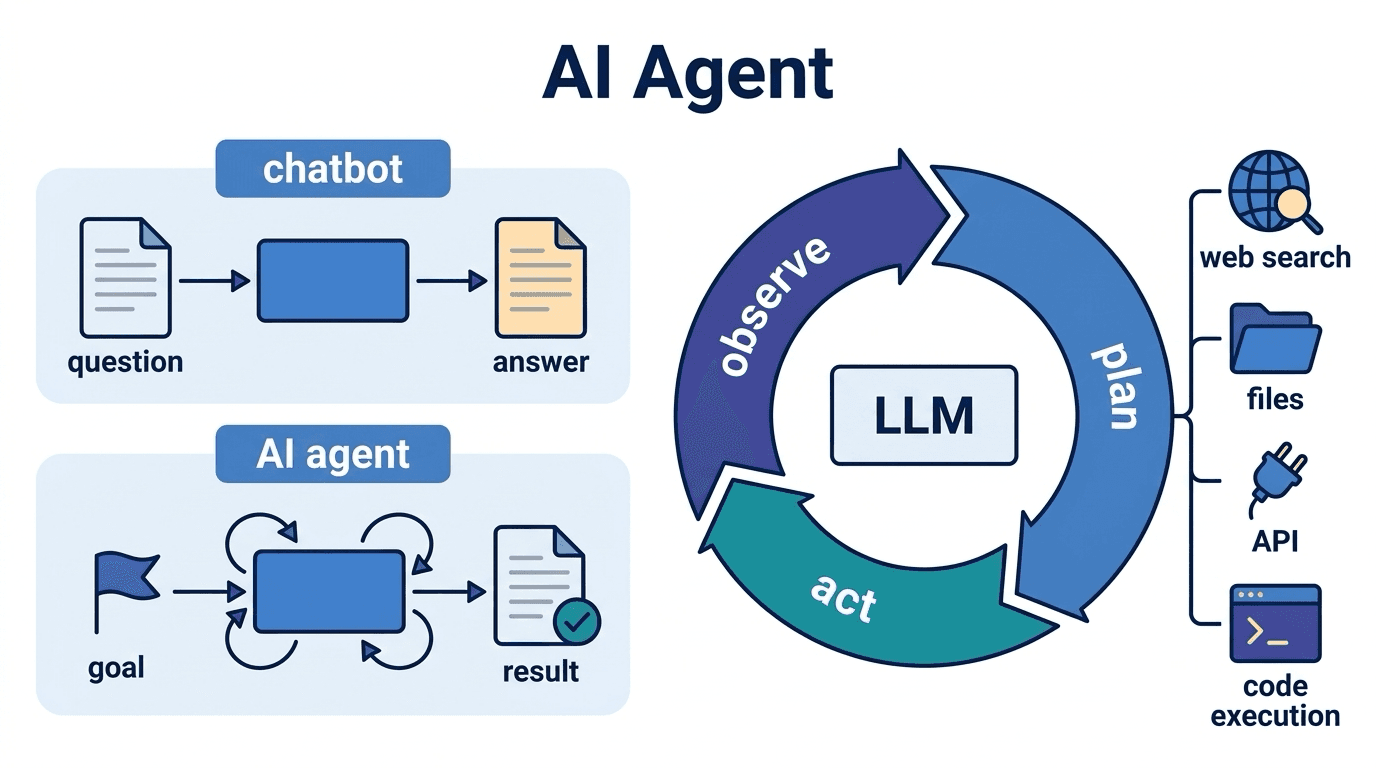
AI Agent
An AI agent is an AI system that autonomously formulates plans toward given goals and executes tasks
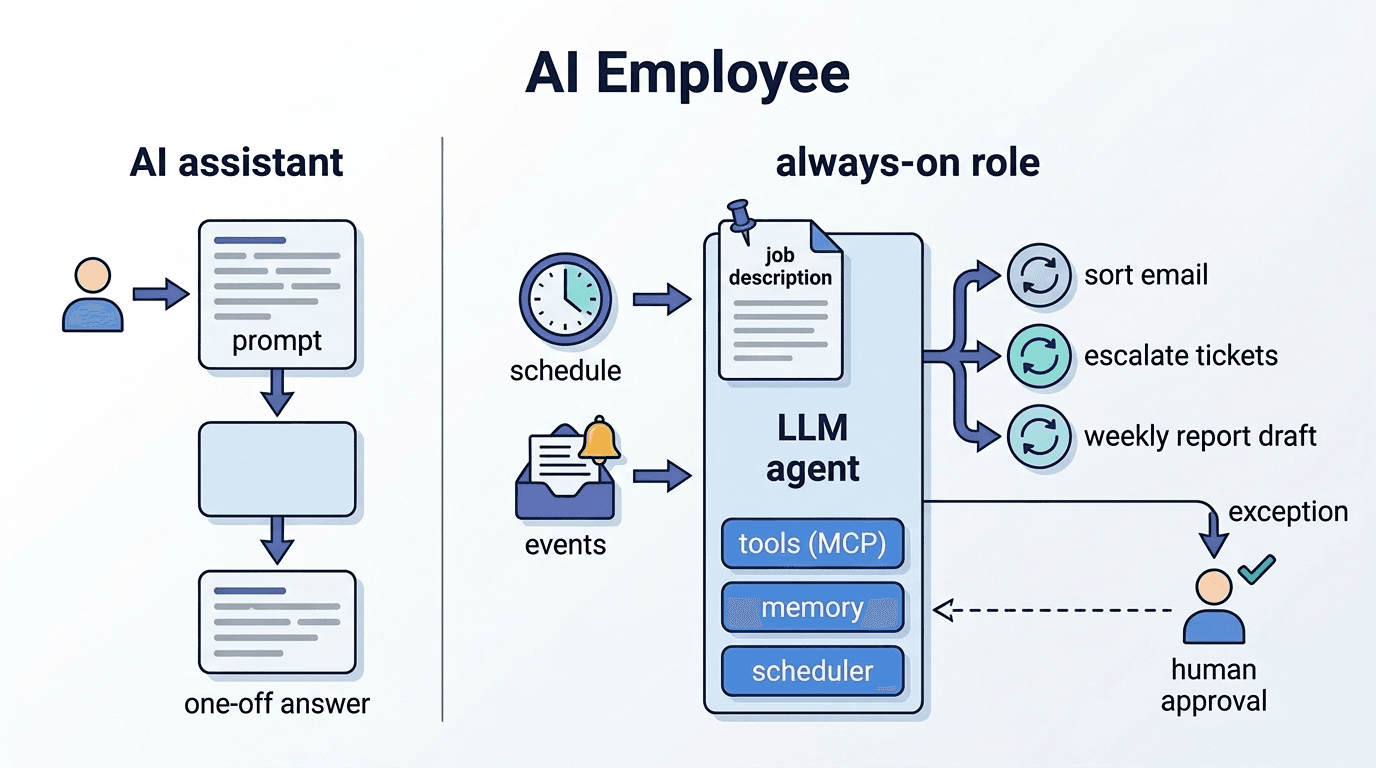
AI Employee (AI Employee)
An autonomous AI agent that takes on a specific business role and continuously performs tasks in the

Shadow AI
Shadow AI refers to the collective term for AI tools and services used by employees in their work wi